One more train ride on our Eurail Pass, from Thessaloniki to Athens. Unexpectedly, it was one of the best. On the day we arrived in Thesssaloniki, before we met the group, we figured out the closest bus number and stop from our hotel to the train station, and made a trial ride. We showed a sleepy ticket agent the Eurail passes on my phone and without comment he punched out a couple of paper tickets with seat reservations. We were excited about paper tickets! It meant we could actually go through the turnstiles without causing a commotion.
On travel day, we allowed extra time for the capriciousness of bus schedules and arrived at the station early. There was time to thoughtfully purchase lunch to eat on the train, find our track and our particular car. All of the seats faced forward, the train was not crowded, and the windows were clean to see out. We had a view of Mt. Olympus (which Cal climbed, a long time ago), a lot of cotton being harvested, and a beautiful mountain range that we went right through. The travel time to Athens was about four hours. Two stops on the subway, an eight minute walk, and we were in front of our hotel.
The star attraction in Athens, of course, is the Acropolis. We headed out early the next morning for our walk through picturesque neighborhoods, with many ruins along the way. The Acropolis, at the top of the hill, was often in view.

An ancient stadium is still in use.

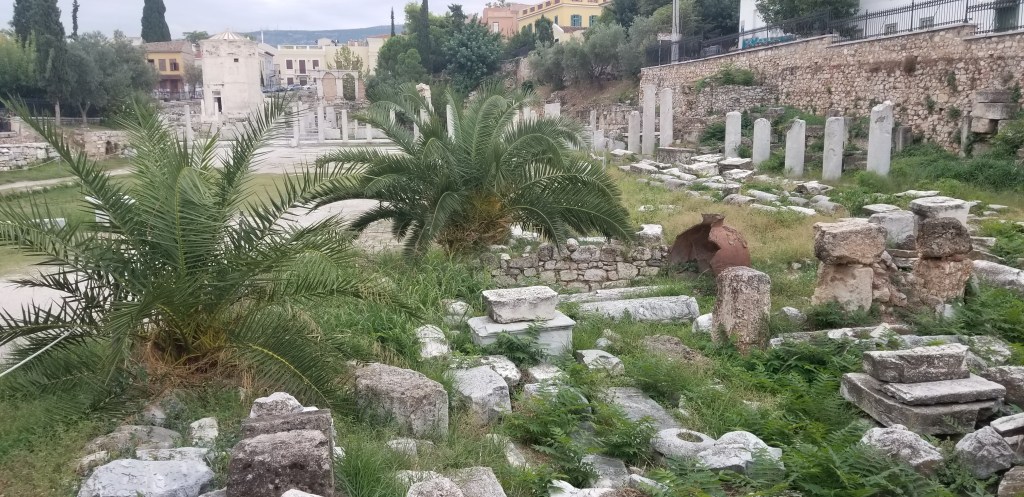
We walked past the remains of the Roman agora:
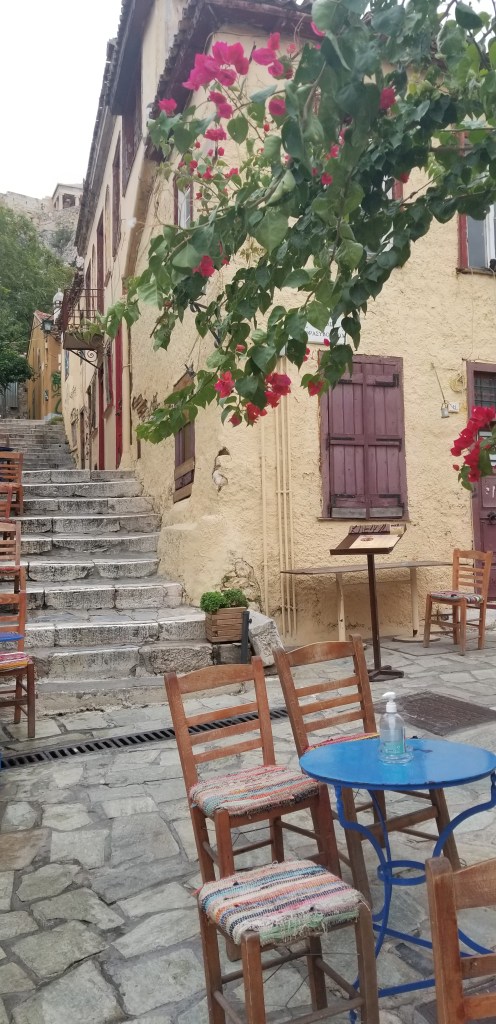
and plenty of pretty cobblestone streets and lanes.
We were at the Acropolis almost as it opened, which was perfect. The crowds only get heavier as the day goes on.
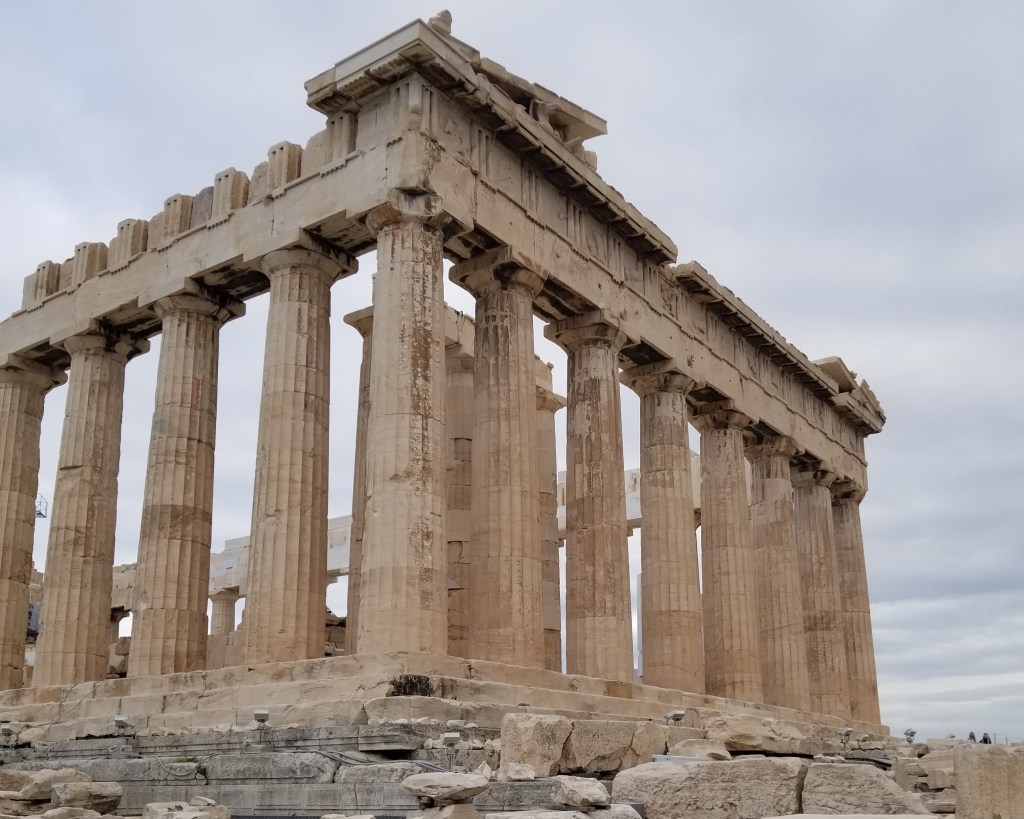
The Acropolis is the term for the whole complex on the hill. There have been fortification walls around this hill for 3,300 years; the first wall was built in the 13th century BC. In the latter part of the 5th century BC, the Greeks had a decided victory against the Persians and established democracy. An exceptional age of thought and art followed, and the monument to these ideas were established. It was dedicated to the goddess of wisdom, Athena. Today it is a UNESCO world heritage site.
The Parthenon is a temple and but one of the ancient structures on the Acropolis, although it is arguably one of the most famous. It was an unbelievable and indescribable moment to be standing here.

Also at the Acropolis is the temple of Erechtheion, dedicated to several different deities, including Athena.

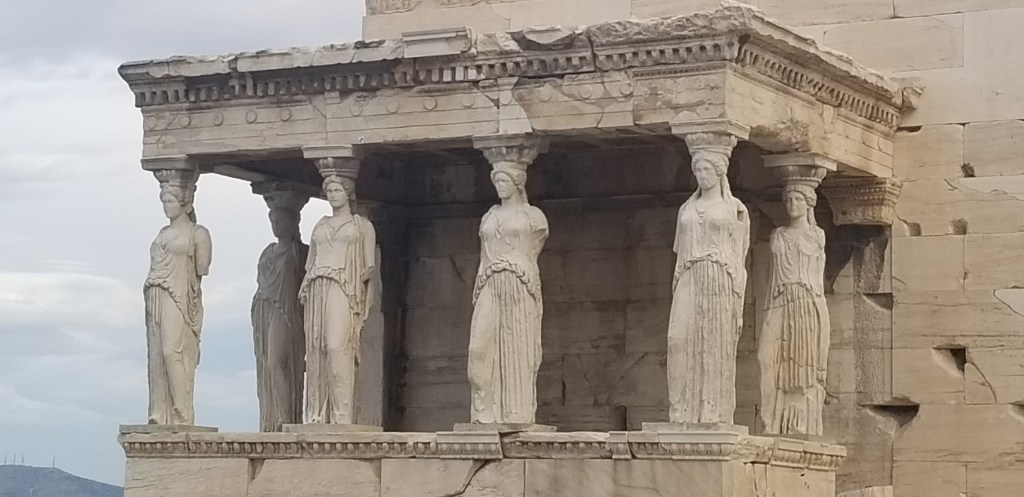
I liked the caryatids that are to one side of the Erechtheion. Caryatids are sculpted female figures used as a support instead of a column. These are all replicas; the originals are in the Acropolis Museum.
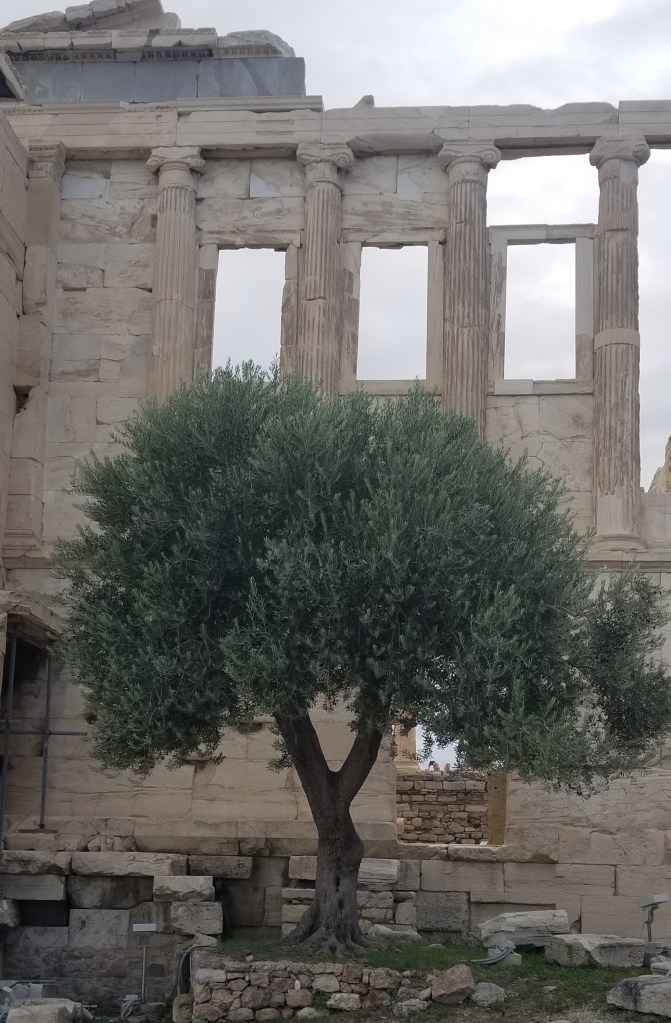
There was once a statue of Athena here; it was later carted off and destroyed in one of Greece’s battles. The story goes that Athena planted an olive tree here. The olive tree symbolizes peace, wisdom and harmony. Of course, the sacred olive tree from antiquity is long gone. This one was planted in the early 20th century.
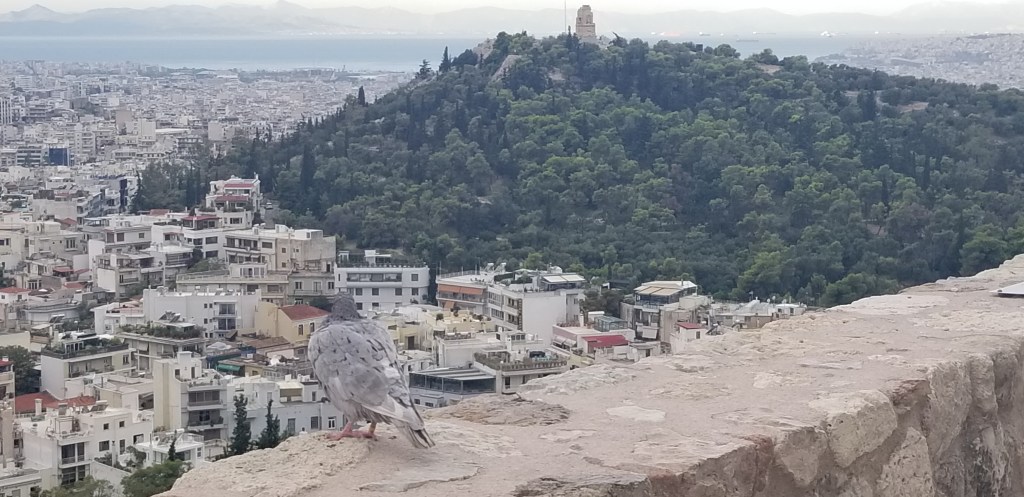
A pigeon and I admired the view from the Acropolis.
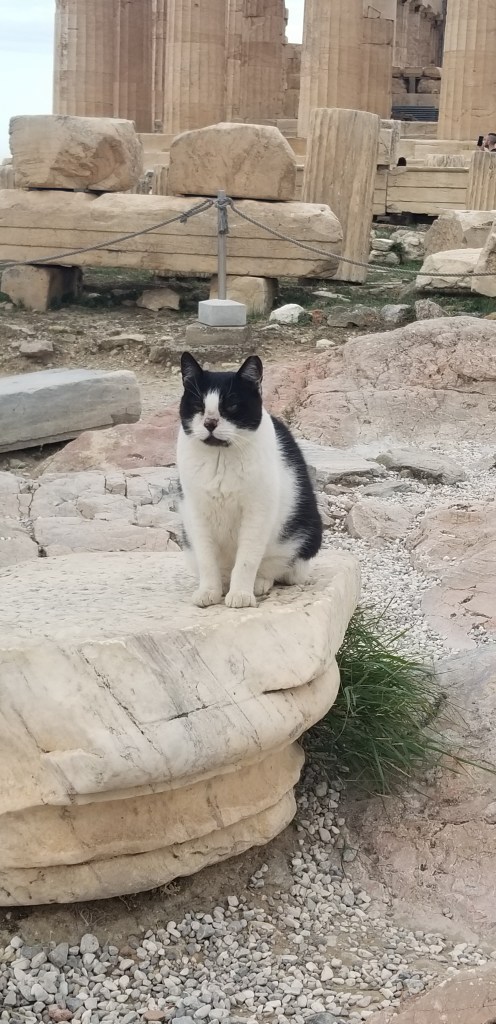
Beginning in Thessaloniki, we had begun seeing feral cats everywhere, and I delighted in seeing them. There are several to be seen at the Acropolis. I presumed this one was male, owing to his size, and dubbed him “King of the Parthenon”. I chatted with a lady who was feeding kitty treats to all the cats; she walks up and does this every morning. I’m sure that’s better than the junk food that many tourists probably feed them. Mr. King looks pretty well fed.
We also had fun watching a team of people reconstructing some ancient ruins. There was great discussion regarding the placement of the stones. The forklift driver waited patiently for someone to make a decision. The lady in the white coat, whom I would presume to be the archaeologist, seemed to always have the final word.
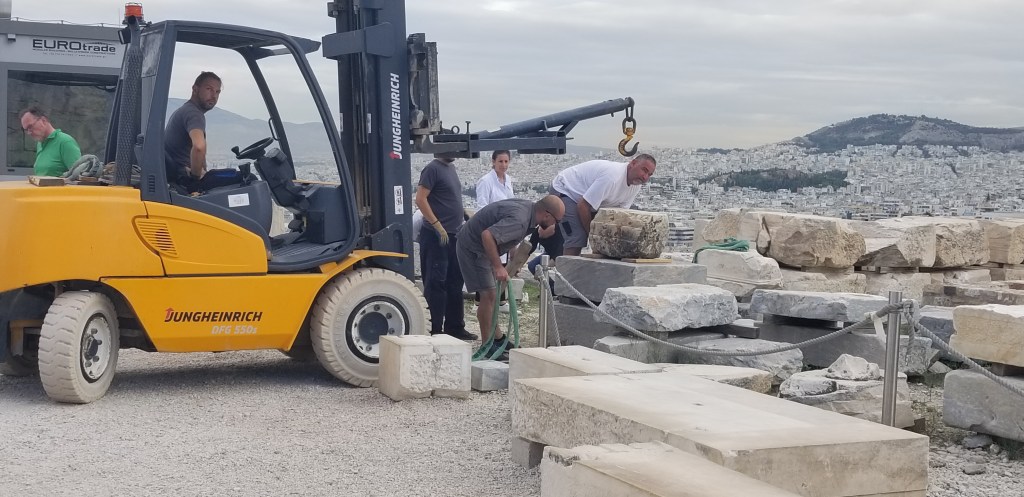

It’s wonderful that they pay so much attention to getting the tiniest details just right.
After visiting the Acropolis, the natural thing to do is to visit the Acropolis Museum, which is on the south side of the hill.
The surprise here is what is under the museum. When building it, the remains of a whole neighborhood dating back to the 4th and 5th century BC was discovered.

I was surprised that this neighborhood had a system of pipelines for clean water and and an underground sewer that ran under the sidewalks. I did not think that any dwellings of that age would be so advanced.
It is quite extensive. One more view:

What to do with such a treasure? Well, if a museum is being built above this, that’s easy: just make it a subterranean level of the museum.
Upstairs, I found one of the original caryatids from the Erechthion up on the hill.

This is what the pediment of the west side of the Parthenon looked like. A pediment is the triangular upper part of the front of a building; the Greeks loved to put statues up there. In the center is Athena, and next to her is the sea god Poseidon. Poseidon is revered for striking a rock with his trident and causing a saltwater spring to appear on the Acropolis.

These smiling gentlemen are original architectural details that would have gone above a pediment.
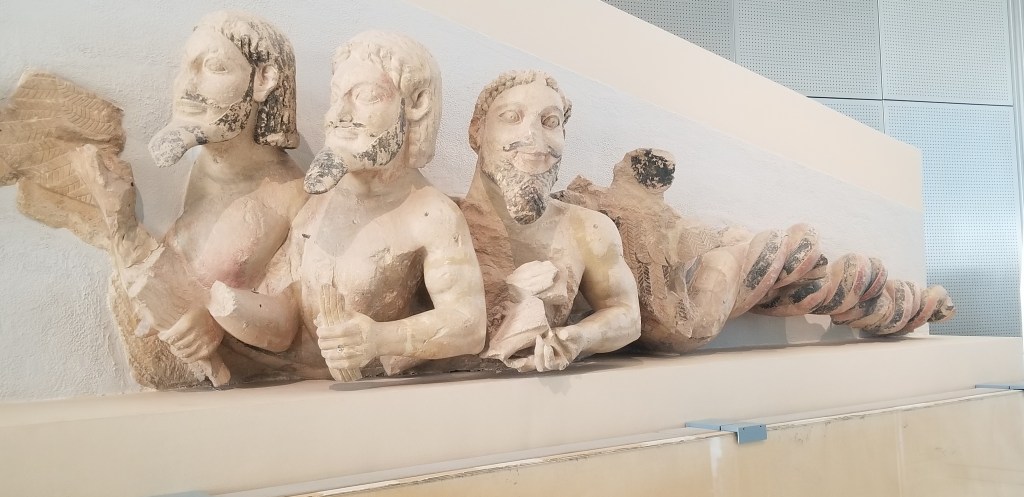
Here is a view looking out from the museum to the Acropolis above, where the antiquities came from.
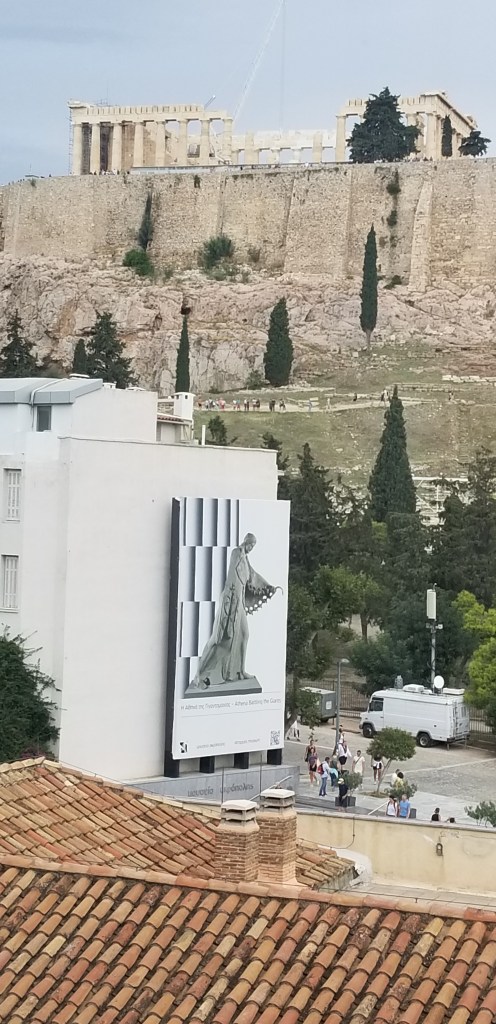
My original plan was to smoosh everything we saw in Athens, including a day tour that we took, into one blog. Clearly, it did not work. Our short time here was packed from the time we left our hotel early in the morning to our search for a place to eat dinner – and it didn’t even stop there. There will be another Athens blog!
Next time – Athens, Part 2

 Twosna Travels
How amazing to have actually been there! It’s been so long since my daughter visited Greece (over 20 years), I will have to ask her again what she did and what she remembers. Your pictures are amazing. I will likely never visit Athens, but at least I know a little more from reading your posts. I look forward to the next one about Athens.
LikeLiked by 1 person
It’s a place I’ve wanted to go to for so long and it was like a dream being there! I was so fascinated by all the antiquities and the stories behind them. I’m glad you are enjoying the blogs.
LikeLiked by 1 person
Thanks for sharing. I was there this past summer. Athens is World wonder!
LikeLiked by 1 person