
Have you read the book Grandma Gatewood’s Walk by Ben Montgomery? It tells the story of Emma Gatewood, who at 67 years of age walked the entire Appalachian trail solo. And then did it two more times, as well as other long-distance walking trips!
A Gallipolis, Ohio native, she also loved to walk in Hocking Hills, a wooded and hilly area in southern Ohio. There is a six-mile particularly deep stretch of gorge that she called “more interesting than anything I saw on the Appalachian Trail”. It’s loaded with many beautiful natural features. Once a year, until her death, she would lead a hike through this gorge, and it is now called “The Grandma Gatewood Trail”. I have wanted to hike this trail ever since reading the book.
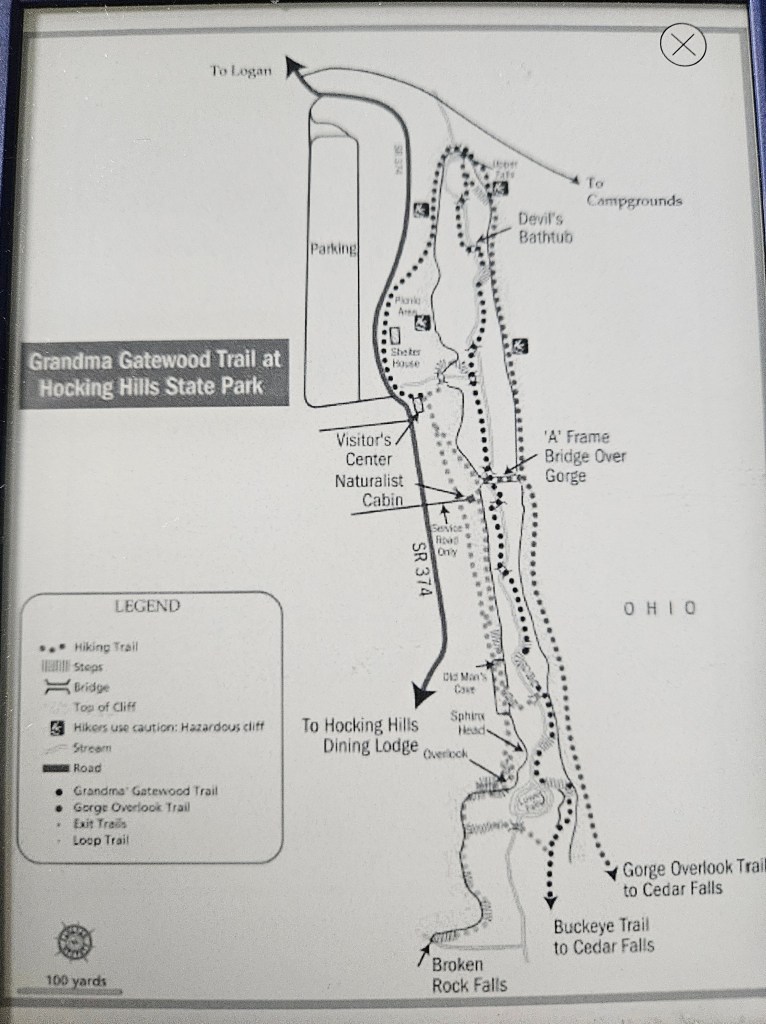
Not wanting to wait for the weekend crowd, we planned to hike on the day following our arrival, which was a Friday morning. This trail is extremely popular. Rain was predicted, though. I really debated if I wanted to get up out of my cozy bed early, but I also did not want to share this trail with a lot of people. We arrived at 7AM and saw less than five people the entire time we were hiking.

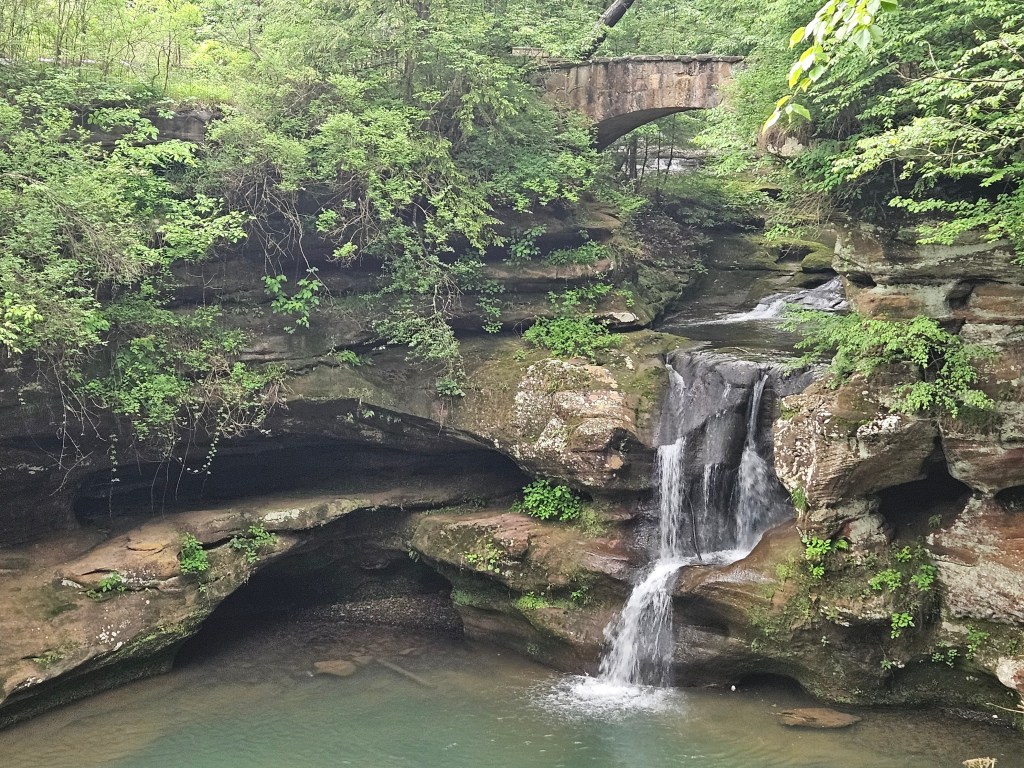
We crossed a bridge and were immediately met with this waterfall:
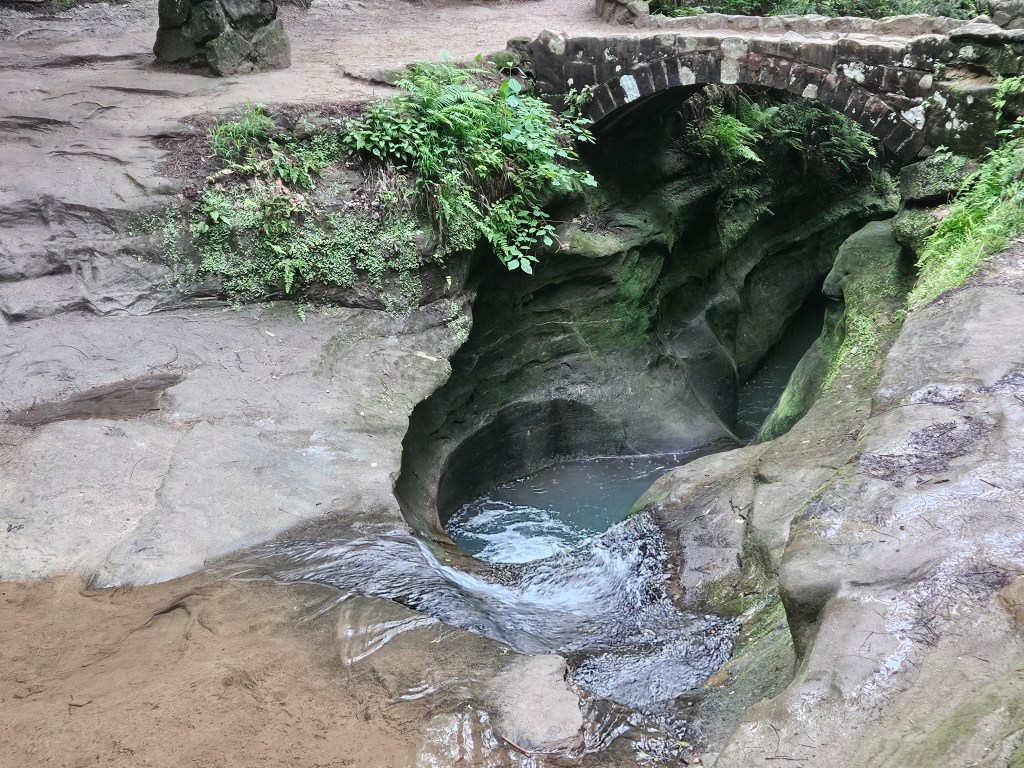
And not far after that, Devil’s Bathtub:
The walk is rated “difficult”, but the rough edges of this popular part of the trail have been worn down a bit. Grandma Gatewood Trail is blazed in light blue, as you can see on the tree.
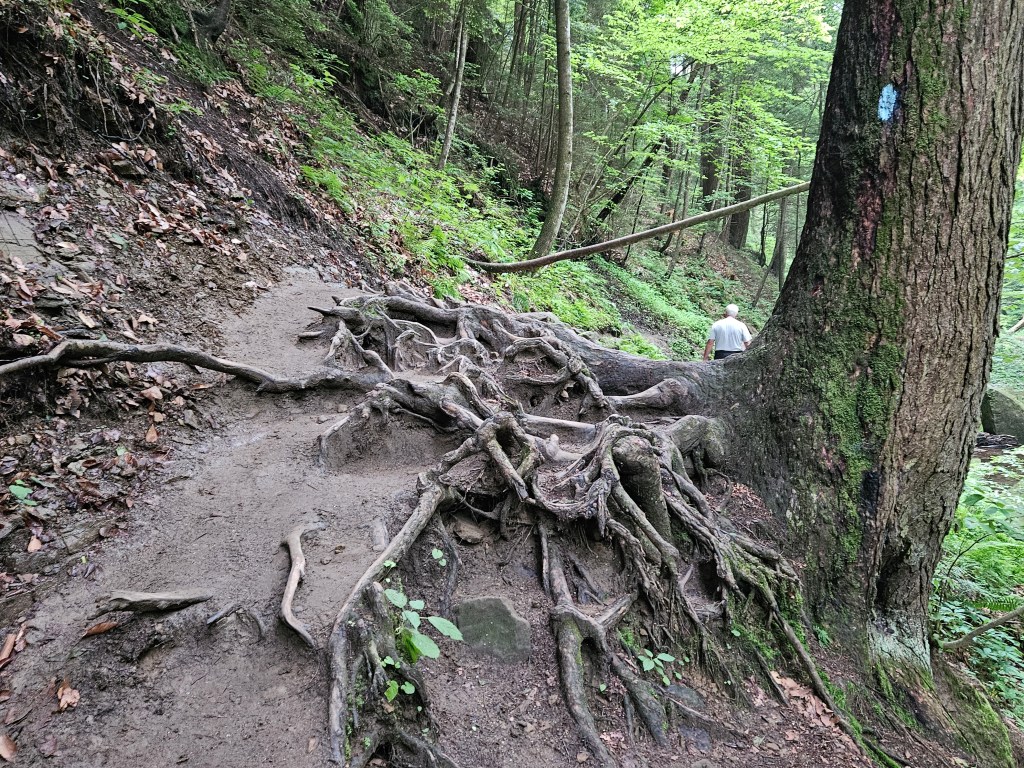
The forest was moist and drippy, with the sounds of water flowing almost everywhere. A multitude of birds sang to us.
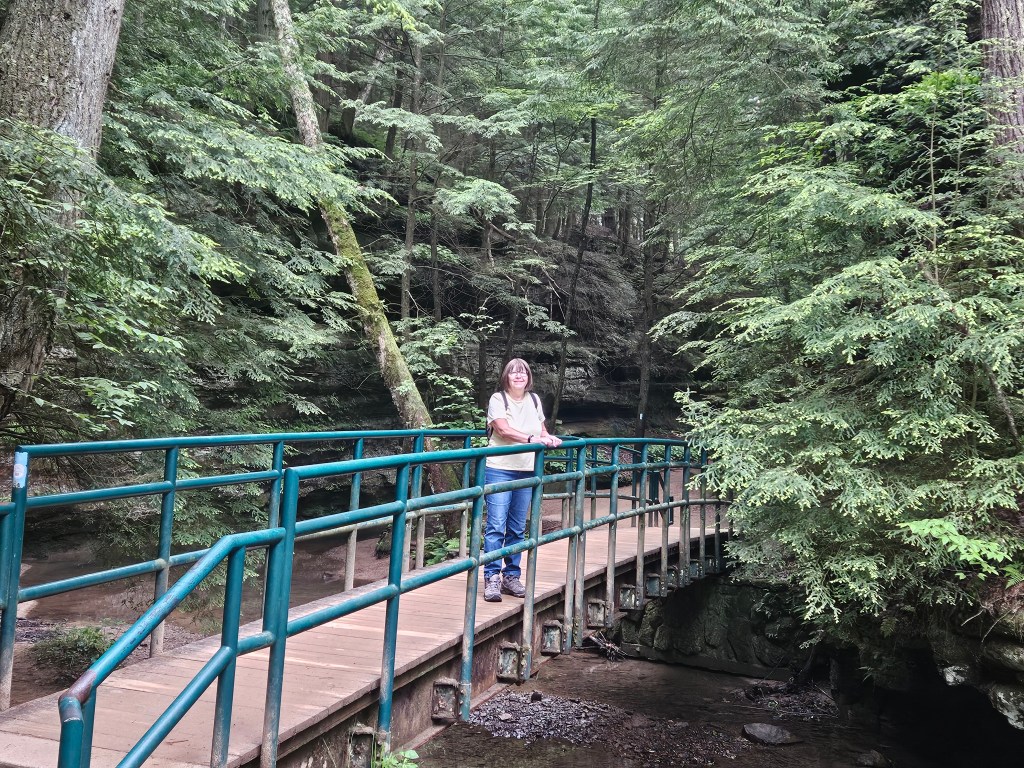
Many bridges crossed the meandering stream. I especially loved the way the bridge below was built to harmonize with its surroundings.
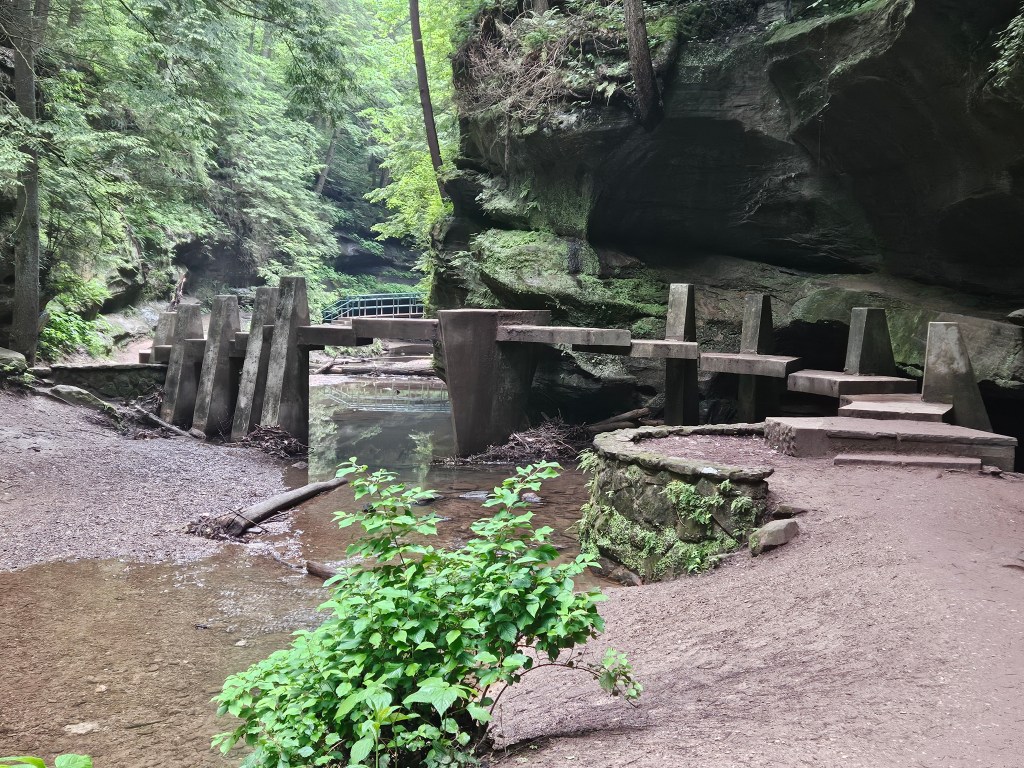
And then there was this tree, seeded at the bottom of the gorge, growing mightily out of a boulder to reach over the tall sandstone cliffs and find the sun.
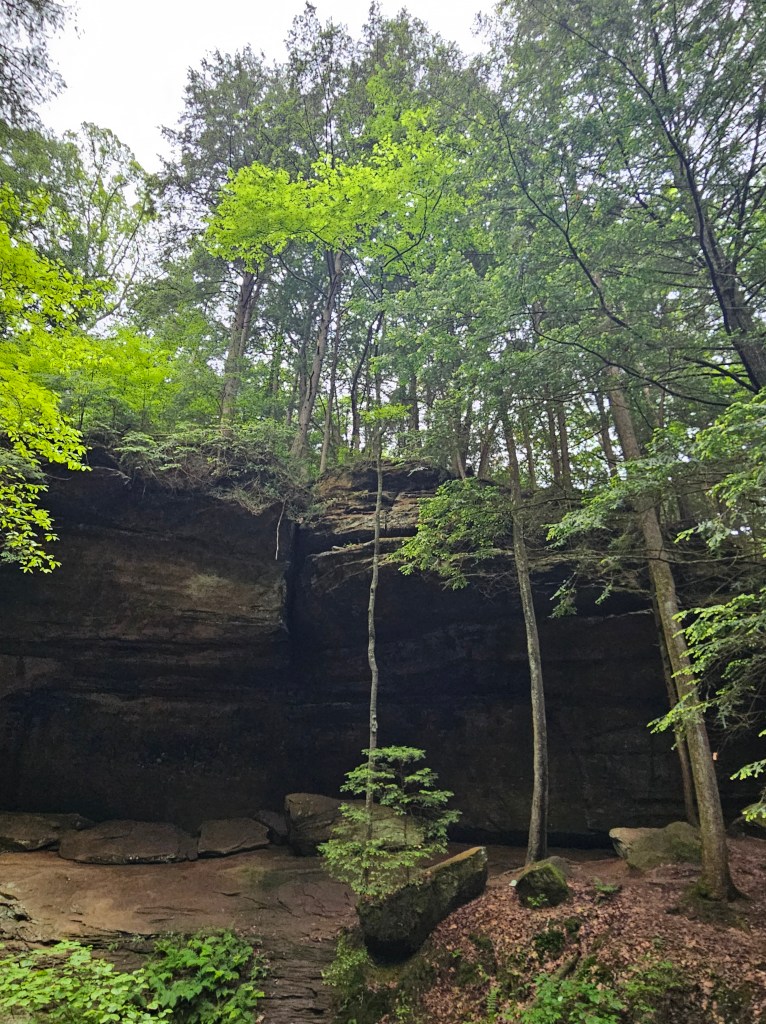
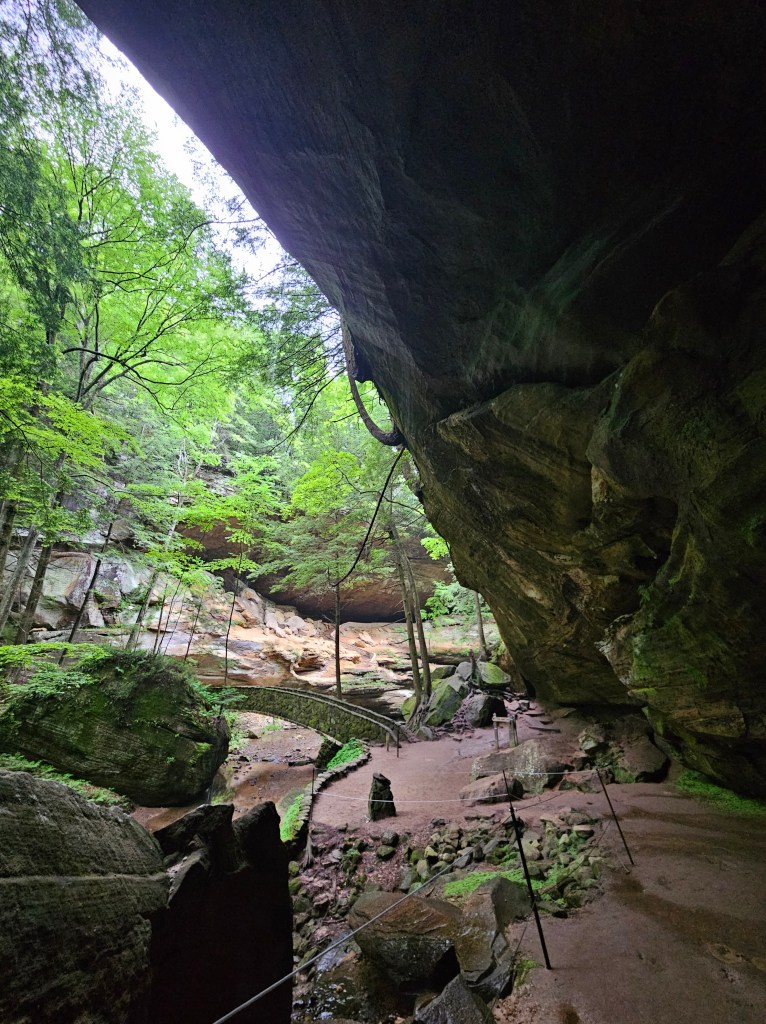
There were immense boulders and cliffs to walk under–
gorgeous waterfalls everywhere–

and then, a final insult to our tired legs, the hike up to Old Man’s Cave–
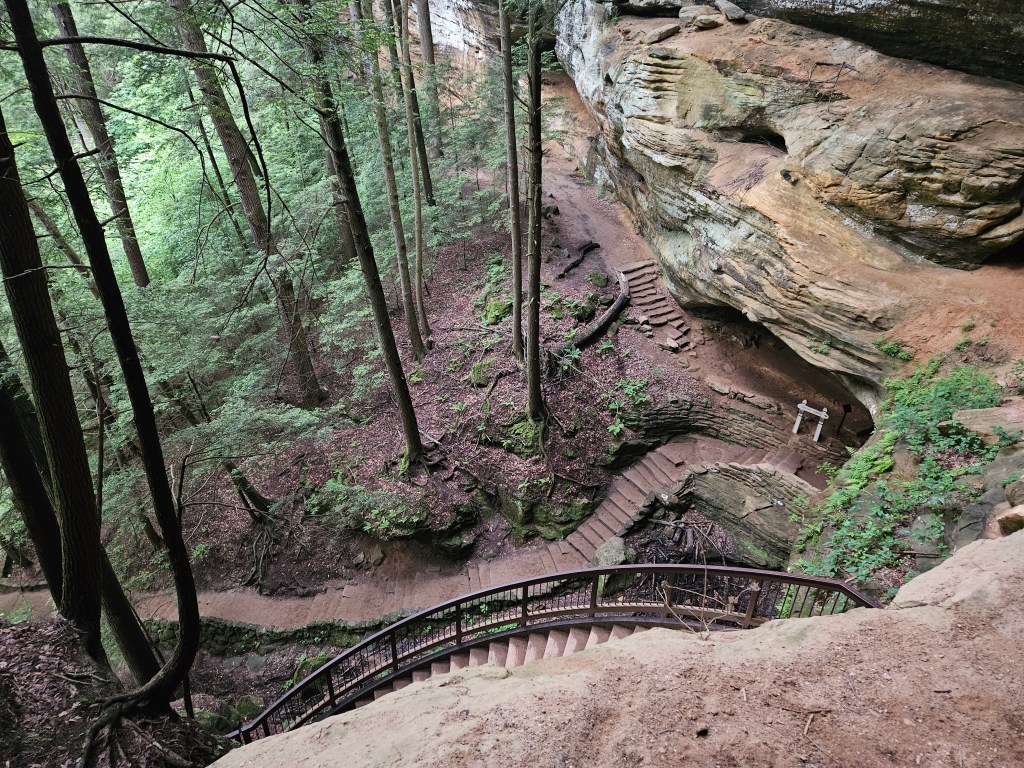
and up and out.

Old Man’s Cave is named for a recluse, Richard Rowe, who lived here in the 1800’s and made this cave his home.
Our walk here was about 3.5 miles. The rain started in a drizzle, and we turned back at a point where we could join the return part of the one-way trail. It was coming down harder as we returned to the truck so we were glad that we did not try to venture further.
While reading the book, I had envisioned the surrounding area to be fairly pristine and quiet, the state park an oasis of tranquility. This couldn’t be further from the truth. It is a huge tourist area. The country roads down to the park were lined with signs for cabins, and the state park visitors center contains an immense parking area. There is good hiking everywhere and not just in the state park. In the towns of Hocking Hills and Logan, there is everything a tourist could want to empty their wallets on: ziplining, rappelling, tubing down the river, going to a zoo, shopping in a huge plaza with antique malls and other delights, going to a glass factory, and the list goes on. So what did we find to do on a rainy day?
How about a Pencil Sharpener Museum? This is a tiny little building located next to the Hocking Hills Regional Welcome Center. It is two men’s collections: Paul Johnson and Frank Parades. Paul’s collection of 3,450 sharpeners is reputed to be the world’s largest, and Frank traveled the world while collecting his.

There was even a book about how to sharpen a pencil. I’m sure I didn’t know that I needed this.

As if pencil sharpeners were not exciting enough, we drove into Logan to visit the Columbus Washboard Co. It is the only factory in the US that still makes washboards. In case you need one, this is the place to go.

We missed their factory tour and I didn’t need a new washboard that day, so we wandered over to M&M Family Diner next door for lunch. Shelves and walls around the restaurant were full of M&M memorabilia that dedicated customers have gifted them over the years. The M&M actually comes from the name of the owners, Michelle and Marvin. We enjoyed simple but warming bowls of soup and sandwich.

We ran a couple of errands and got groceries but it was still raining. We passed the rest of the afternoon at Hocking Hills Winery. Here, the thing to do to sit at a table and order a sample flight. We were out on their patio in front of a heater, just watching it rain in the woods. What a great way to pass a Friday afternoon!

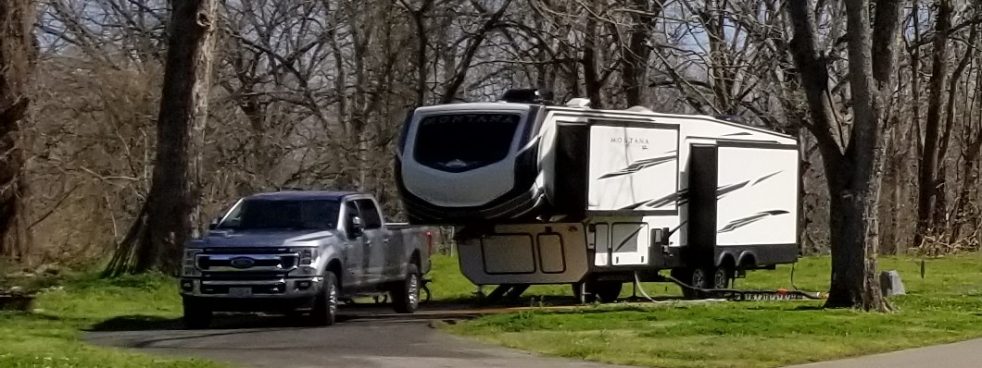
Our last day in Hocking Hills was sunnier, and we enjoyed another very different activity: park golf. If you never heard of this, it is because our RV park has one of only two park golf courses in the United States. The idea originated in Japan and is popular there. The game is a cross between regular golf and croquet. A park golf course fits into a more compact space than a normal golf course.
The golf clubs are heavier, with a chunky wood base. The balls are brightly colored plastic resin, larger than a golf ball.

The cups seemed deeper…or is it our age? We had to to get on our knees to retrieve the ball.
The grass was mowed into three different heights. I could feel the effort of hitting the ball in my arms, especially where the grass was higher. It’s harder than it looks to whack that ball down the fairway, and we were way over par on every hole.

If this was something I could do regularly, I think it would be great exercise. Maybe some pickle ball courts could be replaced with a park golf course? This may be a new wave of the future, and you saw it first right here.
Anyone could play this course, even if they were not staying at the park. The office also had an ice cream counter, so a dish of ice cream afterward was definitely in order.
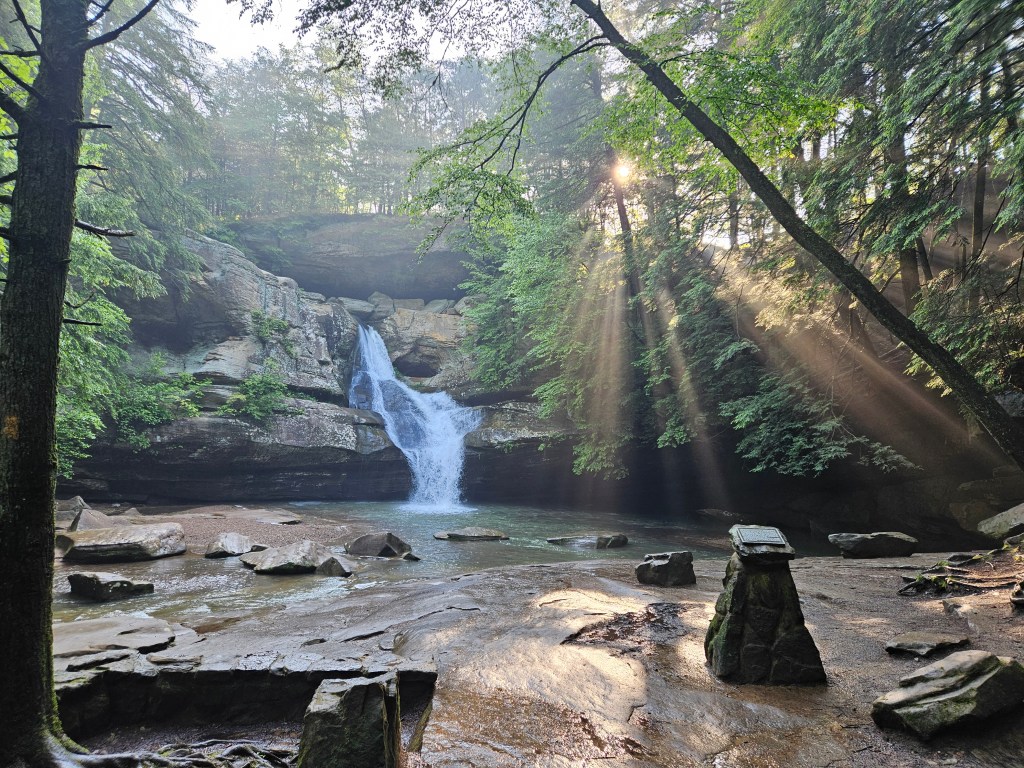
We hiked at Hocking Hills State Park every morning during our stay. There was a staircase climb down to Cedar Falls with its tall cliffs and two waterfalls, one large and one small. Everything was dripping because of the prior day’s rain.
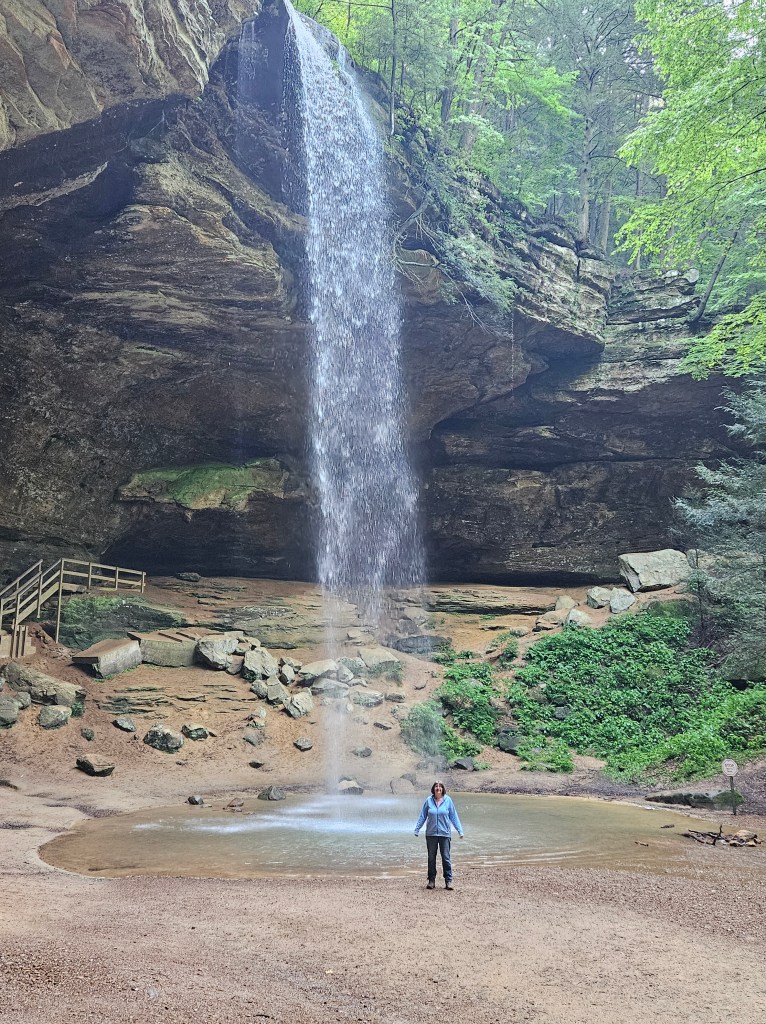
We also drove to the trailhead for Ash Cave, which is partly a handicap trail and paved. It is a large rock overhang, and again owing to the rain, we had a beautiful waterfall.
Our last hike was on the Rock House Trail. Rock House is the only cave in Hocking Hills that is a true cave. It is shaped like a house, hence it’s name. You enter in through the front, and there is a big room to the right and left with “windows”.
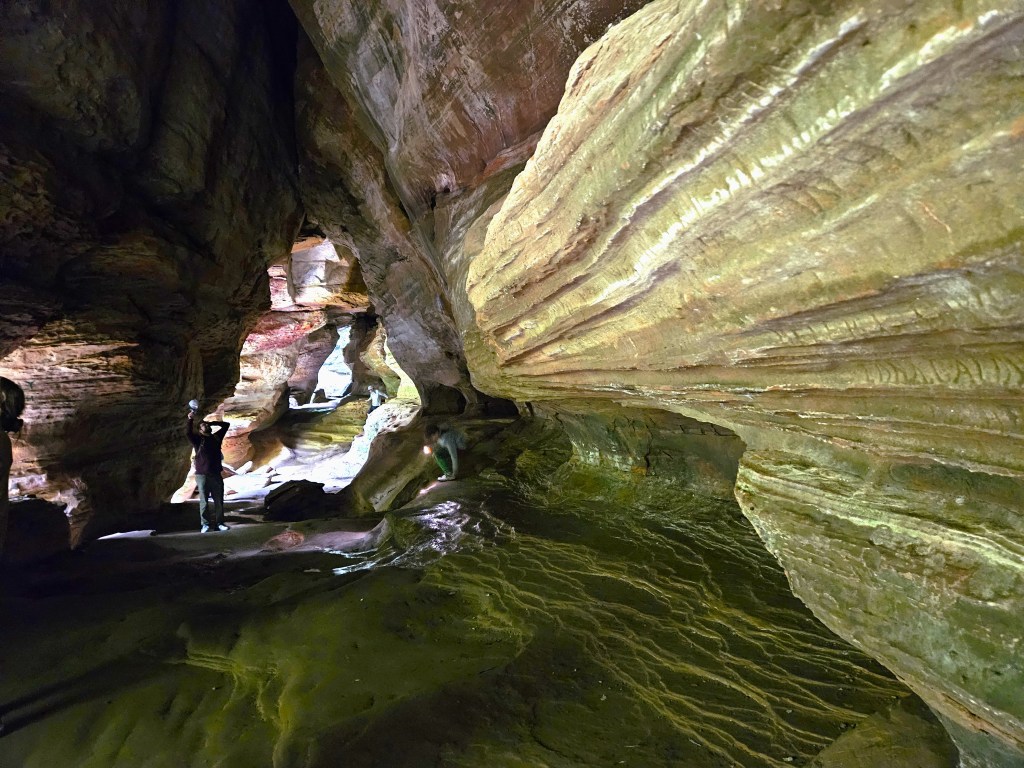
Ash Cave and Cedar Falls are also on the Grandma Gatewood trail, but Rock House is not.
We went to the state visitors center on the morning after the big rain. It was Saturday around 10AM, and that immense parking lot was jam packed. The area around the building and the trails was a hive of activity. We were so glad we had done the bigger hike the day before. In display area of the visitors center, I looked for Emma Gatewood and found her, along with a short biography.
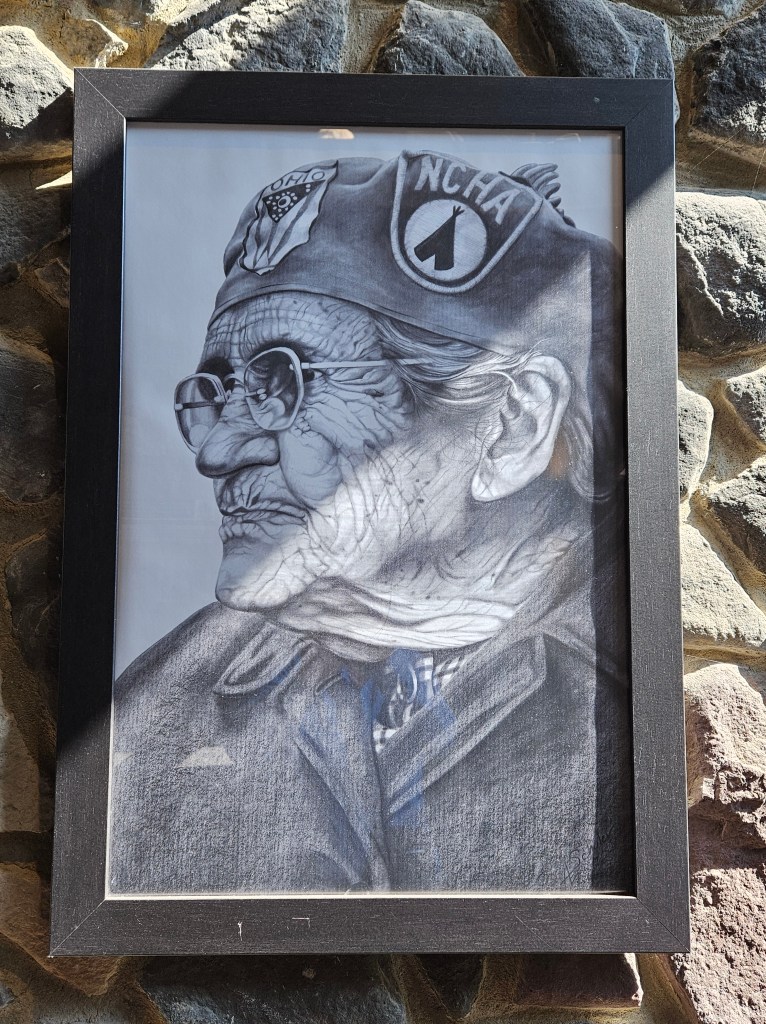
I felt a little wimpy that we hadn’t walked the entire trail in one piece. Climbing around down in the gorge and up through the cliffs is difficult, though, and the distance out-and-back is twelve miles. It’s not a simple walk in the park. I justified our shorter distances with thinking that Emma had had a harder life than I. She gave birth to 11 children, lived with an abusive husband, and had to manage what was not much more than basic subsistence living on a farm for many years. She was a tough lady, and I’ve had a much easier life than she. That’s the story I’m sticking to, anyway.
For all the rest of Grandma Gatewood, you’ll just have to read the book.
On the morning we left Hocking Hills, we walked over to a coffee shop in a converted Airstream trailer just outside our park for coffee and tea. We were finishing up when the owner arrived with more boxes of doughnuts. Seeing us, he came over and gave us a free chocolate long john to share that was crammed with cream, even though we had just shared a muffin. Feeling good about his largesse, sitting and enjoying the start of the morning in the fresh air, I was more than a little sorry to leave the area. I could have stayed longer.
Next time – more magic found in Pennsylvania








 Twosna Travels