Europe · UK and Ireland

Lights, Camera, Action! in the UK – Europe Travels 2022

Have you ever seen a movie or watched a TV series with a setting so beautiful or interesting to you that you really wanted to go see the location where it was filmed? Would you center a vacation around seeing one of these places for yourself?

While traveling around the UK we stumbled on many film locations. At the same time, an associate of Rick Steves by the name of Cameron Hewitt posted about this phenomenon on his Facebook blog. He called it “set jetting” or “location vacation”: people traveling to places solely to experience in person what they have seen on film. For instance, Dubrovnik, Croatia was a town off the tourist radar until Game of Thrones became a hit, and now it is one of Europe’s most-visited cities.

Cameron called his blog post “The Outlander Effect” and he wrote it just after our visit to Scotland. Eight years on from the first episode’s release, you can hardly travel around this country without seeing mentions of Outlander. Tourist shops carry Outlander merchandise, and there are websites and maps which helpfully point out the sites to visit. Tours that we went on highlighted Outlander locations.

I haven’t seen the series but I did read the first two books, enough to know about Claire touching a stone which turns out to be a time portal. She travels from 1945 back to 1743. This was filmed at Clava Cairns. I got caught up in the hype enough to have Cal take this picture of me touching the stone there. I did not find myself transported back to another era.

In the Outlander books/movies, Jamie Fraser is Claire’s love interest. The MacKenzie clan also figures in the story, and I saw the two names together on this burial stone inside the ruins at Beauly Priory. In the books, this is where Claire meets the seer Maisri.

The Battle of Culloden, which I’ve already written about, happened in Outlander also. People put flowers at the stone for the Fraser clan.

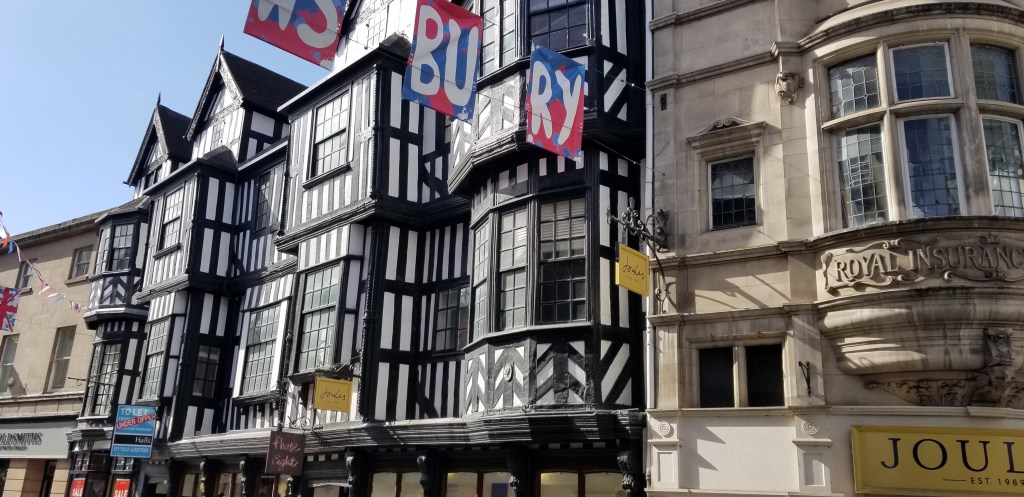
Down to England. When we had a boat ride on the Severn in Shrewsbury, our captain told us that the George C. Scott version of A Christmas Carol was filmed here. The medieval buildings make a perfect backdrop.
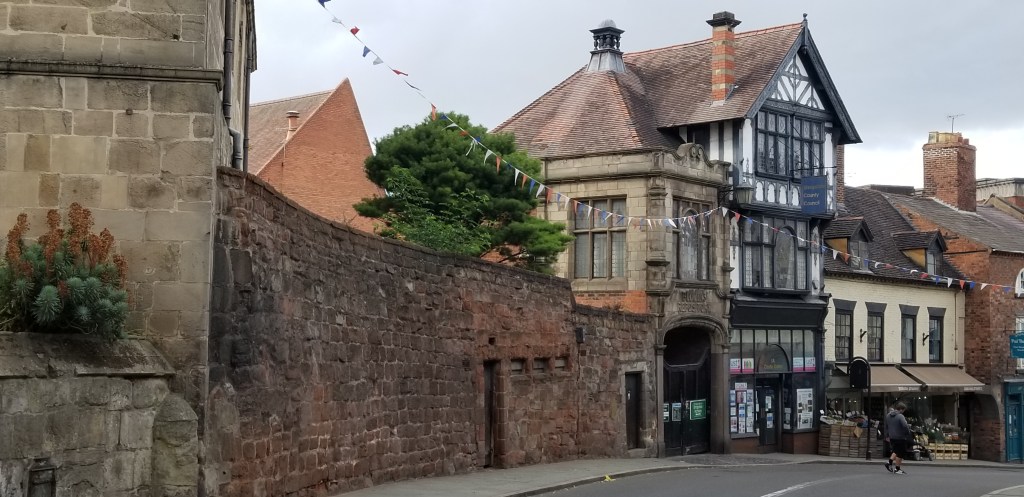
In St. Chad’s cemetery, we found the prop that was left there from the movie:

I admit to being just a little excited about finding it. I can still hear the Ghost of Christmas Future plaintively howling “Scroooooge”! It remains one of my favorite Christmas Carol movies.

Lacock, a little village in the Cotswolds, belongs to the National Trust and people who live there know when they need to clear the streets. This street was used for the filming of the first Downton Abbey movie. If you’ve seen it, just mentally move the cars and the cones out, add a little hay, and you’ll recognize the set.

Lacock has been the setting for many other movies, including three of the Harry Potter series. Lacock Abbey was the setting for several scenes at Hogwarts school, including the hallway inside these arched windows.

We had an abundance of time in tiny Lacock, so we opted to join our tour guide for a short walkabout near the end of our time there to see some movie sites. He showed us the house where Harry Potter’s parents lived before their untimely death.

Our guide offered to take a picture of us in front, and he had a picture of the house in the movie for us to hold. I thought it was slightly cheesy, but we went along with the fun.

Also from Harry Potter, Platform Nine and Three Quarters is where the Hogwarts students board the train in London. It is a tourist attraction at King’s Cross Station in London, and you can have your picture taken in front of it. Almost noon on a holiday weekend was the worst time to visit – there were people in long lines wrapped around ropes and stanchions for the picture. I was not about to invest my London time in line for the privilege, so this is the best I could get. It would have been fun to pretend I was pushing the luggage cart, though.

Speaking of train stations, Paddington Station is where another beloved character can be found. Paddington Bear is memorialized in its namesake place. The beloved children’s story was made into a handful of movies beginning in 2014. We had arrived at Paddington Station from Bath, and then went on a scavenger-hunt-style search for this cute little bear.

Perhaps the most moving spot for me, though, was in Castle Combe in the Cotswolds. Before setting us free to roam in the town, our guide pointed down the street and told us that we would find the location there for the filming of the 1967 movie Doctor Dolittle starring Rex Harrison.

I was a voracious reader as a child and the Doctor Dolittle series of books were among my favorites. Imagine being able to talk to the animals! I read them over and over. I don’t remember if I saw the movie in a theatre, or if it was later shown as a “special” on TV, but I do remember seeing it.

I stopped and looked…this scene was familiar!

In the movie, of course, the street and little dock is larger than life. All of a sudden I was transported back to childhood and I remembered the feeling of wanting to be here. I believe that movies I saw in those days such as Doctor Doolittle, Chitty Chitty Bang Bang, Mary Poppins, Oliver! and others, ignited my desire for travel.

Cameron Hewitt’s conclusion at the end of his blog post, and I agree, was that it’s fantastic if a wish to see a movie location results in travel to a place someone may not otherwise visit. Just visiting movie locations as the sole destination is another thing altogether. It would be like me focusing on the stone that was Claire’s time portal in Outlander and totally ignoring the fact that it is a standing stone for a Bronze Age chamber tomb.

Everyone is different, and has their own style of travel. For me, seeing these sites were the sprinkles on top of the ice cream of our trip. Or the salt and butter on top of the popcorn.

See you at the movies!

Next time: back to the RV’ing life in the US for now.
Europe · UK and Ireland

Higgledy Piggledy Streets in Shrewsbury, England – Europe Travels August 2022

Shrewsbury is likely not the kind of town you would know about if you are trying to decide where to go on a trip to England. And indeed, if you don’t have a lot of time, you probably wouldn’t put it on your list. Tourists are here, yes, but not in droves that we saw elsewhere.

The town lies in Shropshire, in the far west side of England, right next to the border with Wales. It is the setting for a detective series about a 12th century Welsh Benedictine monk who solved crimes in Shrewsbury. Ellis Peters wrote 22 books in the “Brother Cadfael” series. I read all of them, although I enjoyed the earliest books in the series most. A few years back, I looked up what it might be like to visit here, and dismissed it for some reason. Of course, things are not going to look as they did in Cadfael’s day.

But then, a Facebook blogger that I follow called “Florry the Lorry” visited Shrewsbury. The pictures she took of this town are gorgeous. I’m sure that when I commented about a possible future visit here, she replied about the medieval buildings and streets going all “higgledy piggledy”. I can’t find that thread now, but I was ready to go based on her pictures and remarks. Plus, it was right on our path through England.

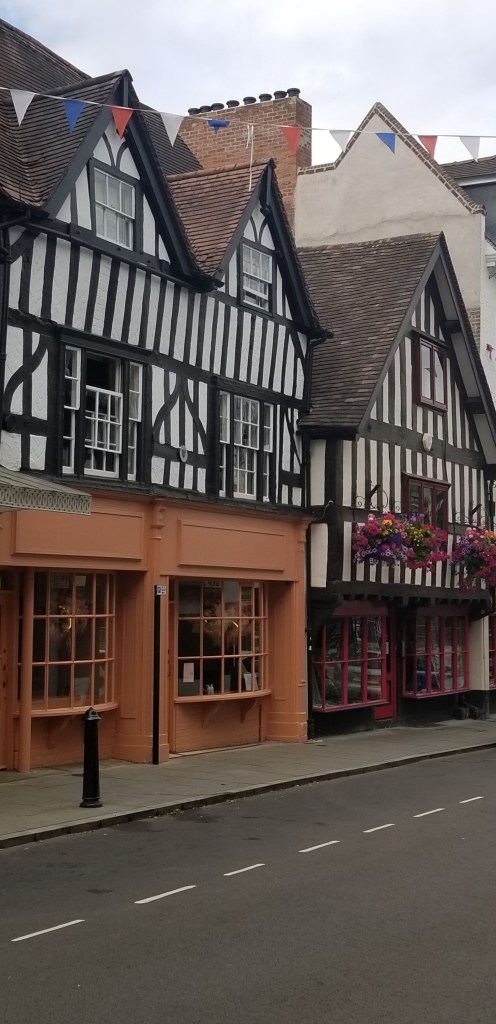
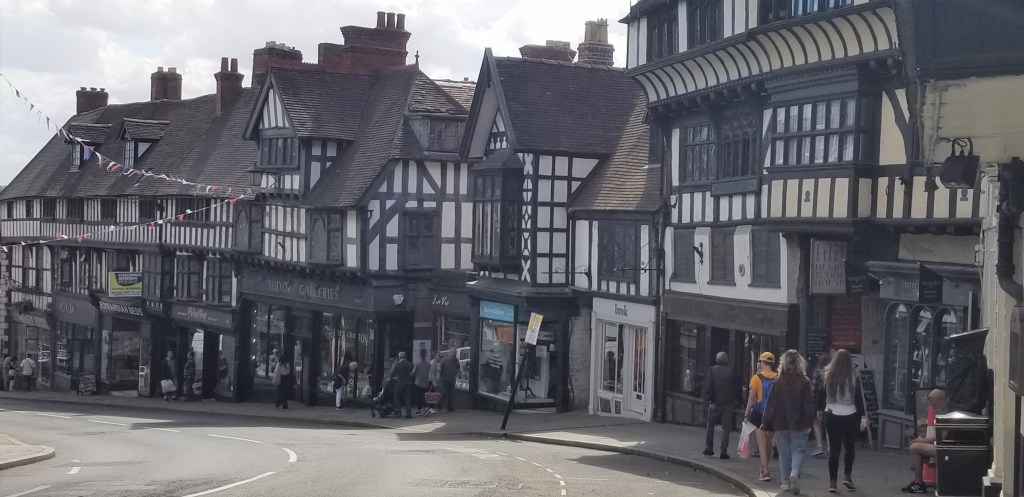
We spent a lot of time in Shrewsbury just wandering about, admiring the crooked buildings, and peering into shop windows.

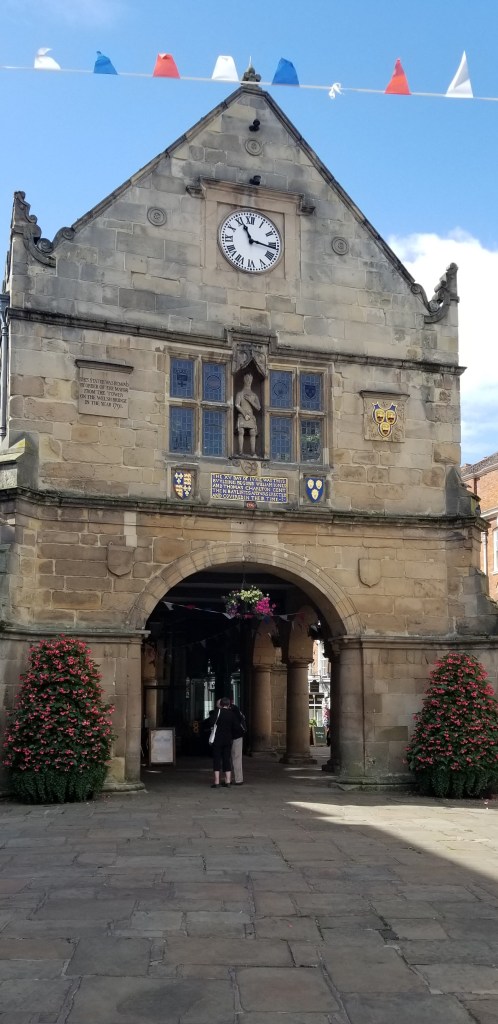
For centuries, Shrewsbury has been a designated “market town” which gives it the right to have a weekly market. It was held here, under the archway and the square:

In the 1960’s the need for a new market was evident. The town built a modern indoor market that retained none of the character of the original, but I’m sure the vendors enjoy being out of the weather. We walked through and I did a wee bit of shopping, as well as to have the requisite tea and cakes. I bought some much needed socks, a foldable tote bag, and – a steal – 3 vintage postcards for forty pence each. We had all the fruits and vegetables that we needed back in our apartment.

Charles Darwin was born in Shrewsbury. There is a statue of him in front of the building where he went to school as a boy. It is now the town library.

There are always so few statues of women that I feel that I should give Mary Webb her due. Her statue was near Charles Darwin’s.

The Shrewsbury places featured in the Brother Cadfael mysteries are Shrewsbury Abbey, the River Severn, and Shrewsbury castle. All of these places still exist…sort of.

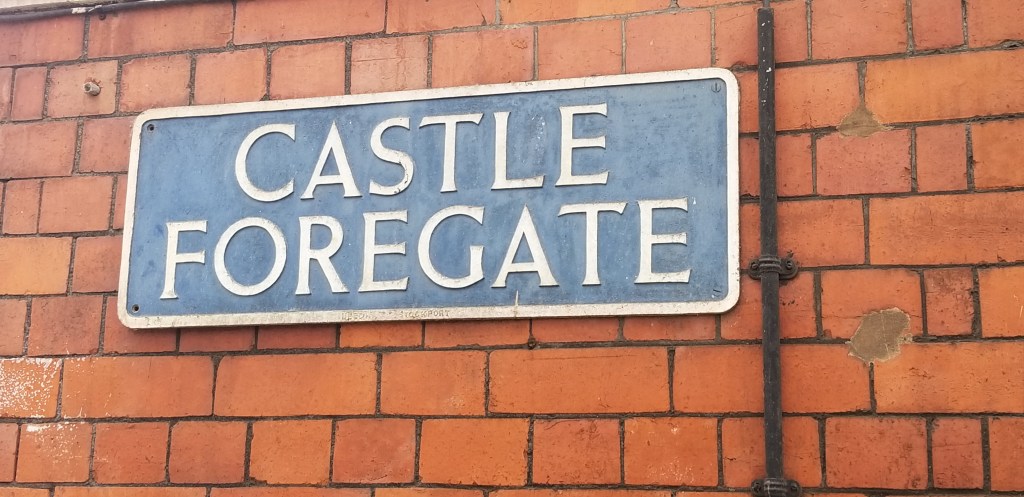
The “Castle Foregate” and the “Abbey Foregate” are two place names often mentioned often in the books. It is simply the roads leading up to the gates of the castle and the abbey, and they are street names used today. It’s interesting to think about how old street names can be in a country that has been inhabited for so long.

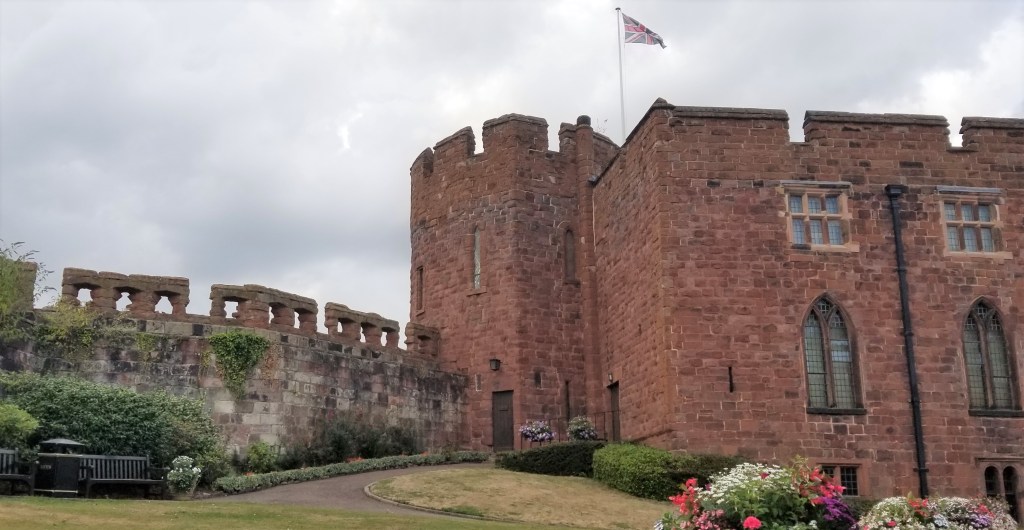
We walked up the foregate to the castle.

The castle contains an armament museum. Looking down into the knights’ hall, I tried to imagine it as it might have looked in the 1100’s without all the displays.

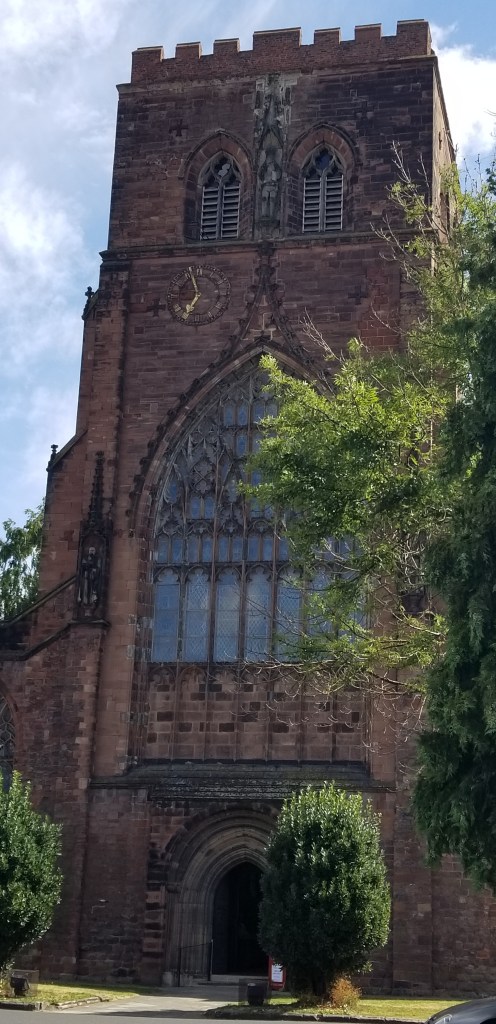
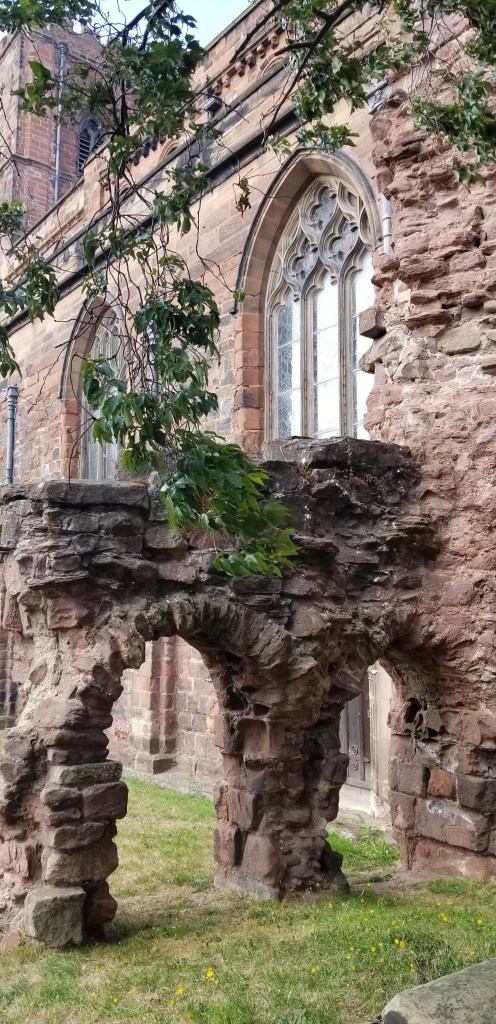
Shrewsbury Abbey, the home of the fictional Brother Cadfael, still exists too. It was founded in 1083. However, King Henry VIII did away with all the monasteries in England and made himself head of the Church of England. The abbey was destroyed in the 1500’s. The church retained its name although there is no abbey and was no longer Catholic after that point. The Romanesque church that was erected in the 11th century still stands, although parts of it have been rebuilt over the years.

A side gate which would have led to the Abbey is all that is left of that:

Inside Shrewsbury Abbey church

One of the stained glass windows paid homage to the Benedectine monks. There are also two statues of the same man laying down, one which depicts the man with a sword and the other shows him wearing a religious robe of some sort. Perhaps this was an inspiration for the books?

The window and artifacts below honor the memory of St. Winifred, a 7th century Welsh saint. The acquisition of her relics surrounds the plot of the first Cadfael book, “A Morbid Taste for Bones”, and is the story which hooked me into the whole series.

The church organ was purchased in 1911. Installation was never totally completed and by the 2000’s it needed some restoration. The update was finished in 2021. There was a surprise treat in store for us: an organ recital by a professor at a nearby college. He performed excellently and now that the organ could be played to its fullest potential, he (literally) pulled out all the stops.

Especially after visiting the church, I was very impressed with all the research Ellis Peters had done with her books. She wove all of her stories in and around the actual places and historical events that were happening in that era.

We crossed the River Severn often in our forays around town.

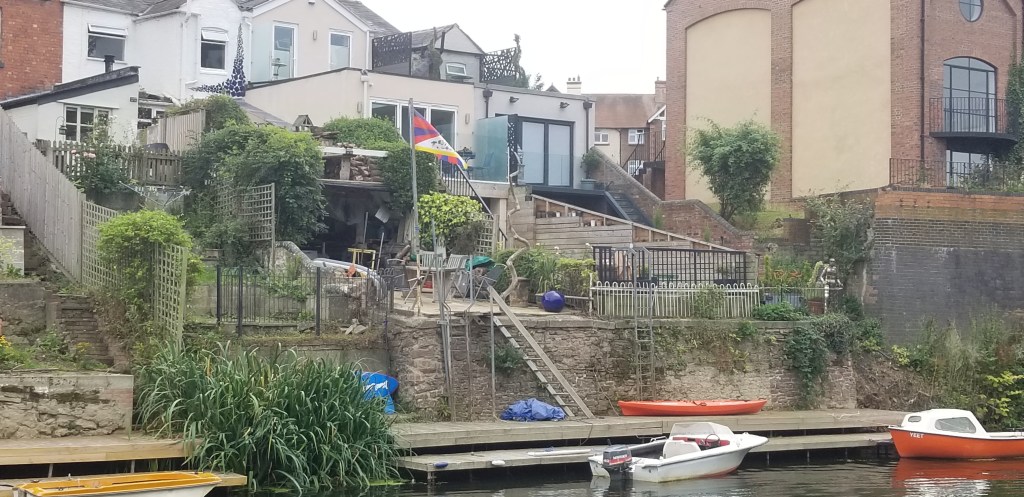
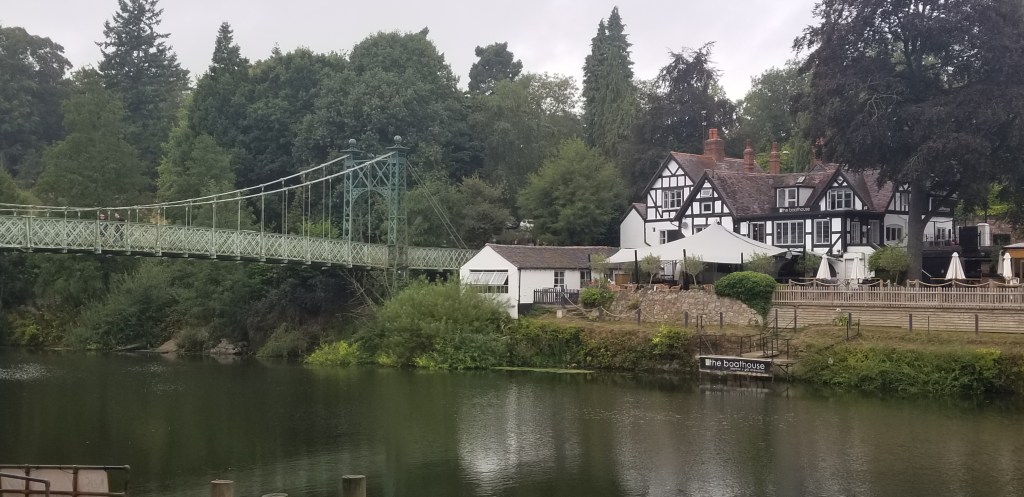
We took a boat ride, too. Although unfortunately we chose a rainy morning to do it, the top of the boat was covered and the rain held off until we were almost done. A spot of tea felt great in the chilly weather! The boat captain helpfully gave us a little Shrewsbury tour as we rode.

From the river, we could see little vignettes of the town that we would not have seen otherwise:

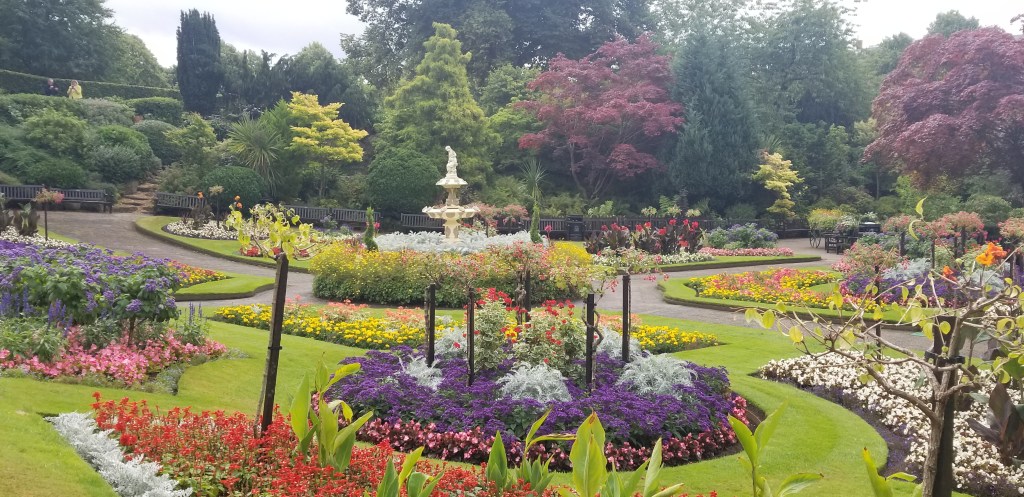
Once off the boat, we visited Quarry Park. An old part of the park called the Dingle dates back to 1879 and contains sunken gardens and a pond. It was the city’s way of dealing with what had been a medieval stone quarry. Charles Darwin used to look for newts and salamanders in the pond. The rainy morning made all the flowers look especially bright. Of course, with the off-and-on rain, we had the place to ourselves.

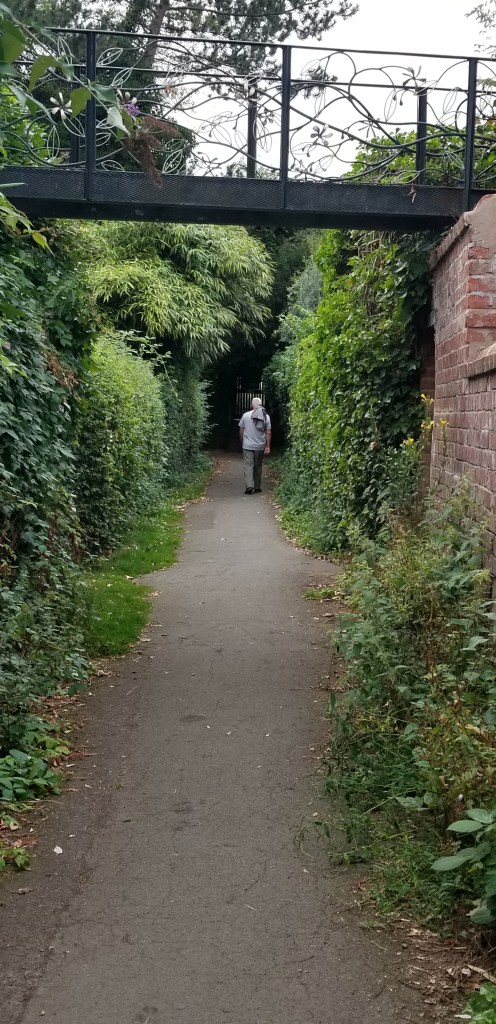
One evening, we headed down the street and saw a footpath called “Pig Trough”. Now, who could resist this? I read somewhere that, in the middle ages, streets would be named after the main enterprises that went on there. Was Pig Trough where everyone kept their pigs? I’ll never know the answer to that, but it will go down as one of our best evening walks. We had no idea where the path was going to go but we followed it all around and eventually it came out farther down the road.

We were in Shrewsbury for a long weekend and that was enough time to see it in a leisurely fashion. I was so very glad that this town had been on our itinerary!

I have been traveling for the past few days. There will be a blog coming up about that and our life in Texas this winter. First, though, I will have one more blog about our Europe trip before I leave it again for a little while.

Next time – we visit Bath, England