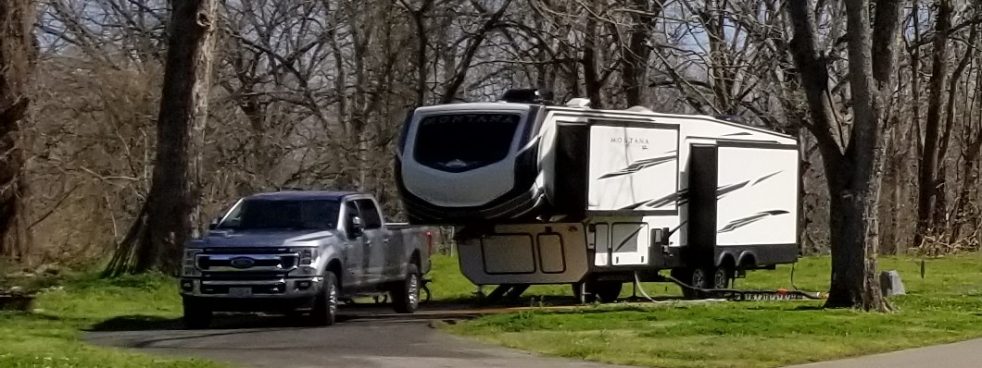
In our continuing futile search for warmer weather, we moved our home just as far as we could go and still stay in the United States – to Yuma, Arizona. If we had gone any further south we would have been in Mexico. Our RV park was only fourteen miles away from the border.
While in Yuma, we had an incredibly interesting and fun day at Castle Dome Ghost Town.

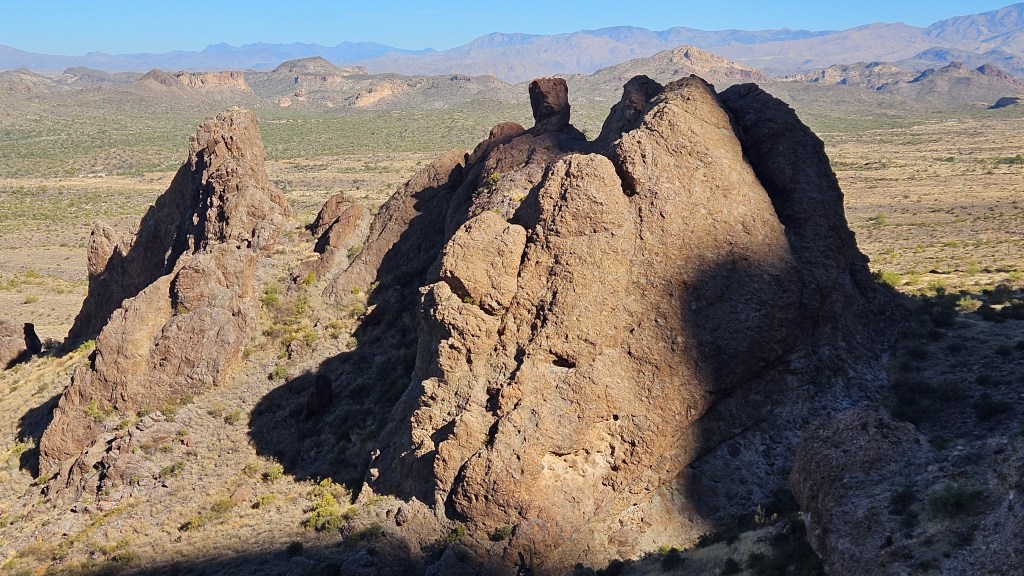
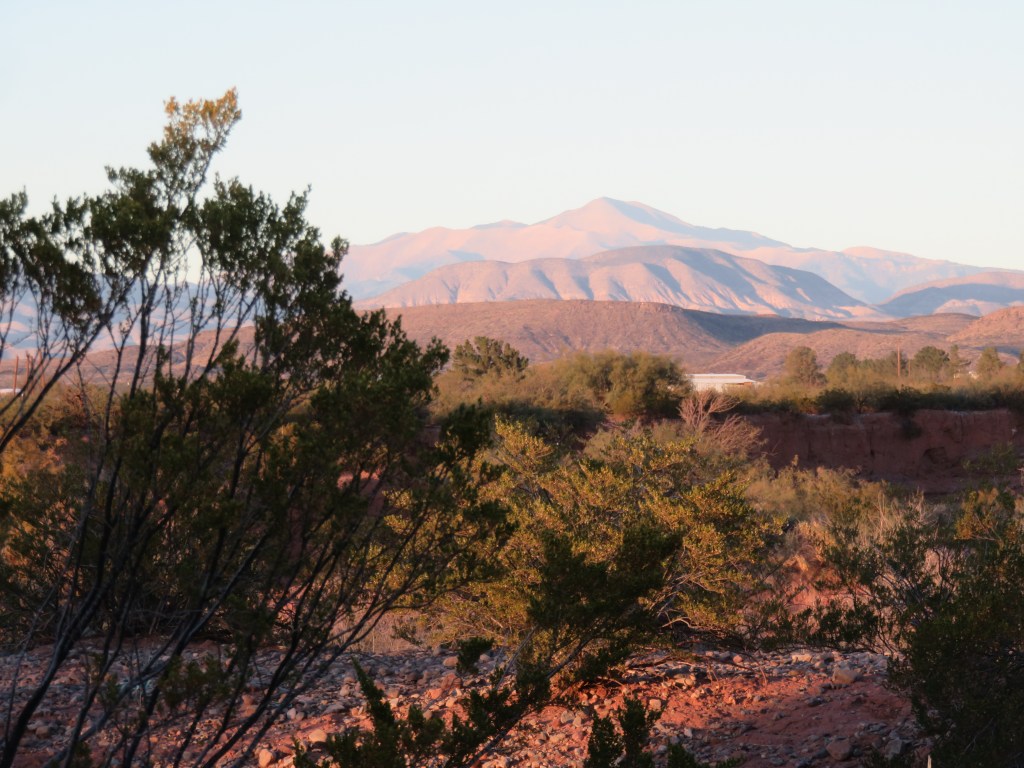
The town takes its name from the mountain range behind it. Castle Dome is the peak that looks a bit like a knob on top of the peak on the left. We could always see it clear back to Yuma. And I say “clear back” because it is a bit of a drive to get here. After the forty mile or so trip, there is a three mile stretch of pavement on the turnoff, and then about seven miles on a rough dirt road through Kofa Wildlife Preserve. A good ghost town is never easy to get to – at least not the ones we have seen.
The actual name of this place, Castle Dome Mine Museum, is owned by a couple by the name of Stephanie and Allan Armstrong. They salvaged original town artifacts from the desert and the surrounding abandoned mines. Around 60 buildings have been resurrected and furnished. What I liked is that everything is open – no peering through dusty windowpanes here – and for the most part there are no display cases or ropes to stand behind.
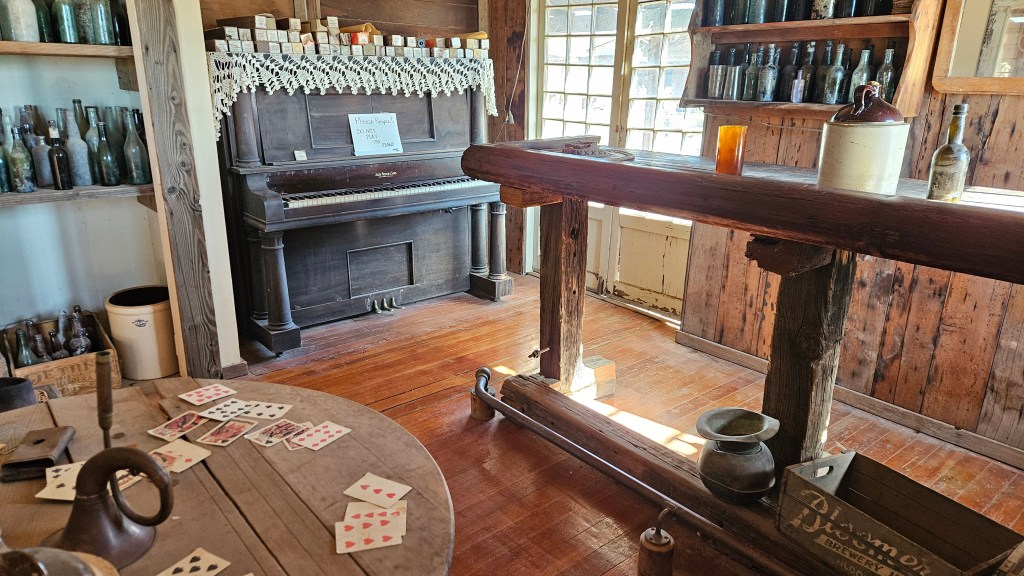
Cal found a bigger saloon to hang out in. This one belonged to the hotel and stagecoach stop. Is that a ghostly apparition in the mirror behind him?

Meanwhile, I tried to work the cash register in the general store.

There were once over three hundred mines here, and this is the longest worked mining district in Arizona. Both silver and lead were mined as late as 1979. Galena was the primary ore and the minerals were extracted from the rock, but when silver prices plummeted the mines finally closed. There are other minerals too, including gold, but the gold mostly played out before the 1900’s. The late 19th century was the heydey of mining in Castle Dome.
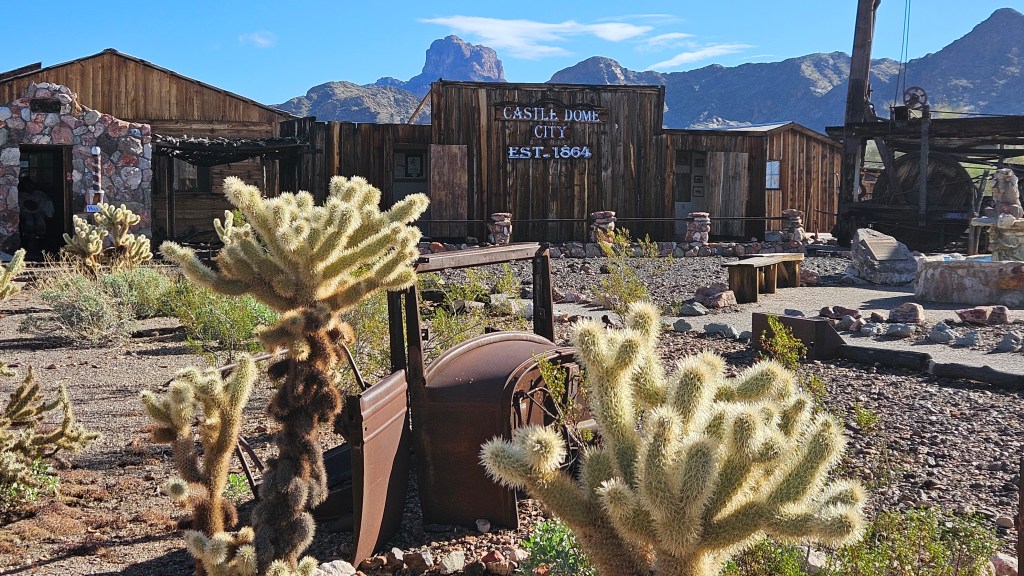
The town of Castle Dome was once larger than Yuma, and its main drag stretched for miles.
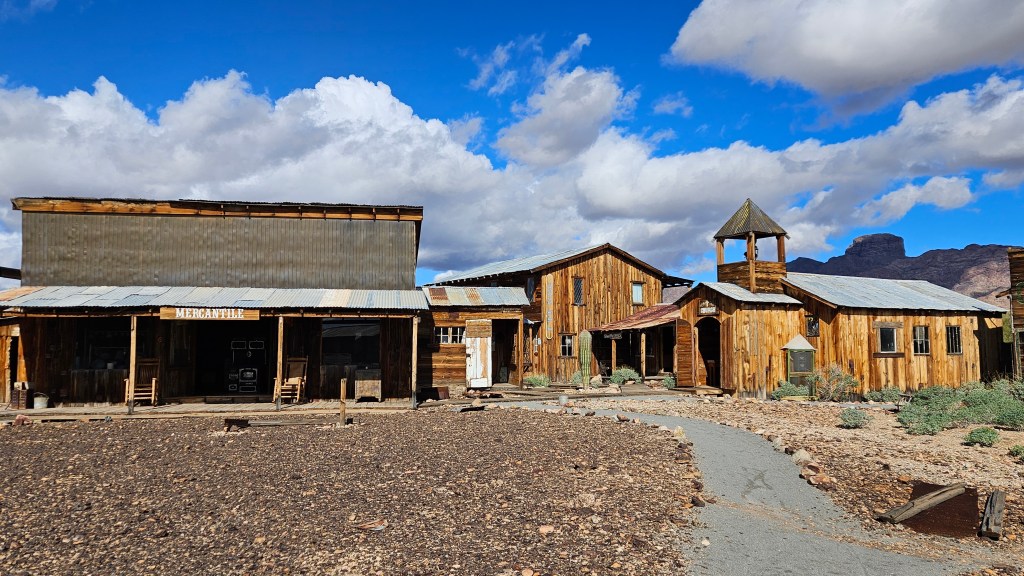

During and after the civil war, people came here in search of a better life. Other people were disillusioned by the California Gold Rush and came back east a bit to stake a claim. They would set up some cactus or tree branches from the desert, throw a blanket over the top, and call it home until their fortunes turned.

There were some areas that are restored back to the eras of the 50’s to the 70’s, since people were living here then, too. But I liked wandering a little further out from the restored town and looking at remains that are still sitting the way they were left.

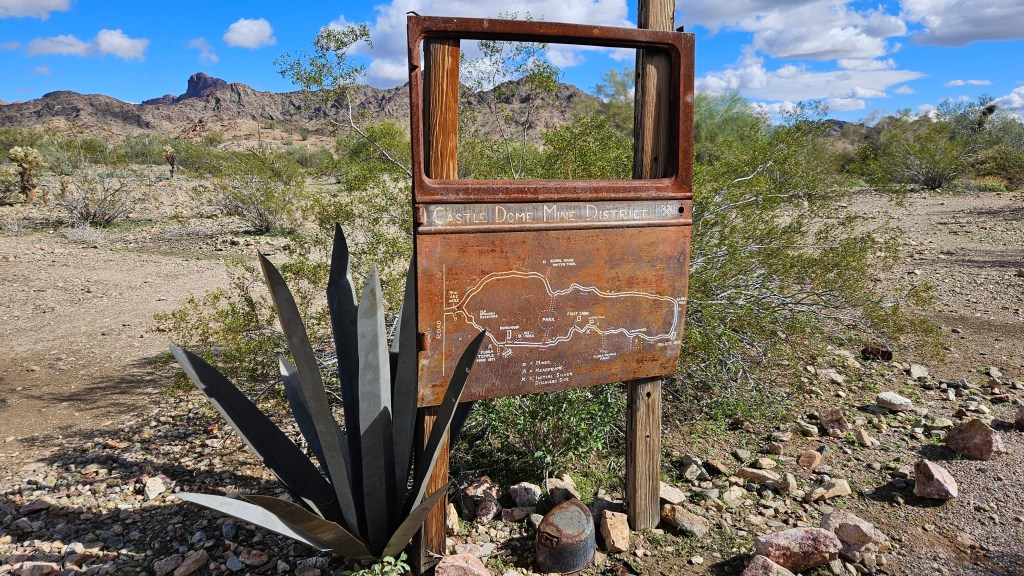
In case the sign is hard to read, this is the encampment of Rita, who came here in 1883 looking for “the right man”. She built the stone steps to her cabin and the rock pillar with which to do her cooking. She always had a pot of beans and cup of coffee at the ready, and all were welcome.

It’s possible to tour one of the mines in Castle Dome. I will admit that, to us, it is outrageously expensive at $70 per head, but we are on the road to see and do all we can. We decided ahead of time that we’d plunk down the money and not look back!
We were in a large golf cart with only three other people plus the guide for the mine tour, and he was a fount of information. And this is where it got a little weird. Turns out Alan, the owner, has come into the treasure of someone who is liquidating their metal sculpture business. It’s not something that is advertised, but they are being set up everywhere out back. In between listening to the bits of information our guide was giving us, there was this to look at:
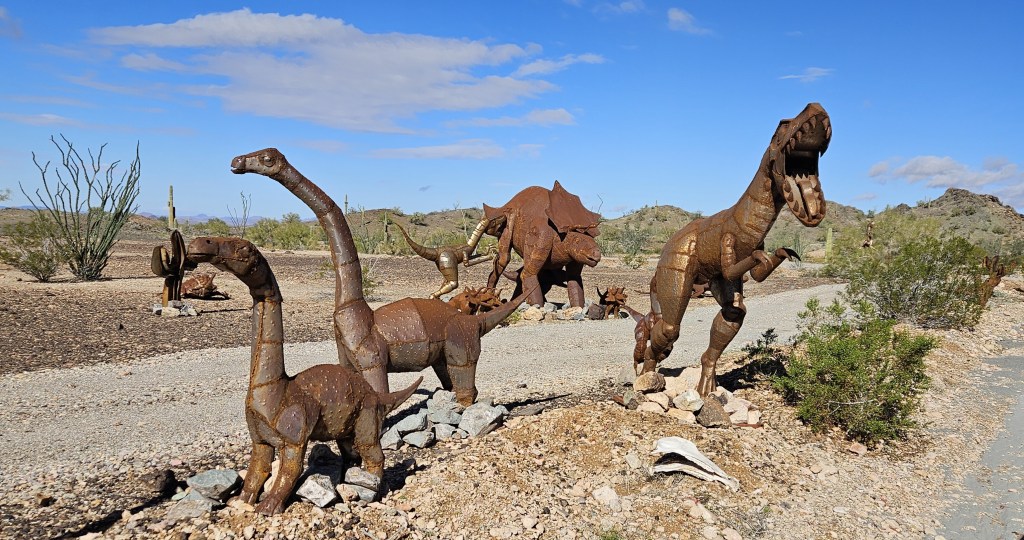
The pre-teen in our group was very impressed. I decided that this would really make the tour fun for kids (or adults) who might need a bit of a diversion from rocks and mining. And to be fair, there is more to the metalwork than just dinosaurs: there are animals and birds of the desert, a miners camp, and other scenes. Another adult in our group took picture after picture of the sculptures, so I guess she enjoyed them too.
We finally arrived at the mine and discussed mining equipment. While our guide was talking, I took a picture of the view. Just ignore the little coyote on the far right. It was impossible to take pictures without these things popping up.

Our golf cart went right into the mine, 100 feet down. We stayed on this level, but there are actually seven levels to the Castle Dome mines, and all mines feed into the main passageways. Out of the seven levels, five are under water. When the mines were in operation, the water was being continually pumped out.

Once down in the mine, we were out of the golf cart.
The mines are no longer in use because prices have dropped and the cost of extraction and production would erase any profit. We looked at this chunk of galena. It contains about 60% lead and 40% silver, and there is fluorite wrapped around it. Its value is estimated at about $5,400, but there would really be no value in processing it.

Our guide highlighted a vein of silver, which shows up more easily with his blue light.
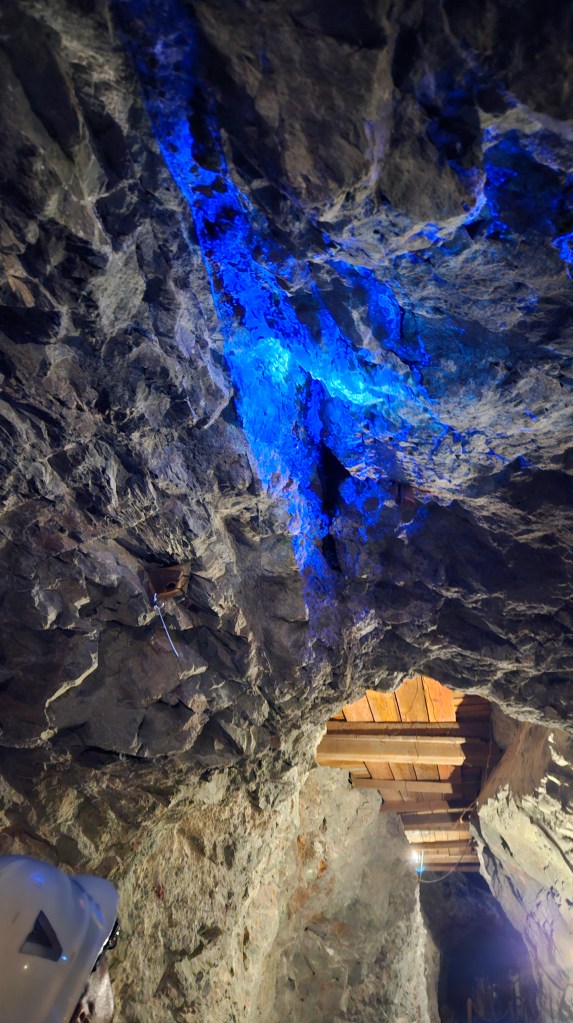
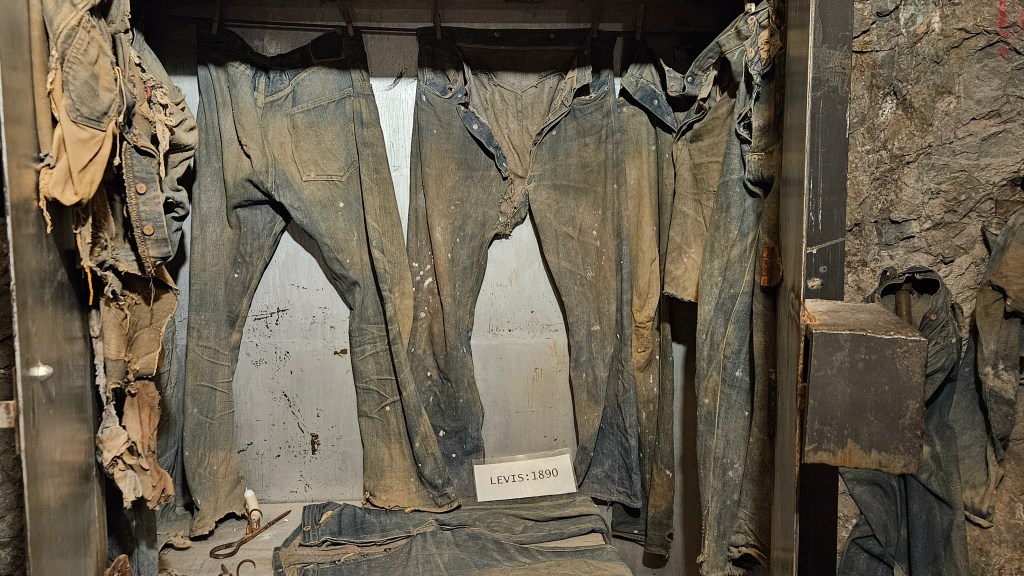
Besides the minerals, there is a treasure trove of items left behind by generations of miners. The climate of the mine preserves them perfectly. Outlaws hid their plunder down here, and there was once a blacksmith shop. Miners wore out their jeans quickly and needed replacements on the job, and many pairs have been found. We looked at some Levi’s that were over a hundred years old:
To us, the thing that made this mine absolutely worth what we paid for the tour was the view we received with the lights off and the high-powered black lights on. The mine is full of fluorescent minerals and these lights cause them to glow.
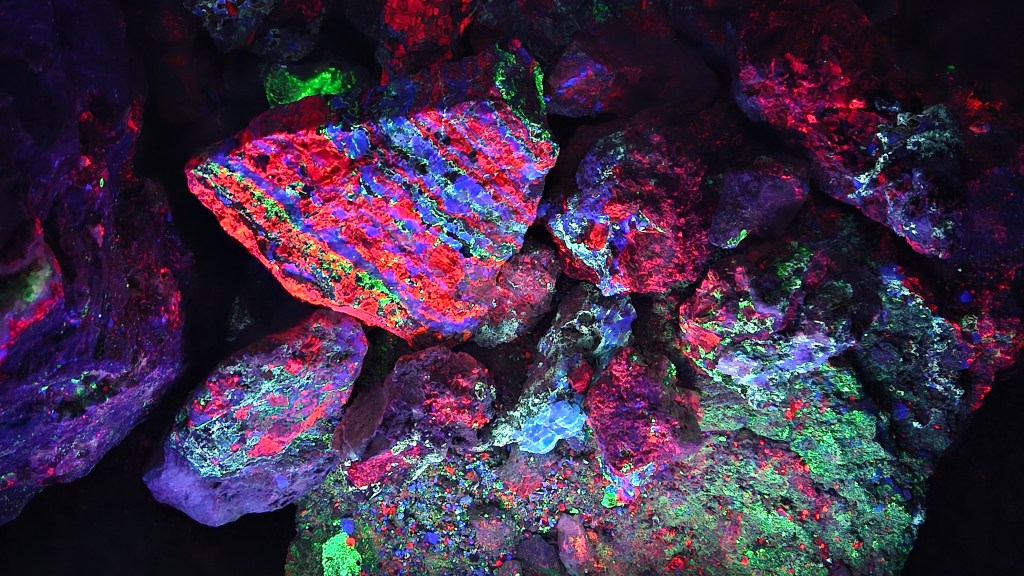
The reds are calcite or halite. Chalcedony, hyalite, or opalite causes the greens. The blues are mostly fluorite, but could also be hydrozinite. It is literally a feast for the eyes, each picture that I took a work of art. With the lights, the mine becomes a wonderland.

When our guide turned the lights off and we entered a totality of darkness, the rocks still glowed. They would continue to do so, he said, for about an hour.

This naturally-occurring “Karaoke Cat” was still glowing after the lights went out.
Our tour was done soon after that, because of course, the phosphorescence was the highlight. The tour lasted an hour and a half.
Inside the mine, our guide had discussed the shifting rocks that are pushing upward under the surface. Mountains were caused eons ago by this shifting rock. We could see the shape of the rocks that come together underground, and once above ground on the way back, could see the effect of those same rocks on the small hill in the picture below. Yes, the one the dinosaur is standing on.
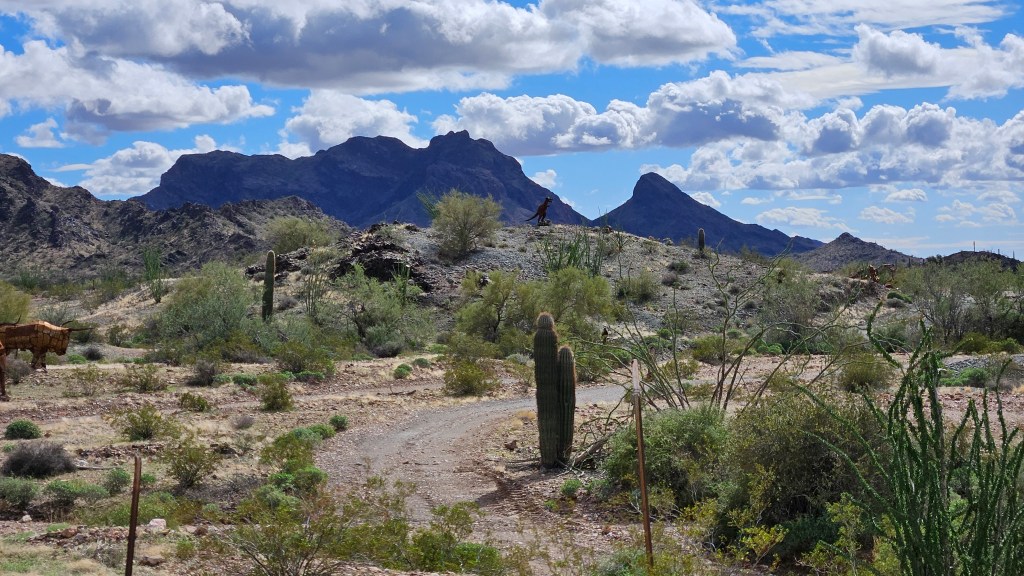
Our guide stopped so we could have a little fun, too. He compared this to one of those tourist places where a picture can be taken with a fake background. Let me assure you, the background here is absolutely the real thing.
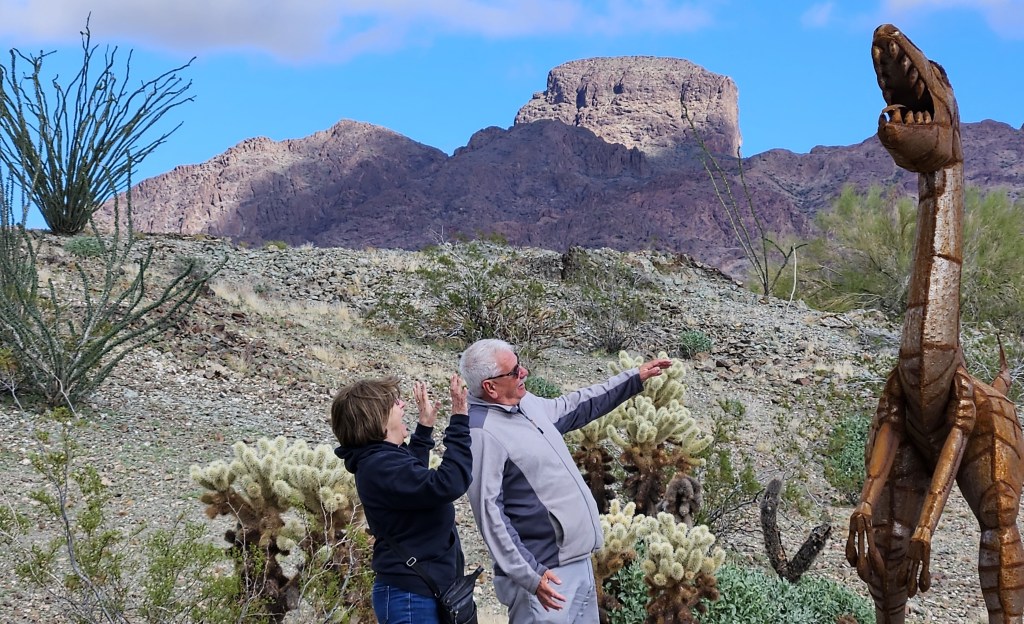
What a time we had here! If I’d loaded up all the pictures I took or enlightened you with all the other things I learned, we’d be here all day. So I’ll stop for now, and maybe do one more post about our stay in Yuma later.
Next time – what’s in your salad bowl?





































































 Twosna Travels