USTravel

Around and Near (but not in) Toledo and Detroit

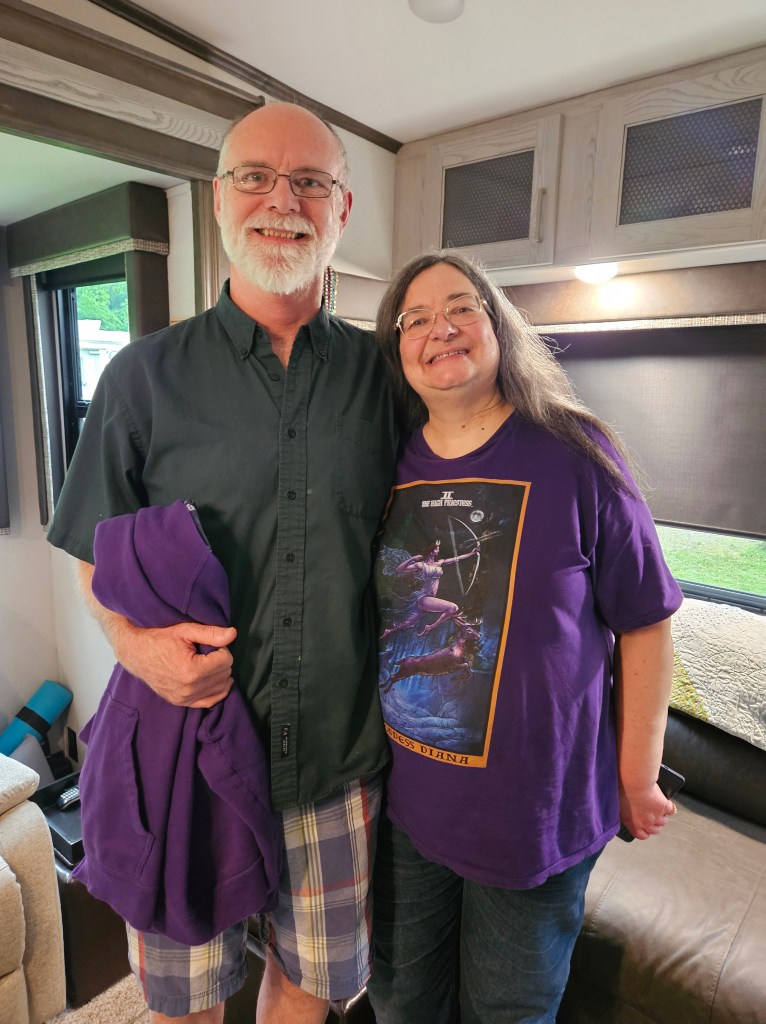
Maumee Bay State Park is a grand place to stay for a few days. Here’s a picture of Cal enjoying the site.

It’s the only picture I took, and it doesn’t show how our site was buffered on the left and right by trees and shrubs for complete privacy. It was always especially fine to come home to this spot after being out.

Maumee Bay is on Lake Erie just east of Toledo. As nice as this spot was, we left it for two nights to visit my brother Marcus and his wife Heidi. They live on the west side of Toledo, in Sylvania on the Ohio-Michigan border.

They have a lovely patio full of beautiful flowers and plants. It’s a great spot to look out and enjoy watching all of the varied birds that stop by their multiple feeders. Can you spot the two tiny yellow finches?

On our first morning at their house, we enjoyed a delicious breakfast on their patio.
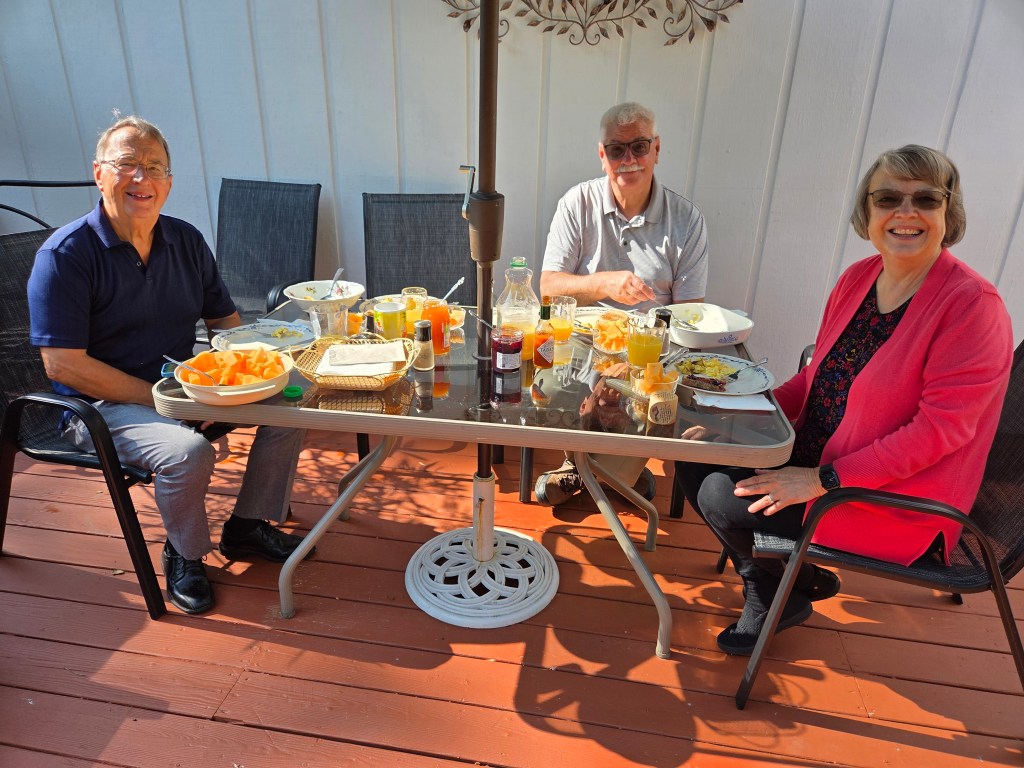
Father’s Day was particularly special with the arrival of their daughter Rebecca, son-in-law Cyril, and their two sons.

They went out of their way to make sure all of the Dads were properly feted with a grilled hamburger cookout, cards and gifts.

All the partying and fun over, we set out to the Detroit suburb of Dearborn, Michigan for a day at Greenfield Village. Henry Ford himself assembled this open-air museum full of the homes, shops and workplaces of famous (and not so famous) Americans.

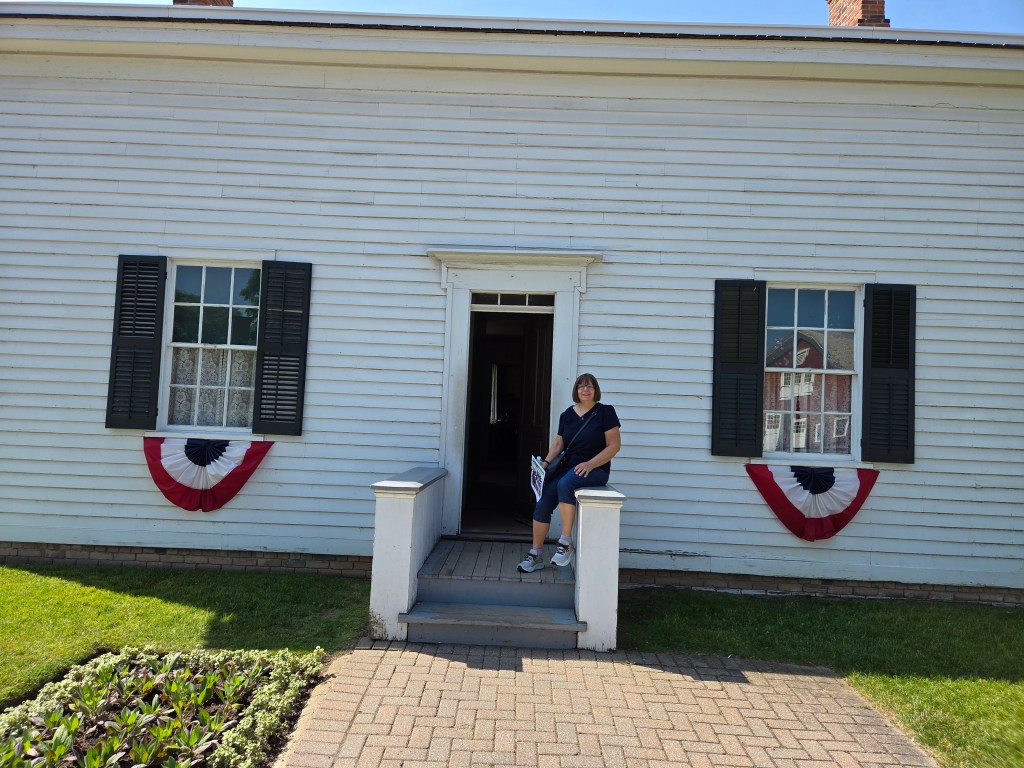
Here I am standing on the porch of the house that Ford grew up in. A road construction project threatened to destroy his birth home in 1919. Rather than see it destroyed, he moved and restored it to the way it looked about the time that his mother passed.
Ford’s inventive beginnings go back to his work on the new idea he had – a “quadricycle” constructed in a shed behind the duplex he and his wife were renting. It was completed in 1896. This shed is reconstructed, with some bricks from the original shed included.
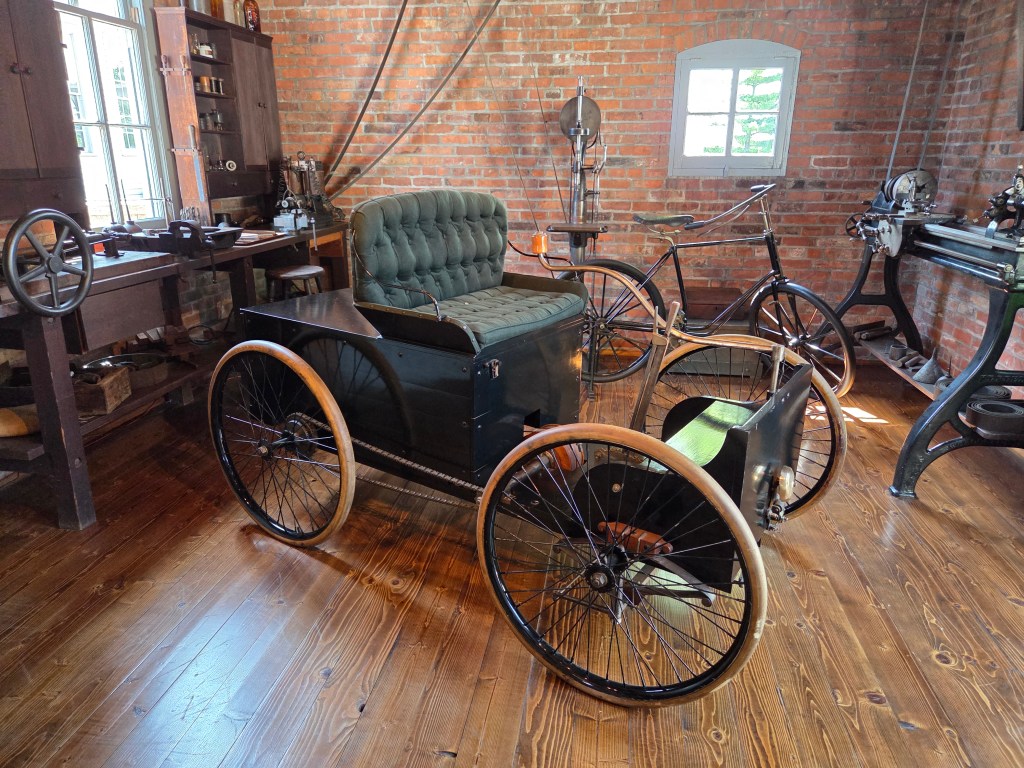
There were two failed attempts at starting a business but finally, in 1903, Ford founded the Ford Motor Company.

When Ford made his money, he began collecting. This idea had its roots in his relocation of his birth house. He liked those things that represented American ingenuity and inventiveness. And so, Orville and Wilbur Wright’s house is here, too, along with their bicycle shop. In the back, they were building their first airplane to be flown at Kitty Hawk.

Ford didn’t stop with the Wright Brothers. A visitor can see a replica of Thomas Edison’s Menlo Park laboratory. The homes of Robert Frost and Luther Burbank and the George W. Carver cabin, slave cabins, and other homes of people I knew and didn’t know have been moved to Greenfield Village. A few are reconstructions. And not just homes and workplaces, but craftsman shops and working farms, too. It takes all day to see the village, and it feels like a step back in time.

Folks can go for a ride in a Ford Model T, and seeing these around town added to the feeling of being in another era, if only for a day.

One of my personal favorites was the Noah Webster home. Webster completed the American Dictionary of the English Language in 1828 while living here.

The book is on display:
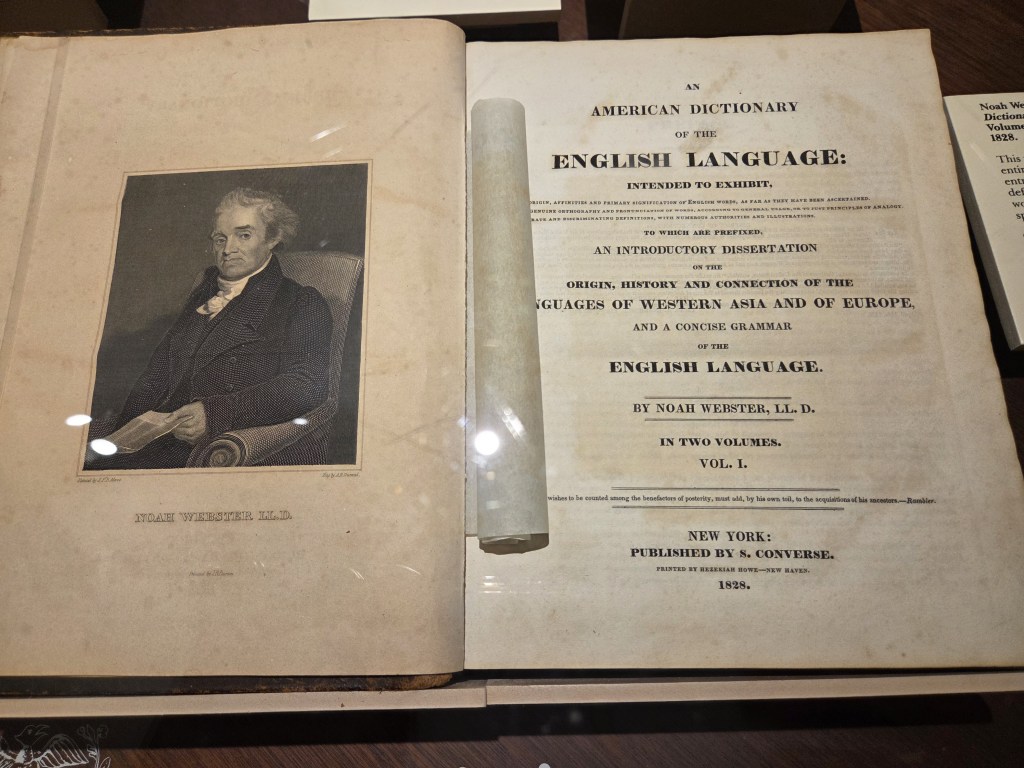
What I did not know before this is that it was Webster himself, by publishing his dictionary, who differentiated American English from British. He is why we have words like “color” instead of “colour”, “theater” instead of “theatre”, “magic” instead of “magick”. He added very American words such as “tomahawk”. There are 70,000 words in it, 12,000 more words in his dictionary than had been in any dictionary to this time. And here’s one for your next trivia night: it was the last dictionary written by one person.

We lunched at Eagle Tavern, the same building that was run by Calvin Wood in the 1850’s. The selections on the menu are from recipes and food that was available in that day. I had dumplings with cooked vegetables and a “cherry effervescent” to drink, which was listed as a “temperance beverage”. We had a lit candle on our table; it was a little dark inside even at lunchtime.

One last favorite of mine to show you is a home and outbuildings from the Cotswold area of England that Ford had dismantled and reconstructed here. It was originally built in the early 1600’s and lived in until the mid 1850’s. The only thing missing for me is the thatched roof and honestly, not all of them had them. I suppose a thatched roof would have required a lot of maintenance.
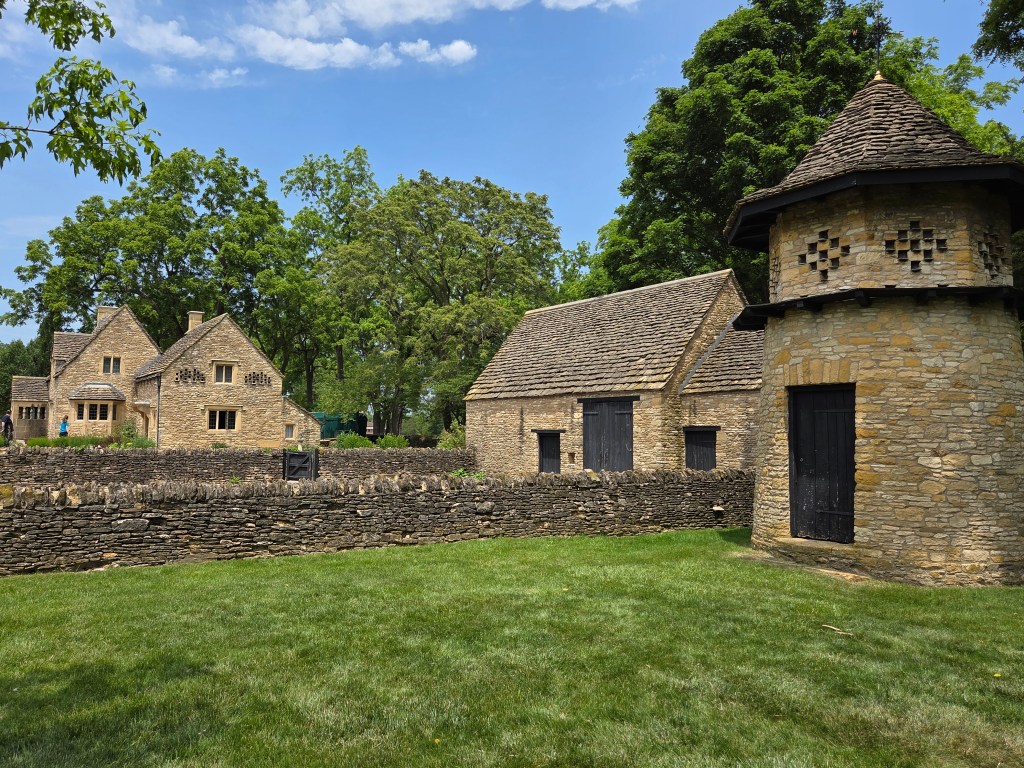
The stone walls are hiding the beautiful flower garden that is also here.

Just outside of Greenfield Village is the Henry Ford Museum, which is a fascinating place in itself. We’ve been there, so we skipped it. We would have had to pass on some of the Village in order to visit all of that in a day.

So, back to our life back in Maumee Bay…

On our first morning, we had errands to run. As we drove up to the Verizon store, we noticed vintage cars coming towards us. Business complete (I got a new phone!), we stepped out and noticed they were still coming. Cal needed a haircut, and I had brought things to do to sit in the truck while I waited. I did not need to do those things, because the parade of cars and pickup trucks kept going the entire time he was in there.

Later, I found out that there were over 200 of them making their way to a car show. The hotels in town had all been full the night before.

We took a bike ride on our last day to explore the park. Just outside of it, we saw an Ohio city sign. I remember these sitting just inside every town when I was growing up, but there aren’t many of them around any more.
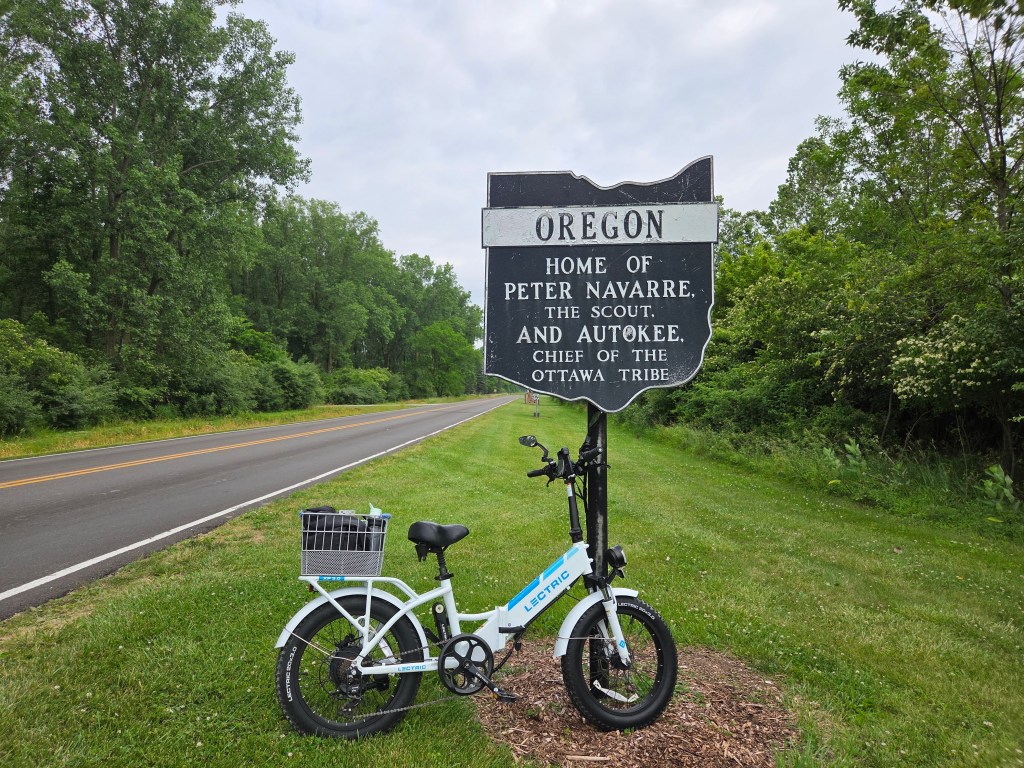
Thanks to Google, I found a little history on the two men noted on the sign. Peter was a noted French settler here and built a cabin in 1807. He He and his brothers saw active duty in the war of 1812, although he was not on the enlistment rolls. He traded with the local Indians and could speak their dialect. Autokee was known for his honesty, friendliness, and for being the last Ottawa chief in the Maumee Valley.

Our bike trail ended at the water where we could see Maumee Bay opening up onto Lake Erie.

We rode past a pretty lighthouse, but it was privately owned so we couldn’t get closer.

And we also rode past two little skunk babies sitting on the edge of the trail. I really wanted to stop and take a picture because they were so cute. I was fairly certain Mama was in the grass nearby, though, so I didn’t stop.

We went back to my brother’s house on our last night in town. His two granddaughters, Eliza and Emilynn, had just flown in from Hawaii, accompanied by their other grandmother Joy. The next day Rebecca and her family were set to leave for France to visit Cyril’s parents. Dinner was a celebration of comings and goings.

Tuna salad for dinner!

Growing up, tuna macaroni salad was something my mother made in the summer time. It may be a midwest throw-back to the 1960’s, but I still enjoy it and make it for Cal and I on our travel days. It’s nice to have something just to pull out of the refrigerator and eat. I was delighted that Marcus and Heidi enjoy this dish too, as well as their whole family, and they made it for supper. Heidi even made a smaller dish without onions, just for me!

Next time – a day in northwest Indiana
USTravel

Back to Ohio – Cleveland and Cuyahoga

It’s only a 58 mile drive from Lake Pymatuning, PA to Streetsboro, OH. That was one of our shorter moves. While moving day was full of sunshine and warmth, the next day was full of rain. We were here for many reasons, one of them being Cuyahoga National Park. A visitor center is always a good place to start, so we headed out in the pouring rain to Boston Mill Visitor Center.

This national park is distinct in that it sits in an urban area between the cities of Cleveland and Akron. It’s long and narrow, running north to south. I was surprised to hear that the park turned 50 recently. Gerald Ford signed it into existence in 1974 as a National Recreation Area. It only became a national park in 2000.

I did not think the person behind the desk was all that helpful. I had heard that you can put your bikes on a train that runs through the park, but I discovered that the train is a separate concession. She pushed a train schedule at me, and a map of the route, but I couldn’t take either one with me. I took pictures of them and we figured out a plan on our own.

Two days later, when the rain was finally finished, we were at the Brecksville Station. On the park map, it is shown as “Station Road Bridge”, and nearby is the Brecksville Nature Center. We waited hopefully with our bikes…and waited…no train. I finally did what I should’ve done in the beginning, and looked it up online. That’s what everyone really wants you to do in 2025. The train doesn’t run on Tuesdays, the very day we were there.

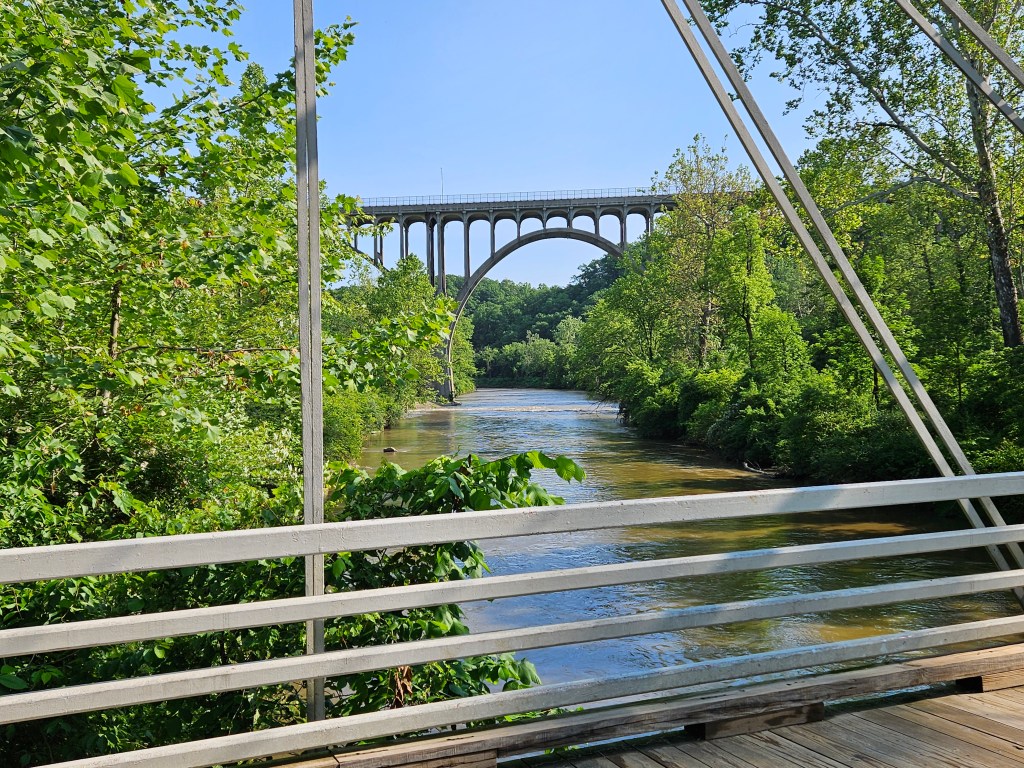
No worries, we rode on the Ohio-Erie Canal towpath nearby and although we were a shade disappointed that the bikes didn’t get to ride a train, we had a great bike ride. First, we had to cross the 100-mile Cuyahoga River, the centerpiece of the park.

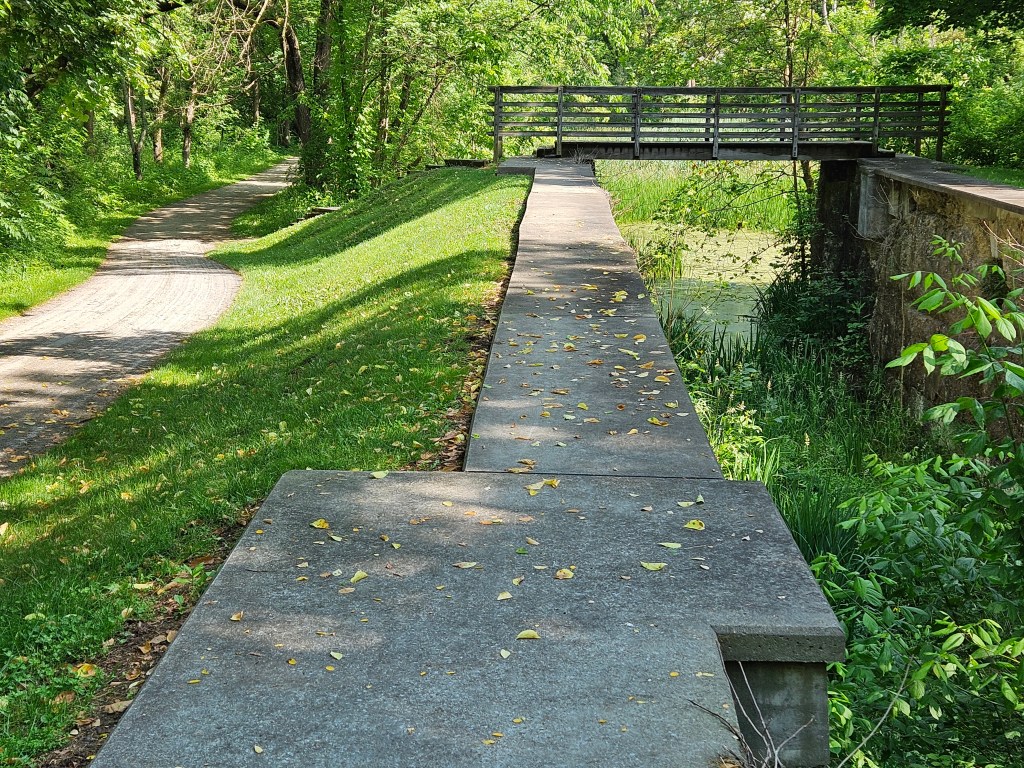
After we crossed the bridge, we swung southward, and the old canal was on our left. The bike trail goes along the old tow path. Signboards told us what we were seeing, which necessitated a lot of stops. The theme of the board on this particular stop is that nature is slowly reclaiming the canal. Sometimes it is totally grown over, and sometimes there is still water in it.

The canal was constructed during the 1820’s and 30’s, and saw heavy usage right away. It carried freight traffic until 1861, when railroads were built. Until 1913, it was a source of water for nearby towns and industries. It began a slow decline in the late 1800’s, and then the flood of 1913 happened. The canal was mostly wiped out. This must have been a huge flood. I first learned about it when we had been in Dayton. There, a whole museum building in Carillon Park was dedicated to the flood and its aftermath in that city.

The signboards told of industry activity on the canal, families growing up nearby and using the canal for skating in the winter, portions where there was danger from thieves and bandits. Settlements such as Boston and Peninsula became flourishing towns.

A part of the National Park area in Boston, Ohio

Riding the towpath is an enjoyable way to experience the park.

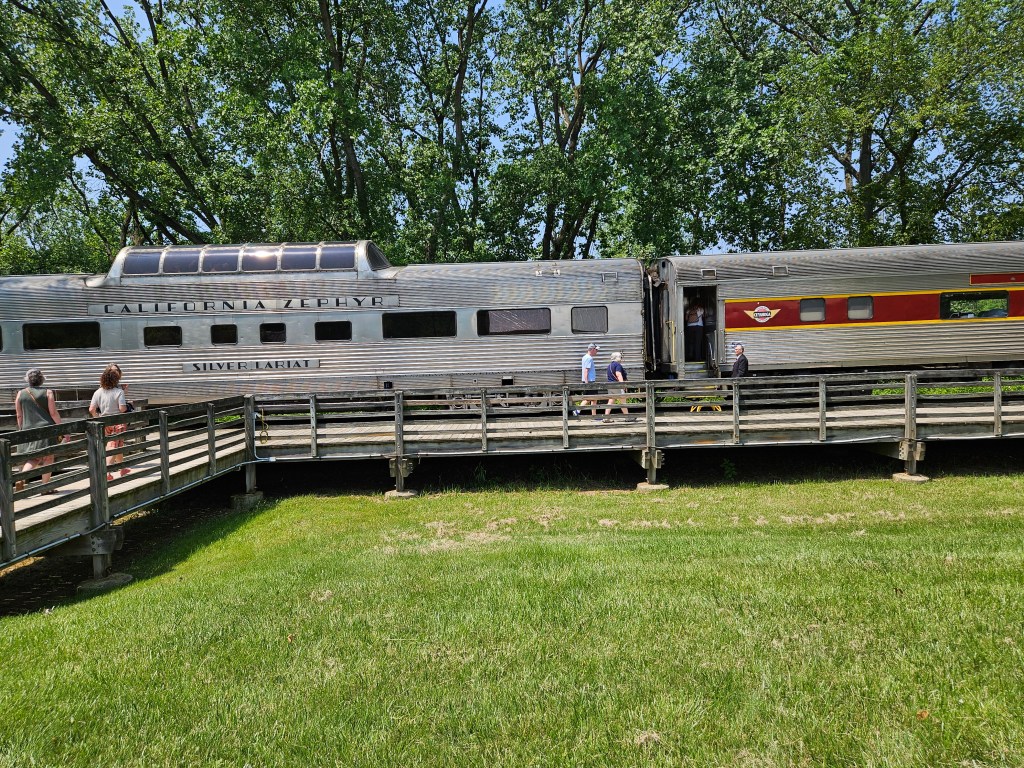
We returned the next day to ride the train. This is not just a cute little excursion train. It is a full size antique passenger train cobbled together from old train cars from across the United States. This is an old resurrected California Zephyr observation car that ran between 1949 and 1970. It had been put behind a passenger train of unknown-to-me origin.

Our seats were in one of the “coach” cars that you see on the right of the picture above. We explored the train–ok, I admit, we were looking for the concession car– and walked through first-class cars that had been lovingly restored to the glamour of the 50’s and 60’s. We rode the train to its northern terminus at Rockside, and then back down to where our truck was sitting in Peninsula. If we’d had our bikes, the porters would have put them in the baggage car and taken them down again for us.

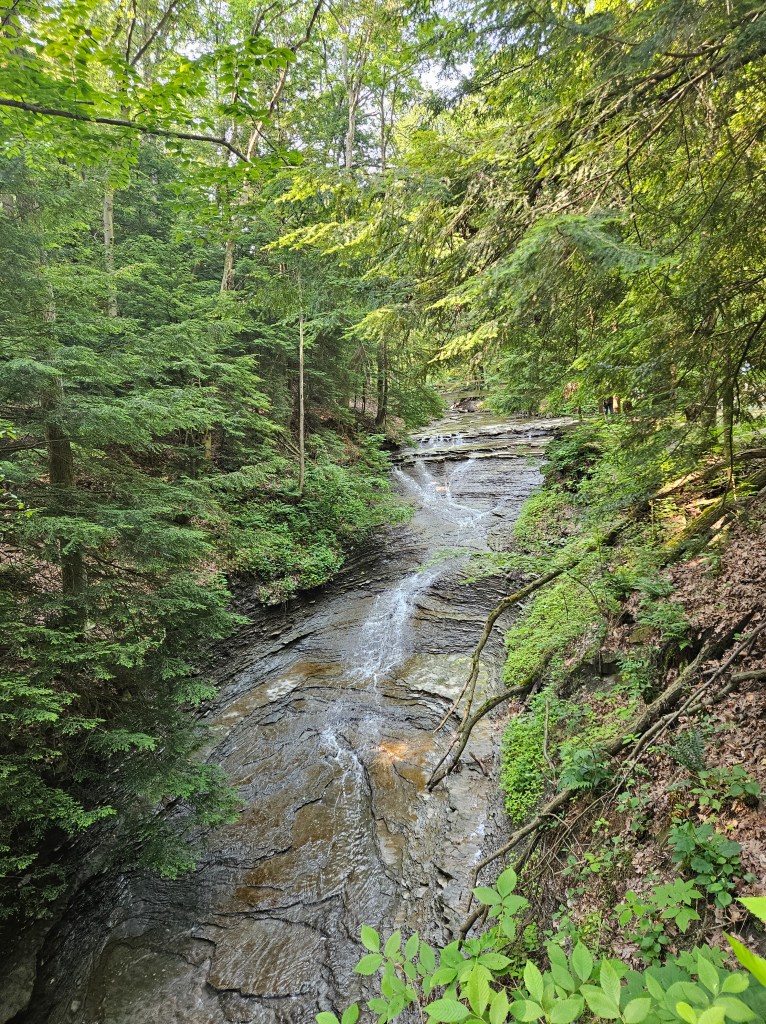
Before riding the train, we explored a couple of Cuyahoga Valley’s waterfalls. Driving through the park and trying to find things isn’t the easiest thing to do. The park’s boundries go in and out of suburbia and also Cleveland Metroparks, and signage isn’t always the best. We couldn’t find Great Falls of Tinker’s Creek, and spoke with another tourist at Bridal Veil Falls who couldn’t find it either. But Bridal Veil was beautiful.

At Tinkers Creek Gorge overlook, the full beauty of the national park is in view.

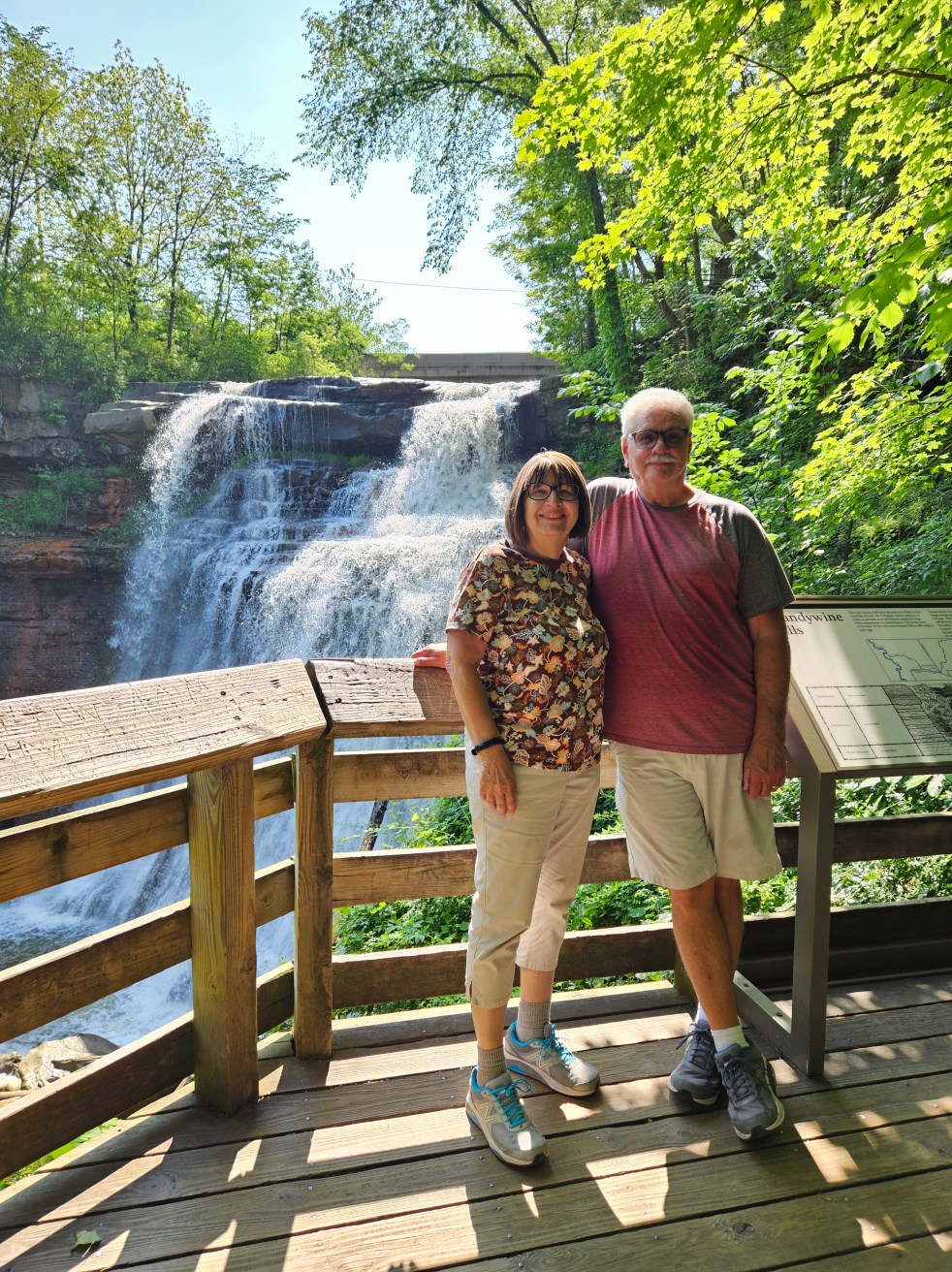
Brandywine Falls is the showpiece of the park.

I mentioned at the beginning that we’d had two full-on days of rain. On the first rainy afternoon, we had visitors.

Kevin and Diana arrived with Lithuanian kugelis, which is a potato and egg “pudding” – like an egg dish – and roses from their garden.
Diana and I were classmates when I lived in the Cleveland suburb of Euclid. We went to school together from grades one through four, and were pen pals for many years after I moved away. Now, though, we communicate by texting. She and Kevin drove from their home in Fairport Harbor just to see us. The rainy afternoon flew by and we ended up having the kugelis for supper.

Aren’t the roses beautiful? They really brightened up our RV for a few days. Even the two tiny buds bloomed.

I’ve seen Diana off and on through the years we’ve been friends, but mostly in our younger days. Whenever we do get together, though, it always feels like yesterday since I’ve seen her. There is always so much to catch up on.
We were a bit torn on what to do during the next rainy day, but in the end we drove up to Cleveland to visit the Rock and Roll Hall of Fame. This was a fun stop!
Exhibits took us through the genre’s history, from before we were born and when we were children. Music blared and most of it was songs we’d remembered and liked. Original music, costumes, and other memorabilia were highlighted for many artists.

There was sheet music and boots from Carole King and Bob Dylan’s harmonica. Guitars from Earth, Wind and Fire and the Doobie Brothers. A couple of Cher’s and Rod Stewart’s costumes, and the list goes on.

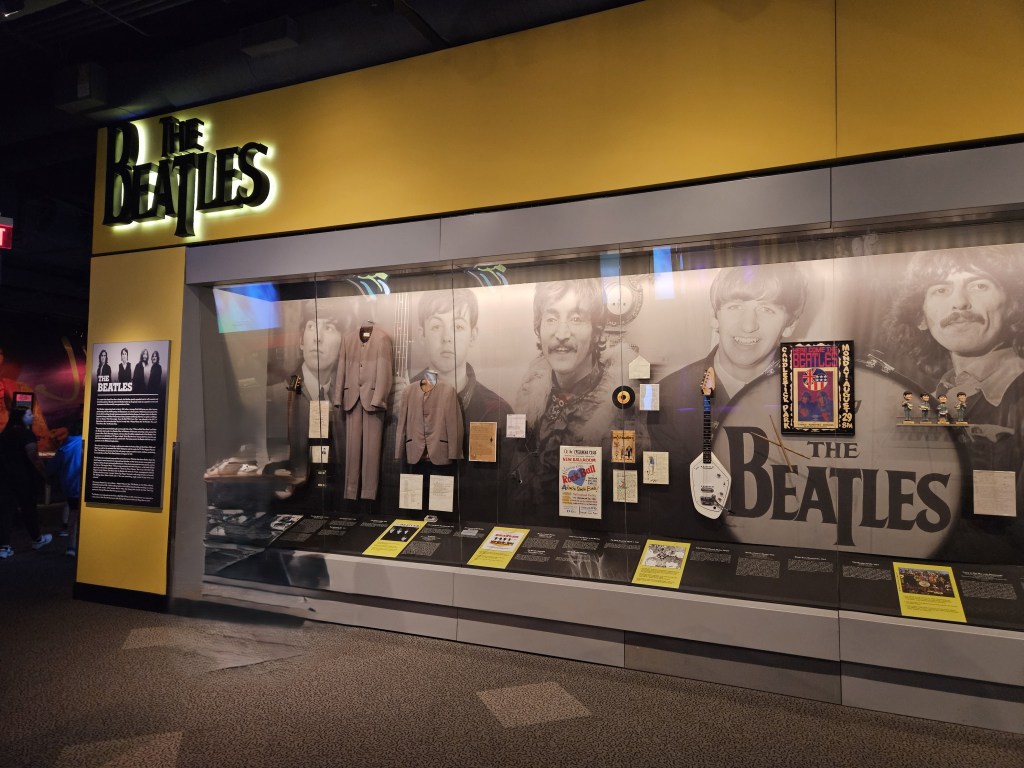
There is a whole room dedicated to the Beatles.

It’s a little bit funny to think Elton wore these things.

Pink Floyd’s “The Wall” was a favorite of Cal’s back in the day. The Wall actually exists and it is here.

In the early era of rock and roll, those in authority were sure that the music was leading teenagers down the path of destruction. I liked what John Lennon had to say about it.

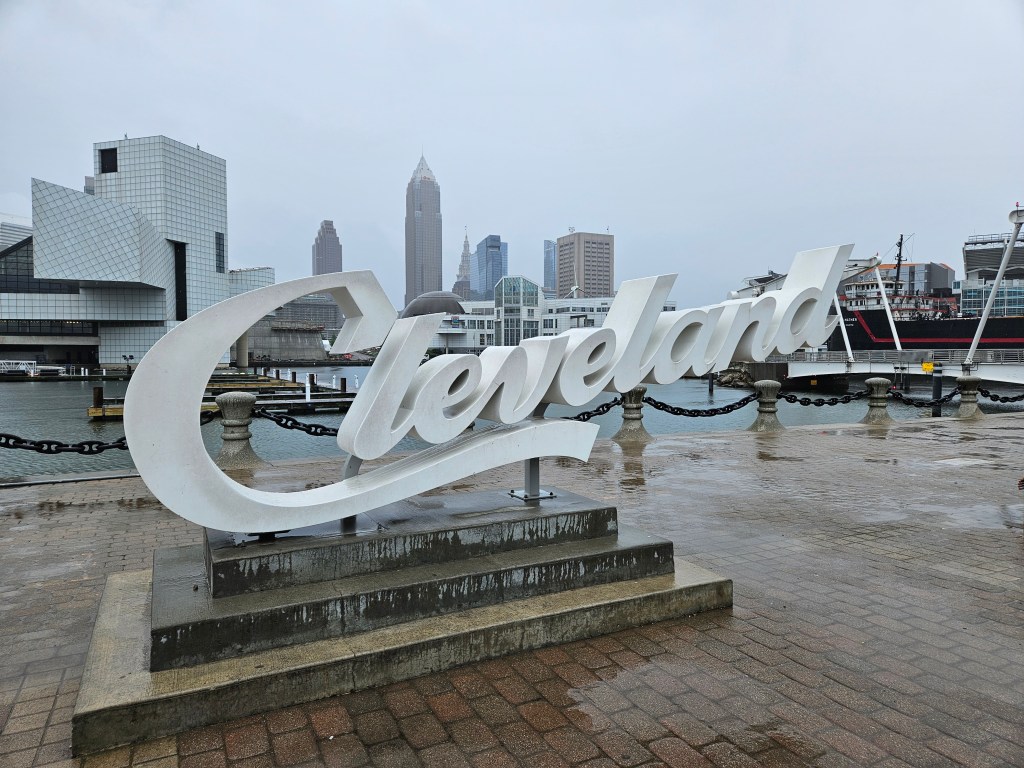
The heart of rock and roll is still beating…in Cleveland.

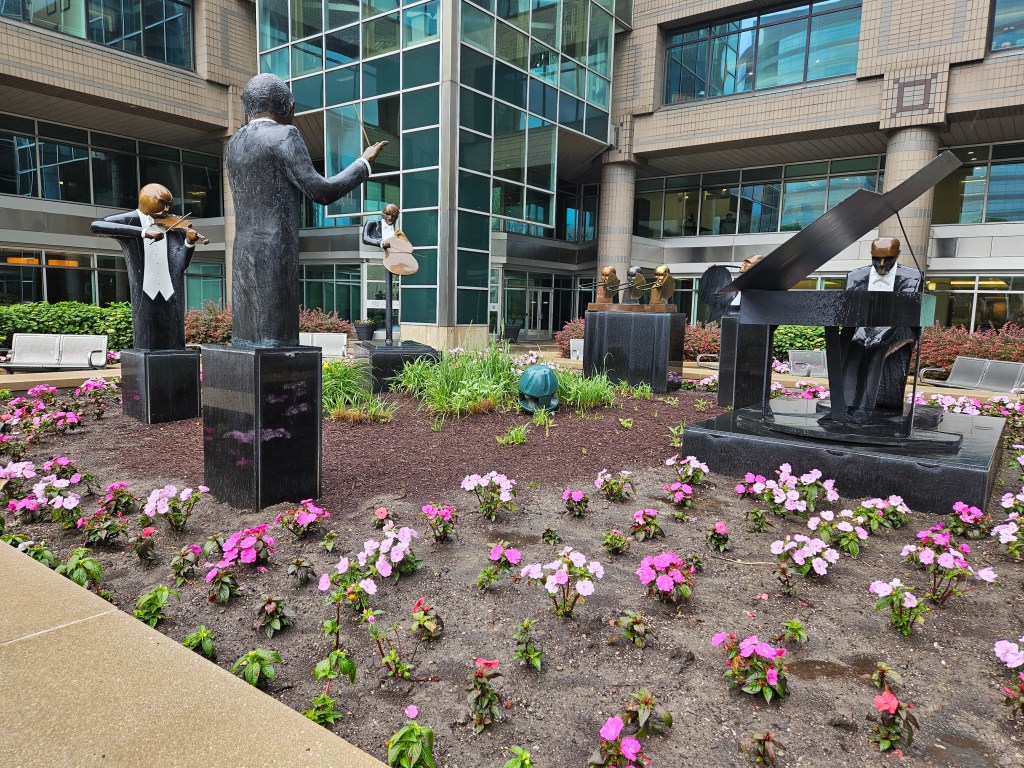
As we stepped out of the museum, the rain was letting up, and we decided to walk into downtown Cleveland for lunch. The Winking Lizard had the best salad I have had in a long time. They called it the Blueberry Salad, but there was more fruit in it than just blueberries, plus feta cheese, and sliced steak that came out sizzling hot. So delicious! On the way to the restaurant, an orchestra was playing:

For several years of my early elementary-school childhood, I lived on Lake Erie, and its beaches were my playground. Because of that, I feel a particular affinity to this lake. We walked up to it after lunch, but by then, we were back to full rainshowers.

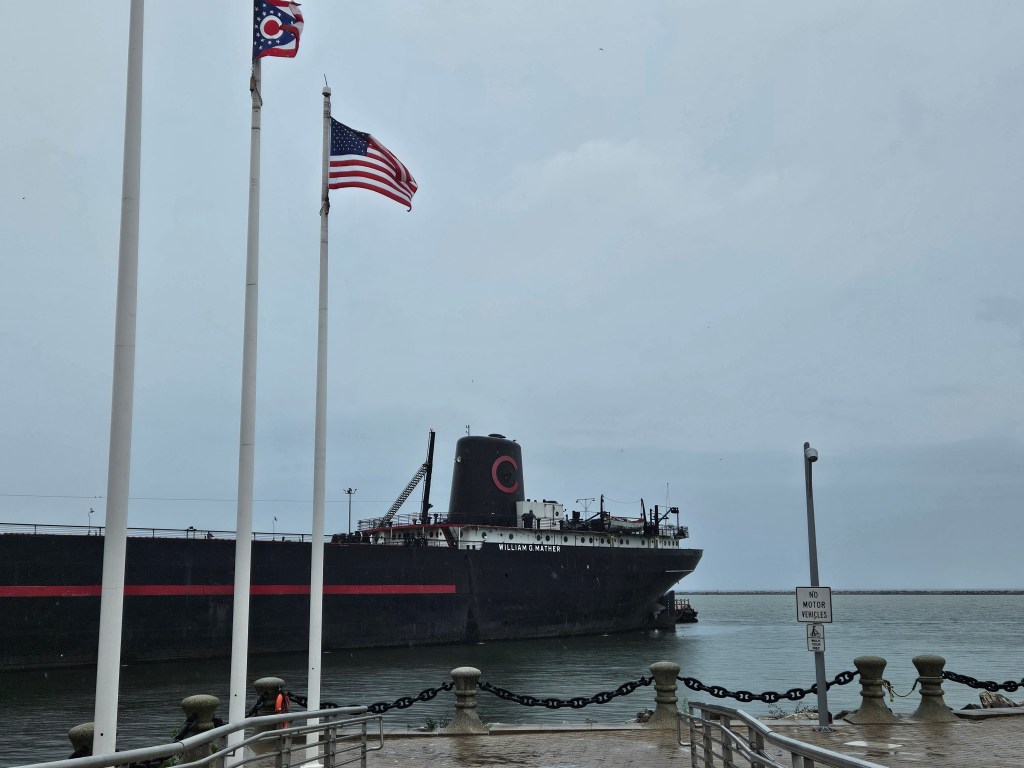
The William Mather is Cleveland’s Great Lakes museum ship

Goodbye, Cleveland. Perhaps we’ll return on a sunnier day.

Next time – a bi-state visit

Uncategorized

Stories of Western Pennsylvania Travels

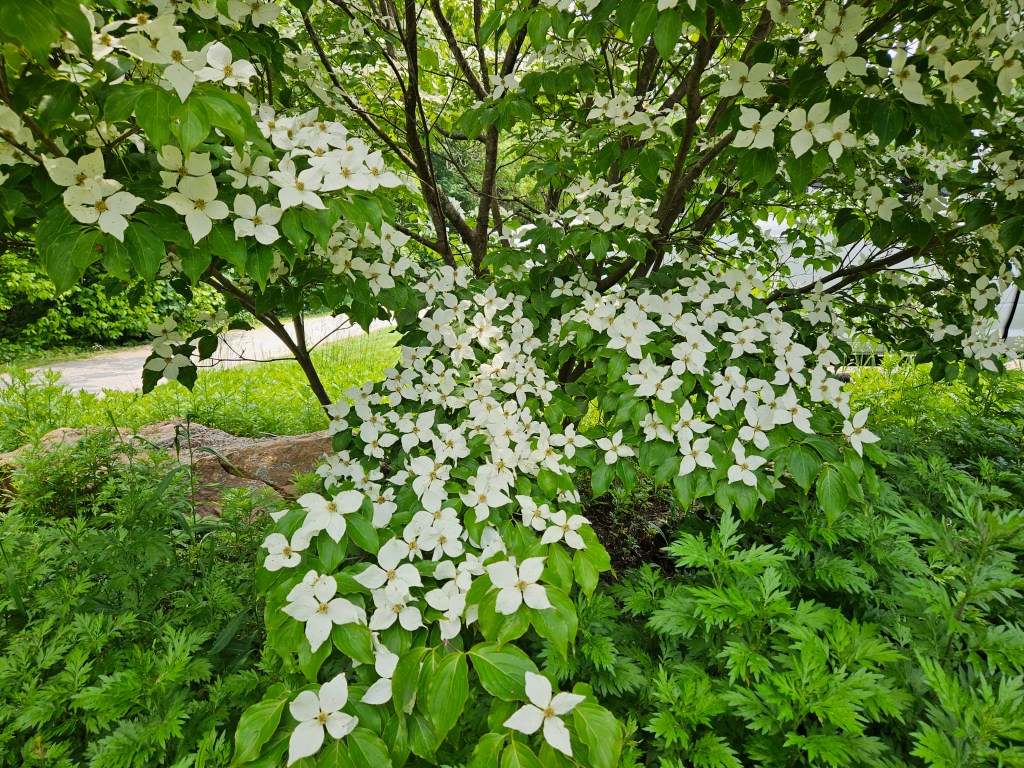
A dogwood in full bloom – Ohiopyle, Pennsylvania

If you think about a battlefield in Pennsylvania, I’m sure Gettysburg comes to mind. But no, we were still near Ohiopyle, a hundred and fifty miles away to the west.

Cal wanted to get the oil changed in the truck, so on his way in to Farmington he dropped me off at Ft. Necessity National Battlefield. I wanted to get my National Park book stamped, but I also wanted to see what it was about.

I spent some time in the Visitors Center, boning up on my American history. There is a short video to watch, too. Here’s the information I gleaned: this site was the catalyst of the French-Indian-British wars that would last for about 7 years. Before the American Revolution ever started, there were trade disputes with the French to the north, British to the south, and Indians stuck in between.

In May of 1754 a group of British soldiers, led by none other than a young inexperienced George Washington, surprised some French soldiers in nearby Jumon Glen. No one knows who fired the first shot (the excellent video told both sides of the story).To add insult to injury, an Indian on the British side killed their leader. Of course, that led to more fighting on both sides that spread to a conflict that would rattle the European world for years to come, and ultimately lead to victory for the British.

After their victory at Jumon Glen, Washington saw trouble coming, and built Ft. Necessity. It has been reconstructed according to archeological finds. Coming down the trail and first seeing it, I was surprised by how tiny it was!

I was able to get a little more perspective on it by going inside. This cabin, probably Washington’s headquarters and lodging, takes up the almost whole fort.

It didn’t take long to visit. But something else had intrigued me in the Visitors Center: the story of the National Road.

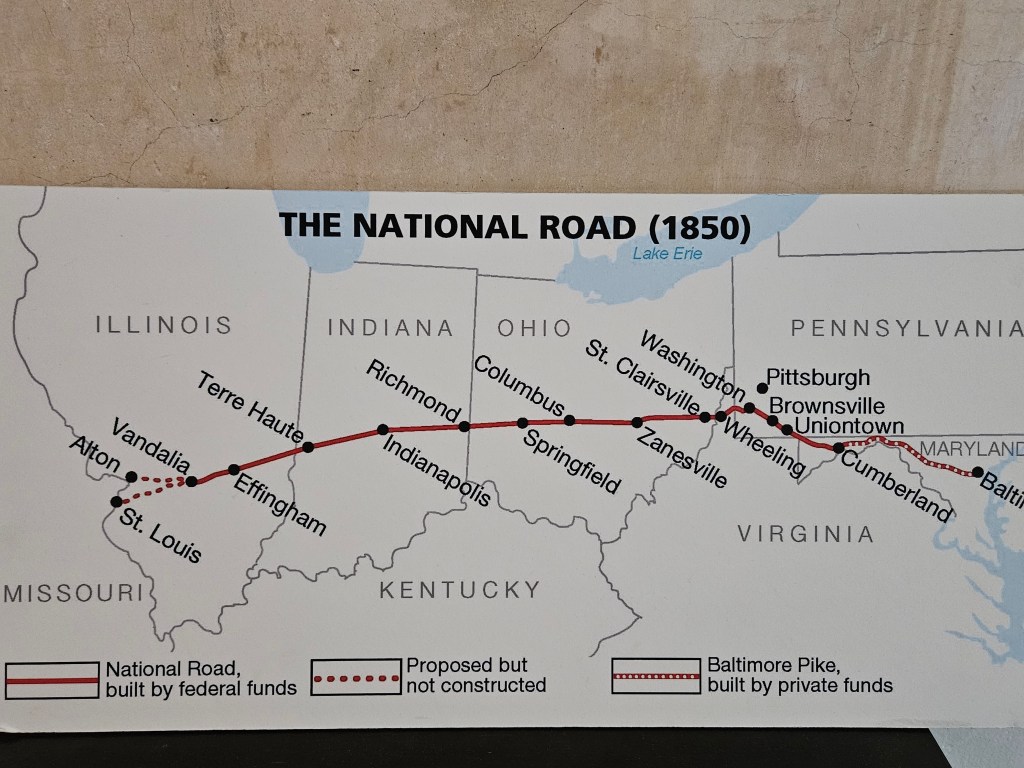
George Washington’s men had had to hack through trees and brush in order to get to this natural meadow. Once the Revolution passed, people were starting to push west. There were not only settlers but also tradespeople. With the first section completed in 1811, the National Road had been established. It was the first federally financed highway.

By 1850, the National Road looked like this.

In modern times, this road has been replaced by US State Route 40. Nothing was said about Interstate 70, but it follows the same route.

Mount Washington Tavern is also part of the Ft. Necessity park. It was built in the 1830’s when traffic on the National Road was hopping. People needed sustenance, a place to stay, and a change of horses. It became a stop on the Good Intent stagecoach line.

My only picture of the outside is above, on the side, as I hiked up to it. It’s a 3-story brick structure. I sure could have used a nice cold lemonade about then, owing to the heat and the small hill I’d had to climb, but I was about 200 years too late.

The tavern was the surprise of the day. I knew nothing about it, and tried the door: open. Creeeak! Absolutely no one around. It is self-guided.

A traveler would have come into the main hall. There is a lovely parlor on the left.

Looking to the right, I could see why the parlor had been so nice: it was for women and families. The men would have congregated in the bar.

When a bell was rung, everyone came to dinner in the dining room, family-style, around one big table.

Upstairs, men and women slept in separate bedrooms. It would not have been unusual to share a bed with a stranger. If the sheets had been washed in the past few days, you were lucky.

Your hotel room for the night, 1850’s style. Oh, you wanted a bed to yourself? Sorry, we’re full…

And, I was feeling lucky that I had been born in the latter half of the 20th century. I really enjoyed this peek into the past.

Our time in Ohiopyle was sadly over. It had been a full and enjoyable couple of days, and I was sorry to move on.

More fun was ahead, though, as we moved northward on the National Road and other roads to Lake Pymatuning State Park. This lake straddles the two states of Pennsylvania and Ohio not far south of Lake Erie. We stayed on the Pennsylvania side.

Lake Pymatuning is a lake that is probably much like countless others that dot the Midwest. For me, though, it has some faded memories. When my family lived in a Cleveland suburb, we came here for camping trips in our family tent. I remember swimming with a (real) inner tube and eating tons of my mother’s pancakes, although I may not have the right park in my mind.

Early morning fishing on Lake Pymatuning

We arrived in a downpour. We could not remember the last time we had to set up in the rain. That showed us that our site had excellent drainage. By the next morning, all was clear.

My Dad would pile my brothers into a rented row boat for some fishing. Always a rowboat. I don’t know if motor boats were as much of a thing back then, or if he just didn’t want to pay what I’m sure would have been a higher cost. If I was really lucky, I was invited along. They would give me a little bamboo pole but I don’t remember catching anything.

My family was strictly in the camp of eating whatever we caught. No “catch and release” for us, unless it was “just” a little sunfish. My Dad and brothers would clean the fish and my mother would fry them up for supper. What would she do if there were not enough? I don’t know, she always made plenty to eat.

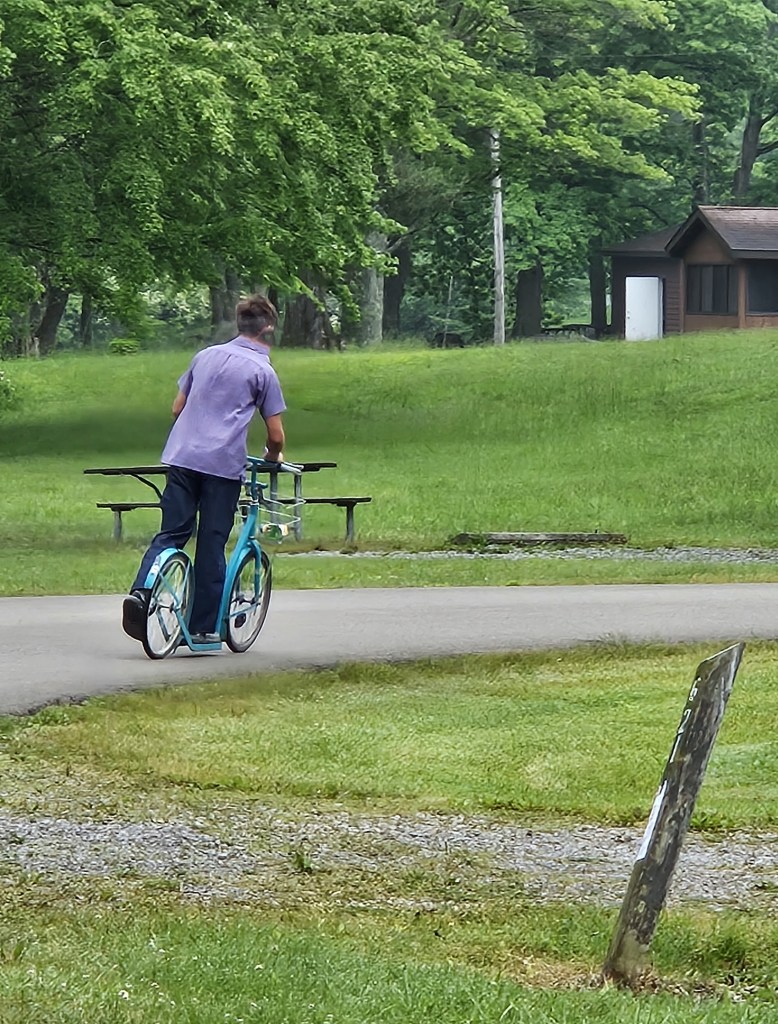
There was an Amish encampment here with a lot of kids. Perhaps there was more than one family. As I walked by, they had a huge pile of bikes behind their tent. Instead of seats, though, they had skateboard platforms. I’d never seen these before. A young man unwittingly demonstrated how they work as he flew all over the campground.

My first thought was, “They’re not even allowed to sit on a bike?” Cal pointed out that it is just better exercise to stand rather than sit, since he had seen these before.

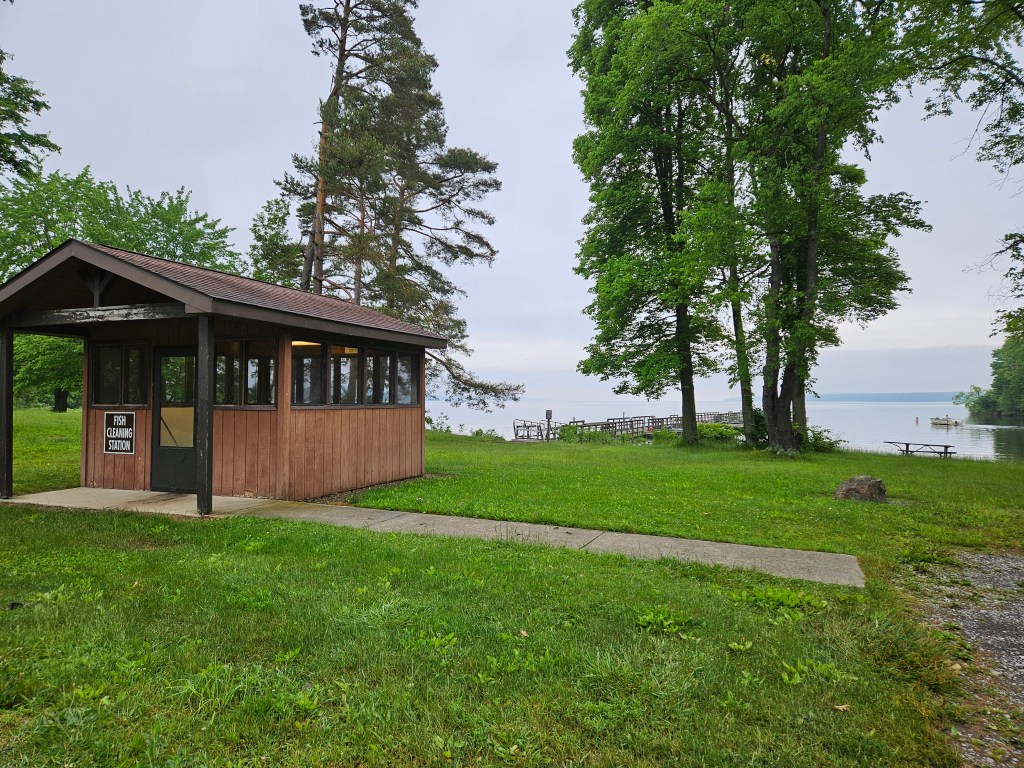
Our stay here was relaxing and idyllic. We were in a smaller, quieter loop than the main one with its beach, playground, dock and fish cleaning station. It looked like folks were mainly local, and a lot of people just had tents.

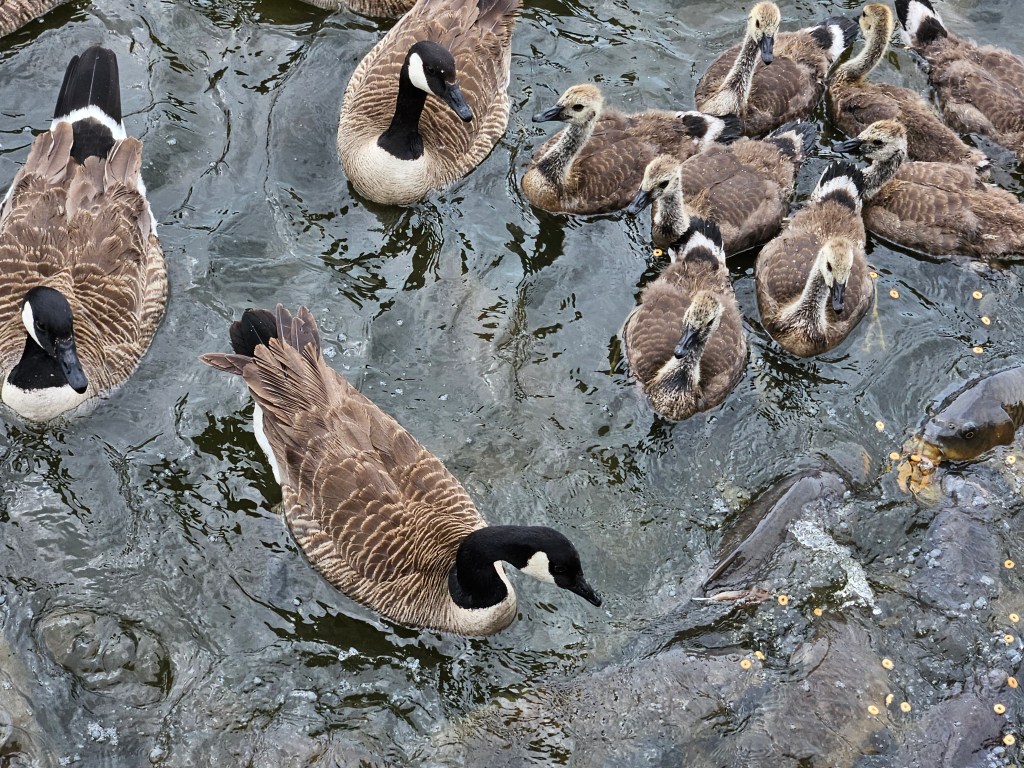
We did get out a bit. The thing to do is to drive up to the spillway and feed the fish. I did not know what the big deal is about that, but apparently it has gone on for years. The catchphrase is “Where the ducks walk on the fish!”

The fish are carp and there were a lot more geese than ducks, but that is something that changes with the seasons. There were SO many geese, and SO many big fat carp all vying for a bit of bread…or Cheerios.

I do not remember my parents bringing us here. My sister Gloria says that our Mom would have used every scrap of her homemade bread in her cooking, and my ever-practical Dad would never have bought us bread just to feed fish and ducks. I would tend to agree. But this was evidently a thing as far back as the 30’s, according to the signboard. You can buy an entire loaf of bread for $1 to feed them. It is a feeding frenzy.

The board also noted that, while it is now known that bread is not the best thing to feed waterfowl and fish, the culture and tradition are being honored. It’s prohibited to do this anywhere else.

We left the fish, and their gaping mouths, and drove along the causeway into Ohio to the little town of Andover for lunch. The main part of the town is on a square. It seems like there should be a courthouse on that square, but there is a nice park instead. The city street goes around the square in one direction. On the edge of the square is a gas station, and behind it and off to the side is the town grocery store. This has the effect of keeping the old town busy, and is brilliant city planning.

We ate lunch at West Side Deli, which is in yellow lettering at the far left of the above picture. We ordered the shrimp basket special, and while we were waiting for lunch a steady stream of customers flowed in. They were giving free hot dogs to the kids. I had gotten into conversation with another customer, and she said for sure it is a once-a-week event, if not more often. It’s really wonderful to see a business supporting the community in this way.

There is also a campground on the Ohio side of Lake Pymatuning, and we drove through it. It is smaller than the Pennsylvania park we were in, but it looks a little more familiar. I’m not sure if this isn’t where my family camped, because it was all too long ago.

At Ohiopyle and Pymatuning, we were at the farthest south and east that we would be on this trip. From here eastward, the only place to go is back to Ohio. And that is a story for next time.

Next time: we visit the Cleveland area, and old friends too

USTravel

A Stay in Beautiful Hocking Hills, Ohio

Have you read the book Grandma Gatewood’s Walk by Ben Montgomery? It tells the story of Emma Gatewood, who at 67 years of age walked the entire Appalachian trail solo. And then did it two more times, as well as other long-distance walking trips!

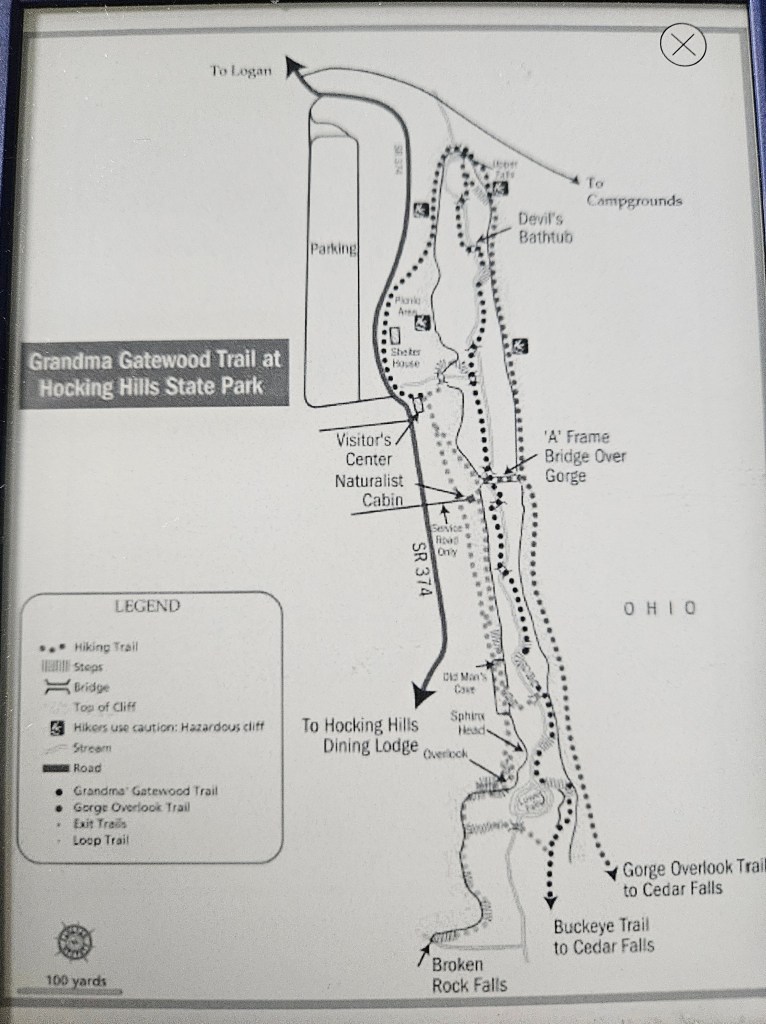
A Gallipolis, Ohio native, she also loved to walk in Hocking Hills, a wooded and hilly area in southern Ohio. There is a six-mile particularly deep stretch of gorge that she called “more interesting than anything I saw on the Appalachian Trail”. It’s loaded with many beautiful natural features. Once a year, until her death, she would lead a hike through this gorge, and it is now called “The Grandma Gatewood Trail”. I have wanted to hike this trail ever since reading the book.

This map doesn’t even cover the whole trail, or show that parts of the trail are one-way for crowd control

Not wanting to wait for the weekend crowd, we planned to hike on the day following our arrival, which was a Friday morning. This trail is extremely popular. Rain was predicted, though. I really debated if I wanted to get up out of my cozy bed early, but I also did not want to share this trail with a lot of people. We arrived at 7AM and saw less than five people the entire time we were hiking.

I was pleased to see this memorial stone when we started hiking.

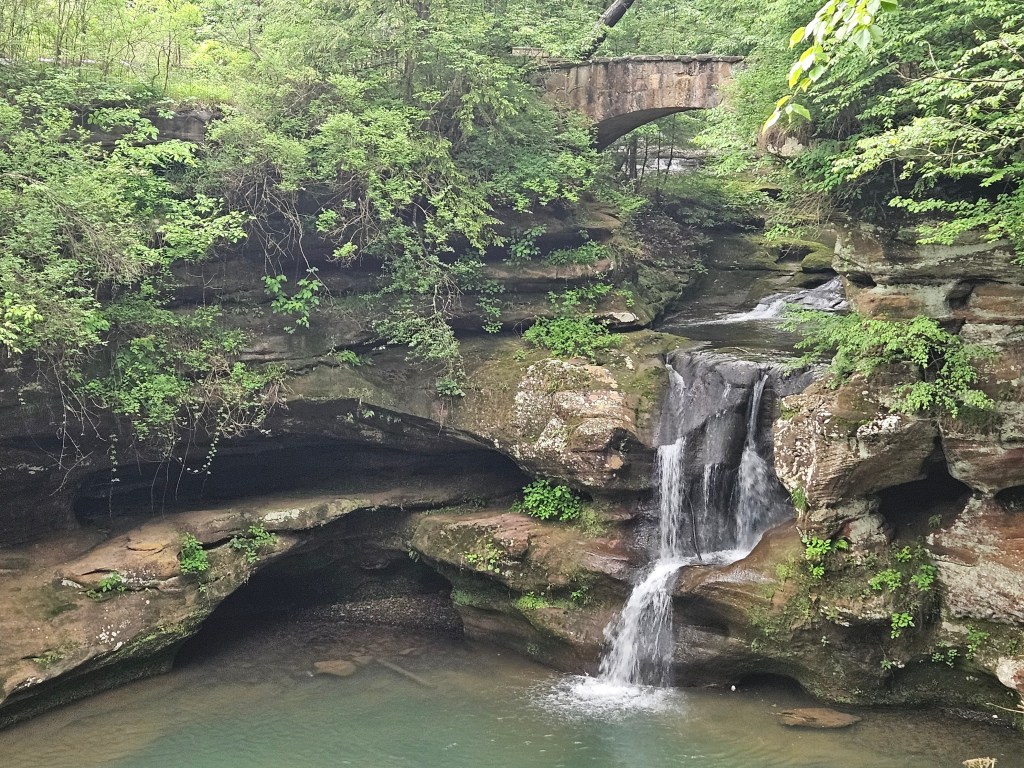
We crossed a bridge and were immediately met with this waterfall:

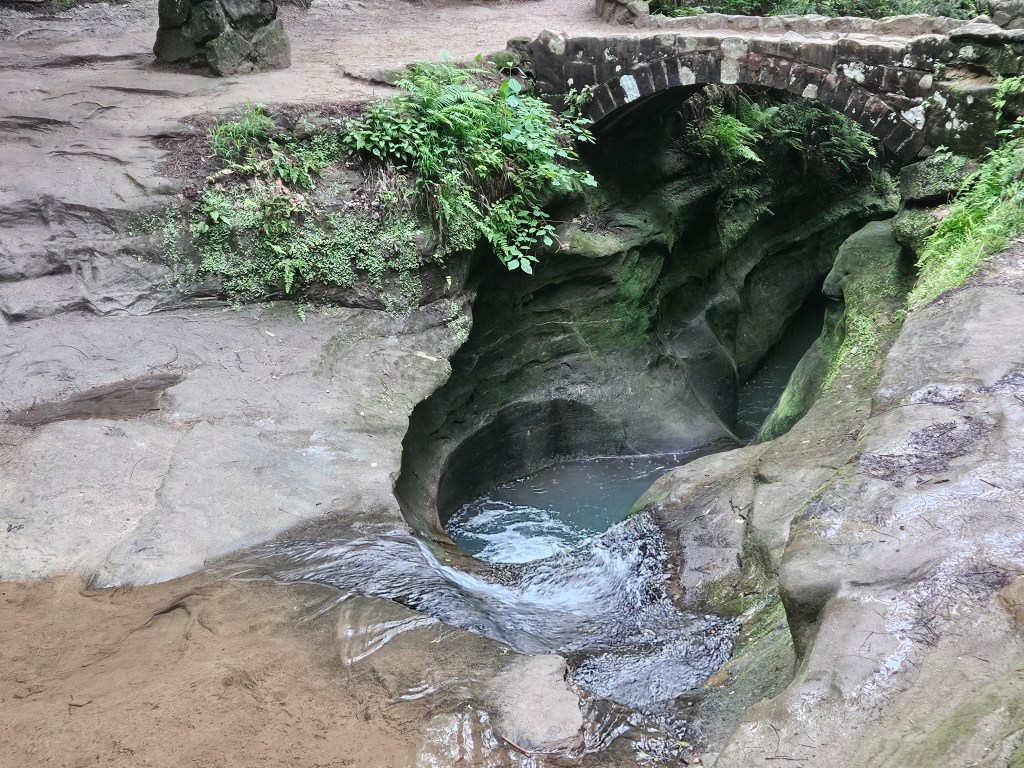
And not far after that, Devil’s Bathtub:

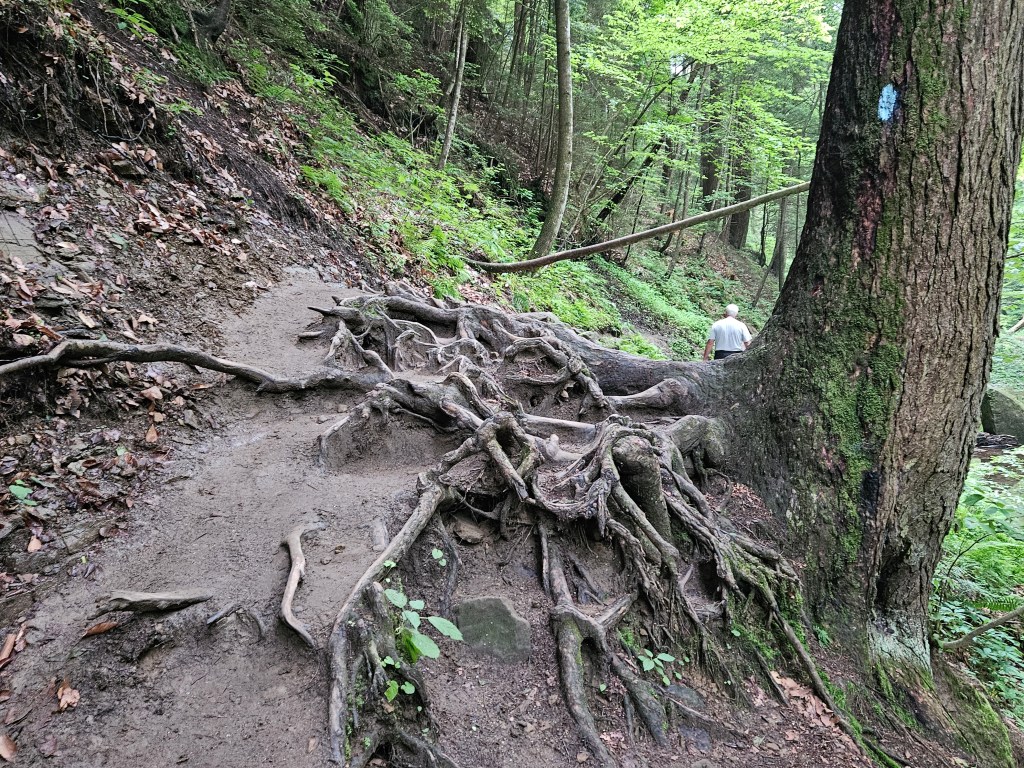
The walk is rated “difficult”, but the rough edges of this popular part of the trail have been worn down a bit. Grandma Gatewood Trail is blazed in light blue, as you can see on the tree.

The forest was moist and drippy, with the sounds of water flowing almost everywhere. A multitude of birds sang to us.

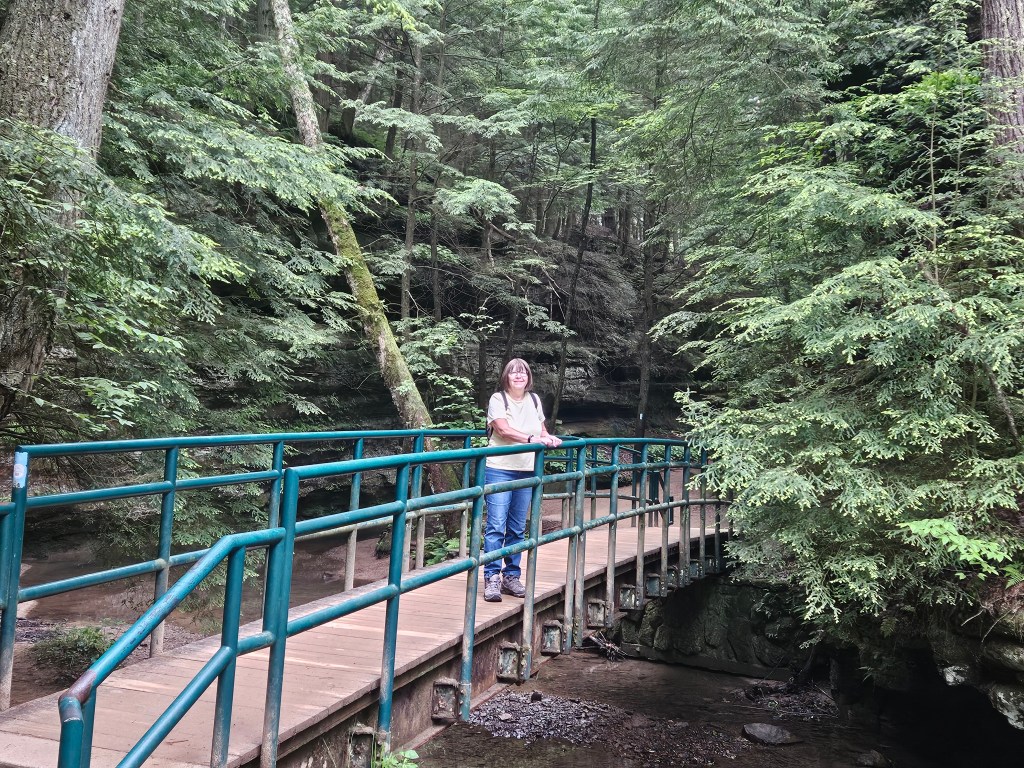
Many bridges crossed the meandering stream. I especially loved the way the bridge below was built to harmonize with its surroundings.

And then there was this tree, seeded at the bottom of the gorge, growing mightily out of a boulder to reach over the tall sandstone cliffs and find the sun.

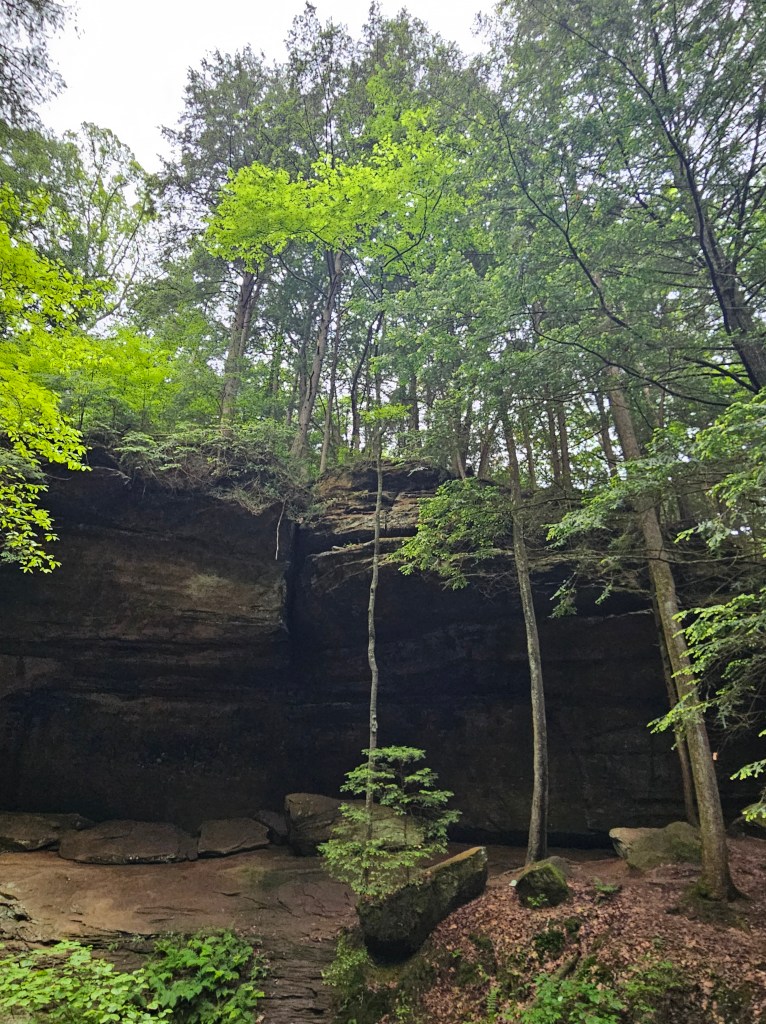
There were immense boulders and cliffs to walk under–

gorgeous waterfalls everywhere–

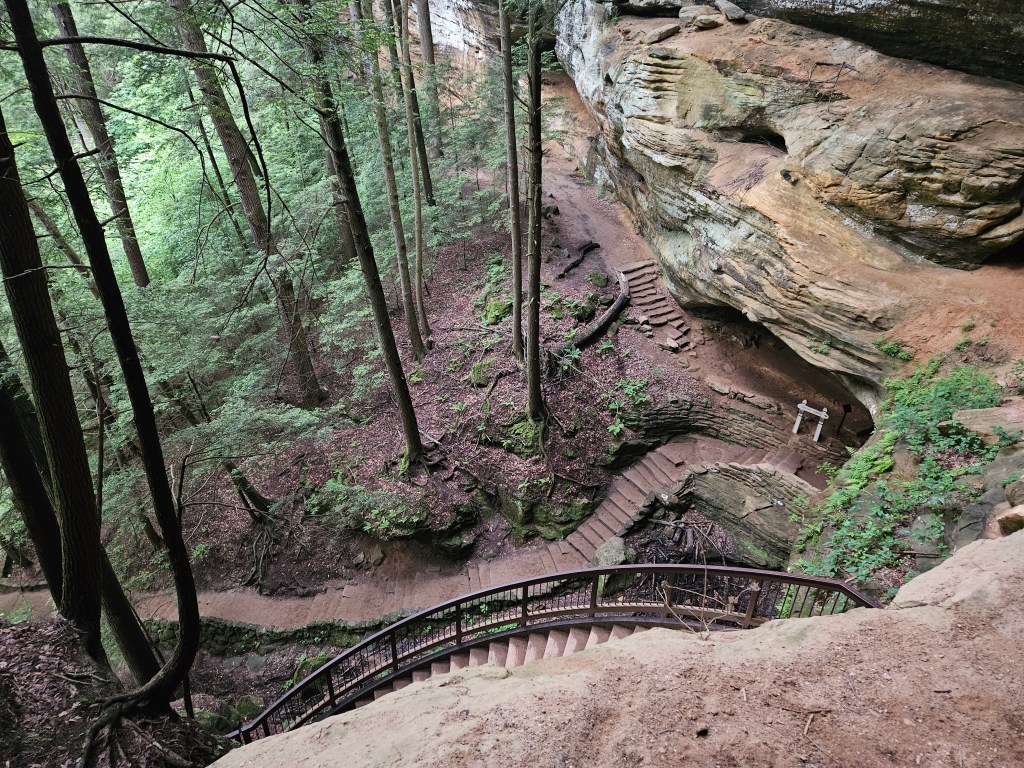
and then, a final insult to our tired legs, the hike up to Old Man’s Cave–

and up and out.

Old Man’s Cave is named for a recluse, Richard Rowe, who lived here in the 1800’s and made this cave his home.

Our walk here was about 3.5 miles. The rain started in a drizzle, and we turned back at a point where we could join the return part of the one-way trail. It was coming down harder as we returned to the truck so we were glad that we did not try to venture further.

While reading the book, I had envisioned the surrounding area to be fairly pristine and quiet, the state park an oasis of tranquility. This couldn’t be further from the truth. It is a huge tourist area. The country roads down to the park were lined with signs for cabins, and the state park visitors center contains an immense parking area. There is good hiking everywhere and not just in the state park. In the towns of Hocking Hills and Logan, there is everything a tourist could want to empty their wallets on: ziplining, rappelling, tubing down the river, going to a zoo, shopping in a huge plaza with antique malls and other delights, going to a glass factory, and the list goes on. So what did we find to do on a rainy day?

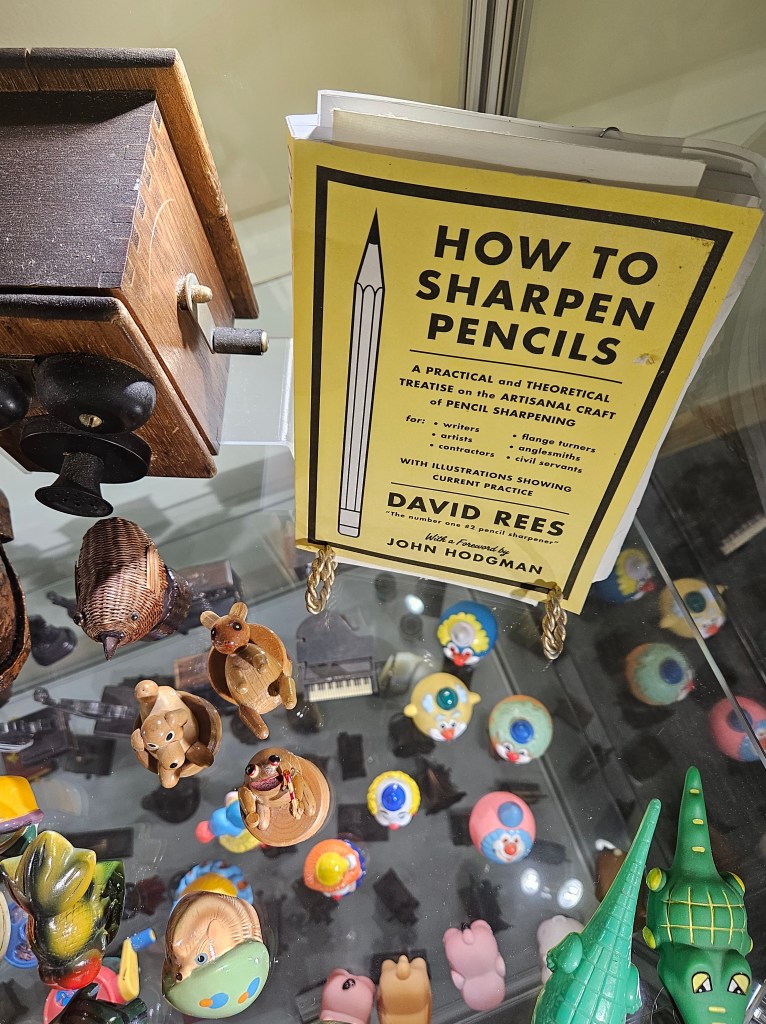
How about a Pencil Sharpener Museum? This is a tiny little building located next to the Hocking Hills Regional Welcome Center. It is two men’s collections: Paul Johnson and Frank Parades. Paul’s collection of 3,450 sharpeners is reputed to be the world’s largest, and Frank traveled the world while collecting his.

There was even a book about how to sharpen a pencil. I’m sure I didn’t know that I needed this.

As if pencil sharpeners were not exciting enough, we drove into Logan to visit the Columbus Washboard Co. It is the only factory in the US that still makes washboards. In case you need one, this is the place to go.

We missed their factory tour and I didn’t need a new washboard that day, so we wandered over to M&M Family Diner next door for lunch. Shelves and walls around the restaurant were full of M&M memorabilia that dedicated customers have gifted them over the years. The M&M actually comes from the name of the owners, Michelle and Marvin. We enjoyed simple but warming bowls of soup and sandwich.

We ran a couple of errands and got groceries but it was still raining. We passed the rest of the afternoon at Hocking Hills Winery. Here, the thing to do to sit at a table and order a sample flight. We were out on their patio in front of a heater, just watching it rain in the woods. What a great way to pass a Friday afternoon!

Our last day in Hocking Hills was sunnier, and we enjoyed another very different activity: park golf. If you never heard of this, it is because our RV park has one of only two park golf courses in the United States. The idea originated in Japan and is popular there. The game is a cross between regular golf and croquet. A park golf course fits into a more compact space than a normal golf course.

The golf clubs are heavier, with a chunky wood base. The balls are brightly colored plastic resin, larger than a golf ball.

The cups seemed deeper…or is it our age? We had to to get on our knees to retrieve the ball.

The grass was mowed into three different heights. I could feel the effort of hitting the ball in my arms, especially where the grass was higher. It’s harder than it looks to whack that ball down the fairway, and we were way over par on every hole.

If this was something I could do regularly, I think it would be great exercise. Maybe some pickle ball courts could be replaced with a park golf course? This may be a new wave of the future, and you saw it first right here.

Anyone could play this course, even if they were not staying at the park. The office also had an ice cream counter, so a dish of ice cream afterward was definitely in order.

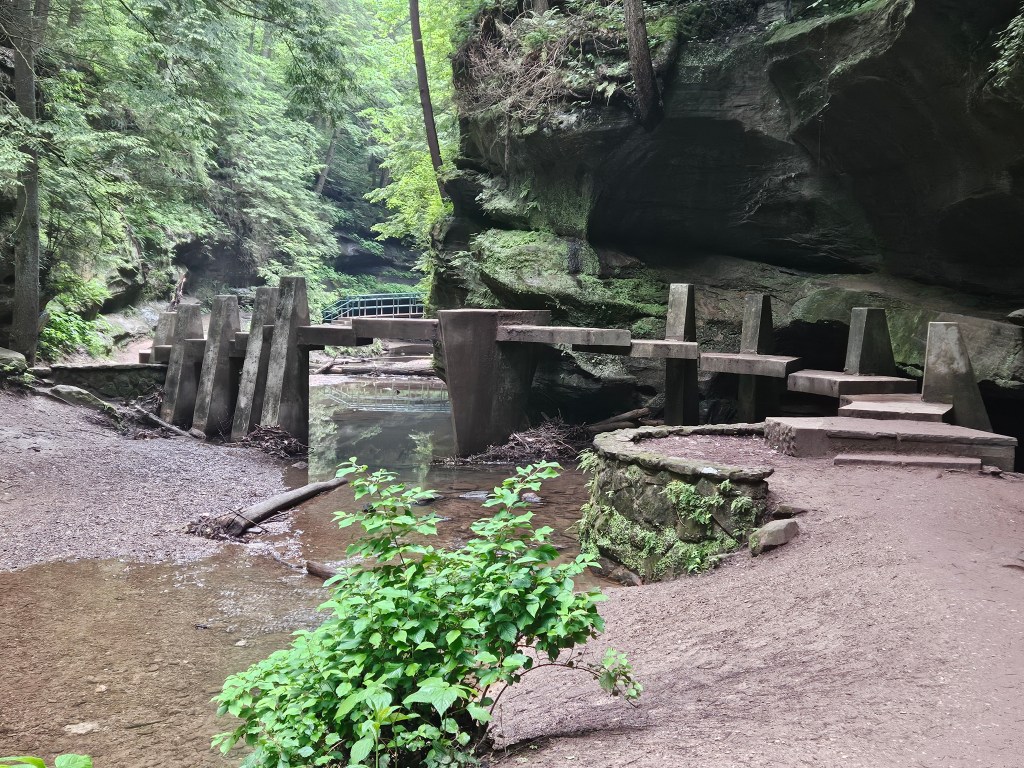
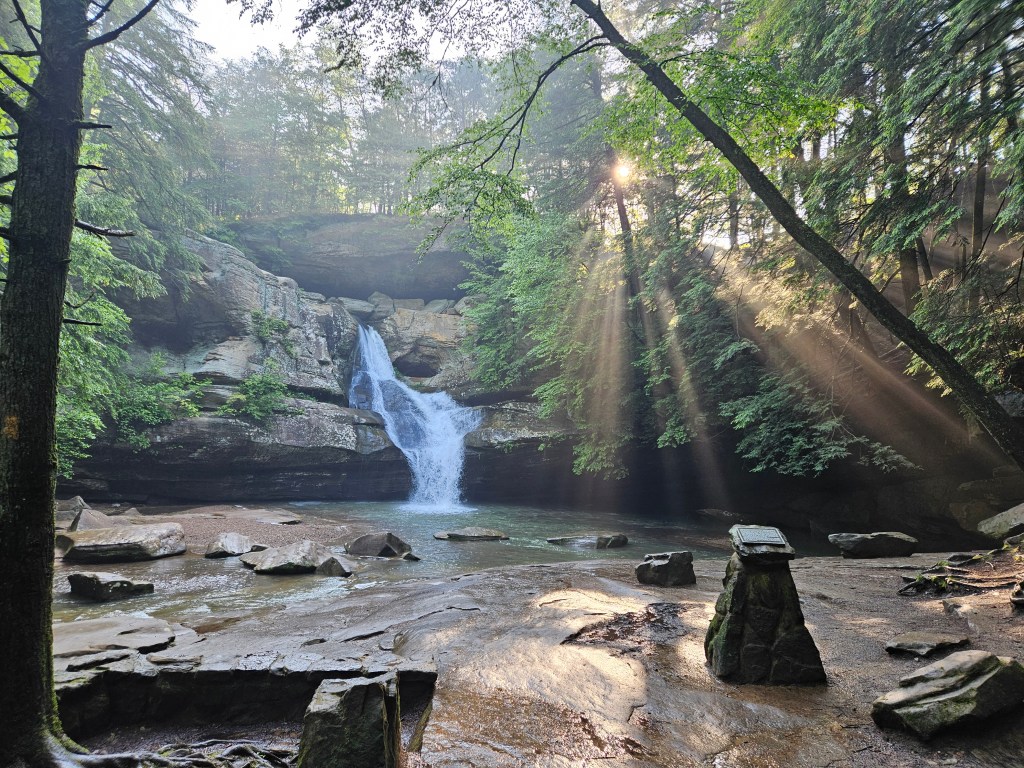
We hiked at Hocking Hills State Park every morning during our stay. There was a staircase climb down to Cedar Falls with its tall cliffs and two waterfalls, one large and one small. Everything was dripping because of the prior day’s rain.

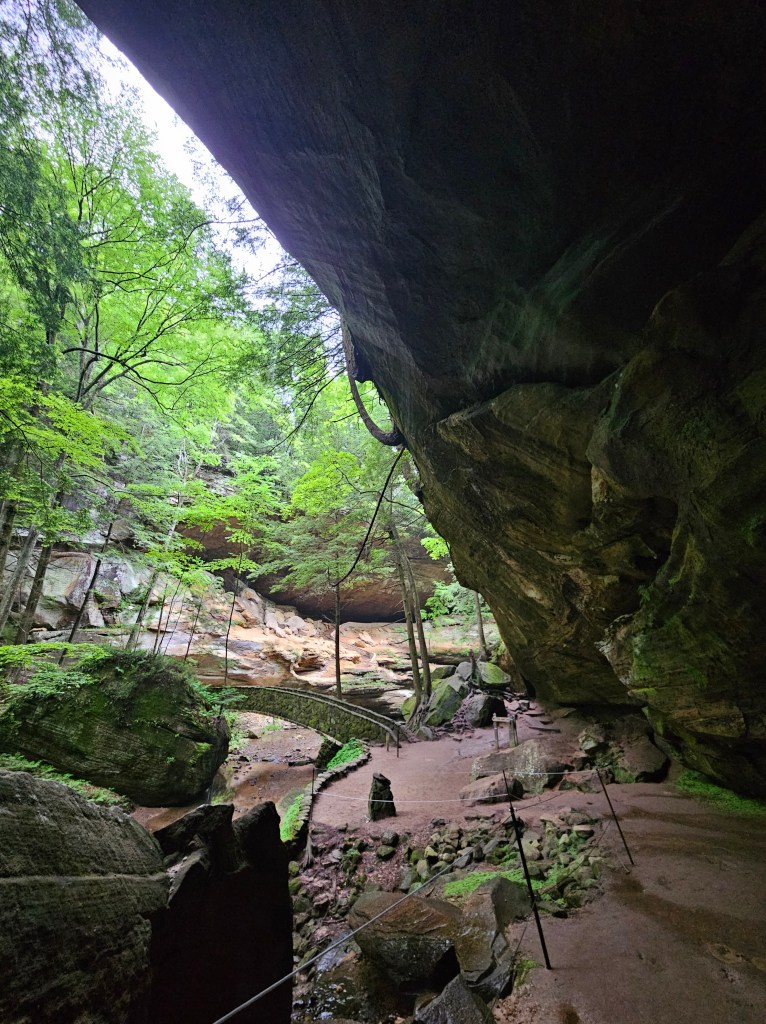
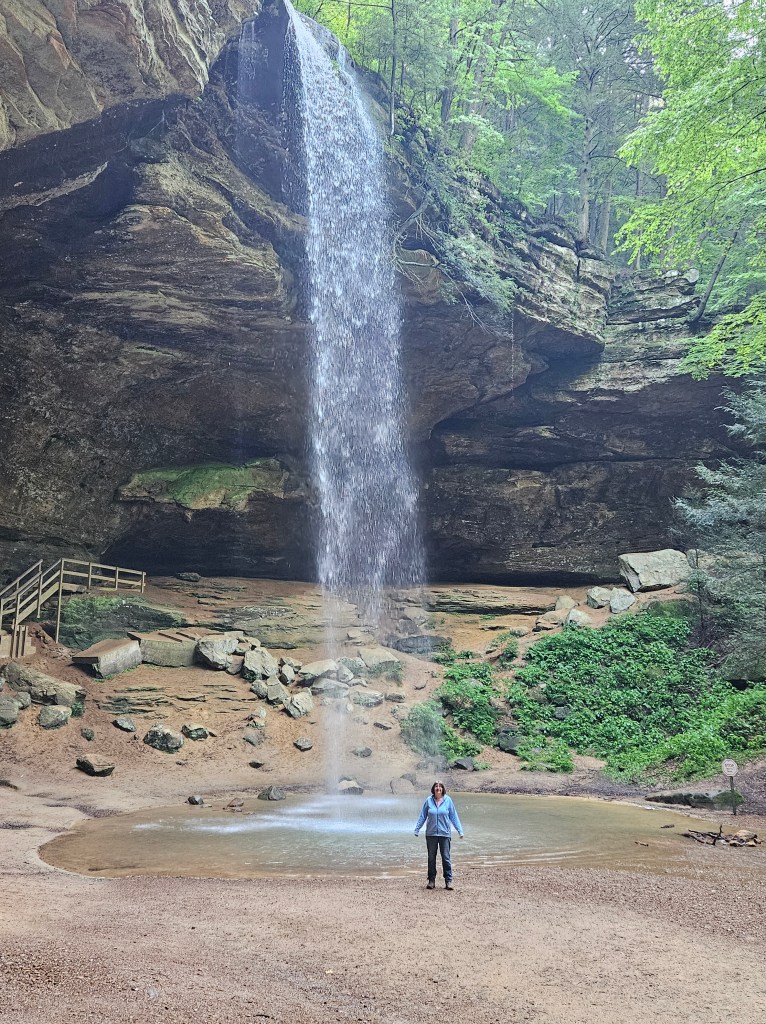
We also drove to the trailhead for Ash Cave, which is partly a handicap trail and paved. It is a large rock overhang, and again owing to the rain, we had a beautiful waterfall.

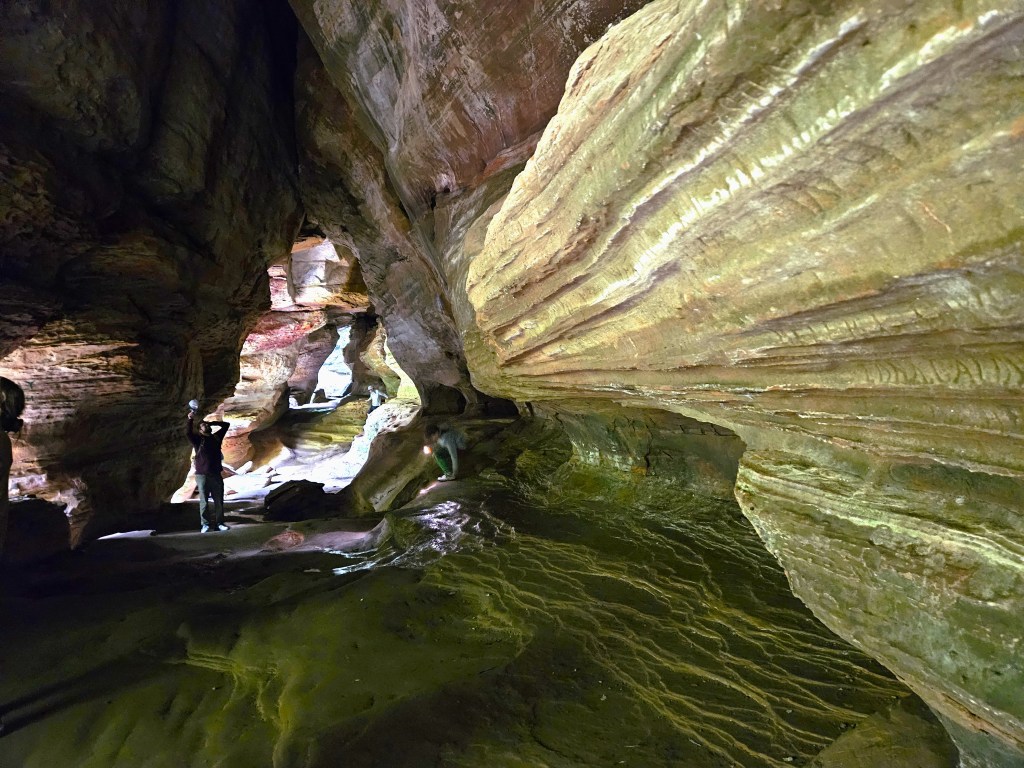
Our last hike was on the Rock House Trail. Rock House is the only cave in Hocking Hills that is a true cave. It is shaped like a house, hence it’s name. You enter in through the front, and there is a big room to the right and left with “windows”.

Ash Cave and Cedar Falls are also on the Grandma Gatewood trail, but Rock House is not.

We went to the state visitors center on the morning after the big rain. It was Saturday around 10AM, and that immense parking lot was jam packed. The area around the building and the trails was a hive of activity. We were so glad we had done the bigger hike the day before. In display area of the visitors center, I looked for Emma Gatewood and found her, along with a short biography.

I felt a little wimpy that we hadn’t walked the entire trail in one piece. Climbing around down in the gorge and up through the cliffs is difficult, though, and the distance out-and-back is twelve miles. It’s not a simple walk in the park. I justified our shorter distances with thinking that Emma had had a harder life than I. She gave birth to 11 children, lived with an abusive husband, and had to manage what was not much more than basic subsistence living on a farm for many years. She was a tough lady, and I’ve had a much easier life than she. That’s the story I’m sticking to, anyway.

For all the rest of Grandma Gatewood, you’ll just have to read the book.

On the morning we left Hocking Hills, we walked over to a coffee shop in a converted Airstream trailer just outside our park for coffee and tea. We were finishing up when the owner arrived with more boxes of doughnuts. Seeing us, he came over and gave us a free chocolate long john to share that was crammed with cream, even though we had just shared a muffin. Feeling good about his largesse, sitting and enjoying the start of the morning in the fresh air, I was more than a little sorry to leave the area. I could have stayed longer.

Next time – more magic found in Pennsylvania

USTravel

Family, Friends, Food, and Carillon Park in Dayton, Ohio

We couldn’t journey to Ohio without visiting some family. In Dayton, that’s my niece Laura and her husband Mike. As hosts, of course, they were busy thinking up fun stuff to do and places to eat.

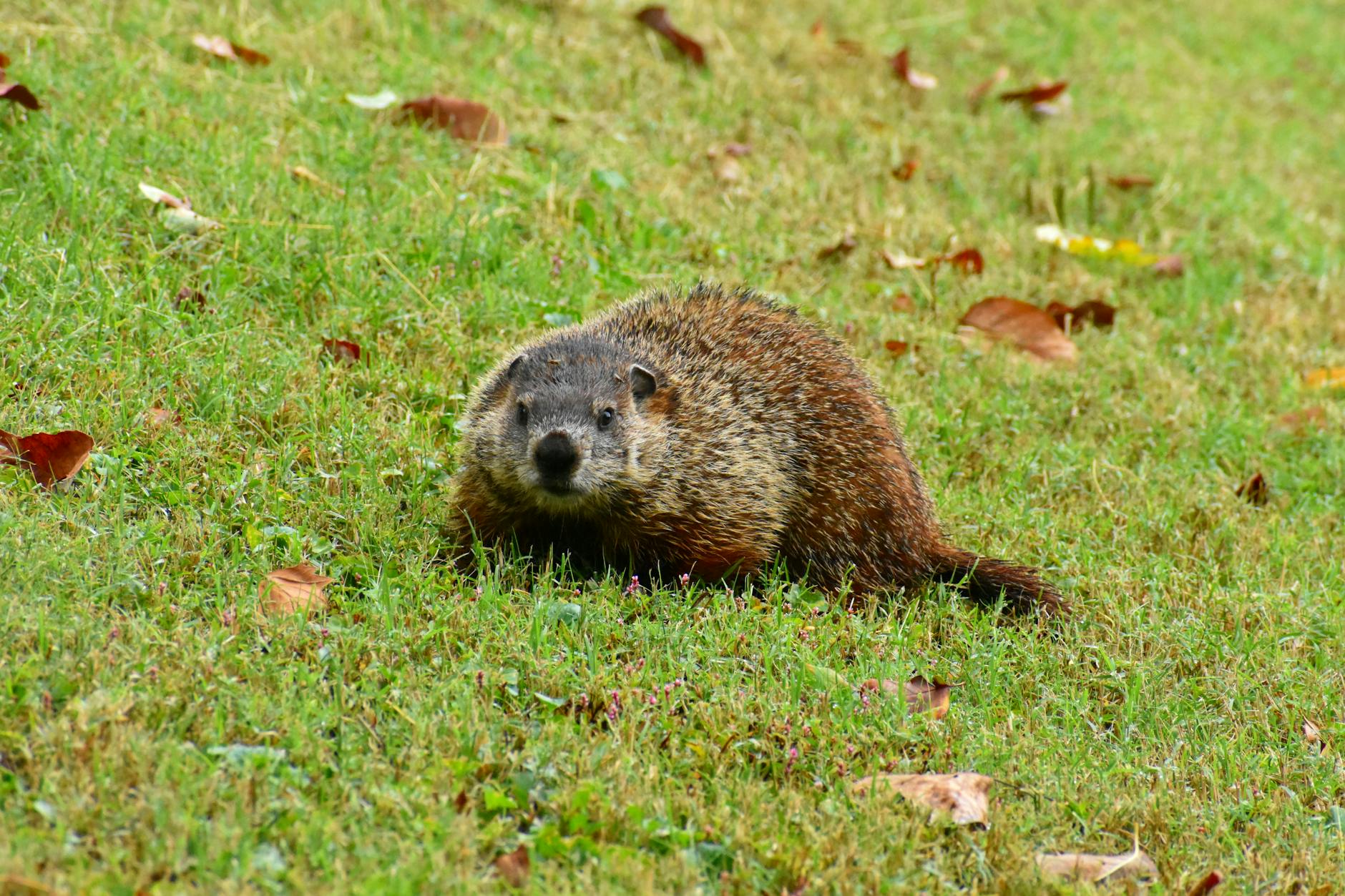
Our stay here was at Wright Patterson Air Base. The family camp was tucked behind the airfield, which meant a journey of a few miles just to get around it. While driving, Cal would happily identify the various military airplanes sitting on the tarmac. I was looking in the opposite direction, keeping my eyes peeled for groundhogs. On our first trip through the base, I saw a fat groundhog waddling through one of the expansive lawns in the distance. And then more, at least one on every trip around. All that grass makes for fat groundhogs.

Photo by Jessa Leigh on Pexels.com

Mike and Laura asked us what we’d like to see in Dayton. With apologies to the city, I had forgotten there was anything to see in Dayton. I did know that just outside of the air base there is a huge air museum, which Cal has been to. I’d forgotten that this is where the Wright Brothers had lived and developed the first airplane.

That history is woven into Carillon Historical Park, which we enjoyed visiting in the afternoon of Memorial Day.

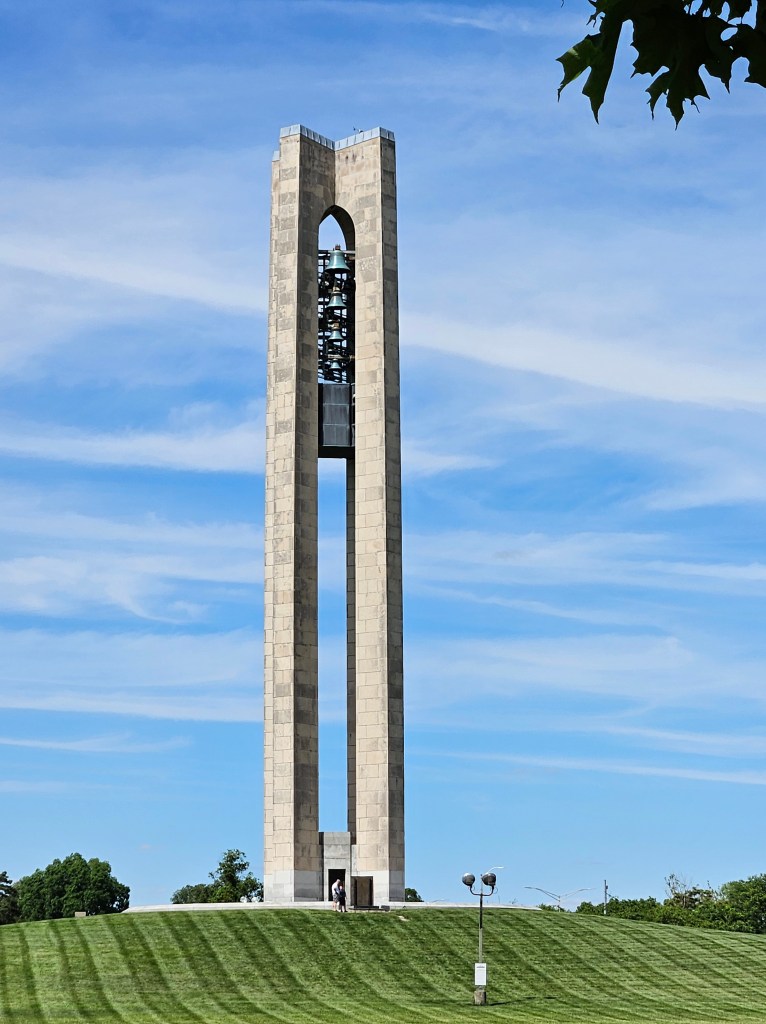
The carillon was gifted by the founders of the park, a couple by the name of Edward and Edith Deeds. It has 57 bells on a 151-foot tower. It’s the first thing you see when driving up to park, which contains a lot of buildings small, large, historical and not, containing aspects of Dayton’s history. Its focus is mainly transportation. Besides all that to see, it’s a lovely place to stroll through on a sunny Memorial Day afternoon.

Cal, Mike, Laura and I at Carillon Park

I enjoyed refreshing what I knew about the Wright Brothers. There is a replica here of their bicycle shop, circa 1895-1897. I did not get pictures of it, but I did get a picture of these bicycles in a separate little building. They are from the same era.

The brothers were working on another small project in their spare time, however. In 1903 at Kitty Hawk, North Carolina, they took the first famous flight of an airplane they had invented. Dayton gets the credit, though, for the development and testing of their airplane at Huffman Field.

Orville Wright himself designed this room displaying their 1905 airplane. He wanted the plane sitting below ground level so that visitors could see it from above.

This plane was resurrected from Kitty Hawk, where it had been left in pieces. It was the first “flying machine” that could take off repeatedly, fly for a small length of time, and land undamaged. All important things for getting off the ground and back!

There are other things to look at too. The sights ranged from an eagle in a nest high in a tree, a building focusing on the big 1913 flood, a carousel with 32 icons from Dayton’s history, Ohio’s first taven, and many trains and streetcars such as this one:

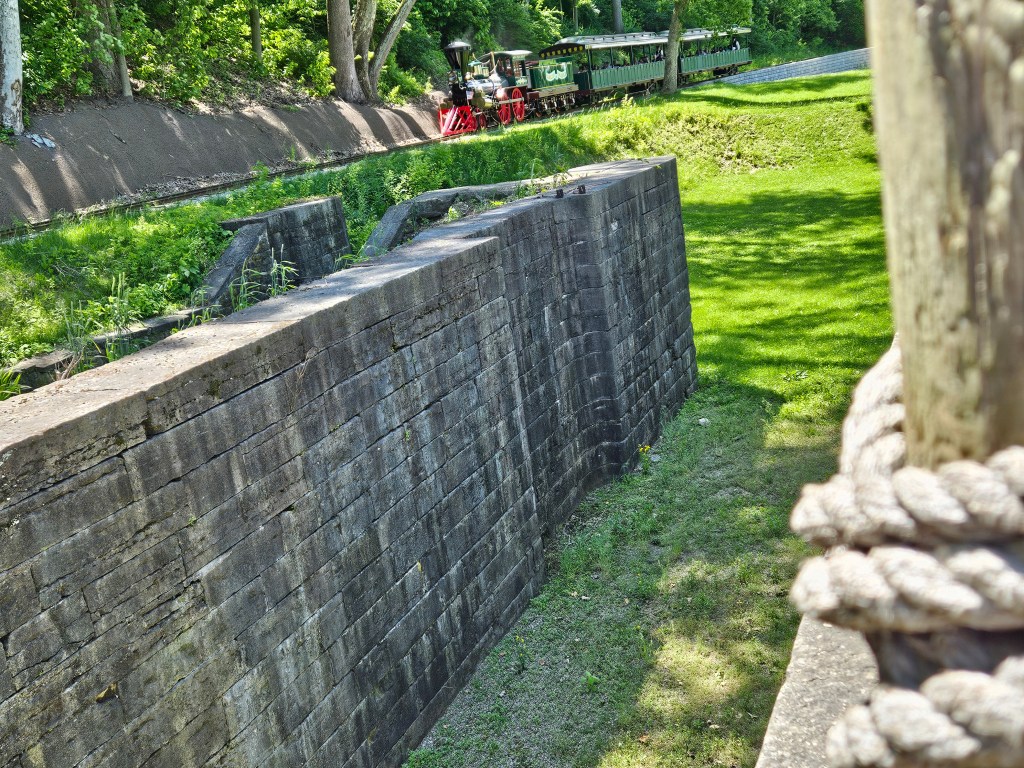
I remembered learning about the Ohio-Erie Canal when I was a child, so I was excited to see this little piece of it. A bonus was getting the park train in the background of my picture of it.

There is even a covered bridge, although it goes nowhere and has no water underneath. It was moved here from near Bellbrook, Ohio.

We could choose a song for the carillon to play before leaving the park. I chose “Pachelbel’s Canon in D.” It was pretty, but hardly recognizable.

A trip to an Irish pub in downtown Dayton capped off this day. I had shepherd’s pie with a Guinness. But it was just one good meal among many that we had with Laura and Mike. Who knew that Dayton was such a foodie city? We had pizza, salads and beer at Old Scratch Pizza (two beers in one week when I haven’t had even one since I don’t know when!) and another dinner at a place called Rip Rap which was a bar and grill. The whole idea behind this dinner is walking behind the restaurant to a “shake shack” of the same name behind it afterwards. I was sorry that I was not hungrier for the delicious ice cream, and that it was a cool and windy evening.

In contrast to the beautiful weather we had for our time at Carillon Park, the following day was rainy. A perfect day to go visiting.

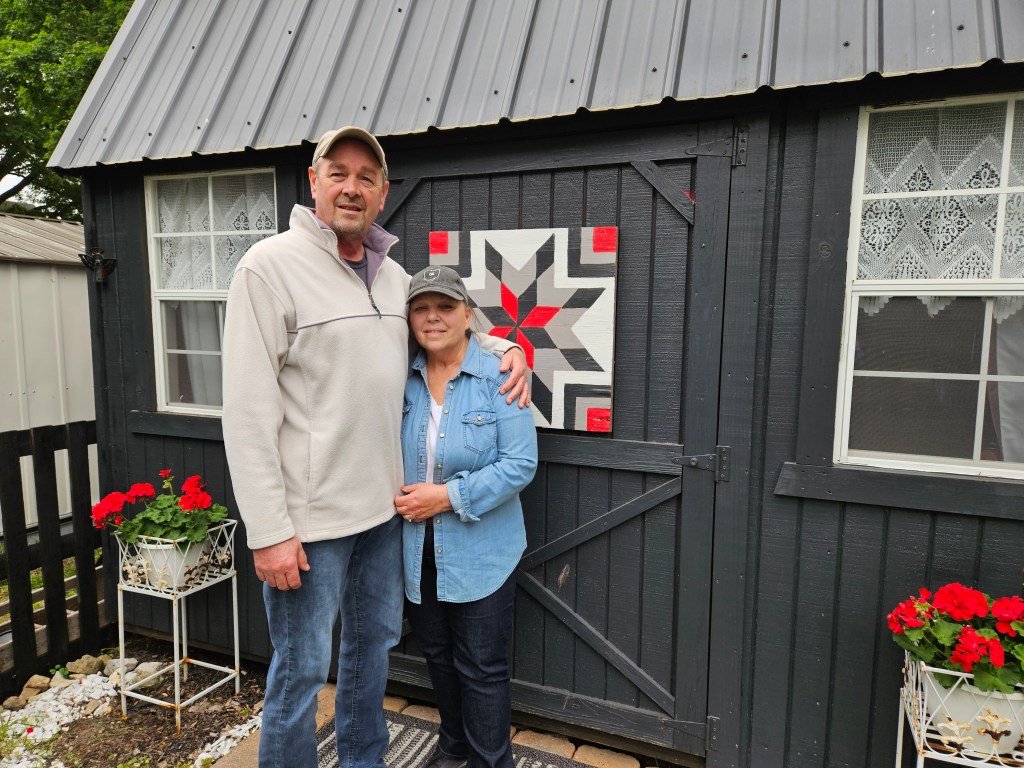
I spent thirteen of my childhood years living in three different Ohio towns. One of those towns was Marysville, where I had a good high school friend named Karen. We’d lost touch after I’d moved, but she found me again on Facebook. She and her husband now live near Urbana, not far from Dayton, and we spent a great afternoon visiting with them.

Karen and Brett in front of Karen’s “she-shed”. Karen painted the barn quilt on the door.

A great lunch was had with them in Urbana at Las Palmas. More good food! It was good to catch up on all the years that have rolled by during my visit with Karen.

We went two different ways though the lush green countryside driving to and from their house. Our scenic drive was hilly with lots of woods in view, small old towns that are hardly towns anymore, old houses and barns.

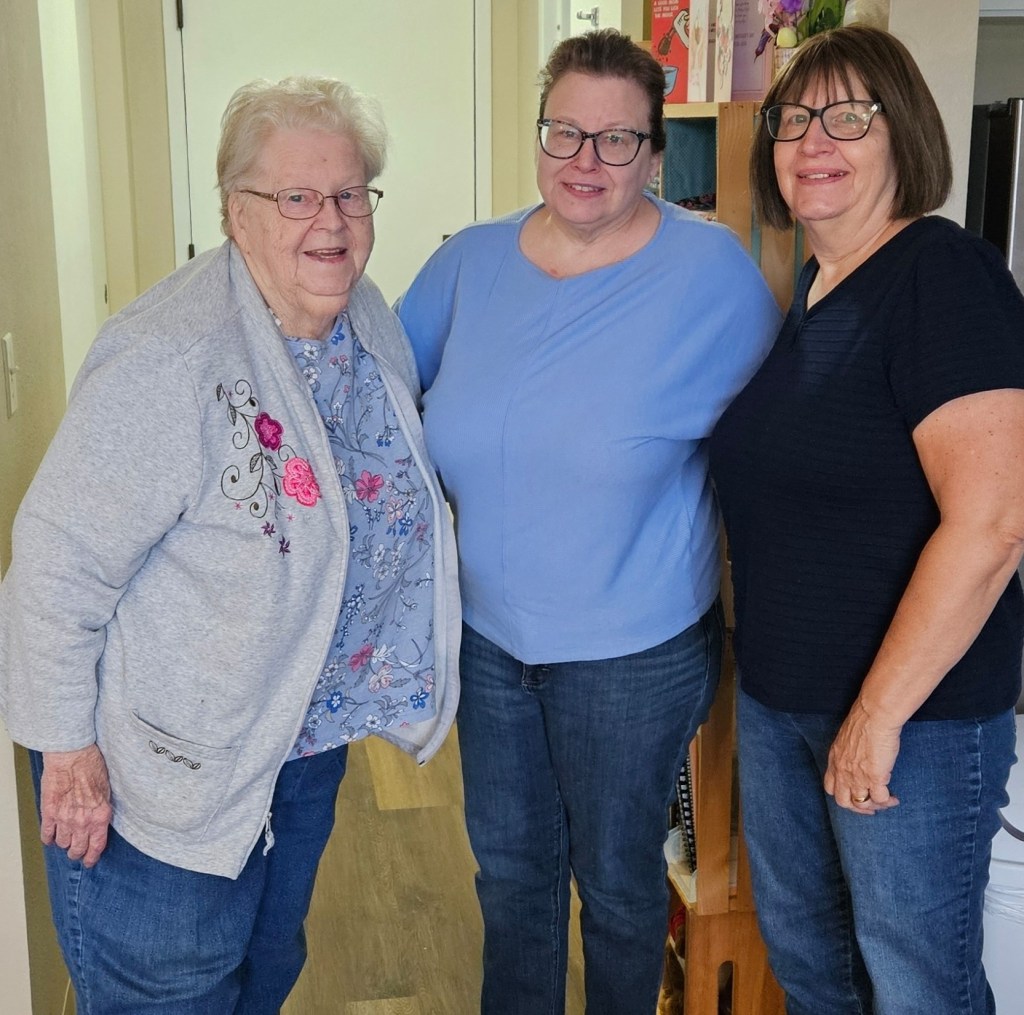
There was one more important stop to make near Dayton. Laura took us to visit her Mom and our sister-in-law Mary Jo. I first met Mary Jo before my fifth birthday and was the flower girl in her wedding to my brother Wayne. She is happily settling into a new apartment.

All good things must come to an end, however, and all too soon our good times in Dayton were done. Time to roll down the road to a new spot!

Next time: a slice of heaven in Hocking Hills