Upon our arrival in Naxos, our AirBnb host sat us down, unfolded a map, and drew all over it as she showed us all the varied things we could see in the mountain villages behind Naxos. It looked great! But how do we get there? Naxos is not Santorini, so the possibility of an ATV was quickly discarded. The distances are greater, the roads mountainous and tangled.
I turned once again to researching day tours. As I’ve already reported, Naxos in the middle of October was winding down their season. There wasn’t a lot to choose from except for a regular big bus tour. There were enough of us tourists left in Naxos to fill up that bus.

We headed out into the countryside. Olive and cypress trees dot the rolling landscape which is bordered by low stone walls. Old buildings in various states of decay can be seen here and there, and, up on distant mountaintops, ruins of Venetian castles. The valley is fertile and, besides olives, produces potatoes, fruit, wine, honey, and cheese. Small wonder, then, that the god that the ancient Greeks worshipped here was Demeter, god of harvest.
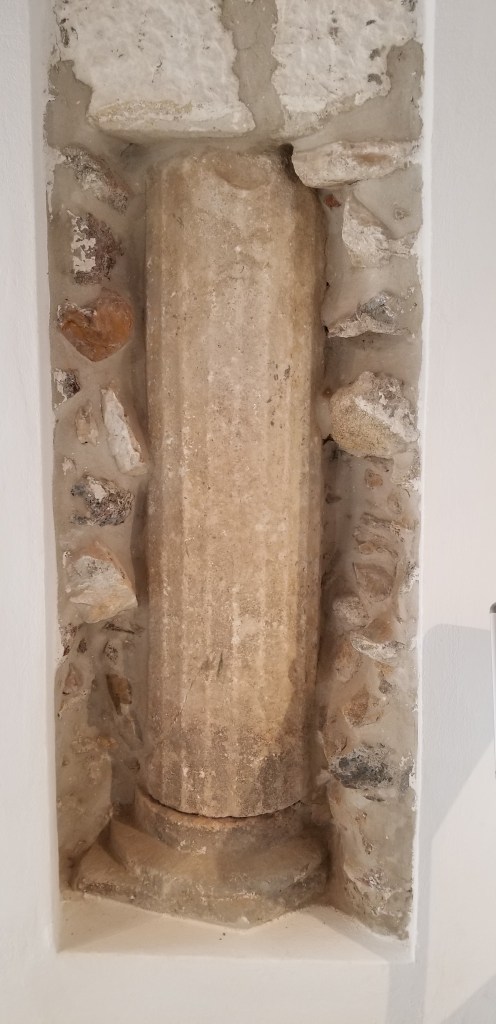
Our first stop was to see Demeter’s temple, built in 530 BC. It’s quite a story: as Greek civilization declined, a Byzantine church was built over the old temple. Arabic pirates destroyed the church in the sixth century AD, but it was rebuilt in 1977. After the discovery of the Greek temple, an archaeological excavation began, and the temple was rebuilt.

To allow for excavation and the subsequent build of the temple, the old Byzantine church had to be disassembled, moved to the side, and reassembled. It has its place in history, too.

One of our fellow tourists asked the guide why the temple wasn’t completely rebuilt. The answer is that under Greek law, buildings cannot be restored to a greater proportion than the ruins that were found.
Onward, then, to a 150-year-old olive press. Our guide demonstrated its use and the making of olive oil in the old days.

I wrote in my journal one thing I learned about the making of olive oil: that cold-pressed olive oil is best. I looked at both of my olive bottles in my pantry, and nothing is written anywhere on them about the oil being cold-pressed.
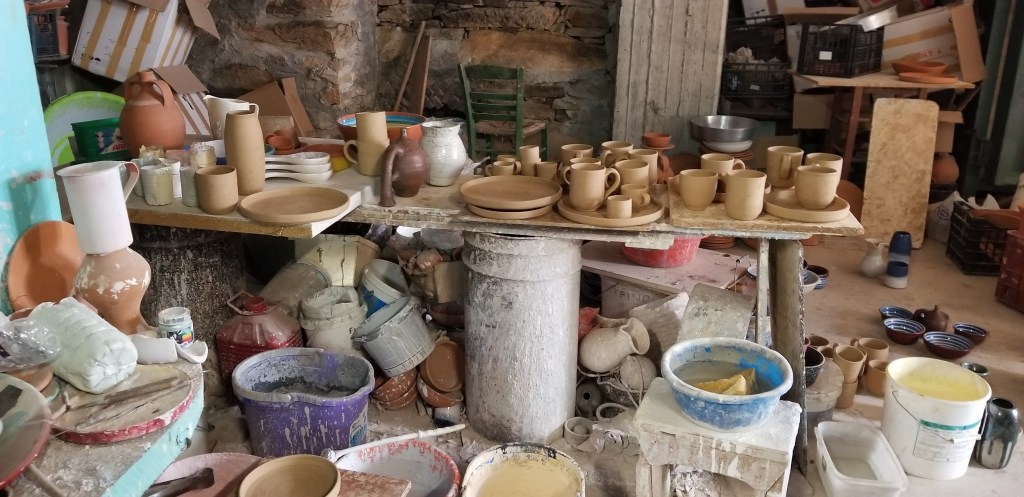
On to a little pottery shop, where the potter demonstrated his craft on a wheel. As he works, he throws excess bits of clay on the wall- his “wall art” is at left.

Then: off to the village of Halkio, to visit the 125-year-old Vallindras citron distillery. I enjoyed the little walk through the streets of town to get to it.

Citron is a fruit that grows on Naxos. It has a thick rind and the fruit is slightly bitter. The zest is what is mainly used. You may be familiar with candied citron. I remember it being packaged in small tubs in the grocery store, although I haven’t shopped for it in a very long time. My mother used to put it in the German lebkuchen cookies and stollen bread that she made at Christmas time. I like lebkuchen, but I only like stollen in small amounts and not enough to make it myself. In the few years that I made lebkuchen myself, I never considered what citron really was.
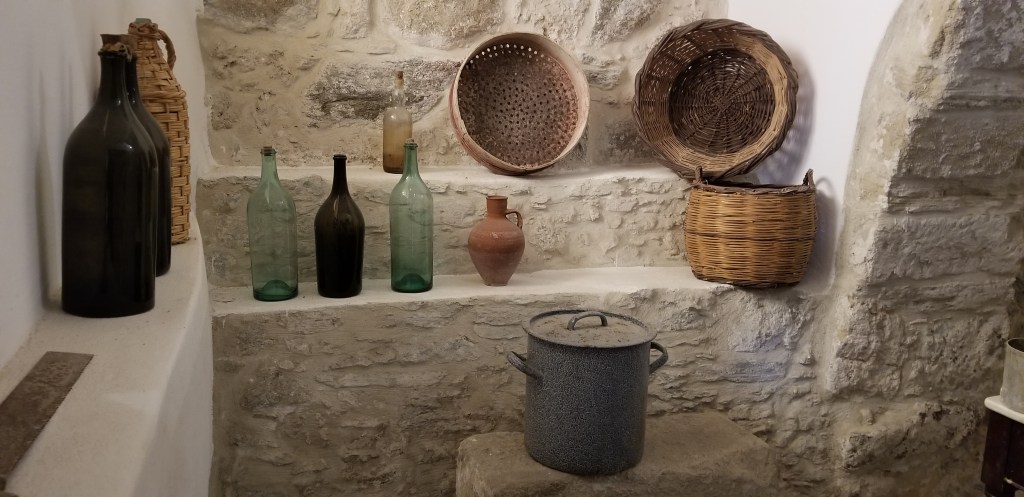
At the distillery, the citron is shown on the table below. Yellow yields the sweetest liqueur, but they also use the green variety and the leaves of the tree for production of the liqueur. It has 30-40% alcohol content. There was yellow, green and clear colored liqueur, and one little sample of the yellow liqueur kind was enough for me. The proprietors explained how they have made the citron through the years, and they used a little room containing the oldest equipment to demonstrate.

We were deep in the mountains by now, and I was in awe of our driver. The roads are mostly one-lane, full of hairpin turns, and not made for big buses. We would round a curve or ascend a hill, and find a car coming directly toward us. The driver of the car was obliged to back up and pull into whatever kind of roadway was closest in order for us to pass. Many times I would look out my window and notice that we were just a hair’s distance from a sign, a building, or a car mirror.
Just as I’d get comfortable looking out the window at the varied scenery, we would make another stop. This one was to Panagia Drosiani, another Byzantine church and the oldest church on Naxos. It was built at the end of the 6th century A.D. The front facade may be newer.

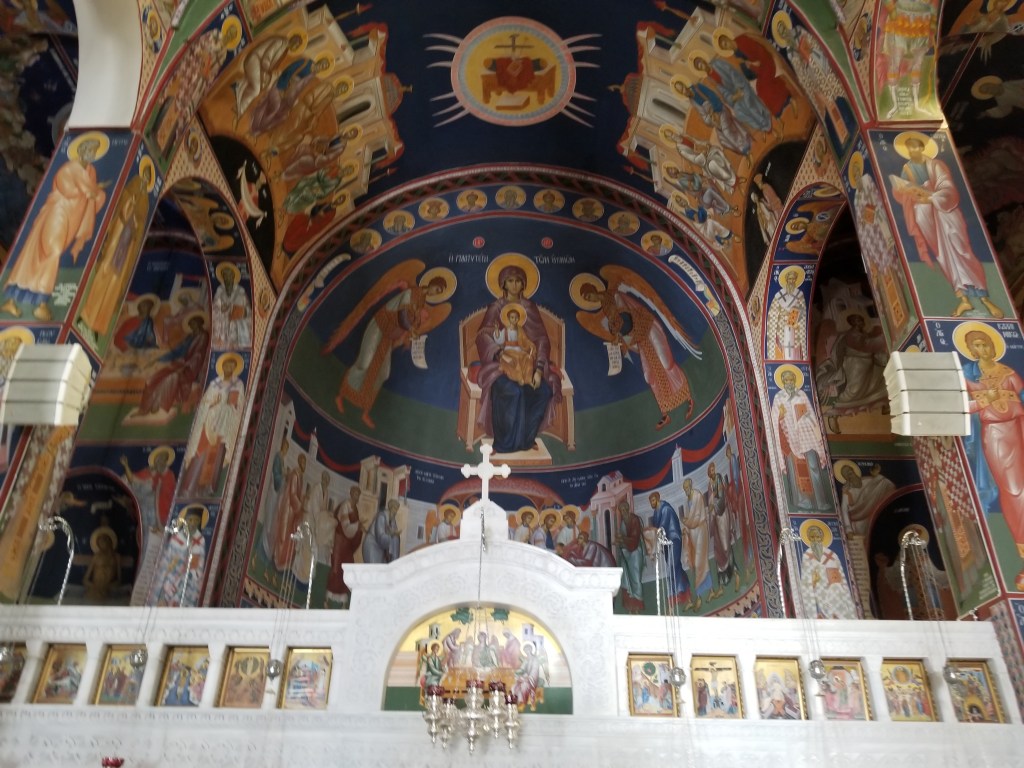
The inside of it was cave-like and dark.

There are many priceless faded frescoes painted directly on to the walls. A dark side-chapel really did feel like entering a cave, and we could only go one person at a time into it. Visiting a church that had been built this early in Christianity’s very existence gave me a bit of goosebumps.
While waiting for others to go through it, I walked around to the back, and found an amazing sight. Here, the original construction of the church can be seen.

It was time for lunch, so for that we went into the village of Apiranthos. It is a village where the streets and archways are constructed from marble. We had a delicious lunch on a simple patio overlooking the valley while my feet were planted on a marble floor. A local cat placed herself there as well, looking at me hopefully during the entire time I ate my meal. Her wait was not in vain. She and I dined on a meal of roasted pork, spaghetti with a tomato gravy, and a salad with a local soft goat cheese called xinomizithra.
The reason for all the marble is that there are marble quarries in abundance on Naxos. It was simply the construction material that they had available to use. I was glad we had some time to wander around this pretty town on our own.

As with anywhere you go in Greece, ruins from earlier eras can still be seen.

Apiranthos’s setting in the mountains also makes it a beautiful place to be.

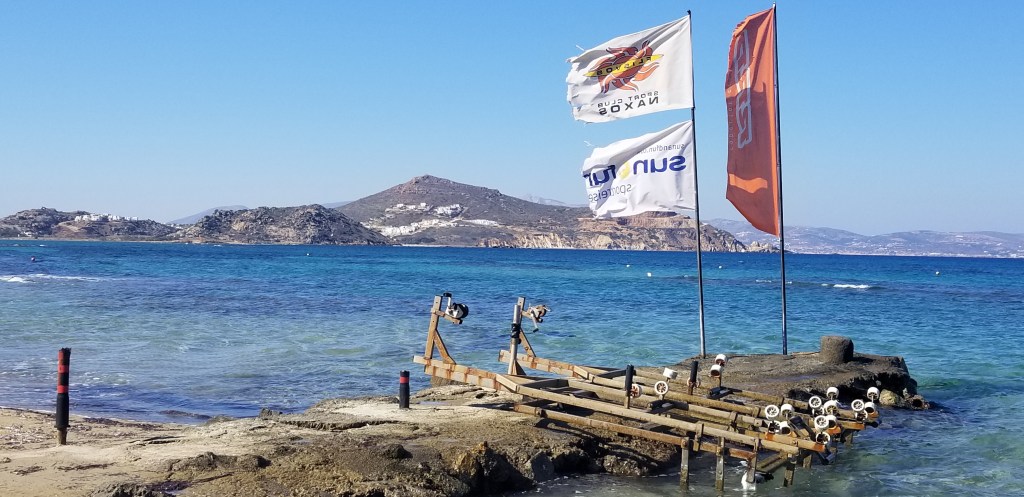
We rode north through the mountains for a long while, finally finding the north side of the island and the sea at Apollonas. I suspect that in the summer time this would have been a beach visit because we were given a lot of time to do not much. It was dubbed a “coffee stop”. There were a handful of gift shops and some places to eat. It was beautiful there, though.


We had just one stop left; a brief one, to the Apollonas Kouros. It is a massive 34-foot unfinished statue from the 5th or 6th century BC of Dionysus, the god of drink. It lays in the marble quarry where it was carved.

Why was this project abandoned? No one knows. Perhaps, our guide said, a war came. Times change. But another theory, one that I think makes most sense, was that they realized they would have difficulty getting such a colossal statue out of there. They would have had to get it down a steep hill without smashing it and then have an ocean-going vessel large enough for transport.
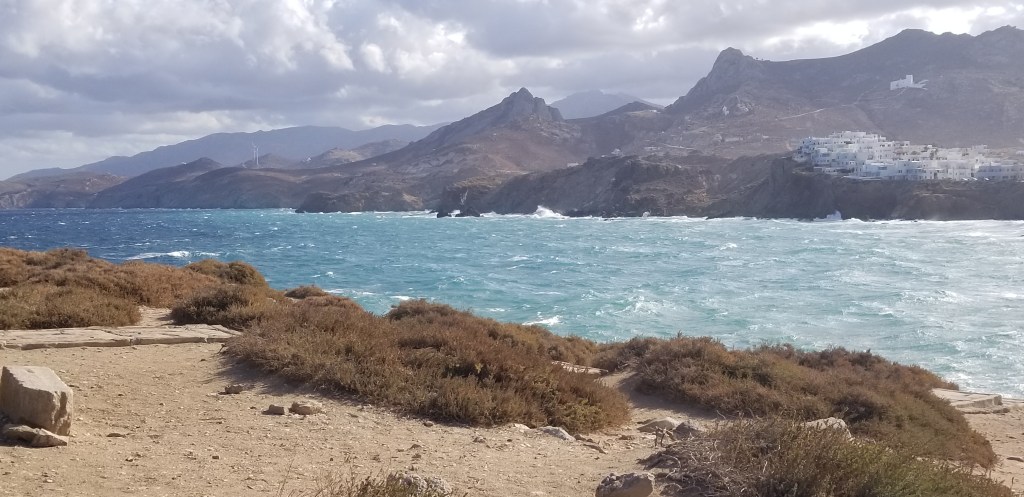
We returned to Naxos via the north coast with sweeping ocean views on one side and high cliffs on another. It had been a great day, although a little bittersweet because it was one of our last of the trip.
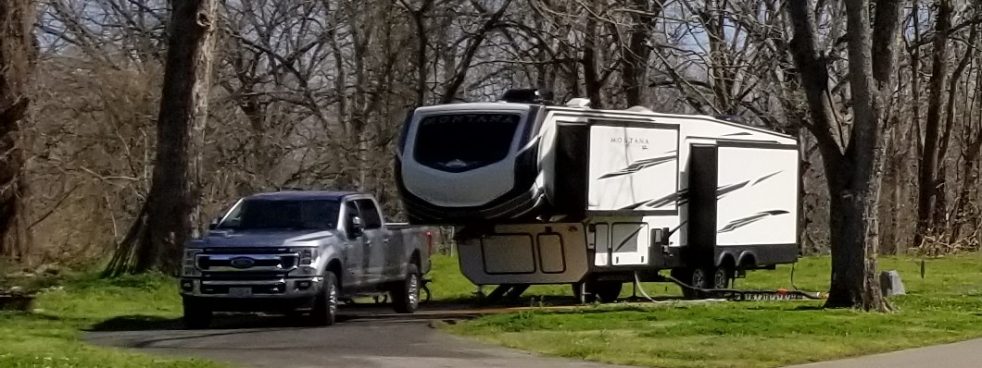
How were we feeling at the end of a three month trip? Cal had his moments when he felt that our adventure was too long and wanted to go back to his RV. Looking back on it, though, he says he enjoyed the sights and was glad we went. What made it fun for him was all the great food we had and being able to dine outside much of the time. I loved all the amazing places we visited. The trip truly did not have any down times for me and I think I would have been happy to keep on traveling. I missed the grandkids, but to put it in perspective, three months is really not that long a time and I was so happy to see them again when we returned.
For however long you have been with me on this journey, I humbly thank you for reading. I did not expect to be recording it for this long. And now, I am happy to report that my blogs will be returning to our RV life. The summer of ’23 was also epic, and we did do some more outside-the-RV travel both in the US and internationally, but perhaps those will be written at a later time.
Next time – enjoying the sun in Arizona











 Twosna Travels