USTravel

An Oasis in Greenville, Missouri

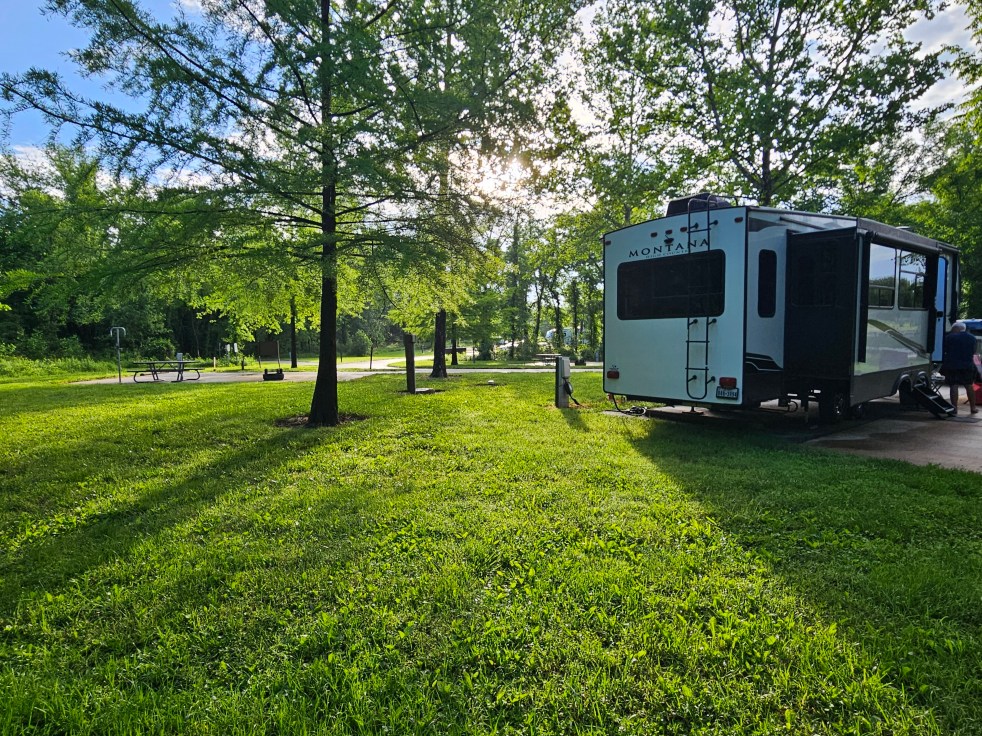
Our last Missouri stop was in Old Greenville, a Corps of Engineers park that thankfully has not been shut for budget cuts. It is a place where folks come from not far away to get out of the house, relax, and walk or ride their bikes. During the week the crowd is mostly older folks and many have three-wheeled ebikes to go visiting their friends. Besides that, though, the place is full not only of beauty but of historical interest.

Two friends of mine, who don’t know each other, recommended this park to me. When that happens, I for sure want to find out what it’s all about.

Heavily wooded Old Greenville lies in the southeastern part of the state, just northwest of Lake Wappapello and on the edge of the Ozark Hills. There is a river nearby, the St. Francis.

And therein lies its problem: it floods.

So many times, in fact, that the town was actually moved two miles away after a dam was built in1940. The dam created Lake Wappapello and fixed a lot of problems for everyone else, but made things worse for Greenville. This park still floods. My friend Betty and her husband Dan were not able to stay here in April as they’d planned because it was flooded. The campground was not reopened until just a week or two before our arrival.

On the walking/biking trail that leads out of the park under Route 67, you can see all the levels of flooding that this area has endured before and after the existence of the dam:

In a stroke of genius planning, the town site is still here, and the campground was mostly built around its edges.

Signboards told stories as I walked along the old sidewalks. The picture above shows the foundation of J. Arthur Davis’s car dealership. Around 1929, a Whippet, which is a model of car I’ve never heard of, sold for $600.00.

And here is the courthouse. It wasn’t terribly old when it had to be taken down. A grainy old photograph shows the old steps that still exist.
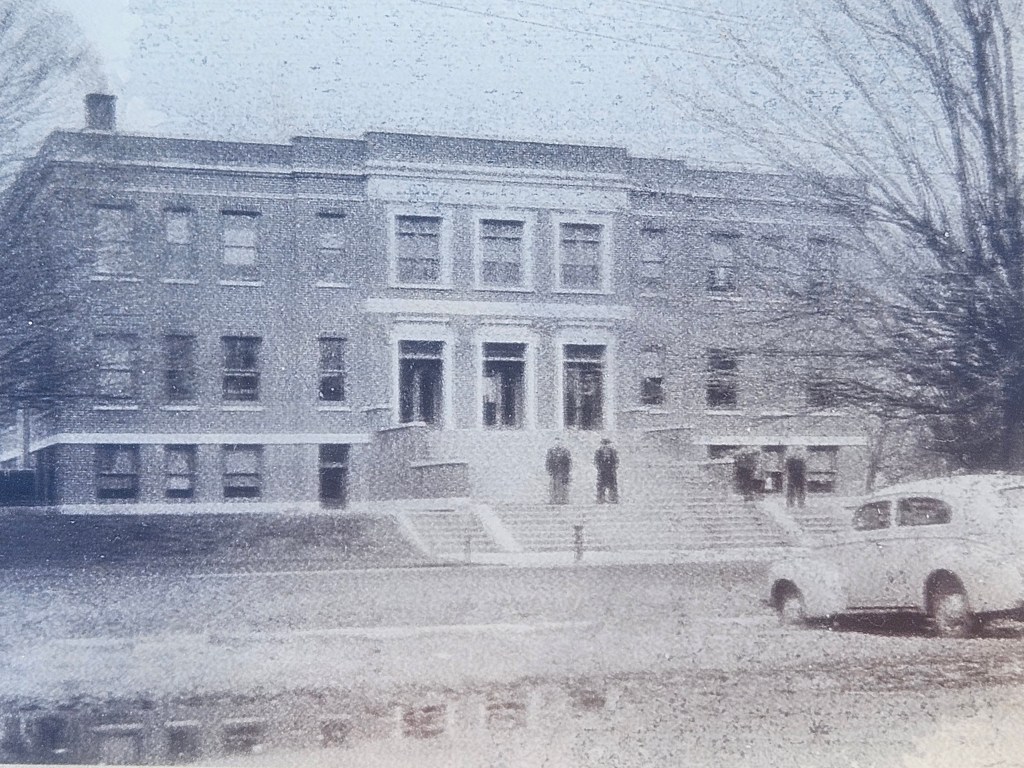
Another grainy photograph sums up the town’s watery history.

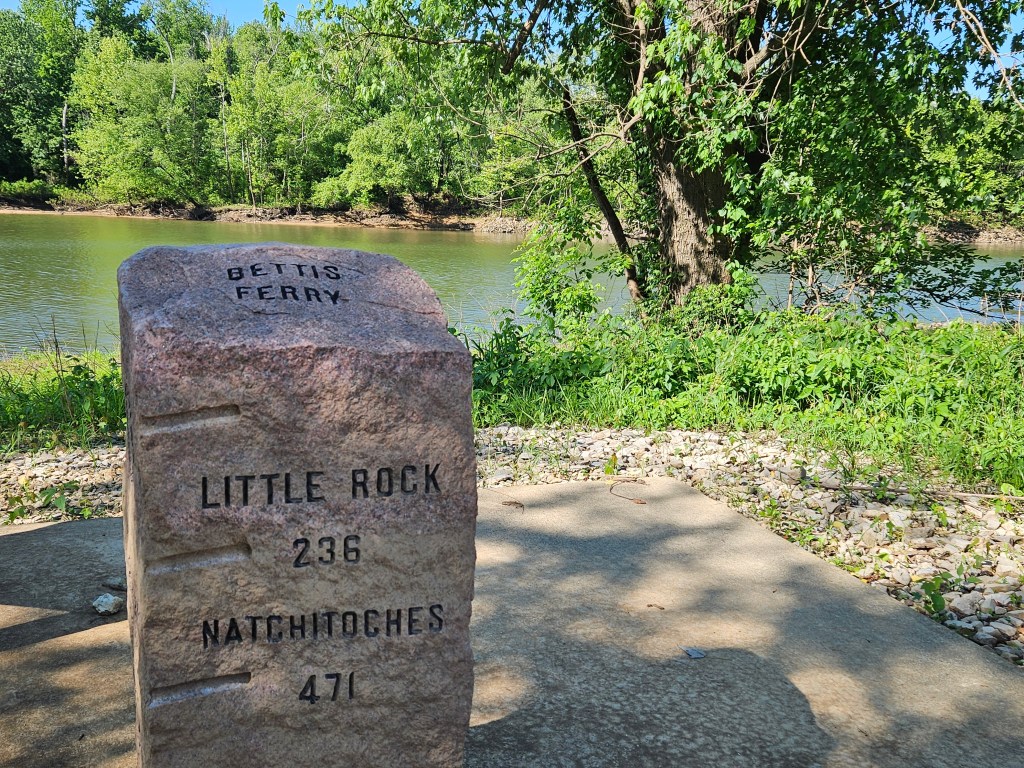
Other things happened in Greenville going back further in time. Indians first used the river here for a crossing. And in a sad chapter in our history, in 1838, more Indians crossed during their forced march west on the Trail of Tears. In its early settlement, before bridges were built, a family by the name of Bettis ran a ferry. Folks who crossed the river could then board stagecoaches north to St. Louis or south to Cape Girardeau.
There were Civil War skirmishes in this area, with a Union and a Confederate leader conducting raids on each other over several years. Since Missouri was split they were both from this state. The men simply returned to their respective counties and led quiet lives after the war.

The cemetery has been left with some graves, five of them being unknown confederate soldiers.

Other graves dating mostly from the late 1800’s to the early 1900’s told stories of short lives and lost children. And there was this, on a weathered old tree. When was it carved?

A bike trail leads through the woods to current-day Greenville, and yes, they did receive a brand-new courthouse. It stands behind the Statue of Liberty war memorial shown here.

Perhaps more importantly, Trail’s End Coffee and Cafe is right across the street from the courthouse. Jason and Jordan own this shop and Jason is Greenville’s mayor. Before we had even introduced ourselves, Jordan was preparing s’more pancake bites for us: still-warm bits of pancake with marshmallow creme and chocolate chips with whipped cream on top. And this was after we’d shared a blueberry muffin! She is so nice and the treat was delectable. We returned the next day for lunch.
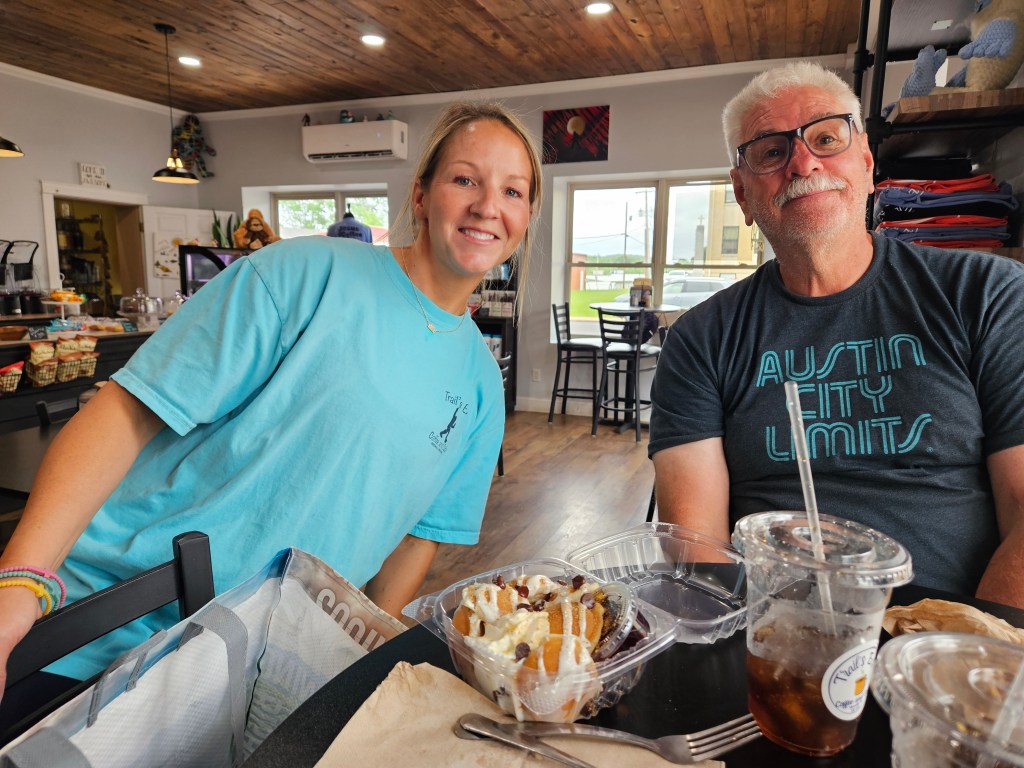
Jordan, Cal, and those awesome pancake bites

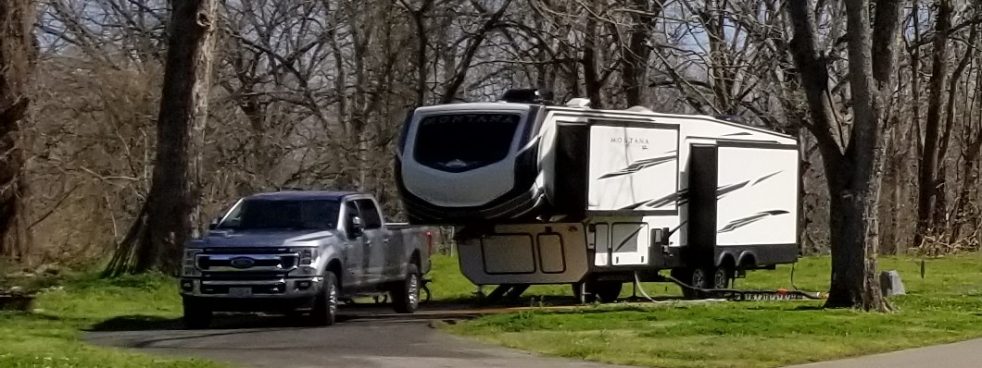
Back at our campsite, we had one corner of the campground loop all to ourselves for one full day until someone came into the site behind us. Even then, it felt very private. I suppose that the only negative was that we had no TV, no phone service, and no Wi-Fi. This reality served to make us appreciate the interlude even more; we found plenty to do. It was a good excuse to head down to Trail’s End on our bikes to get some connectivity, and we never moved the truck in three days.

Who can complain when the only thing to do is to watch a woodpecker at work?

With thanks to my friends Kris and Betty for all their recommendations. Betty has a blog: chambersontheroad.com, and has also written an ebook called “RVing with Bikes” which you can find on Amazon.

Next time – over the rivers to Paducah
USTravel

Of Bikes and Books in Windsor and Mansfield, MO

We have quite the adventures with our Garmin, and humanize it by calling it a “she”.  After Lake Shawnee, she had all kinds of ideas on how to get us to Windsor, Missouri.  We had already decided on a route to get there, but we do value her opinion. When she keeps trying to turn us around for missing her turns, I get nervous. What does she know that we don’t? I look at the low bridges listed in the Rand McNally Trucker’s Atlas that we have. I double and triple check the route.  On more than one occasion, she’s had good reason to make numerous attempts to get us to mind her.

She finally settled down for the last forty miles or so, but I sat with that map on my lap the whole way.  We did pick a pretty good route, for humans.

For us, there are two reasons to visit Windsor, and they both have to do with bike riding.  They are the Rock Island Trail and the Katy Trail, both rails-to-trails Missouri state parks.  Years ago, we rode the entire 275 mile Katy trail round trip over a period of years.  Windsor was one of our overnight stops, in one of Kim’s Cabins.

“Two roads diverged in a wood”… we took both, the Katy on the left and the Rock on the right, on two different days
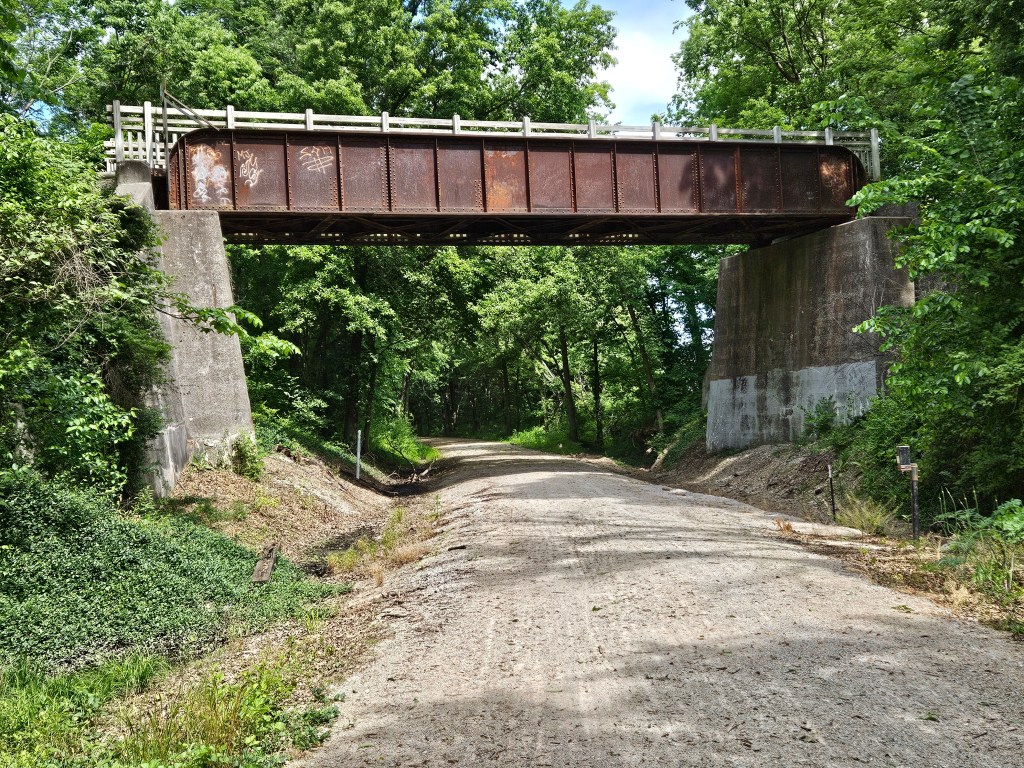
Another view: the Katy above on an old rail bridge and the Rock Island below

This time, we stayed in Farrington City Park.  There is a layout of 8 RV spaces plus room for tent campers looking for a night’s stop off the bike trails.  It is woodsy and secluded and was mostly empty when we were there. Although there is a narrow spur road that goes in front of it, there were no more cars on the road than would be in a campground.  The road T’s  off further down, and one can go uphill to the left to get to the trail or right to go into the park.  Occasionally, there would be a clip- clop of hooves on that road, which meant that some Amish were coming by their horse and buggy.

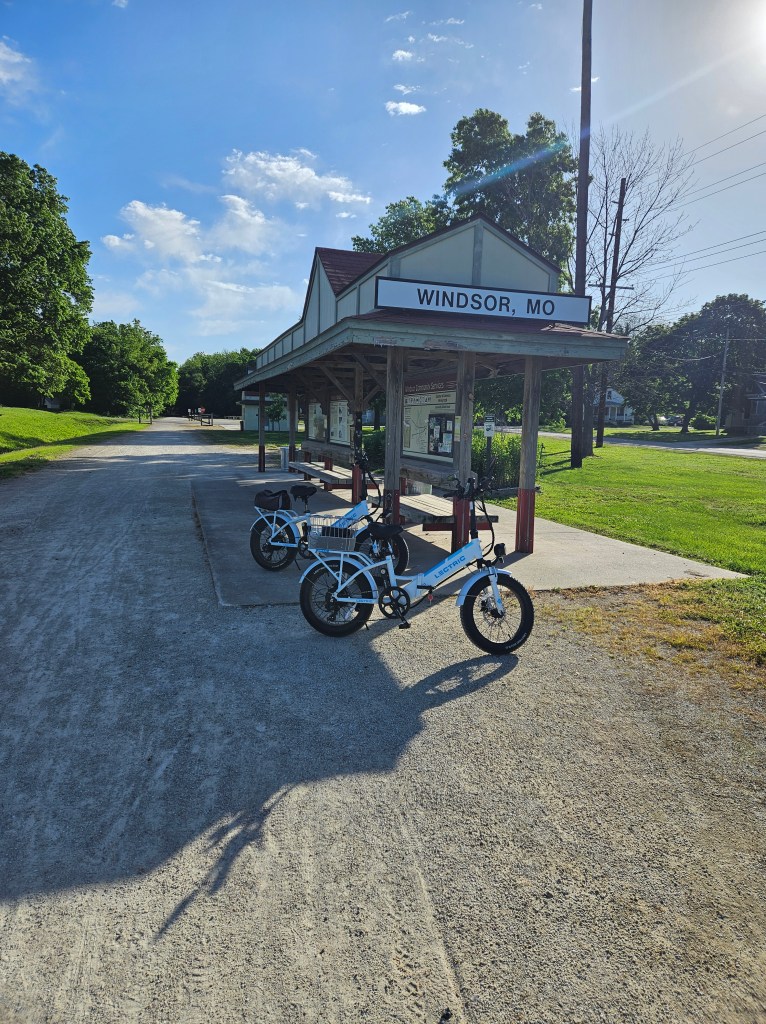
The Windsor trailhead is prettily landscaped, with its own caboose.

We broke ourselves in gently on the Katy since we hadn’t ridden for a period of some seven months or so. Our ride stretched from Windsor to Calhoun, the next trailhead and a distance of fourteen miles round trip.

Ready, set, go!

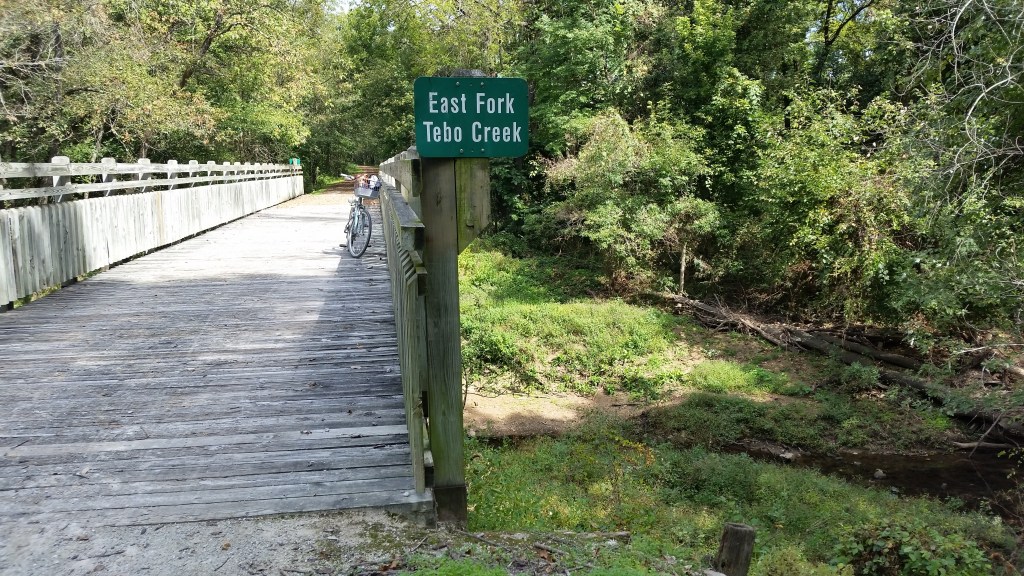
This part of the trail is totally wooded with few road intersections. There are interesting bridges along the way:

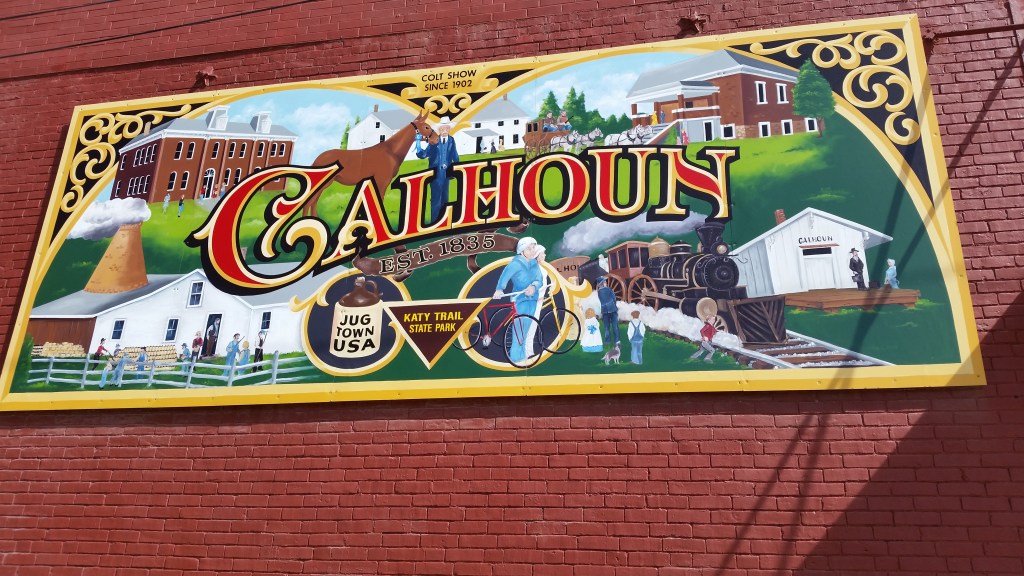
This mural was on the side of an old building in Calhoun:

We rode around Windsor a bit after that, catching up on Windsor news with Kim at her cabins, and visiting with the locals at the Wagon Wheel restaurant.  I think they were a bit bemused to see us riding up on our bikes for lunch.

On a snowy day in December, 2016, we were on hand for the grand opening of the Rock Island Trail in Pleasant Hill, Missouri by then-governor Jay Nixon. 47.5 miles opened from there to Windsor, where it intersects with the Katy. 144 miles eastward are still in development.  Despite my high hopes, no other portions of the trail have opened since then, save for a couple of one-or-two mile sections further east.

On the Rock Island I had expected open prairie, but the trail defied expectations.  Like the Katy, woods and trail ran for the ten miles to Leeton like a ribbon of green amid farms and pasture land.  It was so pretty.  It ran just a little rougher than the Katy, and there were more intersections, but these were mostly gravel farm roads.  We give it a thumbs up.  I guess I won’t be trying to do the whole Rock Island trail, but that’s OK.

So, our total mileage count for the two days was 32.

We could walk in any direction for the evenings we were there, but Farrington Park itself was a favorite.

The lake and a pretty decoration at Farrington Park

Our Rving neighbors gave us a tip about an Amish wholesale store just outside of town. Before leaving, we purchased a loaf of freshly made bread, eggs for half the current price at the grocery, a small apple pie and some fresh vegetables, among other things. We looked at all the things the Amish might purchase:  bulk spices and sauce mixes, all kinds of stainless steel kitchenware, an aisle full of canning supplies and jars, racks of puzzles and shelves of religious greeting cards, and these: fifty-pound sacks of grain and sugar.

Moving down the road…

When connecting the dots between our Missouri destinations, I was elated to see that Mansfield and “Laura I. Wilder RV Park” was on our route for an overnight stay.  The truck would stay hooked up to the trailer, but no matter: I could simply walk across the road to the museum and house. That’s what I did as soon as we were set up for the night.

Laura I. Wilder wrote a whole series of “Little House” books for young children.  You may be familiar with the “Little House on the Prairie” TV show from years back.  For me it was all about the books, and I reread the series many times.  As an adult I’ve read all the non-fiction stories about her and her family.

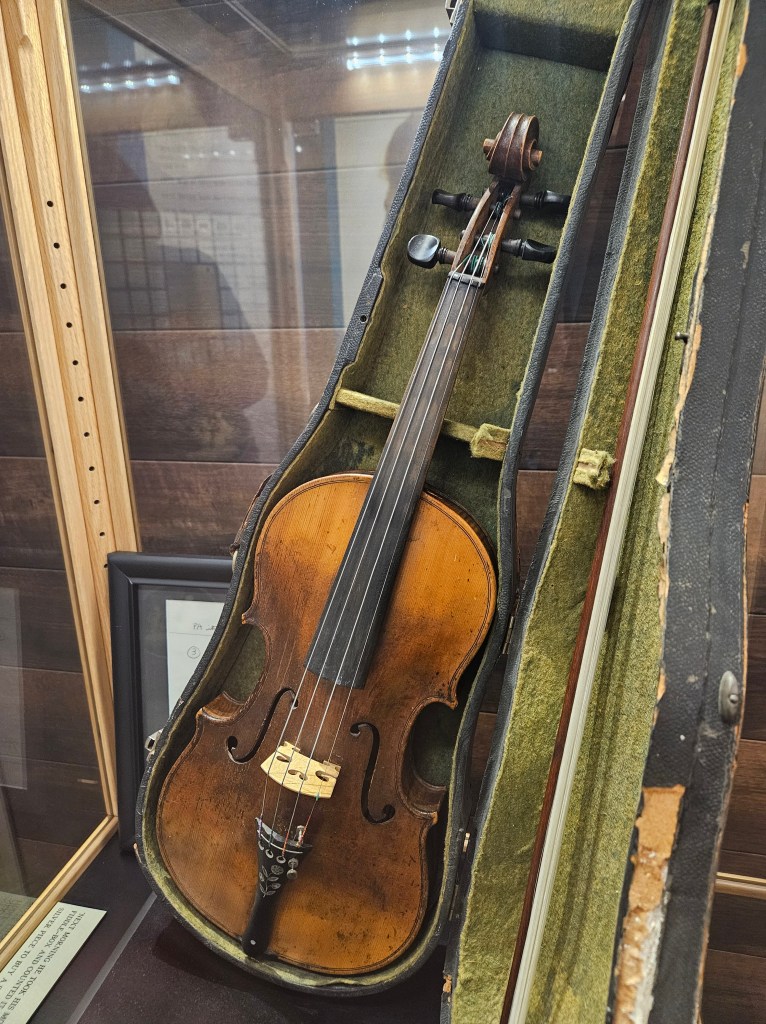
The home where she lived for most of her adult life with her husband, Almanzo, was turned into a museum only months following her death. I’ve already visited twice in earlier years, but the museum building is new since the last time.  There’s a short eight-minute video and then when you walk into the museum you see Pa’s fiddle.

Pa’s fiddle, an object that was a large figure in all of Laura’s books.

It’s great to see all the family memorabilia, but I enjoyed walking through her house the most.  I think about all the years that she and Almanzo shared here.  There are the things Almanzo carved – lamps and tables, and home updates to accommodate things like the purchase of a new refrigerator. He even made a latch hook rug. 

In a foreshadowing of things to come for us, Laura liked the architect Frank Lloyd Wright and wanted the living room to have aspects of his design. It took 17 years to complete all the rooms in the house, and this room was last.

I could see the desk where Laura wrote the books and the table where she would open all the pieces of mail that arrived daily when the books were published.

Laura’s desk, where she wrote all of her books

These days, Laura’s books and the times she lived in are controversial. There have been books written that suggest her daughter Rose had a heavy hand in editing or even co-writing, and books that call into question the reality of the books, all of Pa’s pioneering and moving the family around, and even some racial overtones. Laura did not mean for the books to be non-fiction. And they speak to another time and era, as well as what was known and accepted in that era.

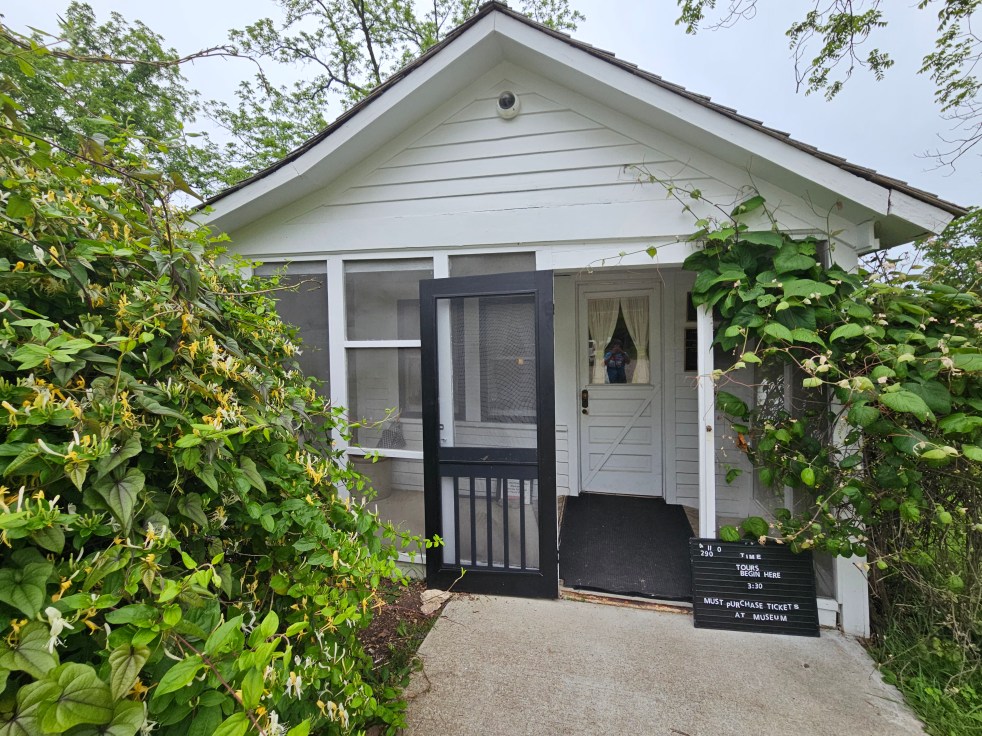
Being the only person showing up, for the 3:30 tour, I had the curator to myself for Laura’s home. We talked of many things, but not these issues. I had gotten sidetracked on another topic: counted cross stitch.

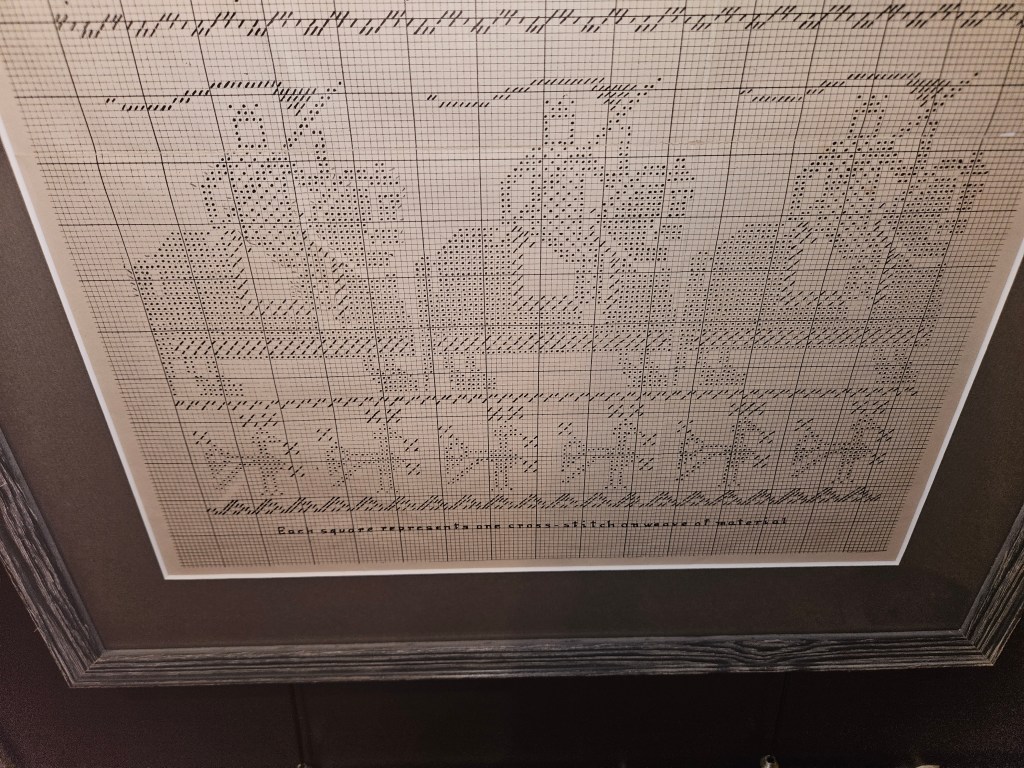
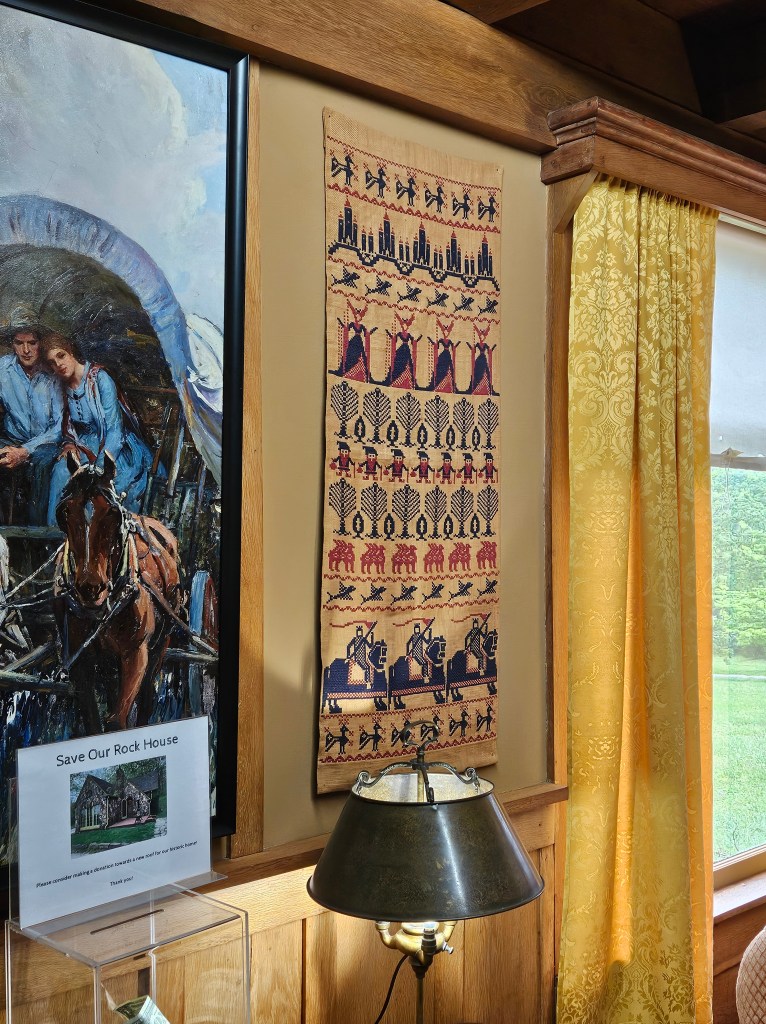
This is part of a pattern for a picture Laura made, which I saw in the museum. In the house, I found the picture, called Knights and Castles:

I fell in love with the picture and asked the curator about it. She herself had found the pattern in the attic just two years ago. It was in a box of old newspapers, tucked in a folder. Until then, the origin of the picture had been a mystery. Laura had sent away for the kit offered in the 1936 Woman’s Home Companion magazine for $1.00. The curator was elated about her find. I went back to the museum and took multiple photos of the pattern. It’s repetitive and in only two colors so I believe I can re-create it. Will I ever? That remains to be seen.

“It’s not the things you have that make you happy. It’s love and kindness and just helping each other and just being plain good.”–Laura Ingalls Wilder

Next time – moving on to Greenville, Missouri