USTravel

So Much To Do In Virginia City, Nevada

Silver! The Comstock Lode was discovered in Virginia City in 1859, and the boom was on. It was the first major silver deposit found in the United States. Mines opened and the town grew to a population of around 25,000 ten years later. The growth in this town is what led the state of Nevada to statehood.

It had been a while since we’d ridden a train, so upon our arrival here we decided to take a ride on the diesel-powered Virginia and Truckee Railroad to start our day.

The train was originally built to haul the ore out of the Comstock Lode Mines, as well as other building materials and supplies, and went all the way to Carson City. Now it hauls tourists on a round-trip venture down to Gold Hill, a tiny town where the first of the silver lode was mined.

Our conductor and guide shared names of the mines and some of their stories as we rode.

You can see the train tracks just above this long-gone silver mine
The town of Gold Hill was so named because gold is what was found here first.

After riding the train, we wandered along the boardwalk through town.

If for some crazy reason you didn’t find anything of interest to see in Virginia City, you could at least wander into the candy shops and have a treat. Your favorite must be in here somewhere!

Mark Twain had a job as a newspaper reporter in the 1860’s. He wrote about his Nevada years in the book “Roughin’ It”. There is a museum dedicated to his time here, but it is being reconstructed.

Of course, in a town such as Virginia City, there are several mine tours that one could take in while visiting. We wandered into the Ponderosa Saloon, and a tour of Best and Belcher mine is available (for a fee, of course) once you walk straight back past the bar. Who could resist?

A hapless miner displays various drilling tools in the Best and Belcher Mine.

This mine was dug for gold, but it was not profitable. Not, that is, until the present-day owners of the Ponderosa realized that this shaft entrance was steps from their saloon. We enjoyed this informative 25 minute tour.

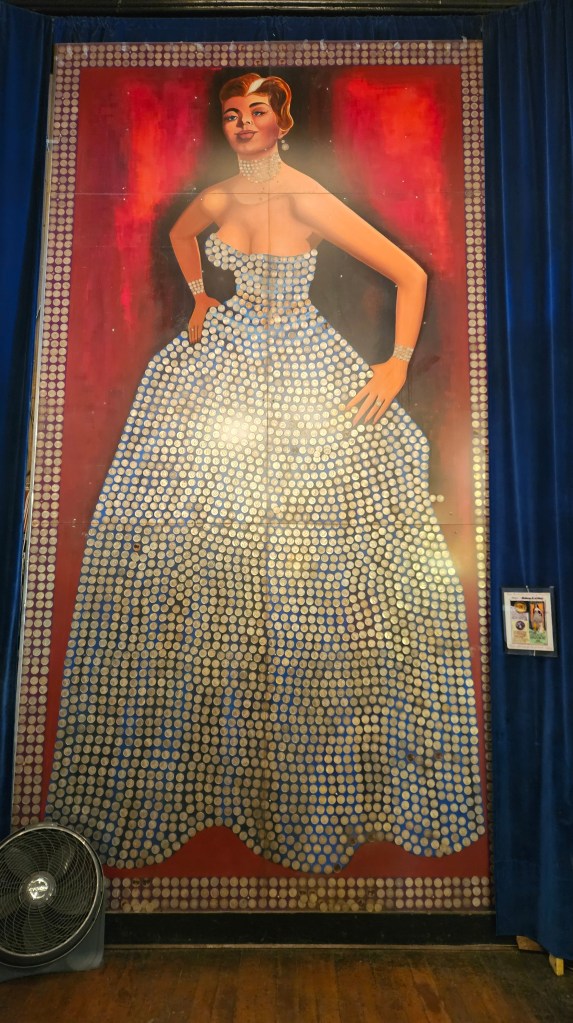
Not that we are saloon hoppers by any means, but down the street at the Silver Queen saloon, we could see a 16 foot Queen made out of 3,261 silver dollars. This lady weighs 210 pounds and the coins are all Virginia City silver. There is a wedding chapel in the Silver Queen too, in case you want to get married after you see her.
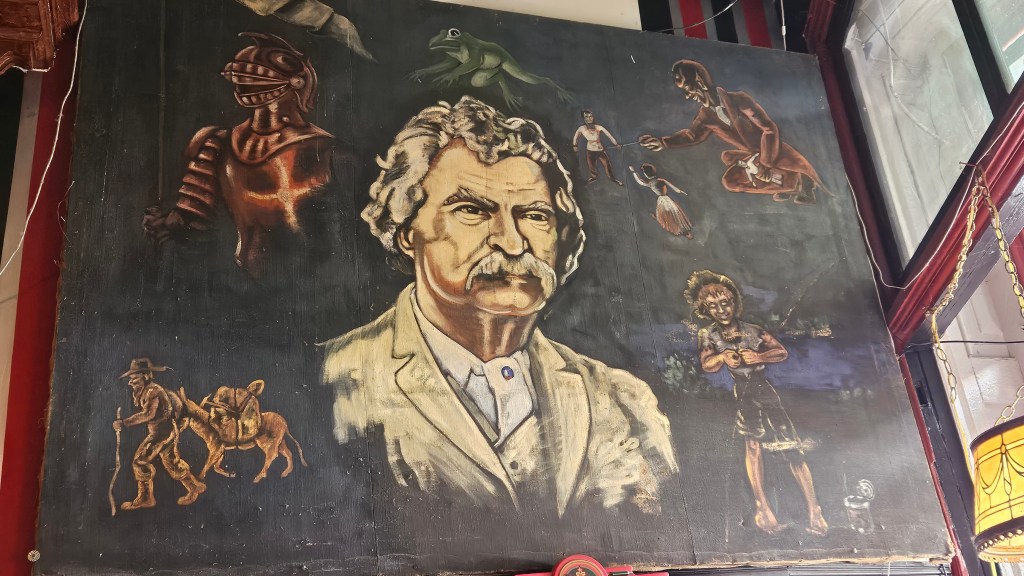
I also liked this tribute to Mark Twain inside the saloon. Samuel Clemens used the pen name of Mark Twain for the first time when he lived and worked here.
We visited two other places in Virginia City. The first was St. Mary in the Mountains, Nevada’s oldest Catholic church. The number of Irish immigrants working the mines necessitated its original construction. It outgrew that one and a new building burned down during a huge fire that decimated the town. The church was rebuilt with bricks in 1864.
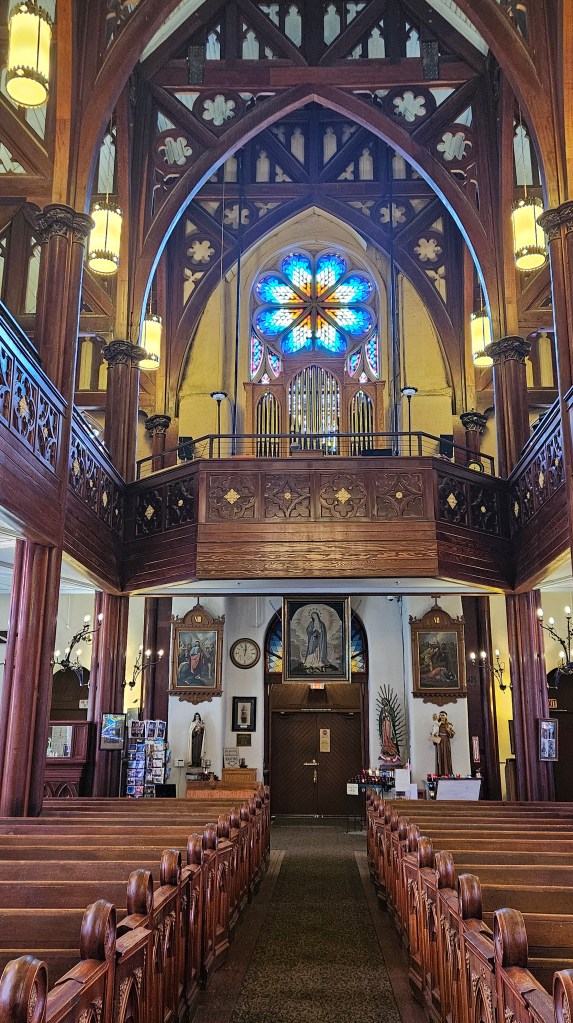
Looking from the nave to the entrance of St. Mary’s in the Mountains

Our train conductor had touted the museum in its basement, and also the fact that they sell wine down there. We couldn’t figure out what happened to the wine, but the paintings in the wine cellar were splendid. The museum held many ecclesiastical treasures.
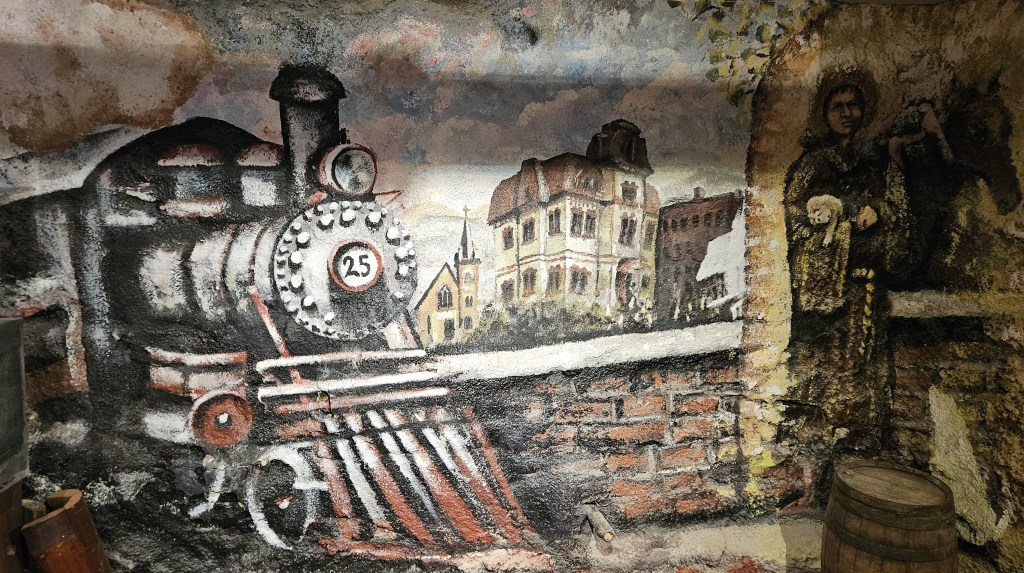
Our last stop of the day was at the old schoolhouse, renovated and turned into the Historic Fourth Ward School Museum. It’s painted into the center of the picture above, and shown below as well.

The children of immigrant miners, wealthy mineowners, town professionals, the shopkeepers, and other residents of the town crowded into this school. There were 3,000 children living here in 1875! Here’s all the facts:

This four-story, Victorian-era school building is the last of its type still in existence. Children from young elementary all the way up through high school attended here. One room was set up exactly the way it was back in the day. Yes, that’s Cal in the front row.
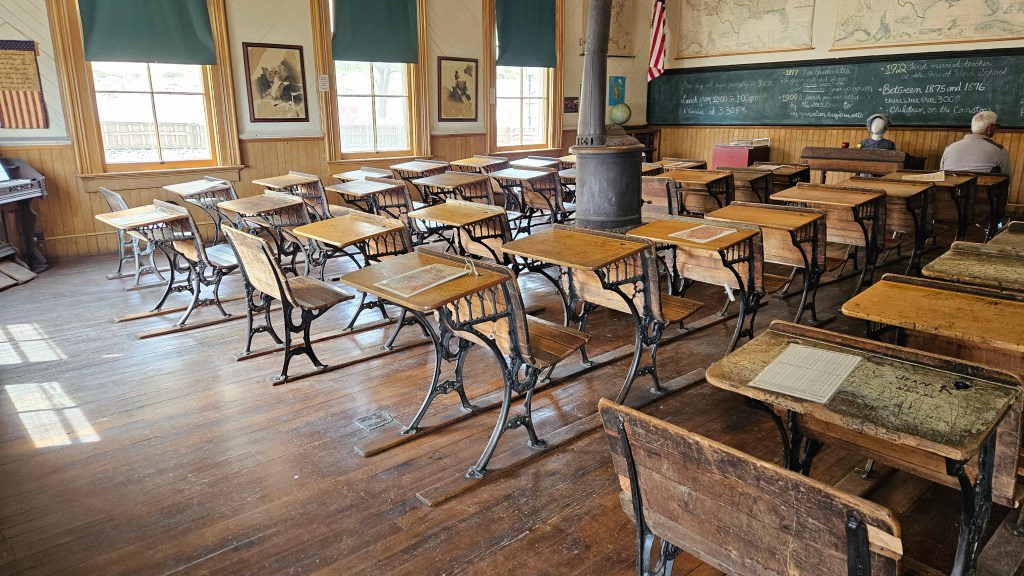
Here is the first grade class in the 1890’s. Note that there is only one teacher for all of these kids!

Other school rooms contain displays of Virginia City history. Here is a piece of Comstock ore:

Unexpectedly for us, we spent an entire day visiting this mining town. It is hard to compare mining towns from one to another because they all have their own history, but Virginia City had a lot of stories to tell.

Next time – we head out on a road dubbed “America’s Loneliest”

USTravel

Burro-ing Around in Oatman, Arizona

The old mining town of Oatman lies in the northwest corner of Arizona and is around fifty miles from Lake Havasu City. With that distance, it’s a little far for a day trip, but after a few days around Lake Havasu we were ready for something different to do.

An unexpected bonus to the trip to Oatman is that it is on old Route 66, and the desert vistas are gorgeous.

Oatman began, as many Southwest towns did, by the discovery of gold in 1915. It is named after a little Illinois girl named Olive Oatman who was captured by Indians. It was a big story that everyone knew about at the time.

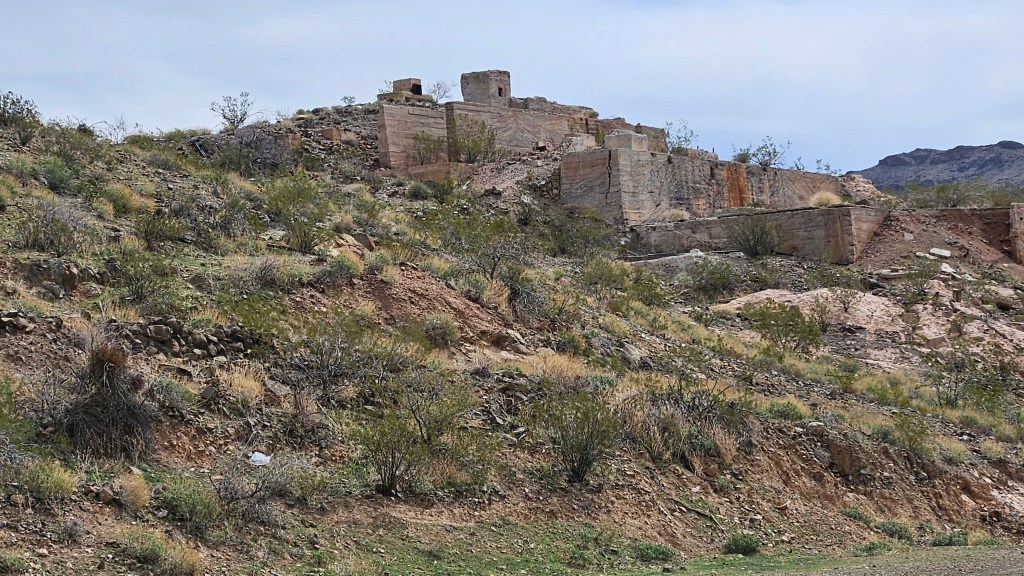
Millions of dollars in gold were mined here, and the remains of those mines dot the hillsides.

A sign on a board in Oatman stated that the town furnished gold for World War I, and copper for World War II.

There was a bit of a renaissance as a destination with a Western theme for tourists when the Mother Road, Route 66, was built.

Abandoned homes tell the story of Oatman’s booms and busts.

Route 66 was bypassed after Interstate 40 was constructed. The town may have died but for the thing that keeps it on the map: the burros that wander around town. When the mines closed, the workers turned their hardworking burros into the hills. The burros became feral, and burros did what burros do – they multiplied. They were used to being fed, so they wandered through town looking for handouts. Now, of course, everyone wants to feed them, and the shops sell mule food.

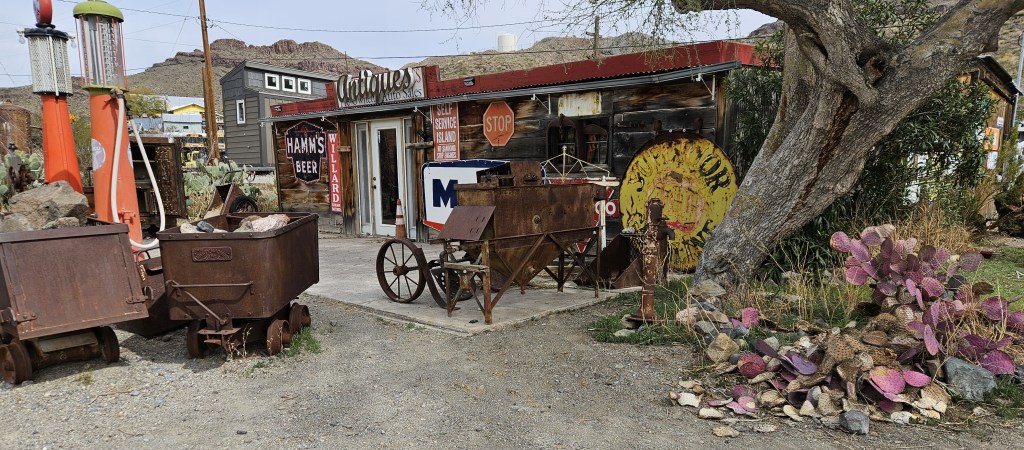
We came into Oatman in the morning, and nary a burro was to be seen. It was a cool morning, and I was told that they like to laze about when it’s cool and come into town when it warms up. So we walked through the craft and trinket shops, and looked at all the varied items that an antique store had sitting outside.

The town had a huge fire in 1921 which burned down many of the buildings in existence at the time. This wall is the site of one of the hotels, and the doorway is the entrance to a mine that was constructed later.

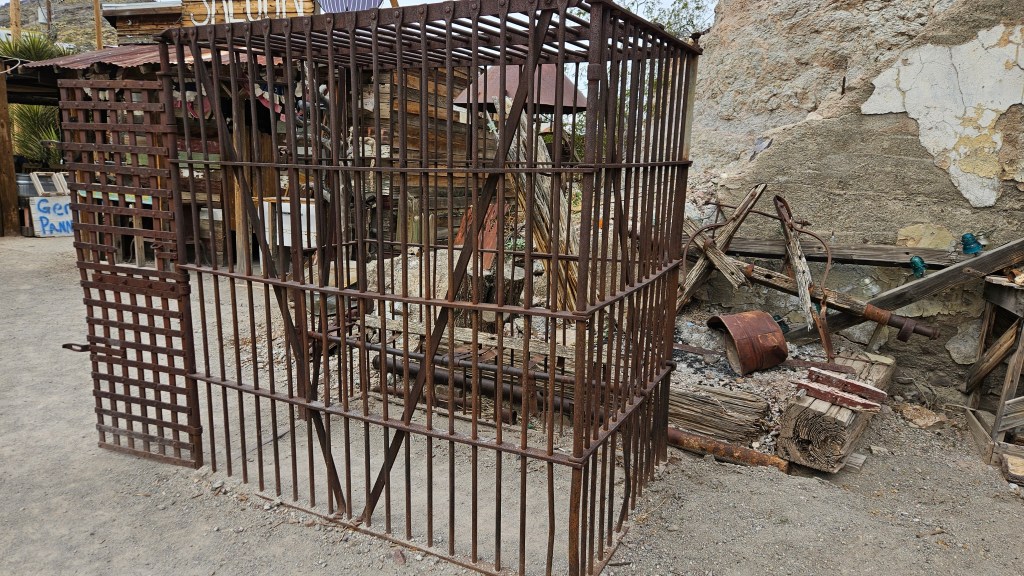
Nearby, there is a jail cell that was used for temporary incarceration of prisoners.

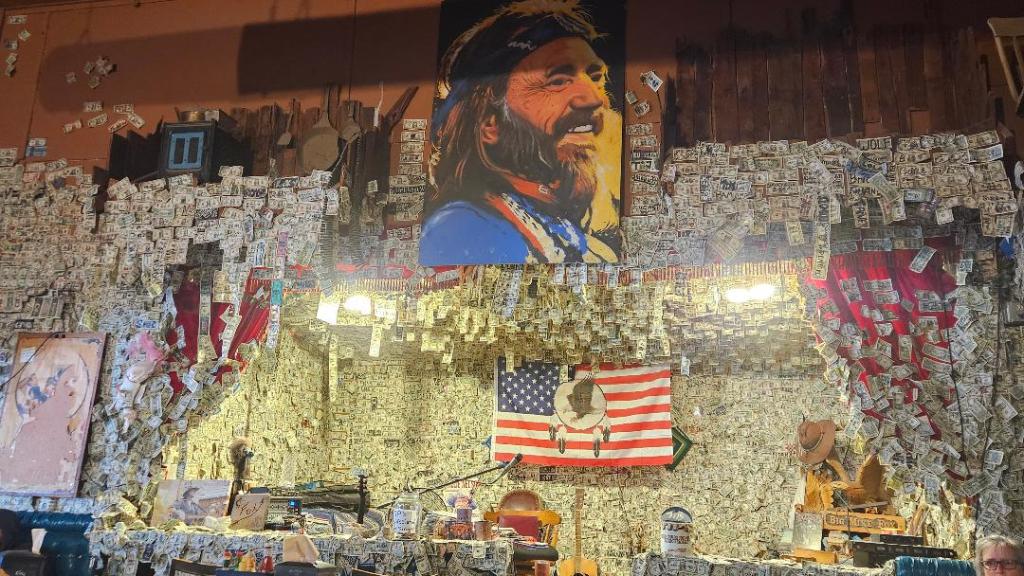
The Oatman Hotel survived the fire of 1912. Built in 1902, it is the county’s oldest two-story adobe structure. We went in for lunch. The walls were plastered with dollar bills and, as I waited for my food, I gazed at a large picture of Willie (in his younger days) on the stage.

I enjoyed a most delicious lunch here. It was the special of the day and called “Greek Shepherd’s Pie”. I can’t pass up anything with “Greek” in the name. After taking a few bites, I realized it was moussaka, but I’d never had moussaka like this before. Maybe it was the melted cheese in it, warm and tasty. I’m still thinking about that lunch. Cal had his usual burger and fries.

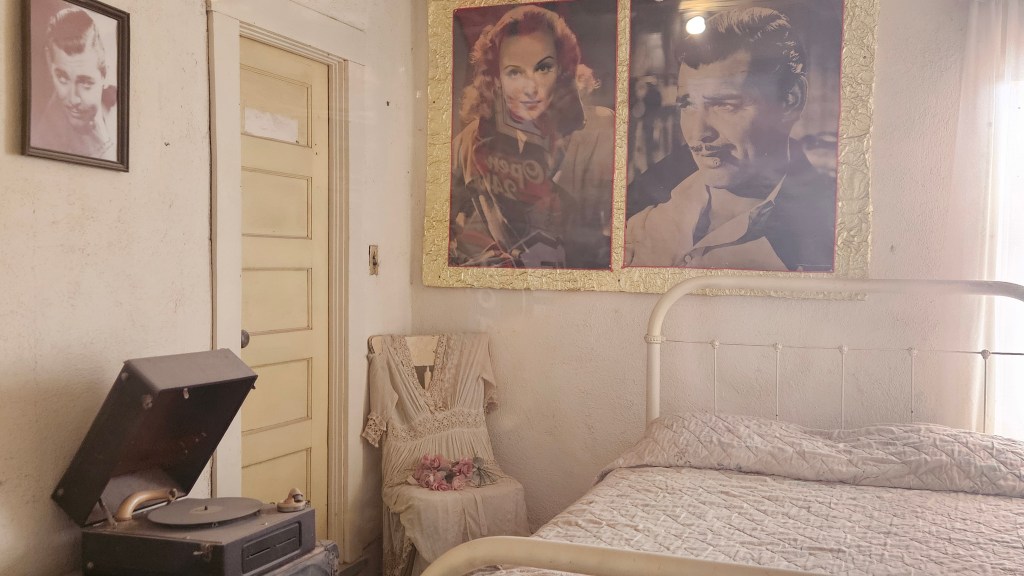
After that extremely satisfying meal, we went into what I think was formerly the lobby but now has a soda counter selling ice cream. Despite all that moussaka, there was room for ice cream. A precocious little girl sat on one of the stools, swinging her legs as she chatted us up. She told us that it’s not possible to stay overnight in the hotel any longer. But we could go upstairs and look in the room where Clark Gable and Carole Lombard spent their honeymoon night after being married in Kingman. Of course we had to take a look after receiving her excellent tourist information.

It’s not a great picture, and there is a bit of a glare with the plexiglass barring the entrance to the room. I thought I’d post the picture anyway because, interestingly, this story is rooted more in myth than in reality. I read later that they returned to Hollywood directly after the wedding. Their supposed room wasn’t the only one to see, though. Other rooms were open and set up to show us the things that early travelers might have brought with them when they stayed in the hotel.

When we emerged from upstairs, the little girl was gone, and there was a shootout on the street. A large crowd gathered. As if on cue, the burros arrived and were soon swamped with tourists. I didn’t buy any feed for them, but that didn’t stop them from checking to make sure.

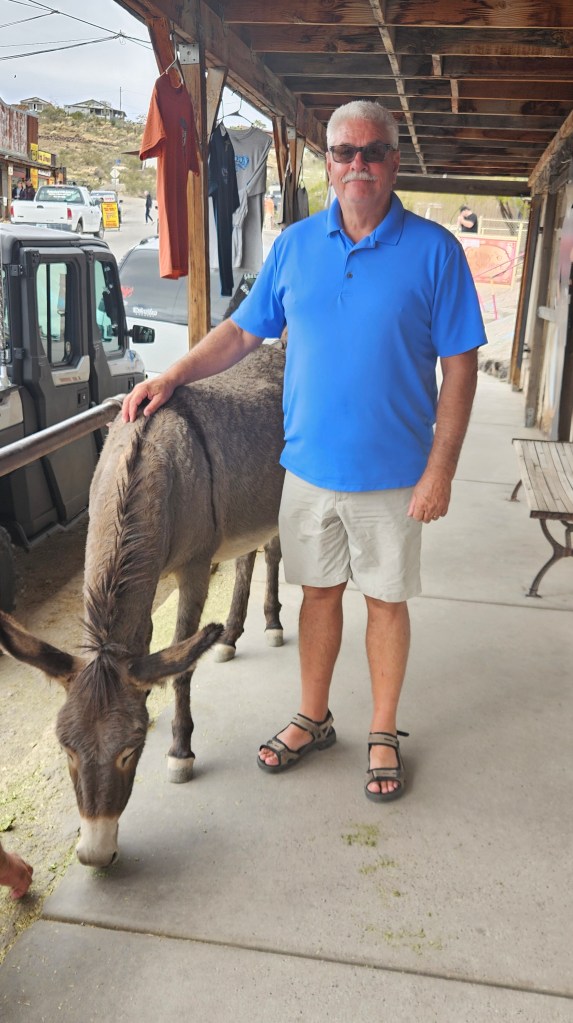
Cal’s new pet burro

It was hard to get a picture of them without other tourists in the picture. We soon began work on an idea we’d gotten from the little post office here. We purchased cute burro postcards for our grandchildren and mailed them from Oatman. They were cancelled with a special stamp.

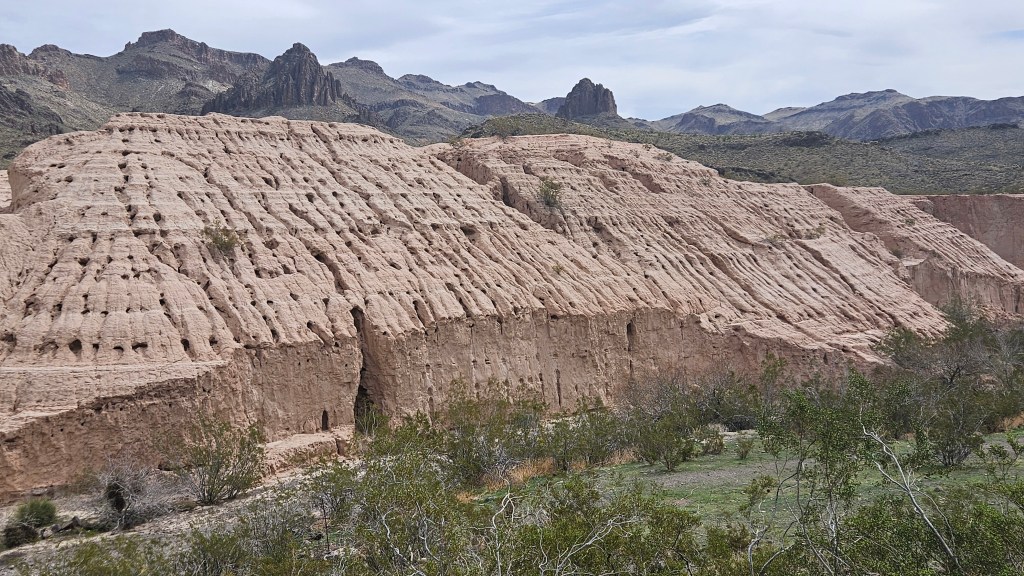
Our time in Oatman was over. On the way back to the truck, I wished I had enough energy to hike over to get a closer look at this gorgeous work of sandstone art by Mother Nature.

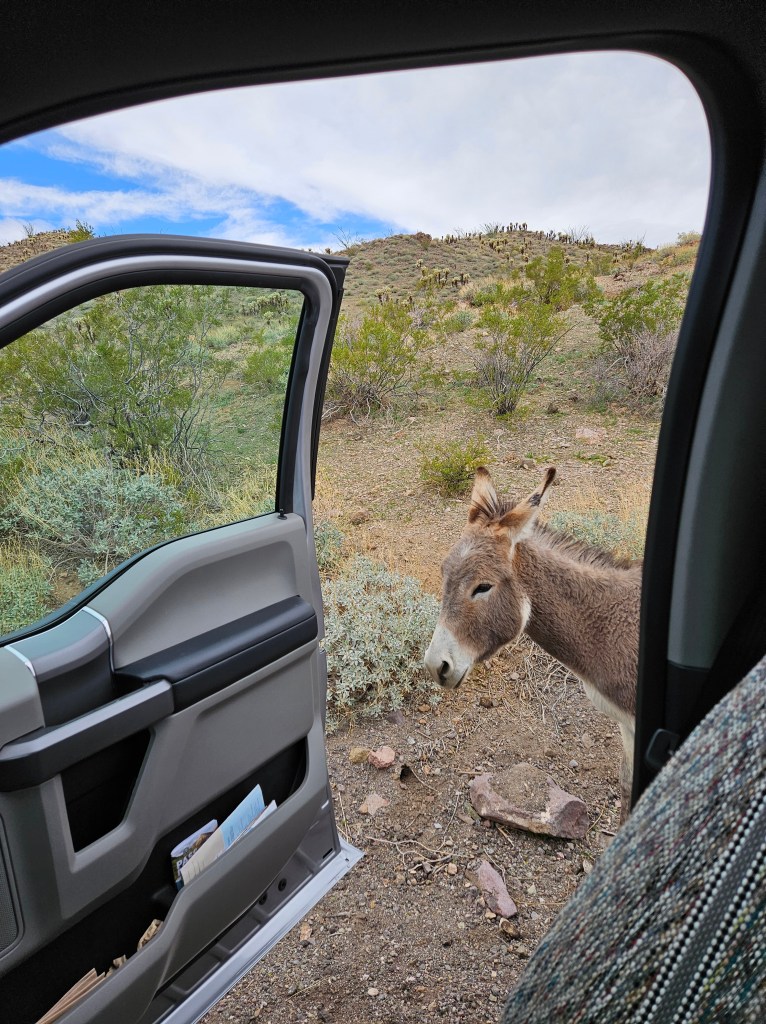
We had one last treat in store. As we began to drive out, a burro was standing all by itself in the road. No tourists were anywhere in sight so I had this burro all to myself.

You know everything there is to know about photographing wildlife. We’ve all seen the pictures of crazy tourists approaching buffalo in Yellowstone. These burros are wild but they are used to people. There are cautions, though, that they can bite and this one was not in town. I kept my distance and stepped out of the truck to take a picture from across the road. The burro, probably hoping for a handout, came over to me. I retreated and slowly walked back to the truck. It followed and clearly wanted a cuddle.

I made an exception for my wildlife rule. This burro was probably used to being in Oatman anyway.

The burro followed me over to the truck as I started to get in. I’m sure it was looking for a handout.

It finally gave up on me, and checked to see if maybe Cal had some treats in the truck.

If you visit Oatman, you may want to not miss the jail museum. The jail has been preserved from Oatman’s heyday and most of it is original. I didn’t even know about it until we came home and came across it when looking up information about Carol Lombard and Clark Gable’s wedding. If we are ever back in the area, that will be a good excuse to visit the burros again. Maybe the Oatman hotel will have “Greek Shepherd’s Pie” on the menu!

Next time – another national park