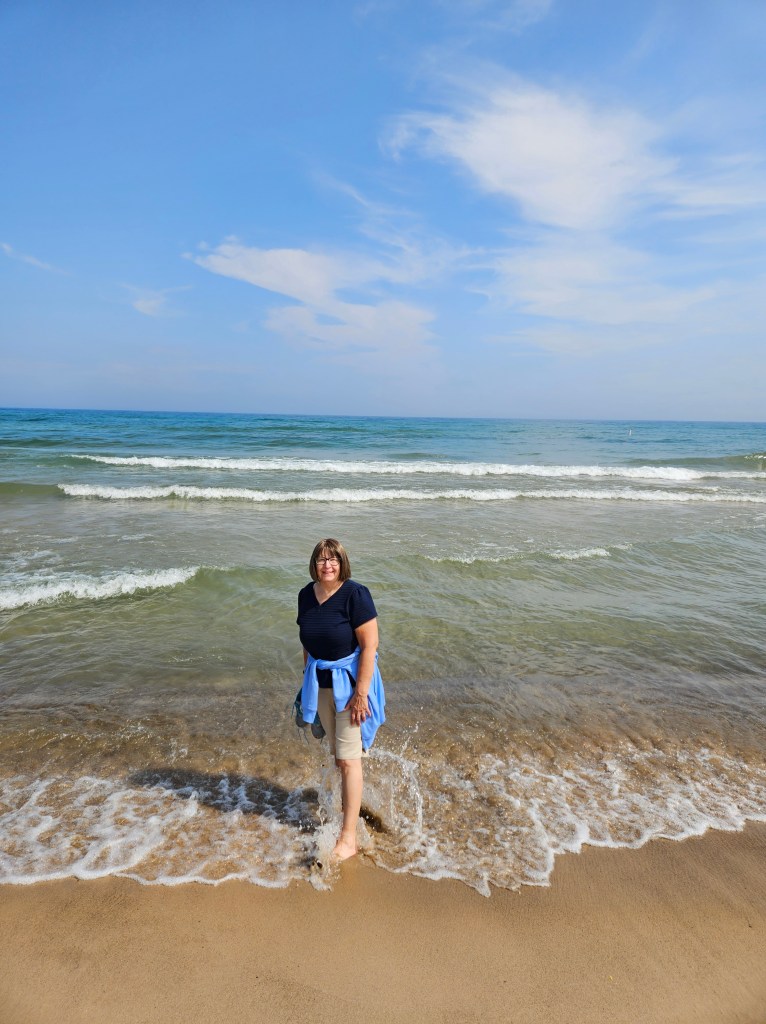
What is so quintessentially summer as being on a beach? We spent a few days exploring the small resort towns of Pentwater, Ludington and Mackinac City on Lakes Michigan and Huron.
I would never have heard of Pentwater, or thought to spend time there, if I hadn’t heard of it from my blogger friend Betty of chambersontheroad.com. She and her family have camped at Mears State Park for years, and now enjoy Hill and Hollow RV park with their trailer. Every summer I can look forward to at least a couple of blogs about Pentwater.

Downtown Pentwater is small, and the whole town is easily walkable. We spent our Saturday morning browsing the farmers market. It was still too early in the season to find either cherries or vegetables, though, so it was more of a craft market. I was in “birthday shopping” mode, and had some success with that there and with all the shops in town. The main street opens up onto a harbor, which is Lake Pentwater.
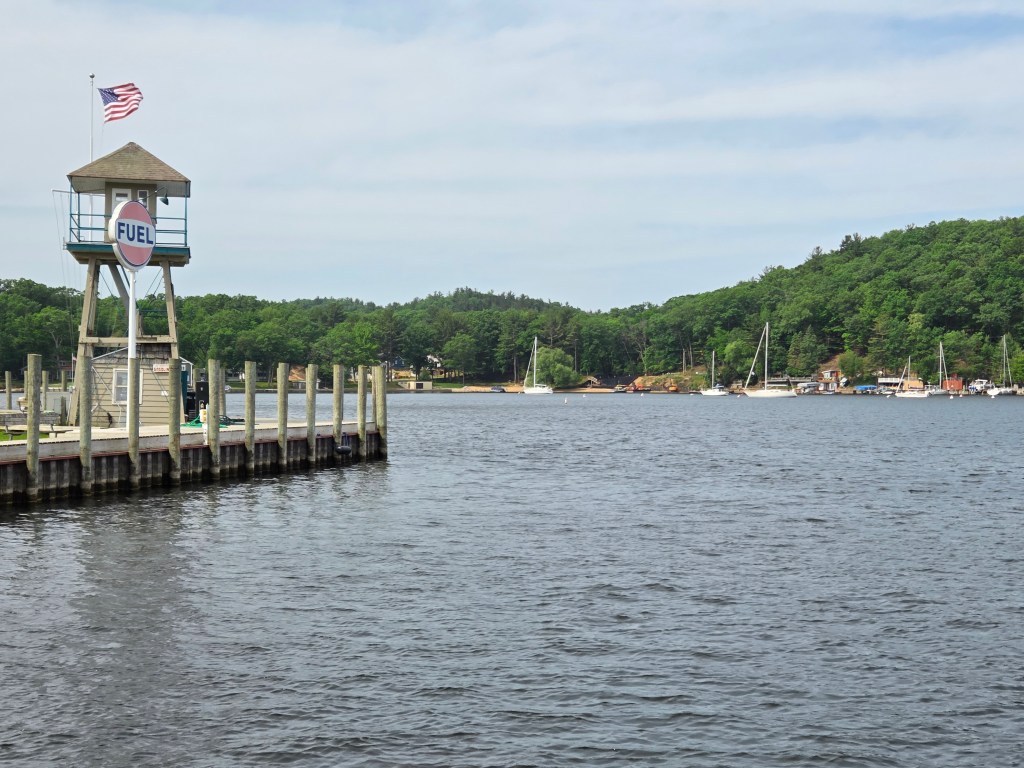
A channel was built from Lake Michigan in the 1800’s that connects the lake to Lake Michigan. A walkway on the channel goes out to the larger lake, and this made for a lovely stroll.
A beautiful statue graces the beginning of the channel walk, and from here one can look back on the town. If you were standing here before 1856, you would be looking at a swampy patch, the end of a stream of water that came from Lake Michigan. Charles Mears, a lumber baron, drained the swamp. He created the channel and released the “pent-up” water from the larger lake, and Lake Pentwater was born.

The existence of the channel enabled Pentwater to become a busy port town well into the early 1900’s. When the lumber industry declined, the channel became perfect for pleasure boating.

The beach that butts up to the the pier is Mears State Park. One can just walk in for free or drive in for the cost of a day pass.

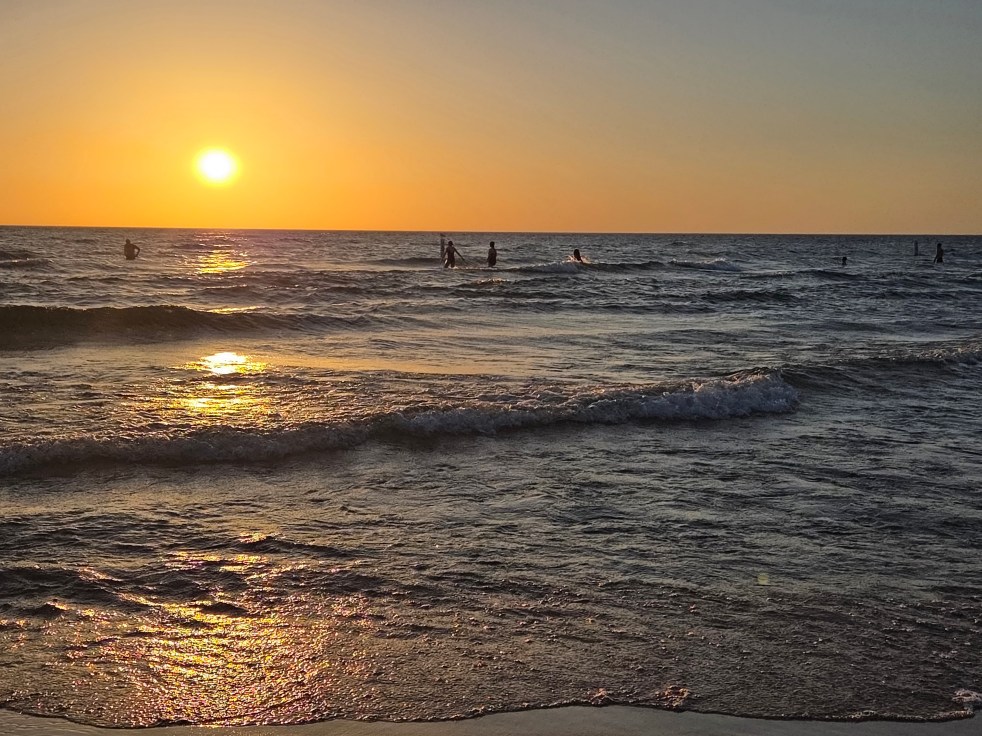
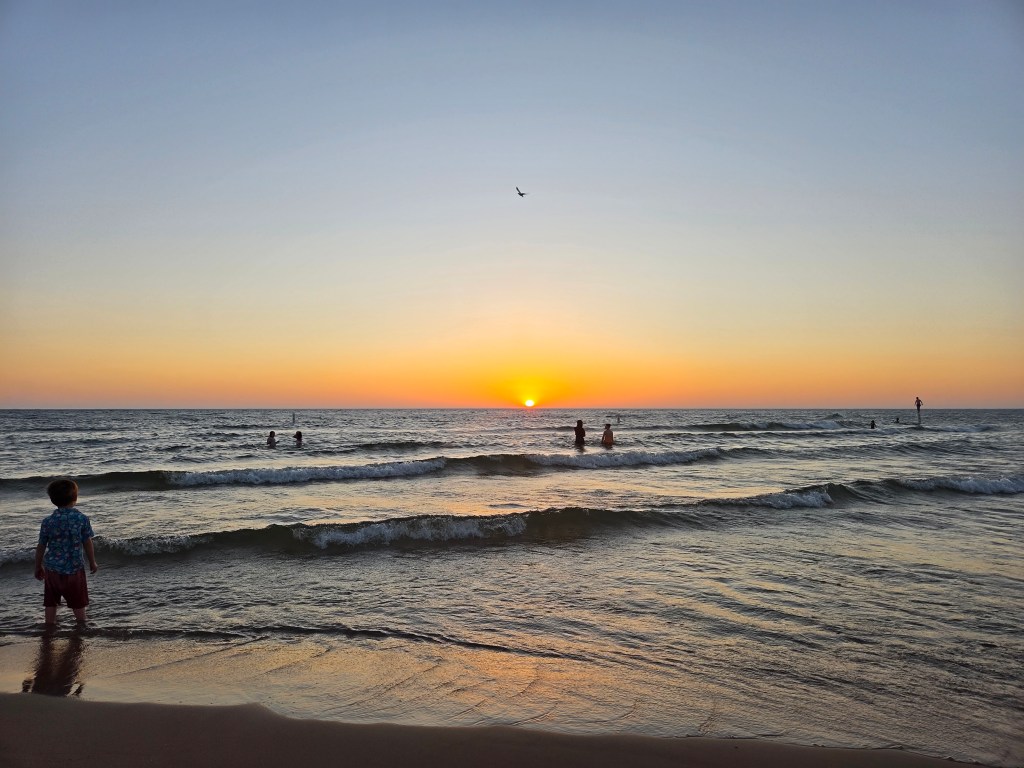
The sun sets beautifully on Lake Michigan, so one evening we came in to just watch the show. We were then approaching the summer solstice, so it didn’t set until 9:30. People were still swimming in the water. Ah….summertime.
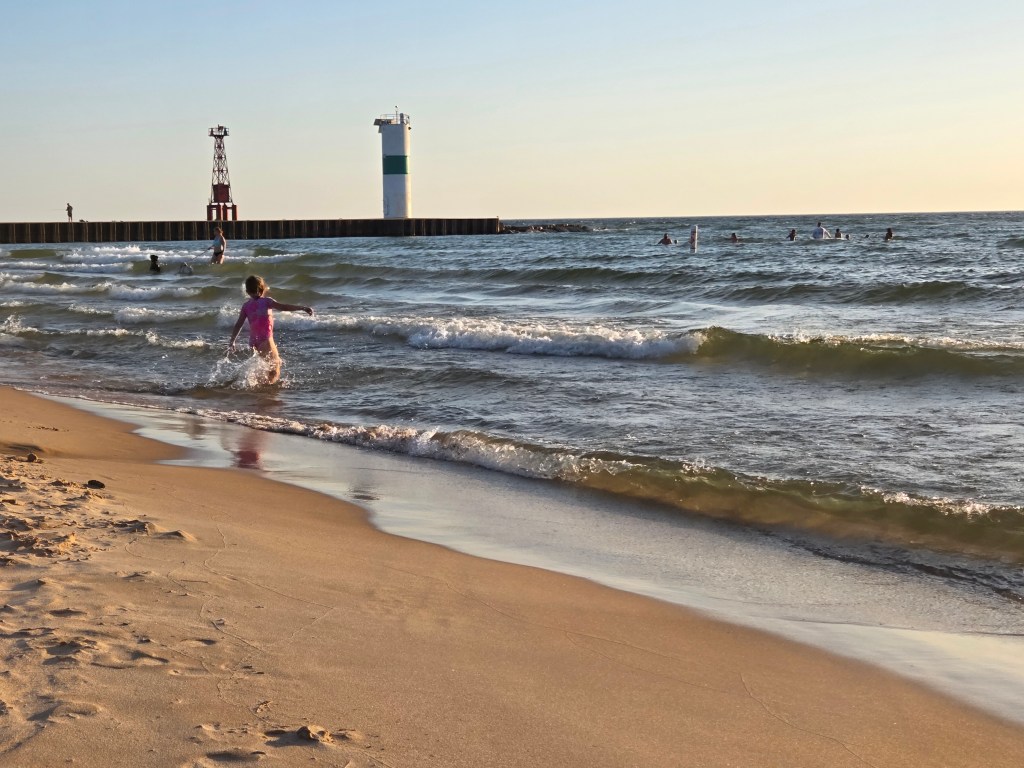
Another Lake Michigan town, Ludington, lies fifteen miles up the road from Pentwater. Here is where we made a shopping run for groceries and Wal-Mart, plus an excellent pizza lunch at Mancino’s. But what we enjoyed most was a stroll at Waterfront Park, where many sculptures graced the path.
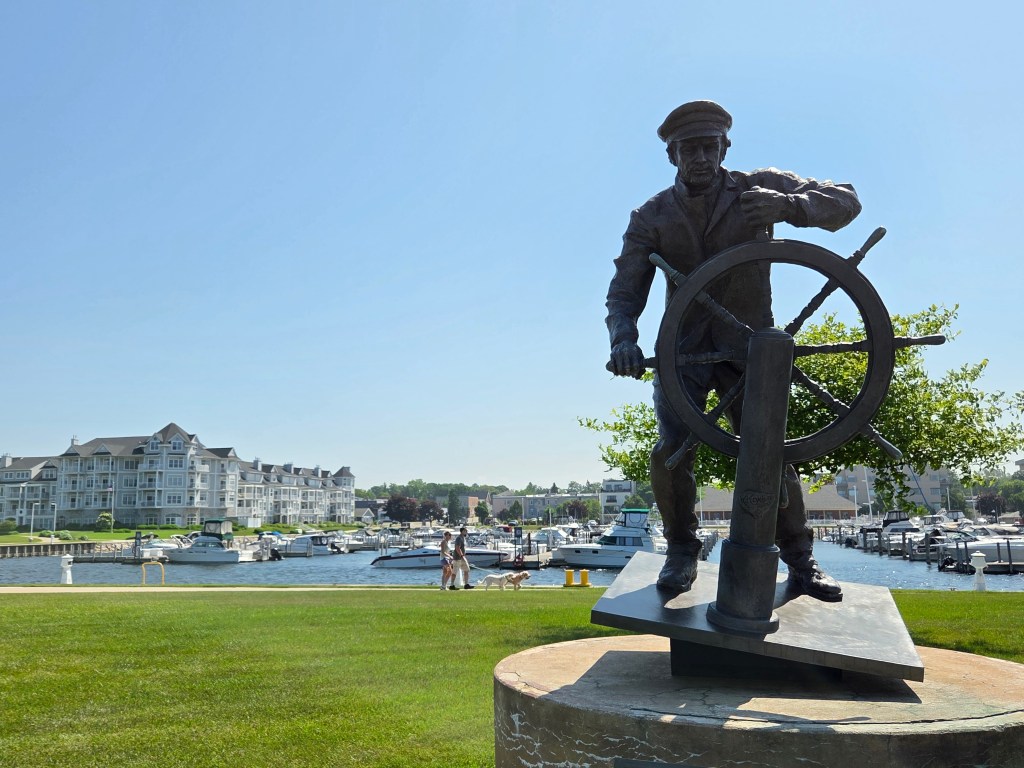
“The Seafarer”, which is a depiction of a real-life gentleman by name of Charles Conrad, pays homage to all those who have made a life on the sea.

I told Cal this is a good depiction of he and our grandson Teddy, if and when he ever takes him fishing.
At first, when I saw the Great Lakes boat “The Spartan” behind all the smaller boats in the marina, I thought it was the ferry boat that our oldest and their family rode across Lake Michigan from Wisconsin last year.
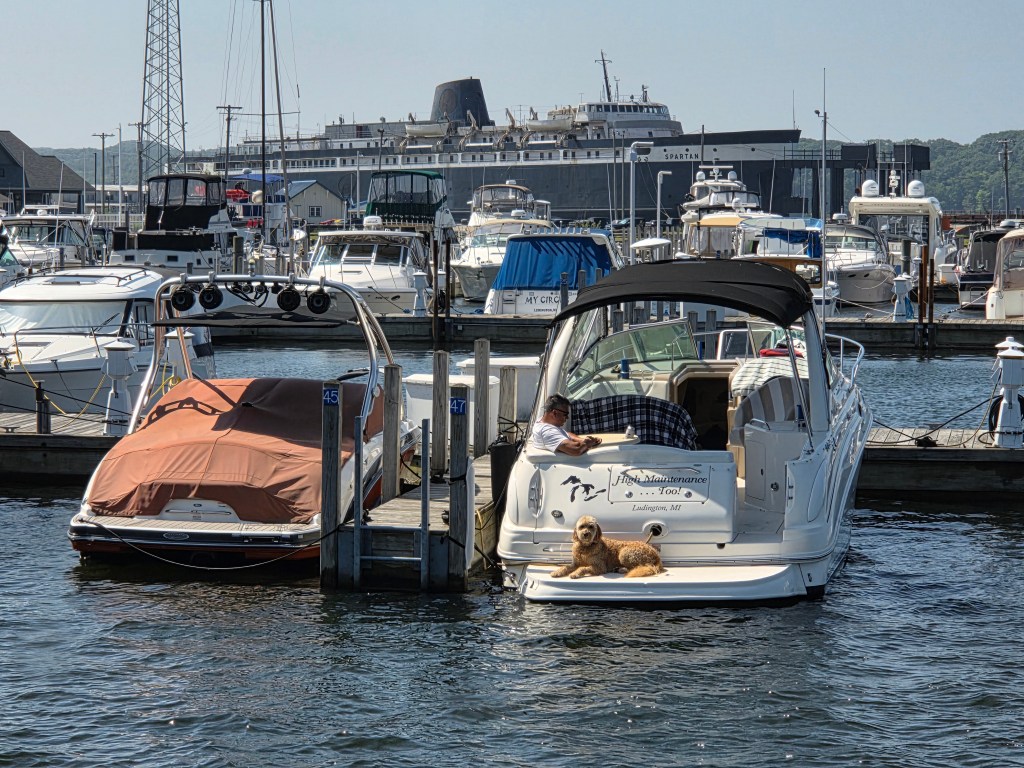
But no, this is not the Lake Express High-Speed ferry that leaves from Milwaukee and goes to Muskegon, MI. It is a twin of the Badger, a historic, coal-fired steamer which is a slower ride and goes from Manitowoc, Mi to Ludington. They were launched between 1952 and 1953, and built to haul railroad cars across the lake. When rail traffic declined, the Badger was converted to a car ferry. The Spartan is only used now for the Badger’s spare parts.
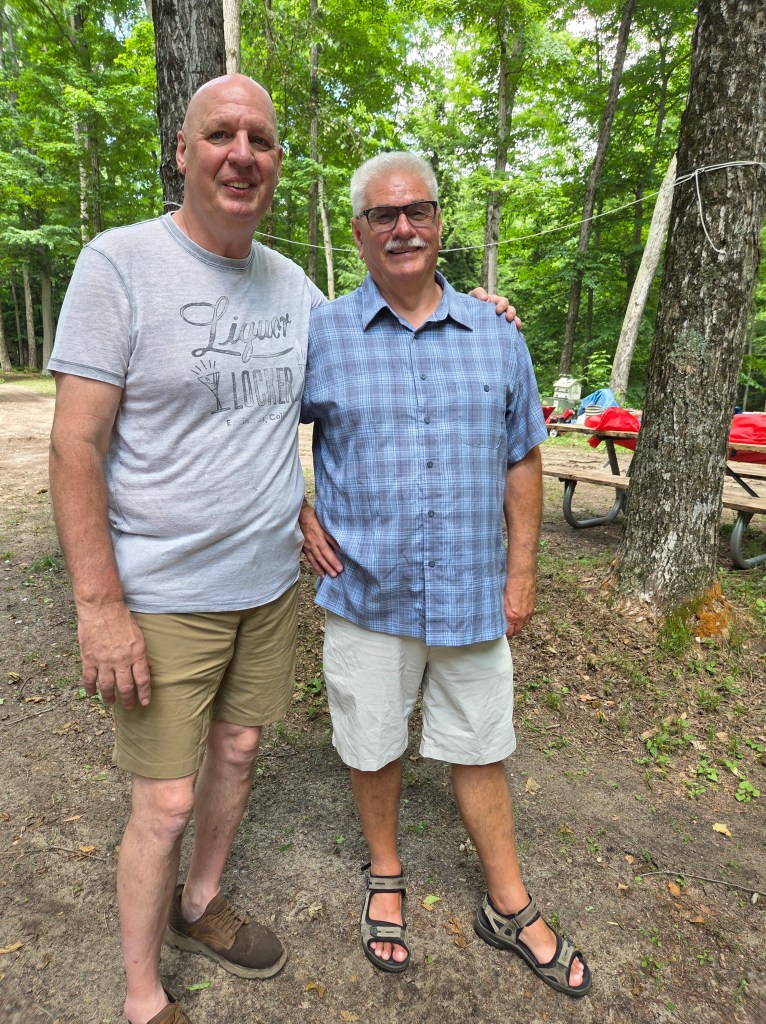
It was while we were staying near Pentwater that we were contacted by an old friend of ours, Mike. He’d seen Cal’s posts of our travels on Facebook and wondered if we would be anywhere near Hesperia, MI on that Saturday. He was having an open house at the family cabin. We looked it up, discovered it was only 30 miles away, and made a spontaneous decision to go. Everything inside the cabin has been brought up to the 2020’s and he spared no expense renovating it beautifully. Next, he wants to finish the exterior of the cabin.
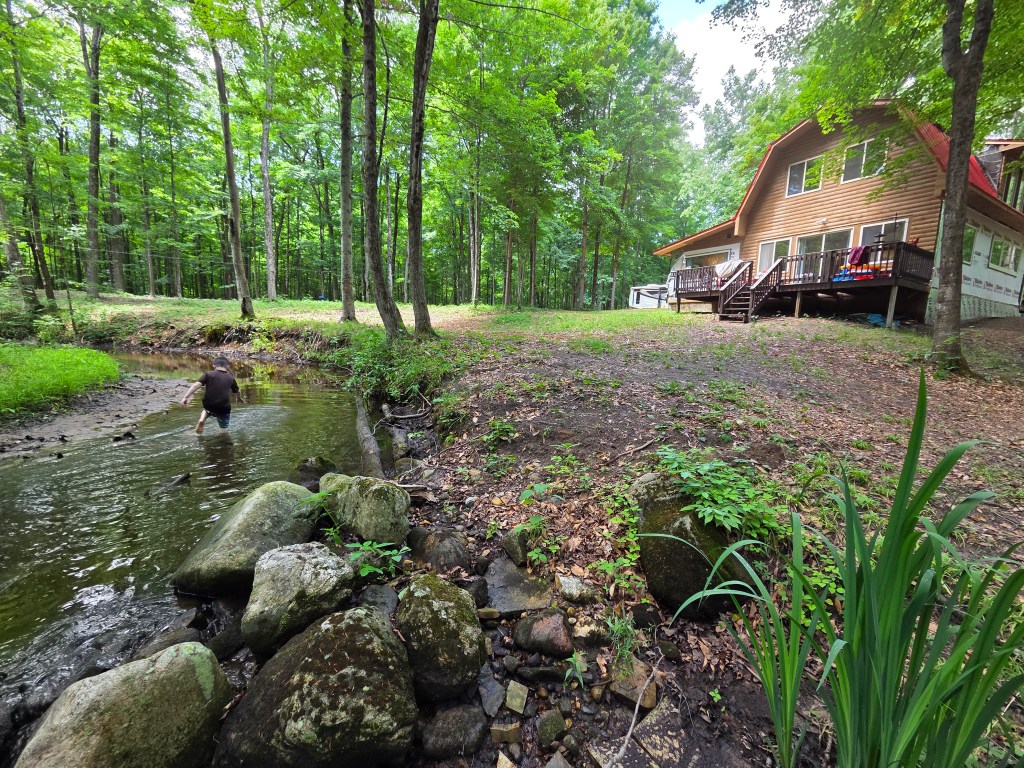
Mike and Cal worked in the same office in our Germany years, and his sons were our daughters’ ages so they played together. Mike’s Mom, Marcia, nannied for the family, and she and I became friends. Back in the states, I visited her here once. I’m not sure if the cabin even had electricity or plumbing, but she loved to cook and bake. This visit brought back a lot of memories, and it was nice to meet Mike’s wife Katja and other members of his family too.
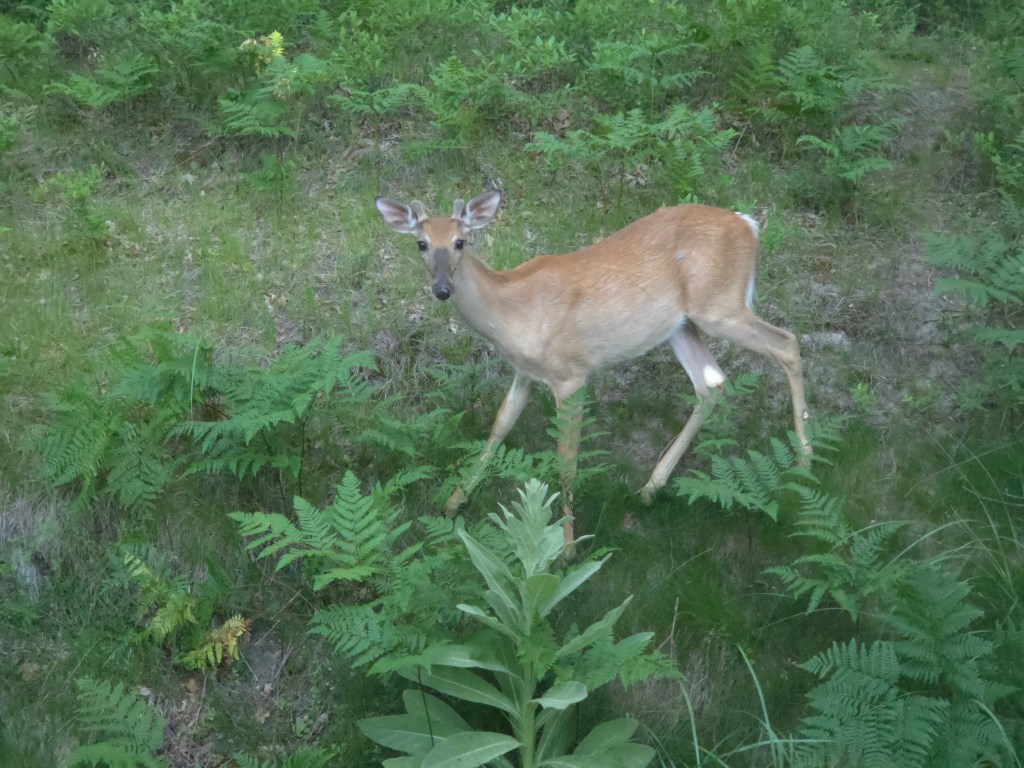
We were a little sad when it was time to leave the Pentwater area. Our site at Hill and Hollow backed up to the woods and we’d had a very relaxing time. A hill rose up directly behind the site and on our last morning a young buck peeked in our back window to say good-bye.
On the way north, we stopped in at Boyne Winery. As you can see, a sign advised us to relax, so we did with a glass of sangria wine.

This was an overnight stop with Harvest Hosts, and will be our last. We do not use the membership enough.

Our last adventure in the “mitten” of Michigan was at the top of the state with a stay in Mackinac City. There was a drive I wanted to take, where we headed back south as far as Petosky State Park. Here, it is said that you can find Petosky stones. I wandered on the beach for quite awhile, because this is where one can find them, but I had no luck.
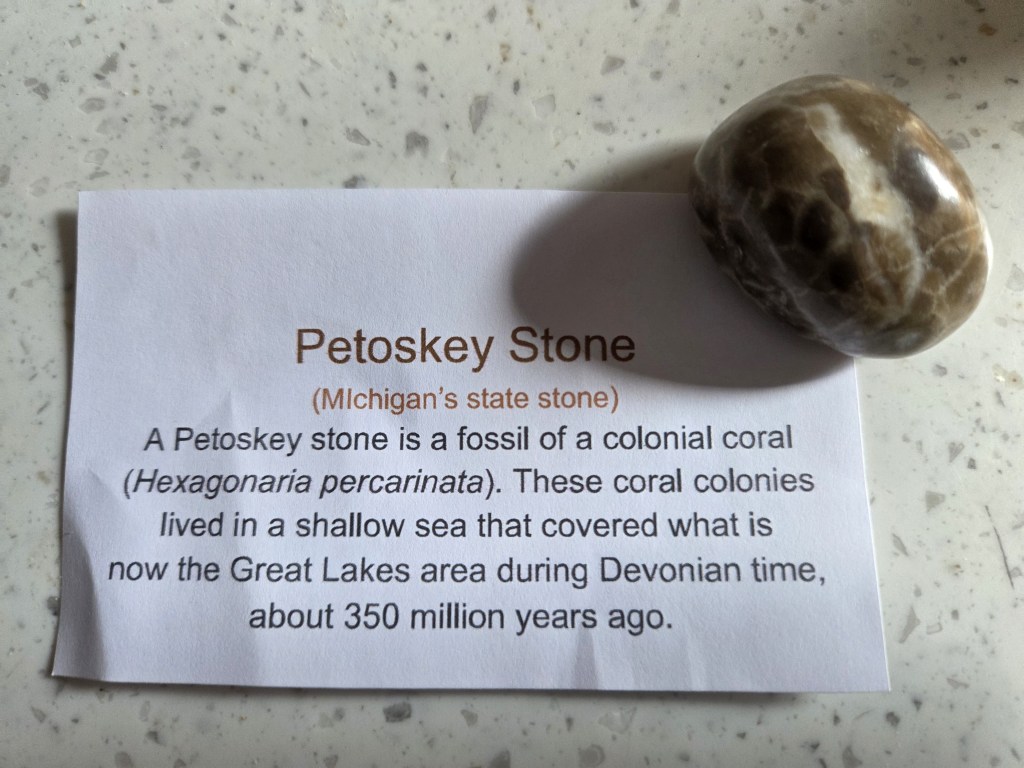
Pretty much expecting this turn of events, I had purchased a polished Petosky stone in Pentwater. The description tells you what it is.
I also purchased two unpolished ones for next-to-nothing later, but my RV has eaten them. I cannot find them anywhere.
A while ago I read a novel, “Famous in a Small Town” by Viola Shipman. A place in Michigan was featured in this book enticingly enough so that I wanted to visit it. It is the Tunnel of Trees, and it is found on M-119. I had thought it was one small spot, but actually it is a 20-mile scenic drive on a road so small that there aren’t any lane dividers.

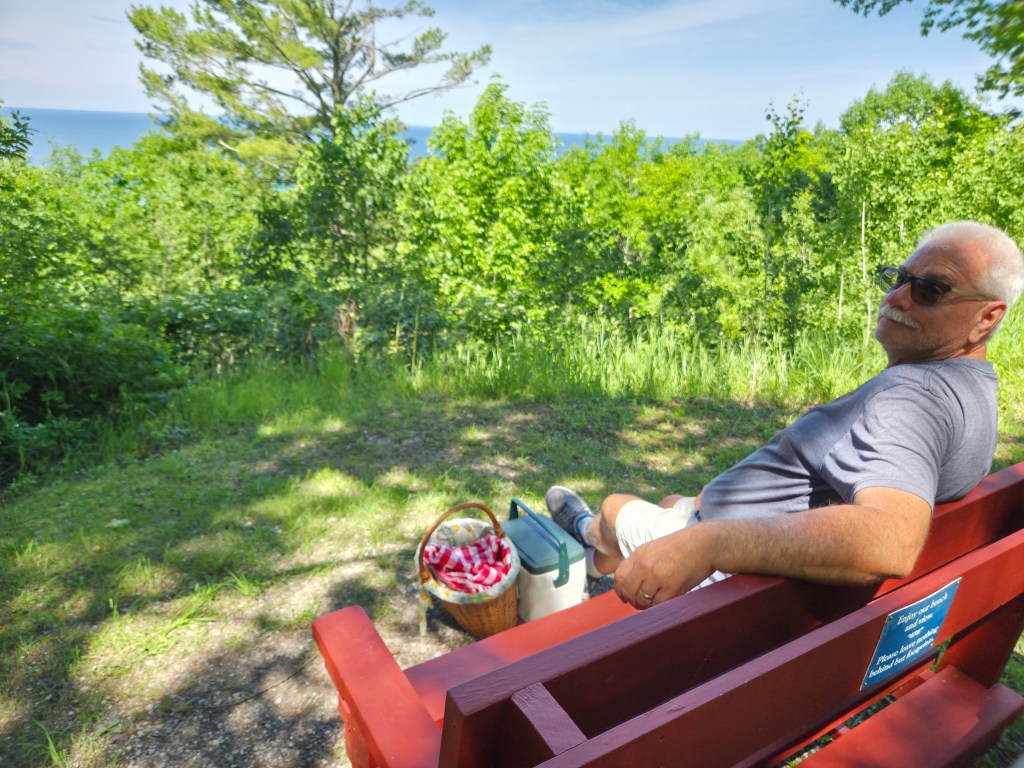
I wanted to stop somewhere for a few pictures. There was a small turnout, and as luck would have it, a red bench for us to have our picnic lunch and take in the Lake Michigan view.
Also featured in the book was the Good Hart General Store. The owners were repainting the facade and scaffolding was everywhere so I didn’t take a picture. In the book there was all manner of cherry items for sale, and although we found a couple things for purchase, we were once again too early in the season for cherries. Their frozen pot pies are also reputed to be delicious but we did not buy any.
Our last stop on this day was Wilderness State Park, at the top of Michigan’s northwest shore, where we found a secluded woodsy spot overlooking the beach to just pop out the lawn chairs.

Our final day in Mackinac City was rainy. We set out to explore the two lighthouses nearby, one on each side of the famous Mackinac Bridge. This bridge connects the upper and lower parts of Michigan and crosses the Straits of Mackinac. On one side of the Straits is Lake Michigan. The other is Lake Huron.

John McGulpin received this plot of land after retiring from service in the British army. Patrick McGulpin, his son, inherited the land after the Revolutionary war was won, as part of a new treaty. The lighthouse was established in 1869 and was named after the family, as was the Point. The lighthouse was in service for almost forty years. We were able to go inside and see the living space of the lightkeepers who were here.

A path from the lighthouse to the lake took us through the woods and down to the lake. Signboards took us back in time with stories of the lives of all the people who lived here through the ages. A big rock out in the water on Lake Michigan’s shores has history, too. Named McGulpin Rock, it has been used as both a navigational tool since Natives lived here. It also helps measure the cyclical changes in Great Lakes water depth.
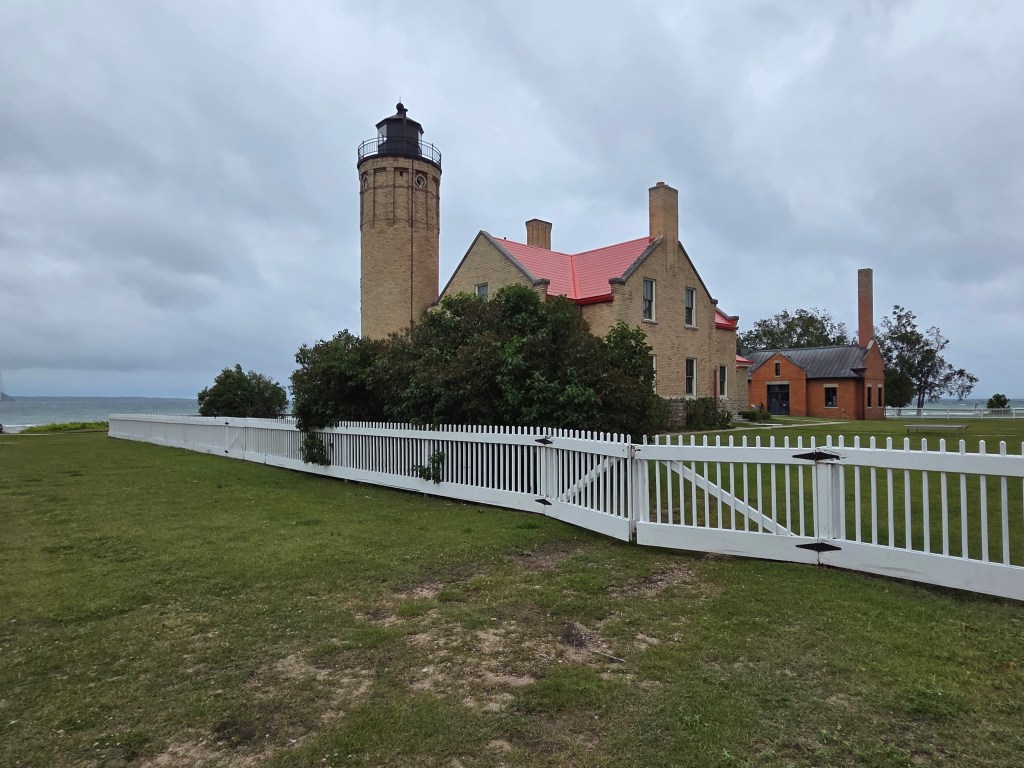
We moved on to the Lake Huron side of the bridge too and took a look at Old Mackinac Point Lighthouse. Things are busier and more touristy over here, since it is near Mackinac City. We did not go inside.
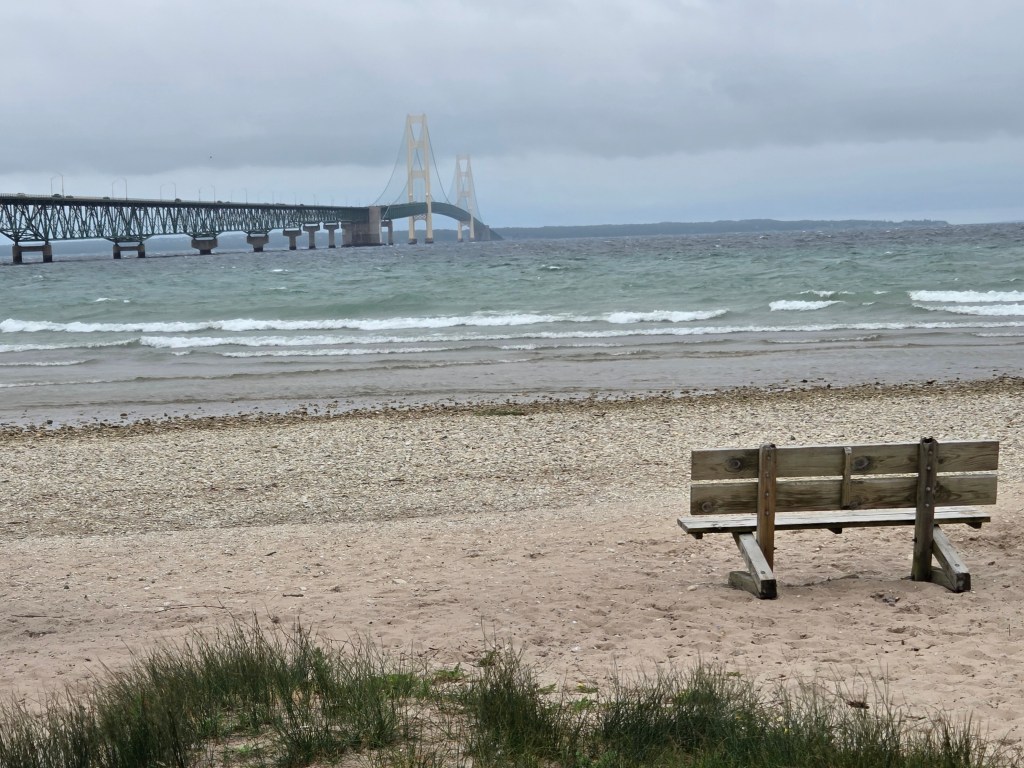
We could also view Lake Huron from our immense RV park. An evening stroll took us there. This area included some swings to sit and look out over the lake.
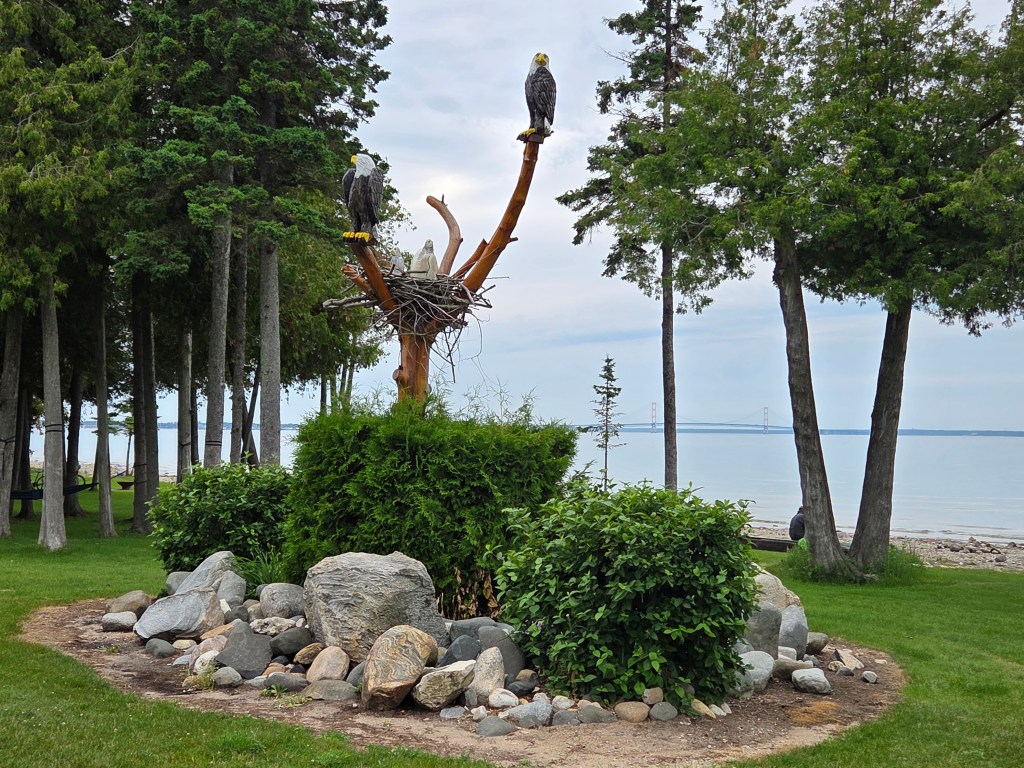
Despite the size and overload of amenities at Mackinaw Mill Campground, we liked our spot here. Once again it was covered on three sides by shrubbery and trees, and there was a huge green space behind the RV. We liked it, that is, until the heavy rains flooded the road (but thank goodness, not our site) on the day we were to leave! Time to go!
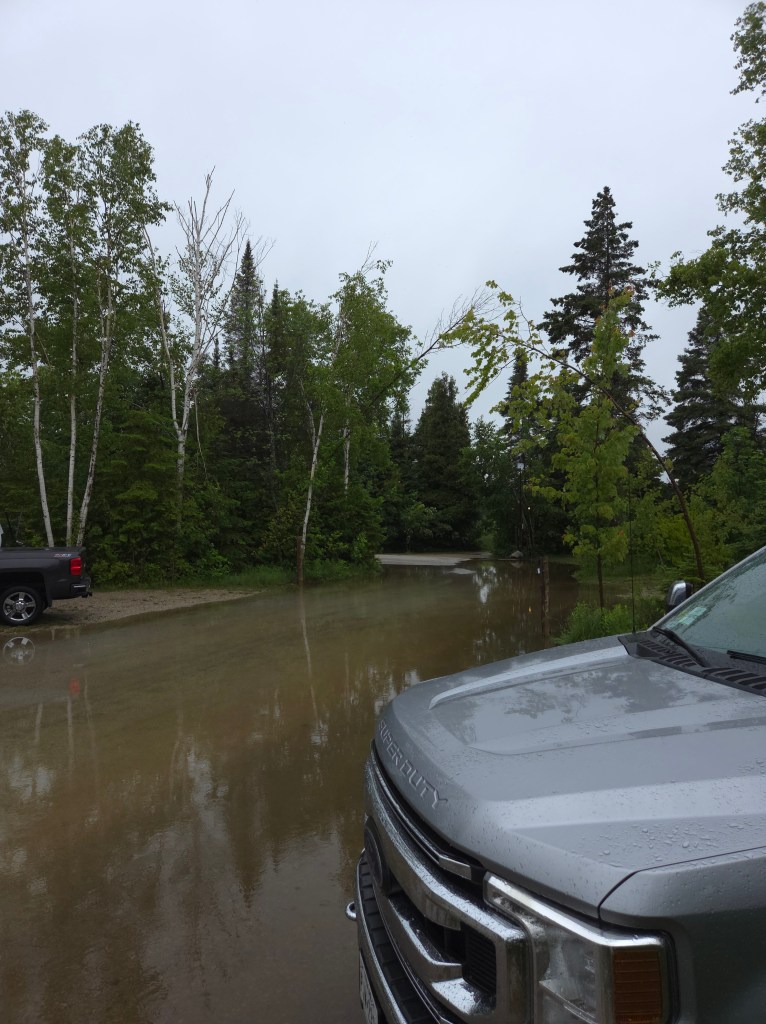
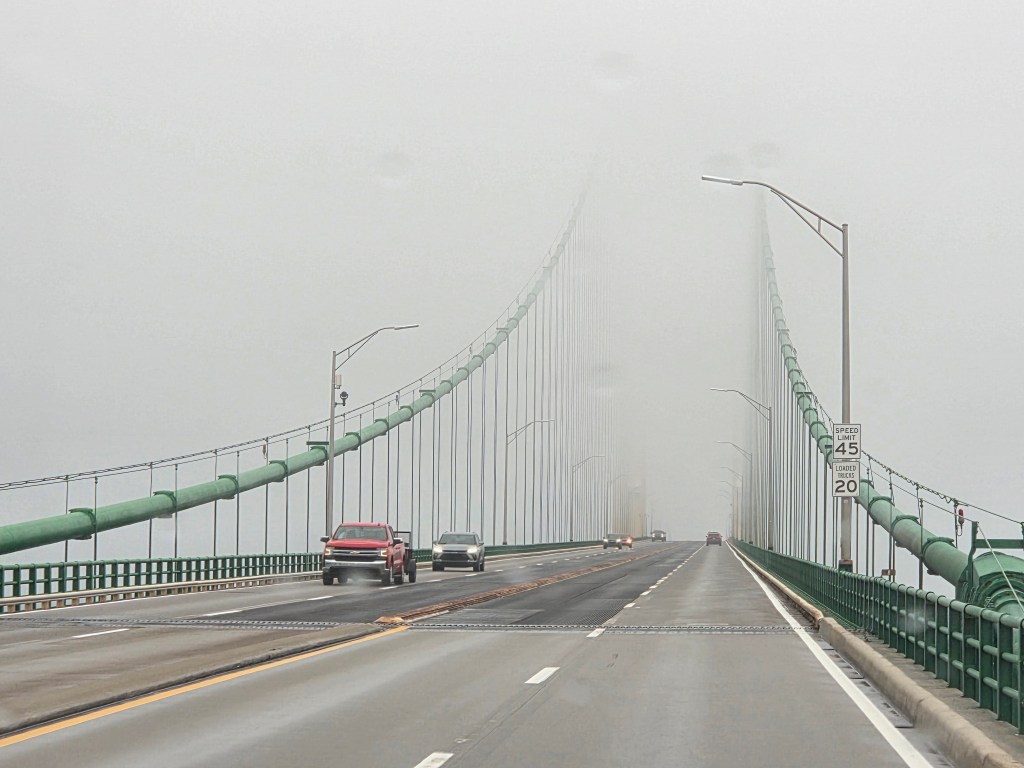
Into the mist we drove, on the Mackinac Bridge northward to the Upper Peninsula of Michigan.
Next time – Heading further north to Michigan’s Upper Peninsula





 Twosna Travels