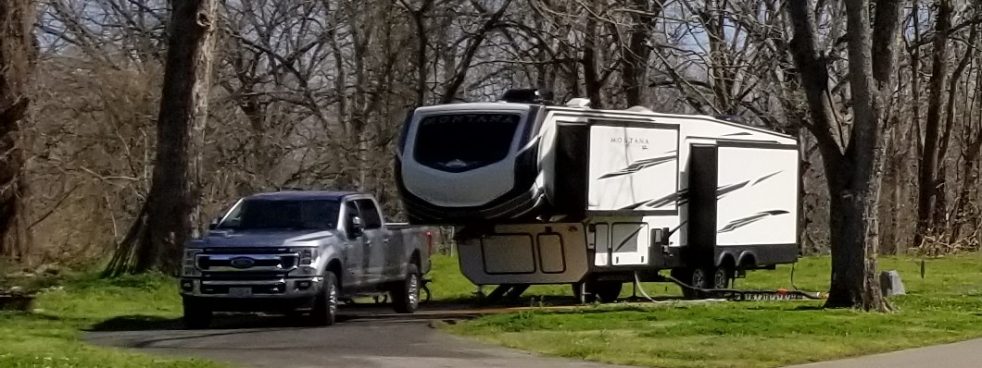

We drove 200 miles to see a house.
Not just any house, though. Fallingwater is one of the finest from Frank Lloyd Wright, the famous architect. It lies in the Laurel Highlands of southwestern Pennsylvania and about 70 miles south of Pittsburgh.

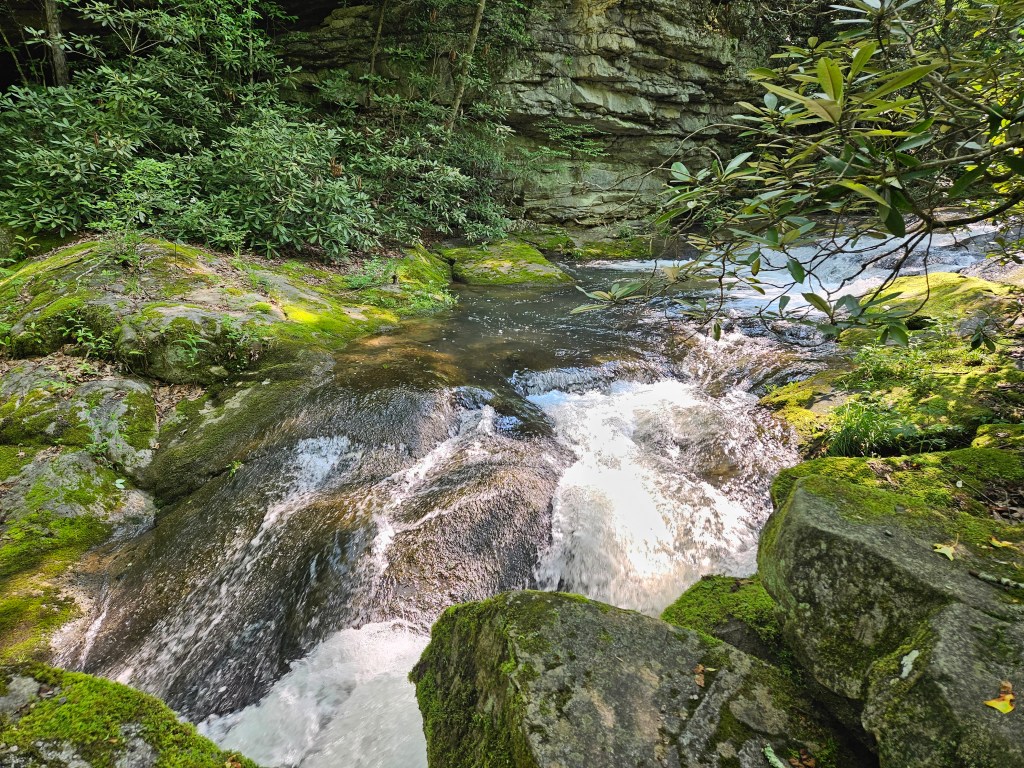
A picture like this first drew me to the house. The steps go right down into the stream from the living room! I can imagine sitting on those steps in the morning with a hot cup of tea, or dipping my toes in the stream on a hot day. That is also a spring-fed pool on the right.
Edward Kaufmann was the owner of Pittsburgh’s finest and largest department store. He had a wife and one son, and they enjoyed coming to these hills for vacations. The site originally was a summer camp and he would bring employees out by train. Edward and his wife contracted with Mr. Wright in 1935 to build the home and its guesthouse at a cost of $35,000. The final cost ballooned to $148,000 with $11,300 in architect’s fees.
The forest around Fallingwater is full of rhododendrons, but they weren’t in bloom yet. Our guide showed us that the light ocher color under the rhododendron leaves match the color of the house. The only other color used is red, a favorite of his.
Wright always wanted his houses to be in complete harmony with their surroundings. He thought the house should be horizontally orientated and in layers, like the rocks that you see behind the water in the picture below, and made from the same rock.
This idea is repeated in many features of the house, such in the dining room.

The house is built to bring in light and the beauty of the surrounding forest. The steps to the stream go down from behind and to the left of this picture.

Artwork from the masters such as Picasso and Diego Rivera are on the walls and decorating the house, as well as treasures from art galleries and antique shops from here and abroad.
There is a viewpoint which we could walk to to see the house as Frank Lloyd Wright intended. The Kaufmanns thought the house might be nice alongside the stream. Wright thought it should be on the stream, and right over a waterfall, so that’s where he put it.
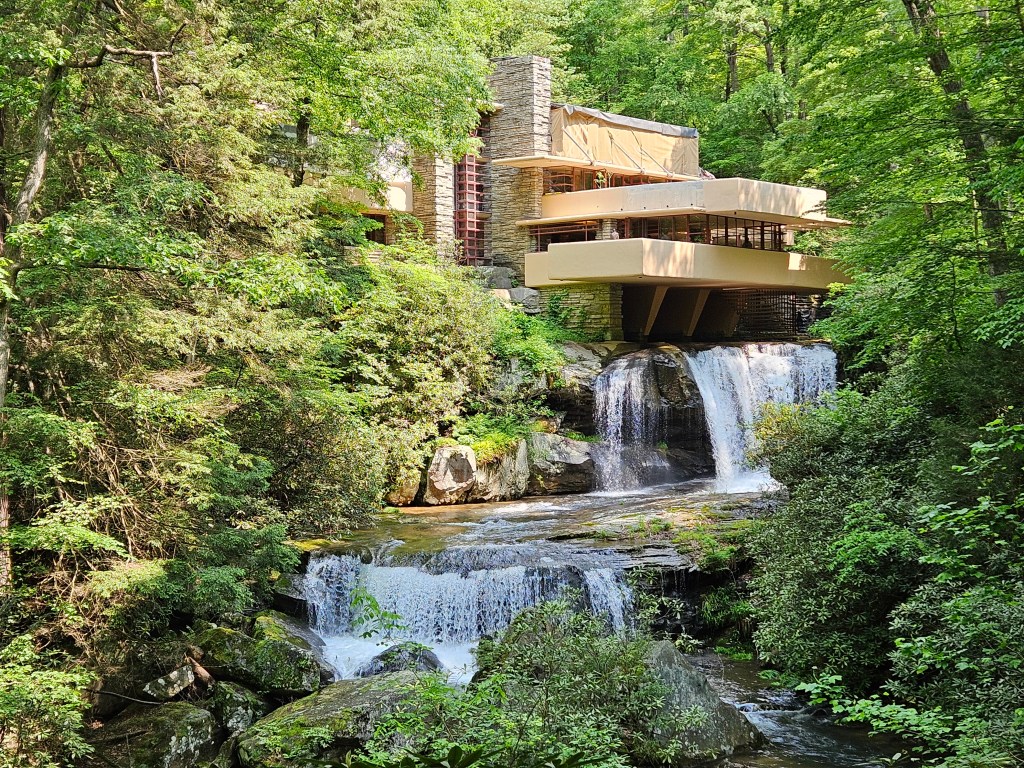
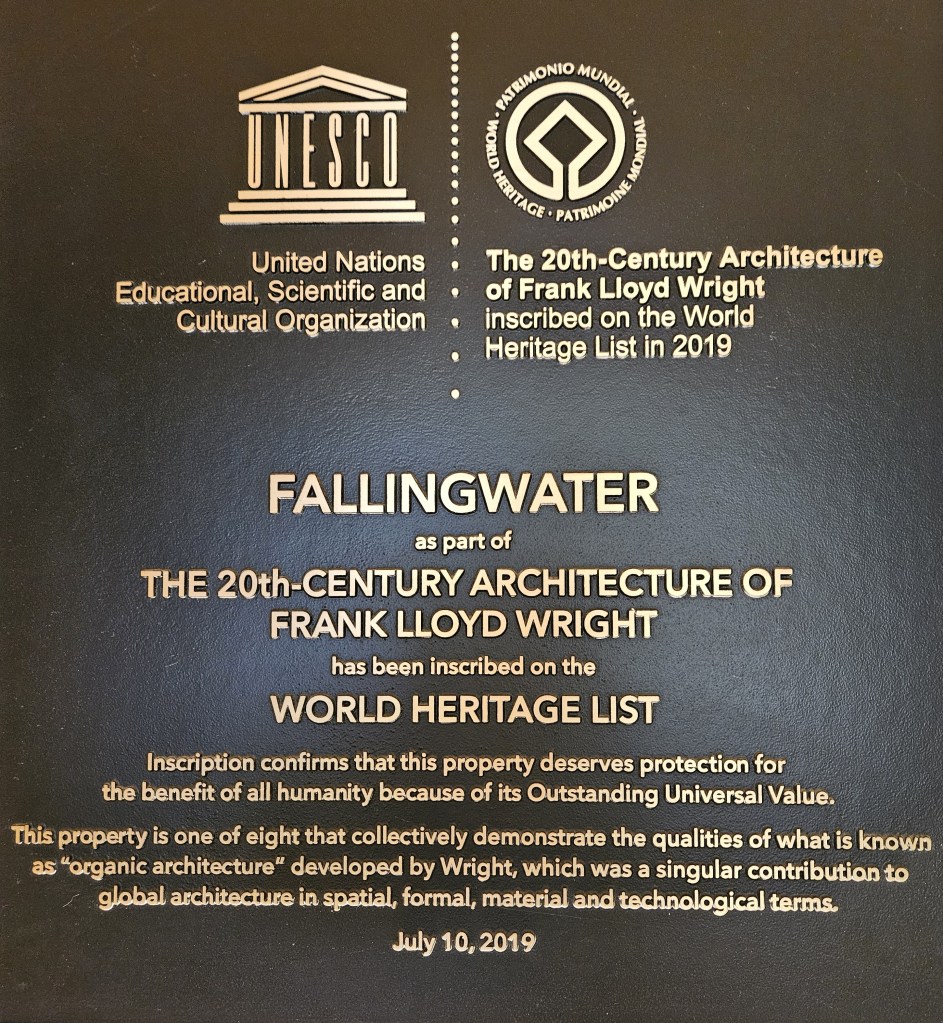
When the Kaufmanns’ son, Edward Jr., grew up and his parents died, he started a foundation and donated the whole house, including the contents, to it. Money was added to maintain it in perpetuity, for everyone to enjoy. Today, the house is a UNESCO site.
The Youhiogheny River flows by Ohiopyle with the Ohiopyle Falls in view from walkways that front the town. A state park by the same name also is right here. This picture is from the visitor center viewing platforms.
In planning for this part of the trip, the house was the focus. What I did not realize at first was that it lies in another beautiful area, much like Hocking Hills in Ohio. And there is another Wright house to visit, Kentuck Knob. We did not visit that one because there were other things to see in and around the nearby town of Ohiopyle.

You can hear the sound of flowing water everywhere you walk in Ohiopyle.
Speaking of the state park visitors center, I really liked the small sculptures that went along with the signboards on the walkway to the building. George Washington declared the Youhiogeny River unnavigable, after trying to get down it on a raft. The sculpture really puts it in perspective.
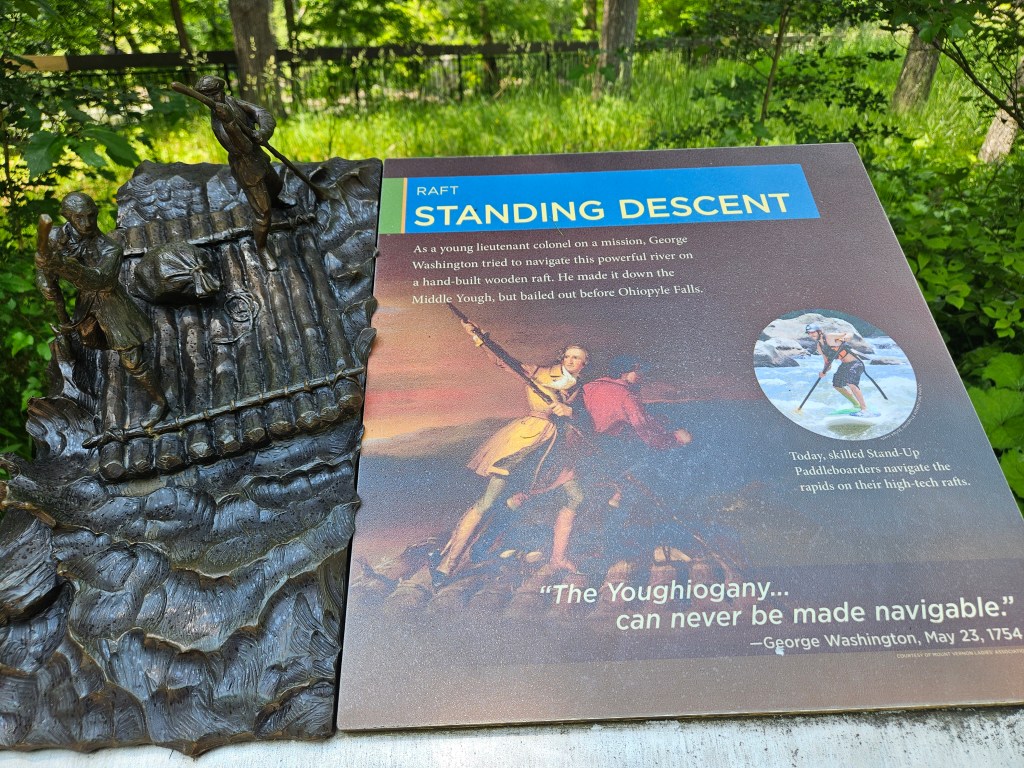
Maybe he just needed to relax and go with the flow, as today’s rafters do.

We chose not to get on the water, but rode our bikes on the rails-to-trails that went over the river not far from the falls.
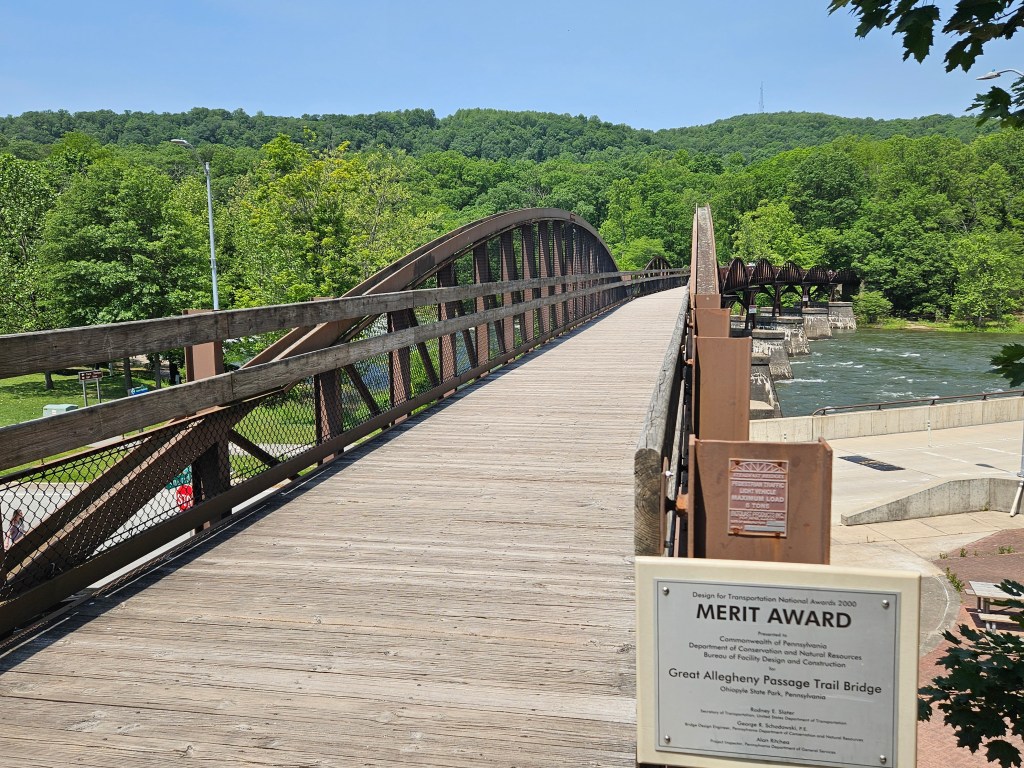
Hikers can walk over the bridge and onto one of the many paths, including old growth forest and a natural area full of ferns.
When the rail line was originally built, it brought passengers from Pittsburgh for a dollar. Resorts and all manner of entertainment lined the river. Eventually, as automobiles replaced the train, the resorts were torn down and the forest has been allowed to regrow and become Ohiopyle State Park. The rail line is now a 150-mile hiking and biking trail, renamed the Great Allegheny Passage Trail.
We rode five miles out and back in one direction, then repeated the same in the other, for a total of twenty miles. Gorgeous views abound, especially from the two rail bridges—
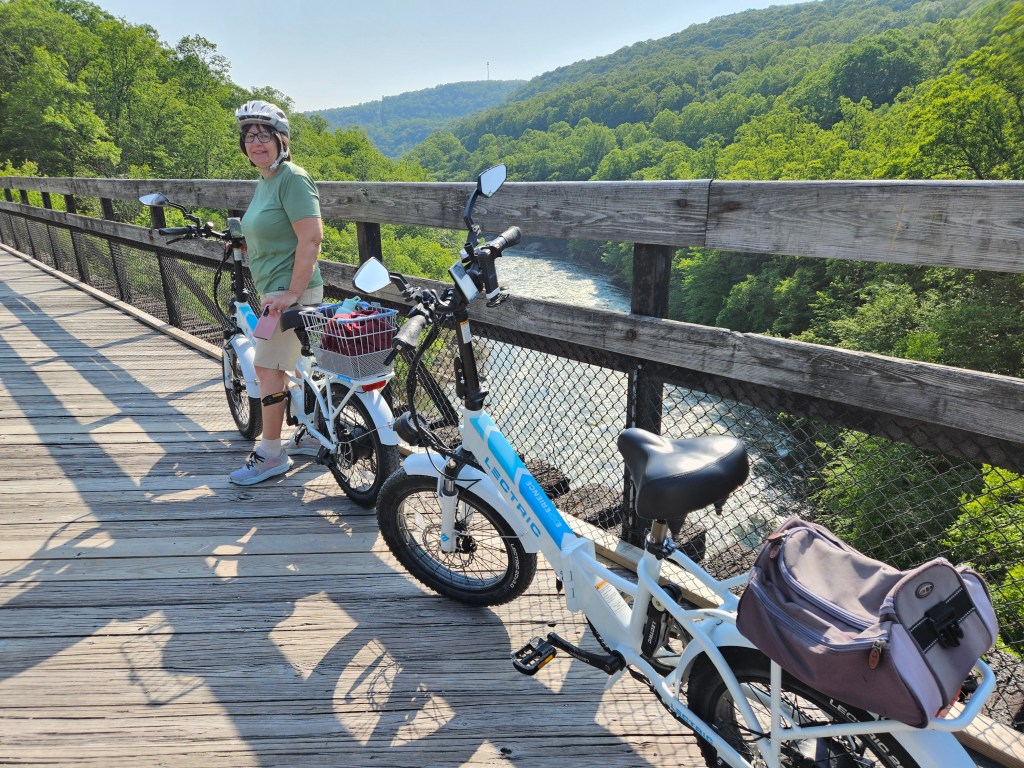
–and in the woods.
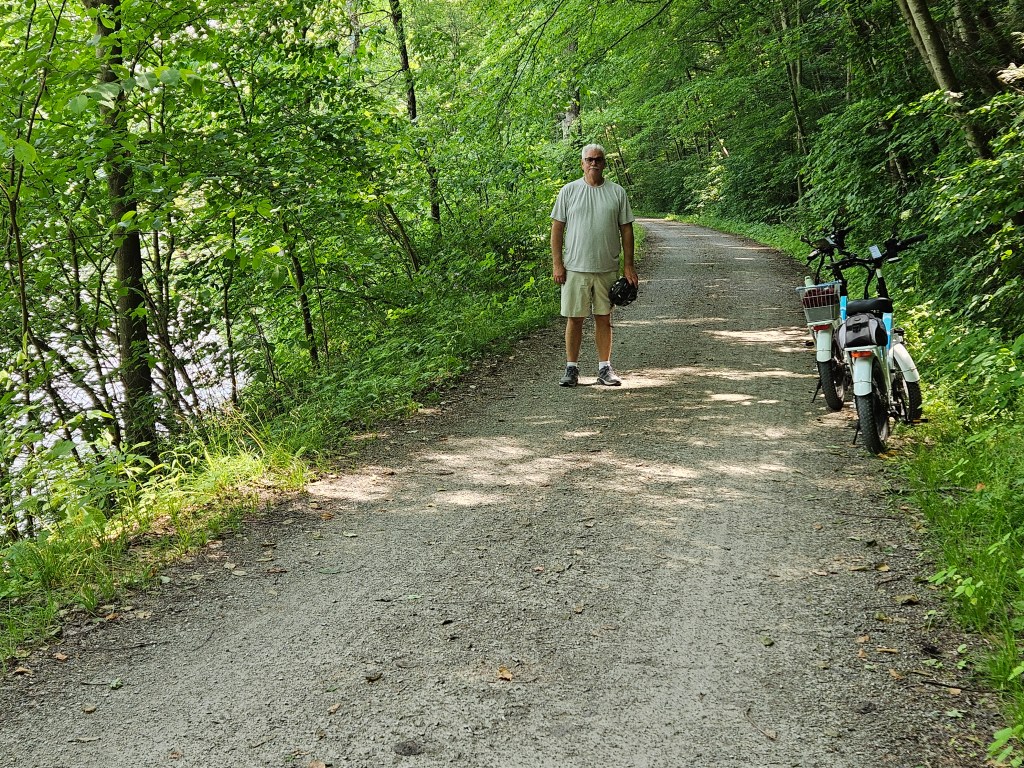
The trail followed the river from on high and alongside, and there were more waterfalls. Signboards directed us to look at things we may have otherwise missed. This is coal country, and after reading one sign we looked up to see a coal seam in the rock ledge. Another sign told about the first settlers, and without that board we may have missed a rock wall that is still here directly behind it.

There are open meadows – perhaps they were once settlers’ homesteads – that are now designated pollinator sanctuaries. We stopped at a shelter near one of them. Gigantic bumblebees, butterflies, and all manner of bugs were flying about. There are a lot of birds, too, judging by the birdsong. It must be a feast for them, but we did not want to be that feast, so we didn’t stop for long.
After riding bikes, hiking, floating the river, or seeing Fallingwater, there are a lot of great places for lunch in Ohiopyle. We had delicious gyros with a view of the trail and falls at Falls Market Restaurant.

The RV park we were staying in bumped right up behind the state park, and we enjoyed its peacefulness. Our door looked out onto this little pond.

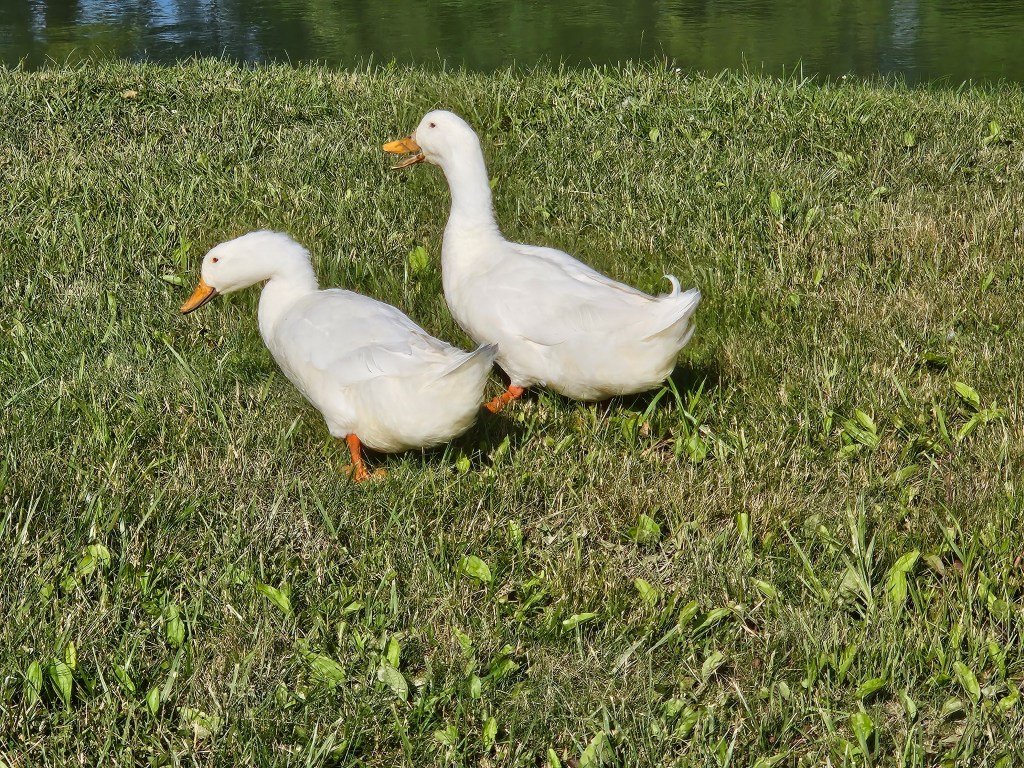
This pond was closely guarded by a pair of watch ducks. As you can see below left in the above picture, they are snoozing on the job. Every time I walked by, they would fuss and cluck to let me know they didn’t approve of me getting close, even if I wasn’t close. I saw them one morning pecking on the glass office door. A few minutes later, someone came out with a bucket of feed and dumped it by their tree. It was a feast for the squirrels when they were finished!
Next time – a battlefield, a tavern and a lake









 Twosna Travels