Europe · UK and Ireland

Stories of Edinburgh – Europe Travels August 2022

One thing I loved about Edinburgh was the stories I heard about, and the connections from one place that we visited to another. There were three in particular: that of the poet Robert Ferguson and his connection to Robert Burns, the story of Deacon Brodie and his connection to Robert Louis Stevenson, and also a little dog named Bobby.

We first met Robert Ferguson on the street. I thought his young energy really came through in this statue of him bustling down the Royal Mile, book in hand.

For two years, Ferguson wrote poems about his home city. One acclaimed poem was “Auld Reikie”, which observed a day in the life of such ordinary people as shopkeepers, children, whores and dandies, lawyers and schoolboys. But his life was short. He fell down some stairs, hit the back of his head and languished in a hospital. Conditions were not good there and he died at only 24 years of age in 1774. He was buried in an unmarked pauper’s grave. Although his body of work is short, he was already well known and respected when he passed.

All that I knew of Ferguson was from reading the stone about him under his statue. Seeing it prompted me to walk through Canongate Cemetery.
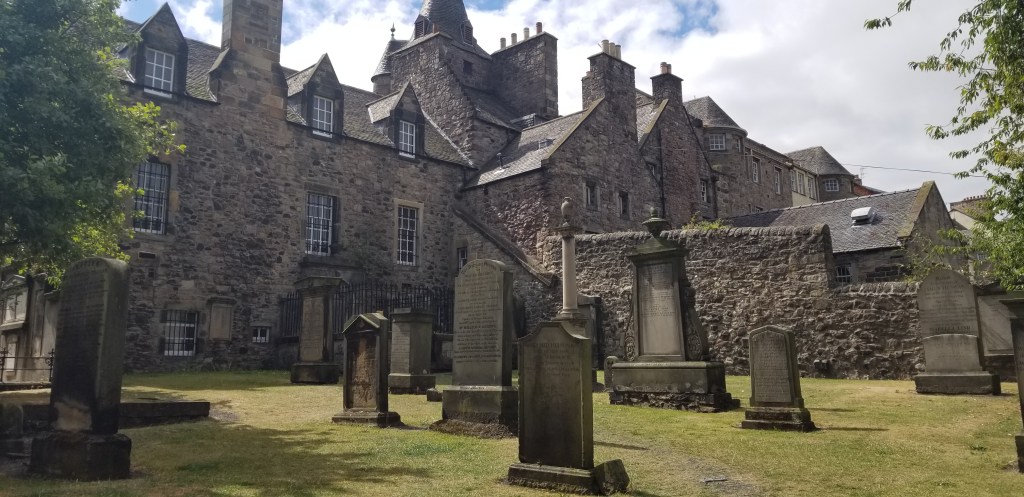
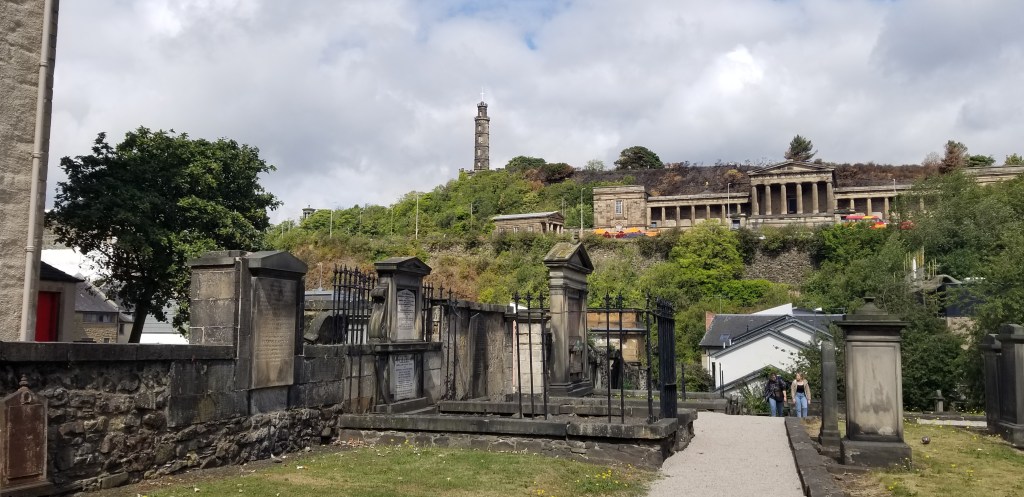
I ran into Robert Ferguson again when visiting the Writer’s Museum. Robert Burns, regarded as the national poet of Scotland and the writer of the song “Auld Lang Syne”, greatly respected Ferguson’s work. He was about nine years younger than Ferguson so was probably aware of him only through his poetry. One thing that he admired about Ferguson was that he had written not only in Scottish English, but also in the native Scots language, Gaelic. Upon hearing that Ferguson was in a pauper’s grave, he paid for a proper headstone to be erected for him fifteen years after Ferguson’s death.
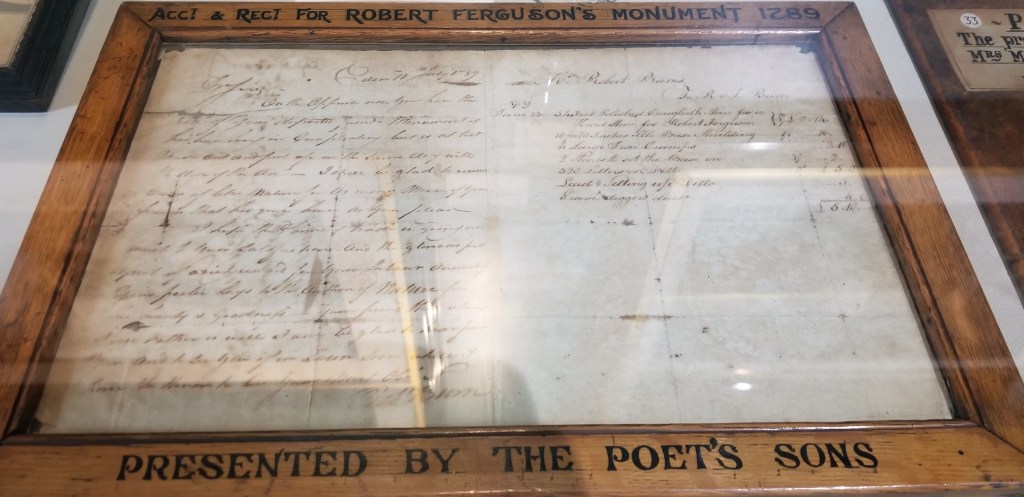
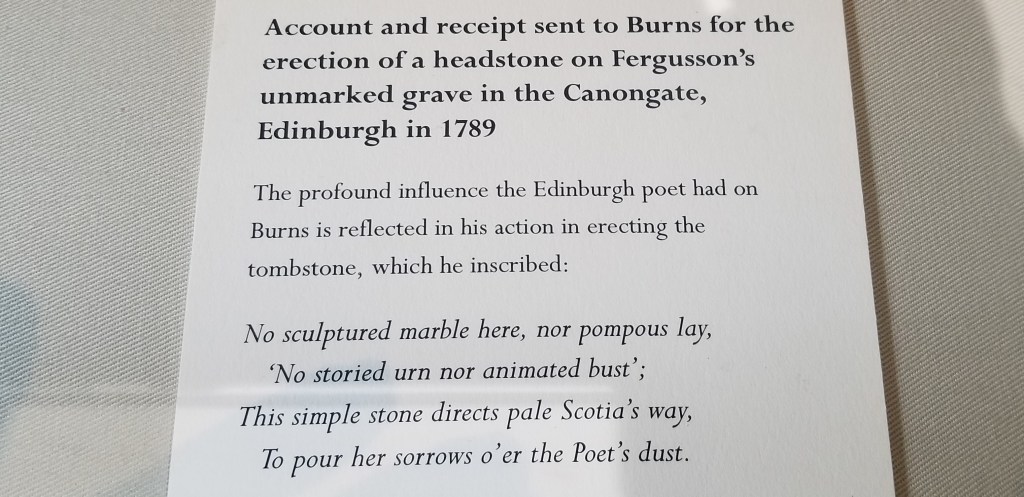
Robert Burns himself was not all that old when he died at the age of 37 from rheumatic heart disease and a bacterial infection that followed. What additional contributions these men could have given the world if they had had the benefit of our modern medicine!

Deacon Brodie was another person whose name kept popping up. I can’t take credit for this excellent picture of him, though. By the time I connected who Deacon Brodie was, we had passed his landmarks.
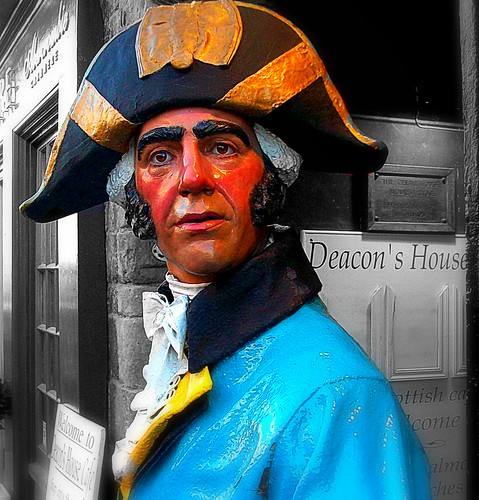
Credit: David/Flickr

This statue of him stands right outside the tiny cafe that bears his name and which is believed to have been his workshop back in the mid-1700’s. We had popped in for something warm on a cold and rainy morning. His story is painted on the walls but I could only see the portion by our table, since the place was full and bustling. Outside again, I saw Deacon Brodie’s Tavern across the Royal Mile. Who was this guy?

By day, William Brodie was a cabinet-maker and city councilor, a well-respected man who came by the title of Deacon by virtue of his position in the trades guild. But the fine Deacon had his secrets: he was a drinker and heavy gambler. To cover his debts, he began breaking into houses and burglarizing them. As part of his work, he would also install and repair locks. Did you need a new lock for your front door? Better not let Deacon Brodie replace it. He would copy the keys of his customers using wax impressions, and use that key to gain entry at night. Eventually he was caught, tried for his crimes, and hanged. They didn’t mess around with breaking and entering in those days.

The sad part is that he really was an excellent cabinet maker, and there in the Writer’s Museum was one of his cabinets.

The cabinet is made of mahogany veneer, one of only two pieces existing that are known to have been made by the deacon

This lovely piece of furniture was in Robert Louis Stevenson’s bedroom as a child and captivated his imagination. (I wonder: as a child, was it he who pulled off some of the knobs?) Later, he wrote a play about Deacon Brodie. The paradox that was evident in Deacon Brodie’s life also inspired him to write the well-known novel, “The Strange Case of Dr. Jekyll and Mr. Hyde”. It was published in 1886, almost one hundred years after Brodie’s death.

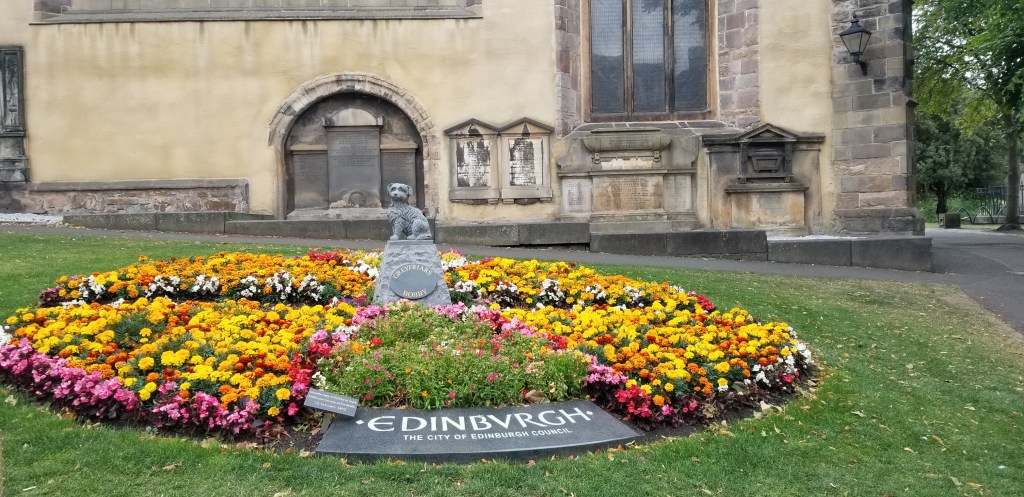
The cutest story of all was that of Greyfriars Bobby, who lived from 1855 to 1872. He was a terrier and owned by a man named John Gray. When Bobby was only two, Gray died of tuberculosis and was buried in Greyfriars Cemetery. For fourteen years, Bobby would spend the rest of his life sitting on his master’s grave. He became the pet of the neighborhood. The owner of Greyfriars Pub would look out for him and feed him, and so did everyone else for that matter. The lord provost of Edinburgh paid for his license and gave him a collar, which can still be seen in the Museum of Edinburgh.

Soon after Bobby’s death, a woman by the name of Lady Burdett-Coutts commissioned a statue of Bobby to be erected, and he is forever remembered. A book was written about him, and there is even a Disney movie titled, of course, “Greyfriars Bobby”.

I spent some time in Edinburgh wandering around looking for Bobby’s statue whenever I thought of it. Looking for it led us into Greyfriars cemetery for an enjoyable post-dinner walk one evening. I read later that J.K. Rowling received inspiration for some of the names in this cemetery for the Harry Potter series: Potter, McGonagall, Riddell, and others. Many are located along Flodden Wall, which I did happen to take a picture of. I wasn’t looking for gravestones that evening.
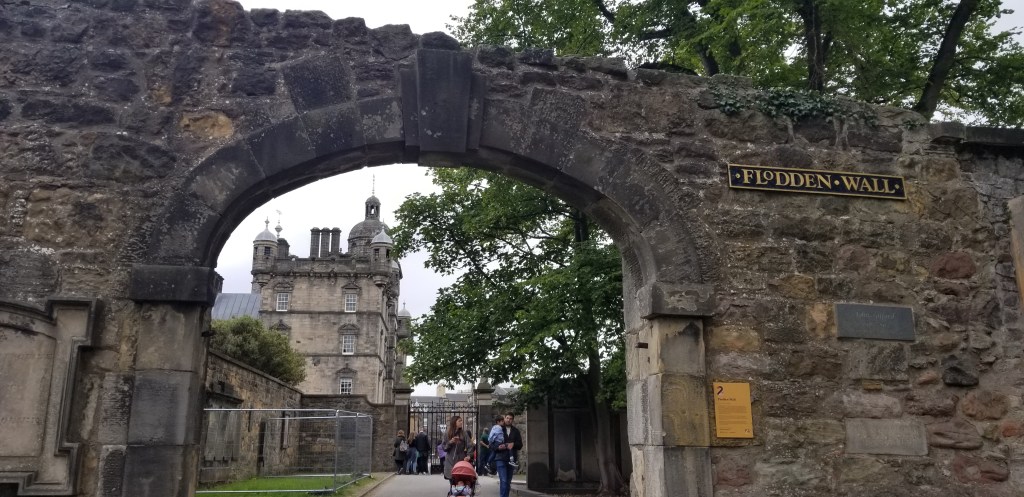
Bobby is also immortalized at the entrance of the cemetery, which you can see in the top picture of this blog.

If you are in Edinburgh and find Bobby’s statue, please don’t rub his nose. It won’t really bring you good luck and the locals don’t like how the finish on his nose has worn down. They are still pretty proud of their little dog.

Next time – Moving on to the Scottish Highlands
UK and Ireland

Down-and-Out in Ireland – Europe Travels July 2022

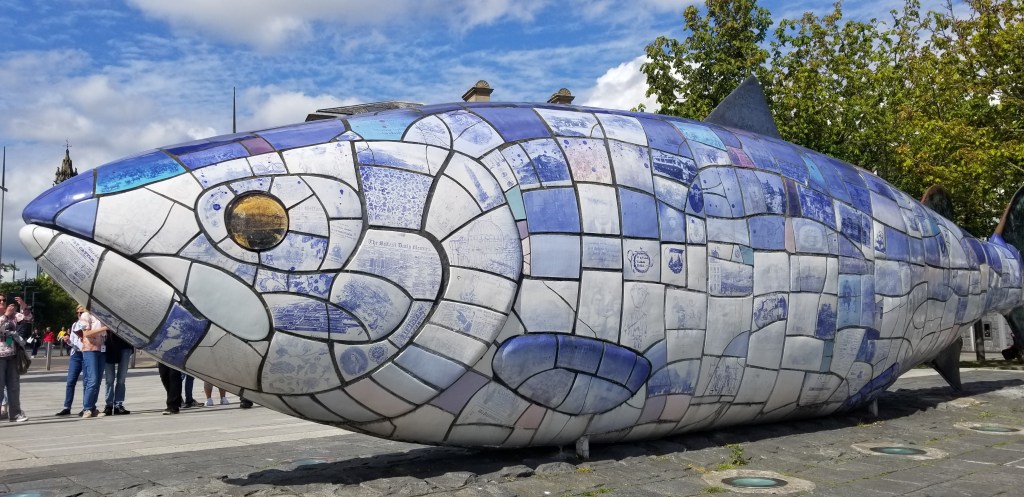
“The Salmon of Knowledge” Donegall Quay, Belfast

Belfast

The big sticking point for a trip to Europe for my husband, Cal, was opening ourselves up to the possibility of contracting Covid. After all, we purchased our RV and truck at the onset of the pandemic so we could travel around in more of a self contained bubble. We’ve been vaccinated twice and boosted twice, though. I was pretty confident, but even after passing the “point of no return” on bookings, he occasionally expressed his concerns.

So, I took care of all questions and doubts for him by getting Covid right off the bat in just our first few days in Belfast.

I should mention that unlike just about everyone else, we masked for most of the trip from Albuquerque to Denver to London Heathrow to Belfast. In Belfast, very few people were wearing them. We masked in bars and restaurants until food and drink arrived, and when the crowd got heavy at the Titanic museum, I masked up.

On the morning of the day we were to transfer to a hotel to join our Ireland tour group, though, I felt the first stirrings of a cold. Cal already had one so I was sure I caught it from him. We masked and met our tour group. It was very small: eight of us, including the guide. They were an interesting and diverse group of people. No one was from the United States.

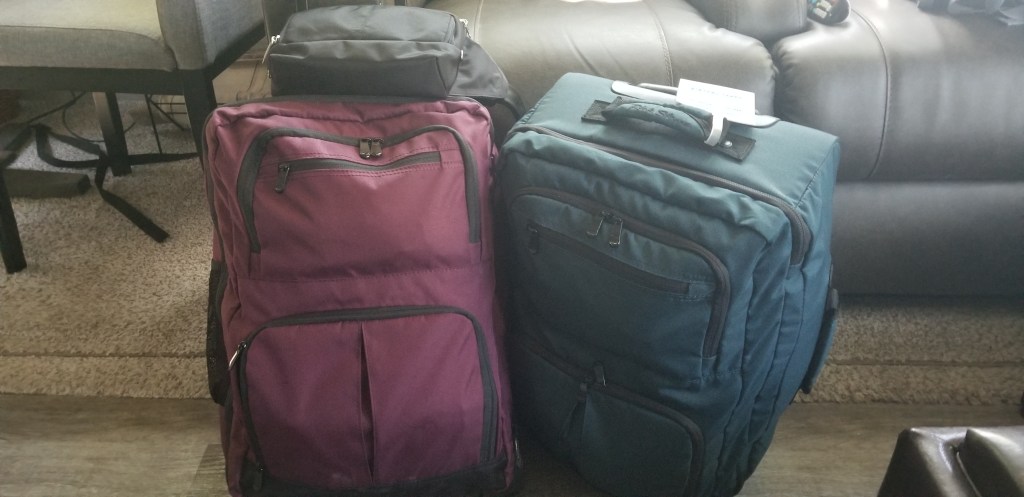
In a fit of pre-trip hysteria the night before our departure for Ireland, I tossed out of my suitcase many things that I had packed in an effort to lighten the load. One of those things was a thermometer. The night after meeting the group was a very rough one for me and I’m sure I had a temperature but I can’t confirm it. Reluctantly, I confronted our guide in the morning, and she gave us Covid tests. The result: Positive for me, negative for Cal. End of tour. Jailed in the AC Mariott Belfast.

The view outside our window became very familiar: Sinclair Seaman’s Church and the Belfast Harbour Office, with rolling green hills of Northern Ireland behind

I was really too sick to care at that point, and Cal was great at being our “go-fer”. The Mariott was a business hotel, not one I’d choose to stay in normally but perfect for Covid confinement. We’re not sure exactly when he got it, but it was probably a couple of days after I did. We had the “new” BA-4 or BA-5 strain so it was more than just a couple days of sniffles. The worst part of this for us, and particularly me, was hours and hours of unresolvable coughing spells. And although we were negative again within days, it was really about two weeks before we both felt better.

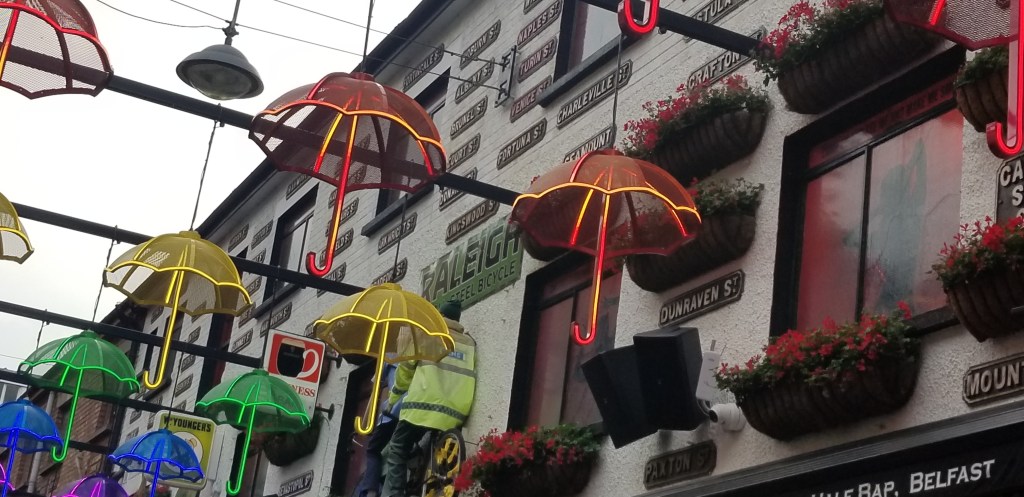
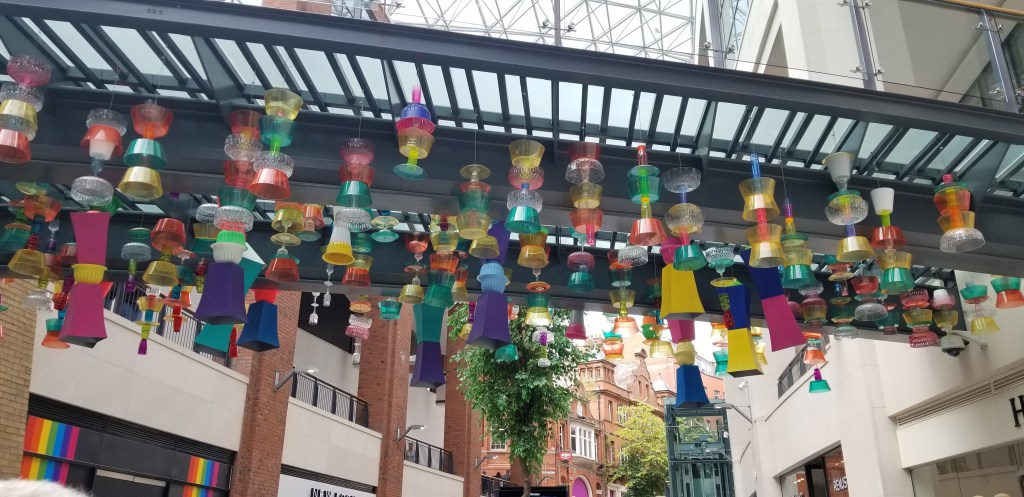
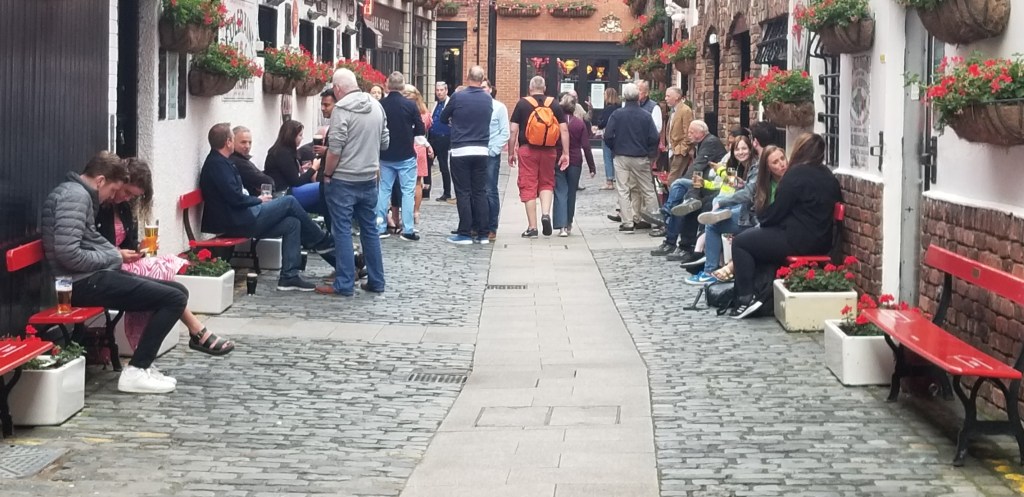
Blissfully unaware of the coming storm, we greatly enjoyed our first couple of days in Belfast. Our AirBnb for those nights was in walking distance to a network of tiny streets full of bars and restaurants. There seemed to be a pub around every corner. Belfast has a lot of alleyways, and every one has at least one pub. Many of them are decorated:

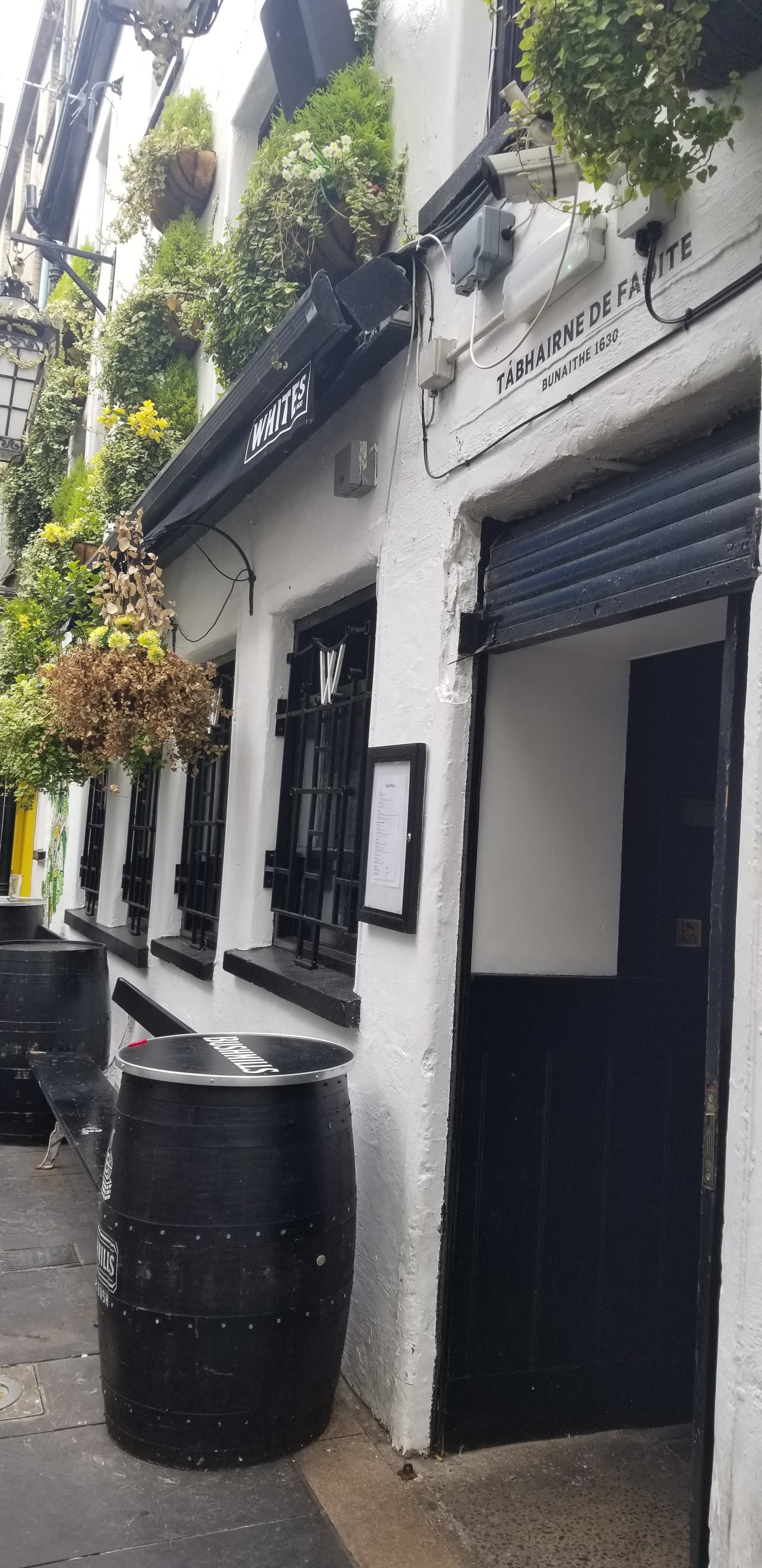
We found the oldest pub, going back to 1630:

the narrowest pub:

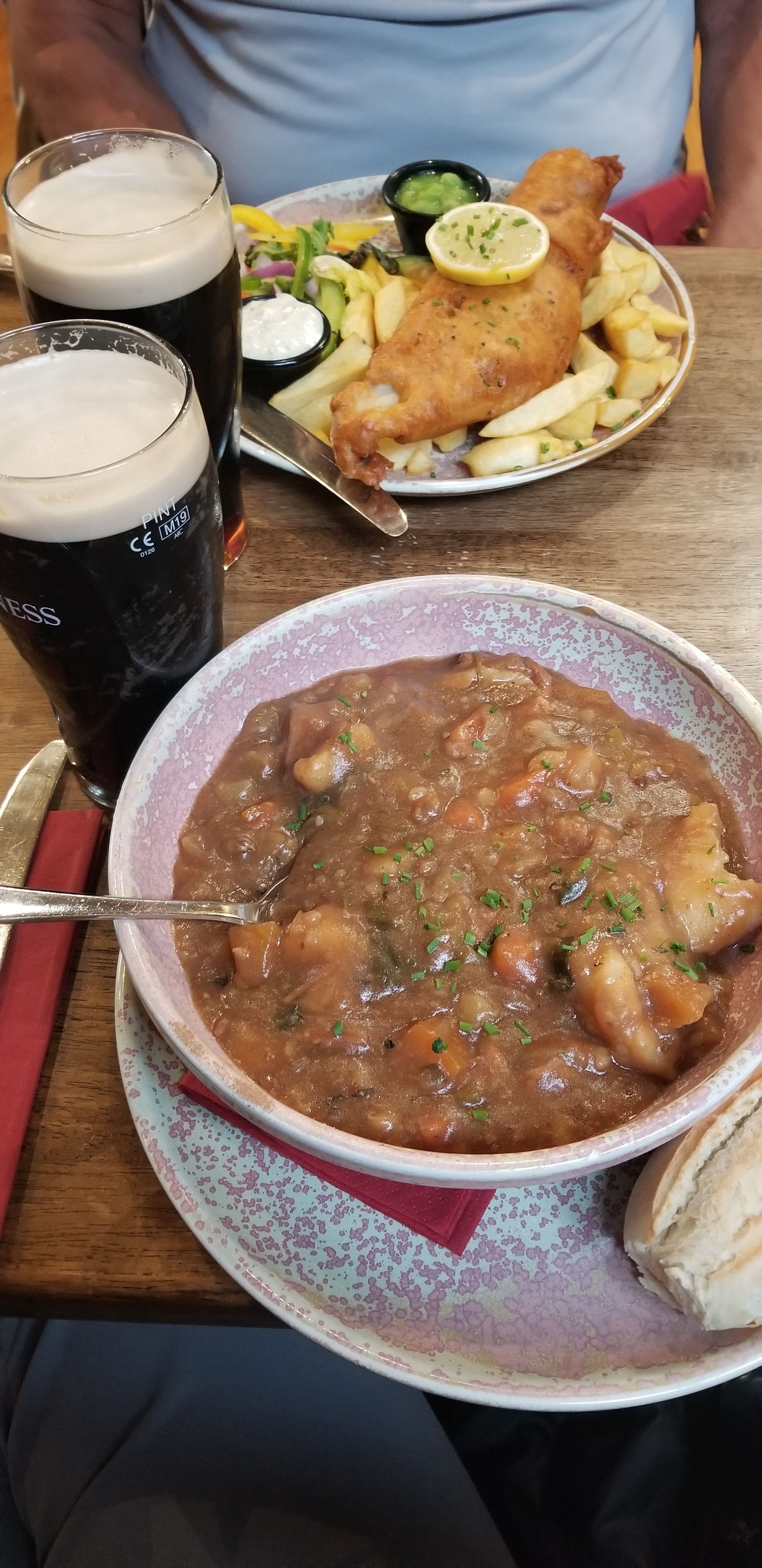
and had fish and chips, Irish stew, and pints of Guinness in a pub. The stuff in the little green cup next to the fish is mashed peas. Most fish and chips in Belfast and Dublin were served with peas in some form.

Many pubs have pews outside for gathering. At happy hour, the alley is hopping.

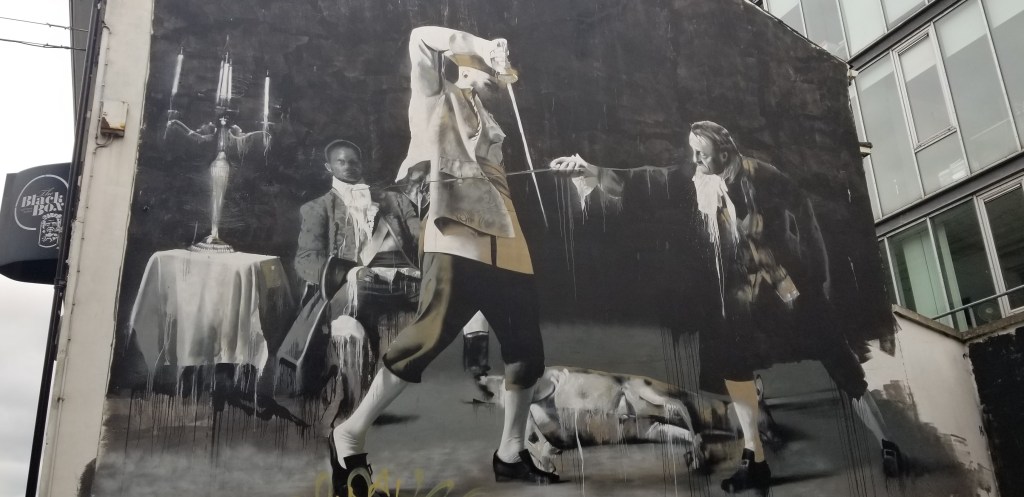
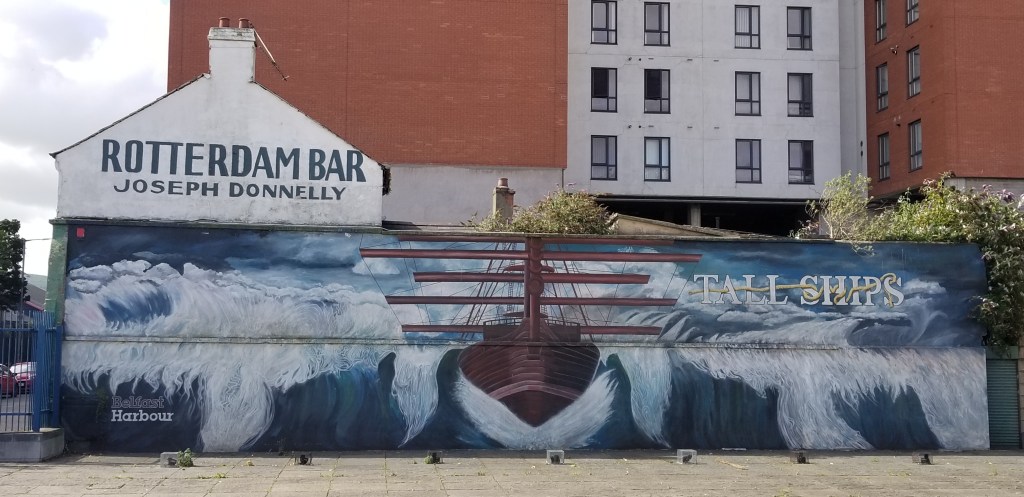
There were larger-than-life murals:

A huge mural near the harbor

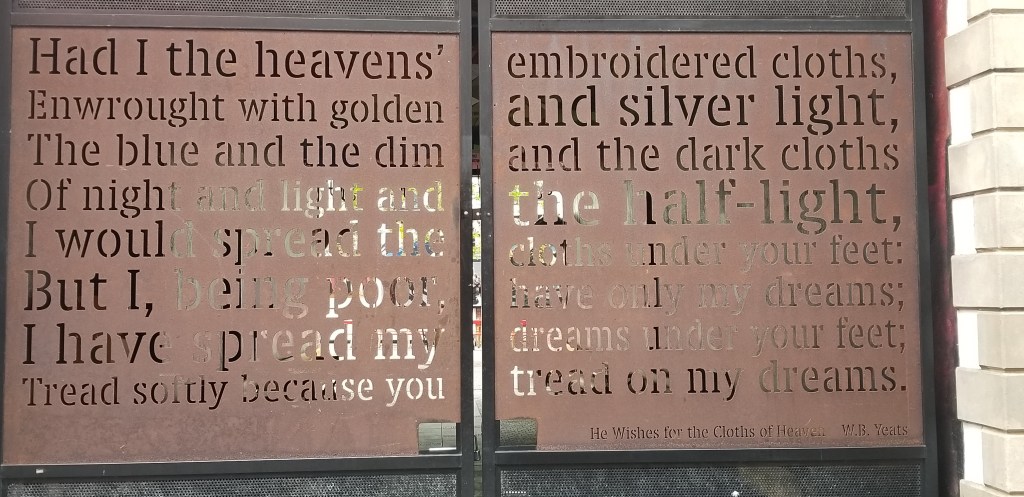
The words of Ireland’s great poets are everywhere – in this case, Yeats. Beautiful words, indeed.
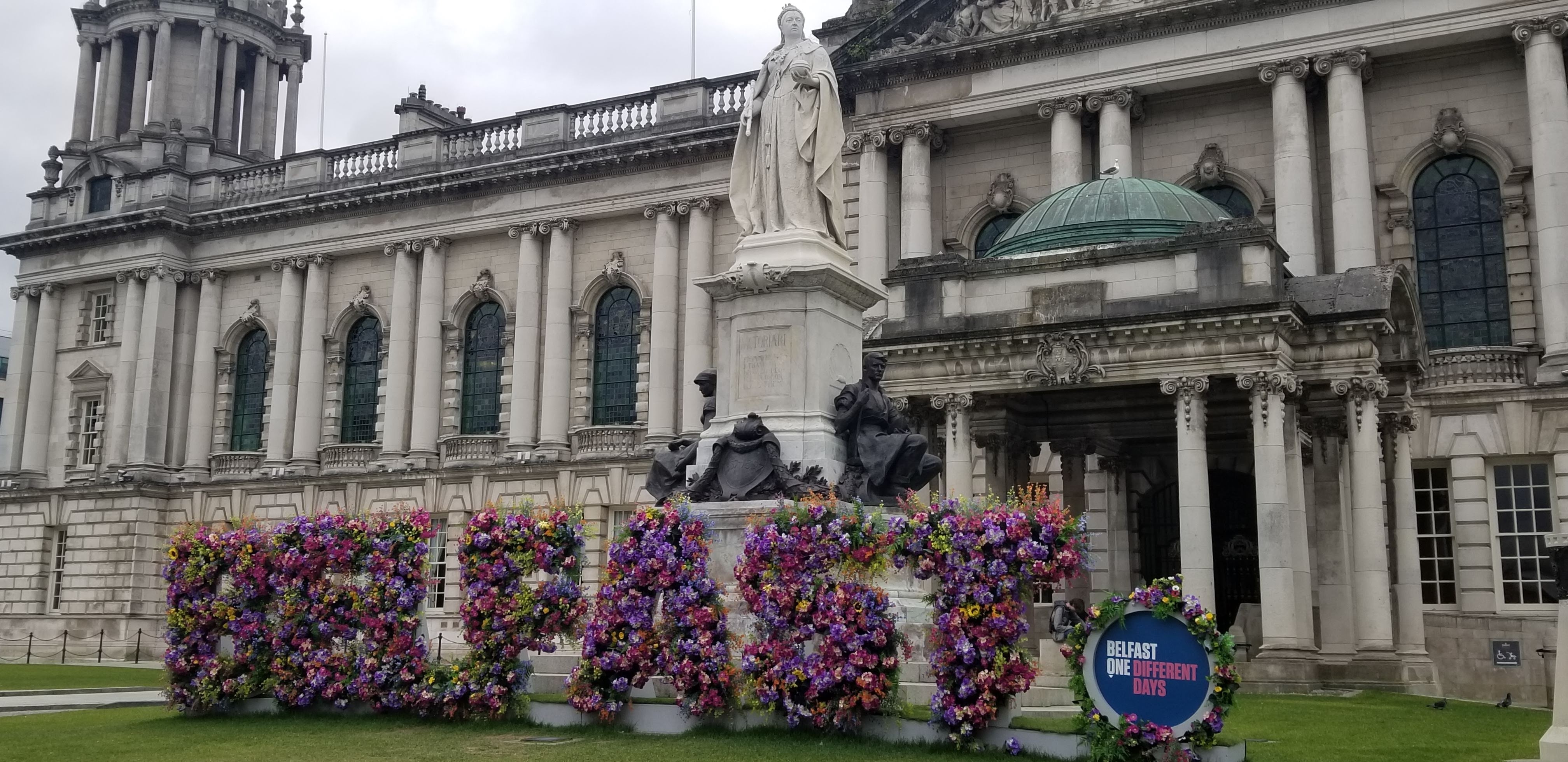
We took a look at Belfast City Hall.

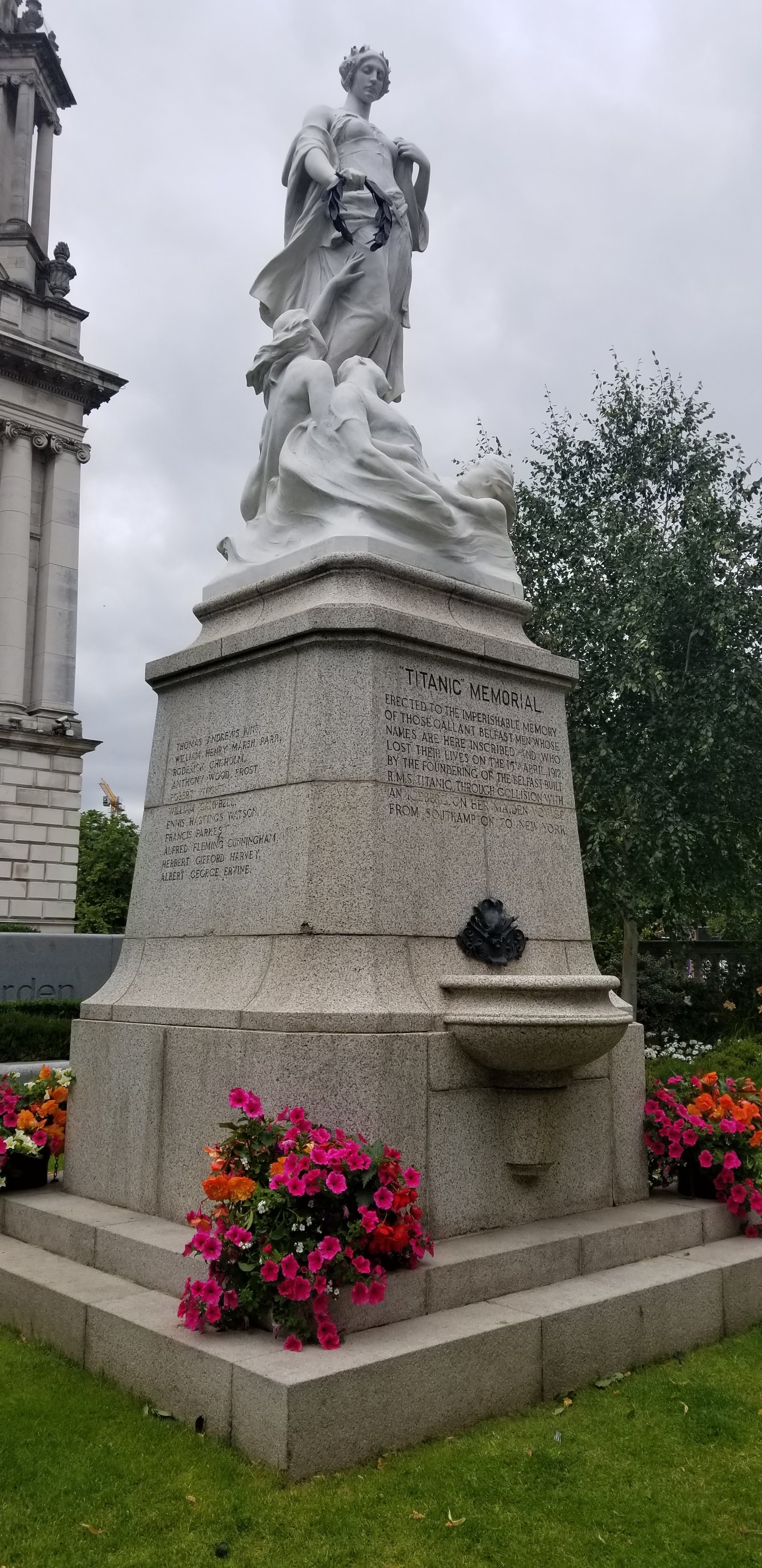
To the side of it, we found a memorial garden and statue in memory of the lives lost in the sinking of the Titanic.

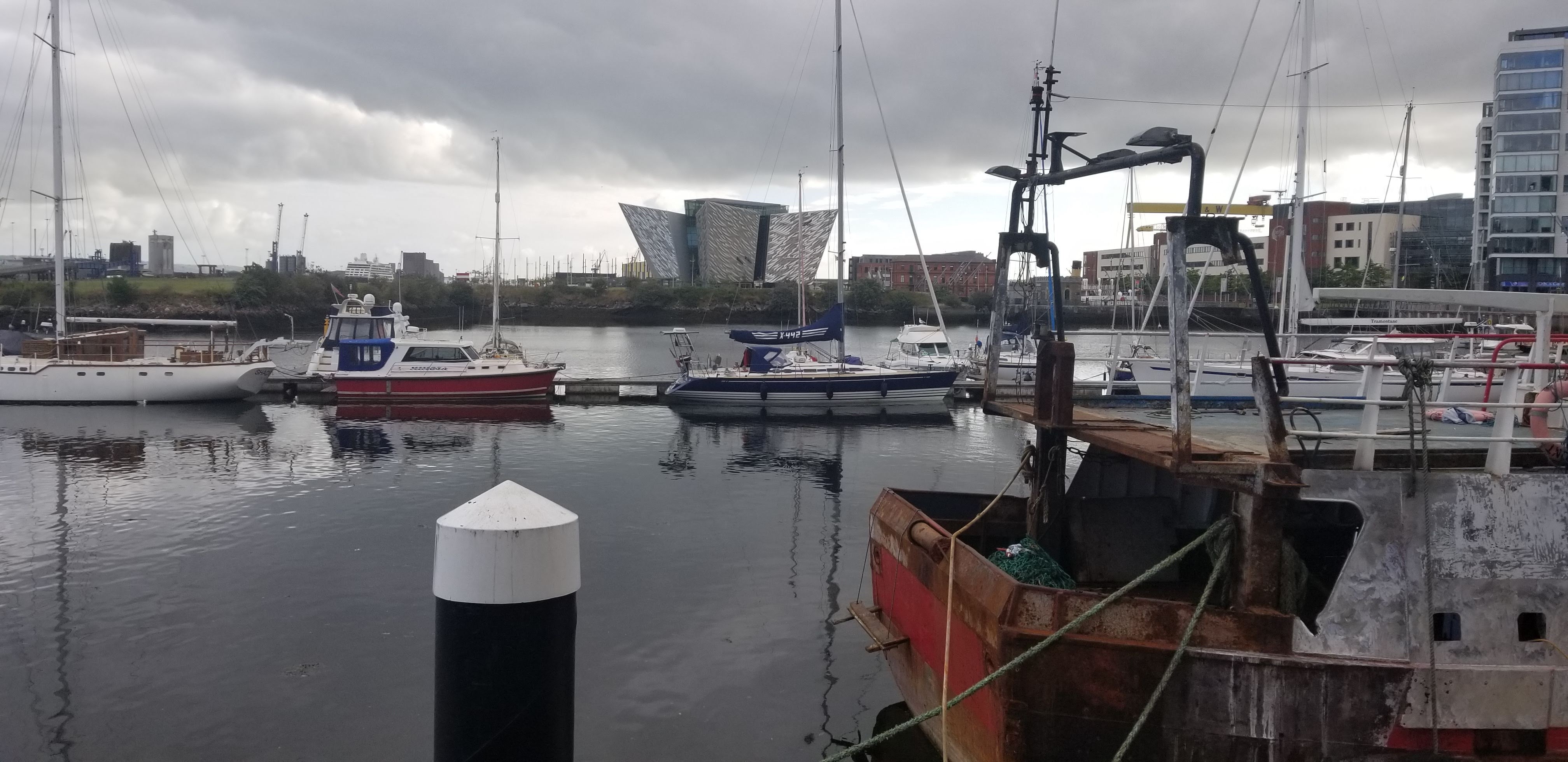
Which brings me to our visit to the Titanic Museum. We walked by the city harbor on the way to the museum.

Belfast Harbor, with the Titanic Museum behind it

The Titanic was constructed in Belfast, and a great deal of the focus in the museum was on life in Belfast as it was during the construction of it. It utilized the labor of 3,000 workers, and hundreds more stood outside everyday hoping to be picked up for some sort of unskilled labor. In that pre-computer era, each corner of the ship had to be drawn out by hand in a building dedicated solely to providing a workspace for the architects.

This picture gives an idea of the riveters at work on the Titanic. The ship is actually another in the shipyard around the same period.

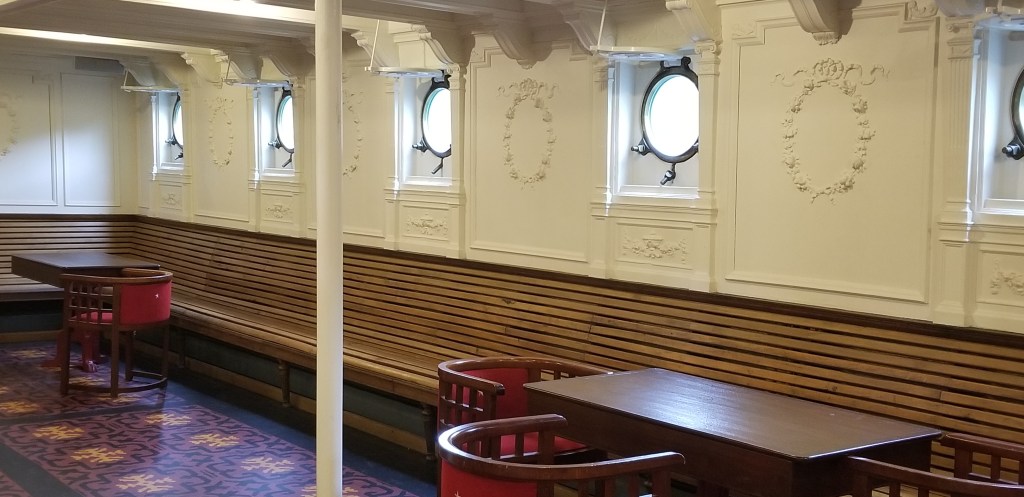
The Nomadic was Titanic’s tender. A tender is a boat that brings the passengers from the dock and out to the ship. In this picture, the Nomadic is shown behind a old floating dock. The seating area of the boat was divided between first and second class.

The first class seating area in the Nomadic. Passengers heading for the Titanic would have sat here.
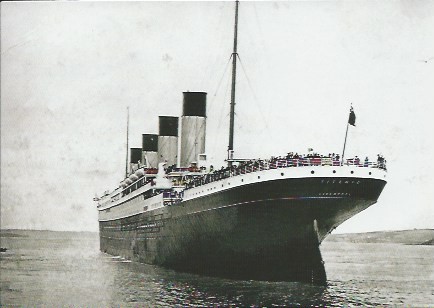
A postcard: The Titanic, with passengers aboard, lifting anchor at Cork Harbor on 11 April 1912

I’ve always been interested in Titanic stories, both fiction and non-fiction. So it was exciting to me to stand on the very spot where the Titanic was built. The lines painted on the ground look like playground guides, but no, they actually indicate where various parts of the ship would have been.

There were other Belfast sights that we had planned to see before Covid hit, but last-minute lodgings were in short supply and we were ready to get going. When our quarantine was over, we made our way by train to the hotel in Dublin where our tour ended had we been able to be on it. We had already planned on staying there for some additional days.

Belfast has a gritty feel to it. It’s a port city, the largest in Northern Ireland, and was once home to several large industries. Fellow travelers that we met later in our trip had visited areas in Belfast where “the troubles” happened, and could still feel tension in the air. Dublin, in the Republic of Ireland, by contrast is a prettier (in my view) city with more of a cultural and scholarly history. Looking back on the two cities now, I think of them both as being cloudy and grey. It could’ve been the weather. Or maybe it’s just my Covid perspective.

Dublin

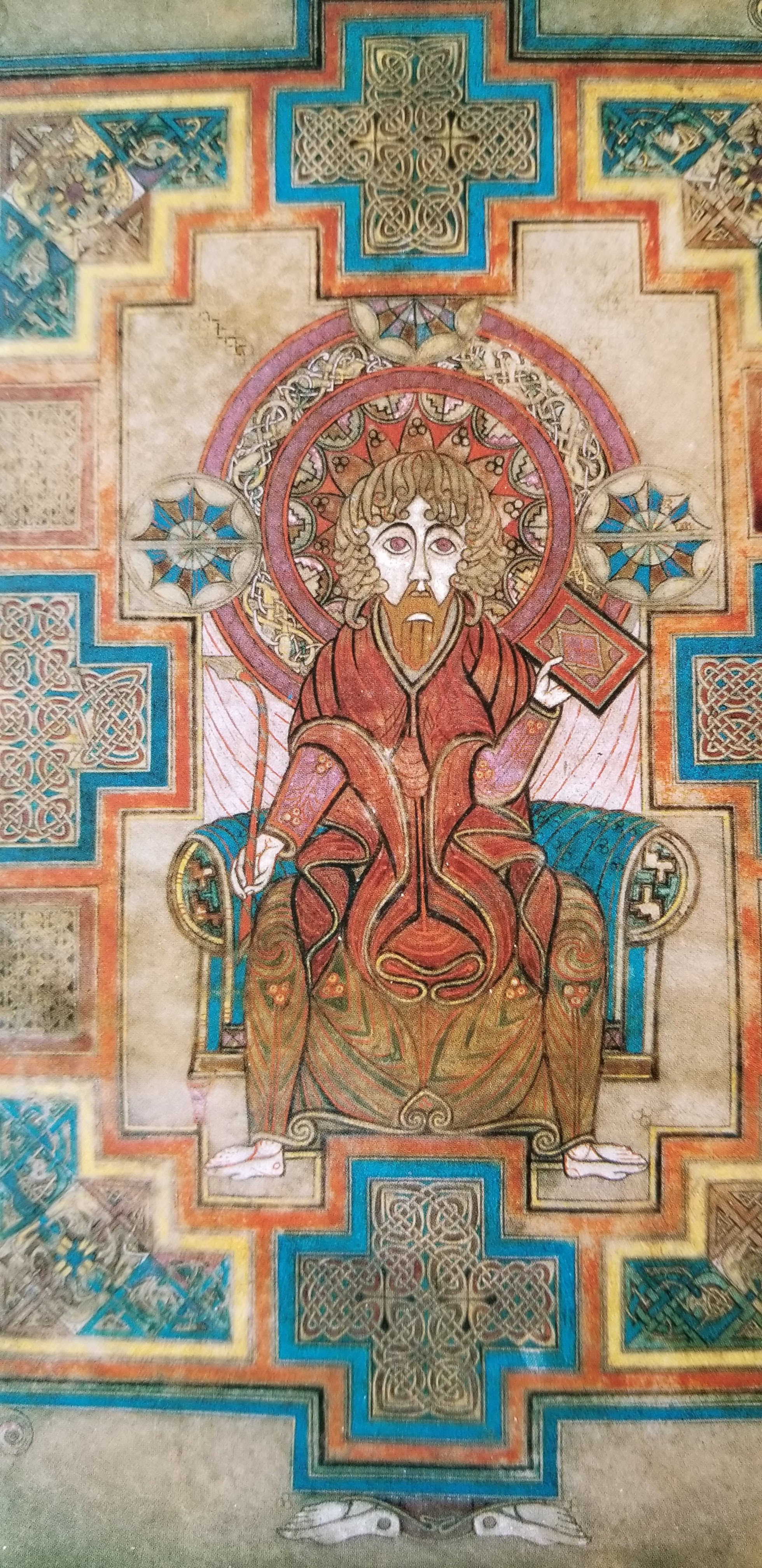
Once on our feet and ready to take on the city, we visited Trinity College, and viewed the Book of Kells. The book is an illuminated manuscript of the four gospels of the New Testament created by monks in 800 AD. It is written on vellum, made from calf-skin, and 150 calves gave their lives so that the book could be written. I took this picture from a postcard. In the museum, only one page is viewed at a time, and the page we saw was a picture of Jesus. This picture is a portrait of Saint John, and gives you an idea of what the other pages may look like. The artistry is breath taking.

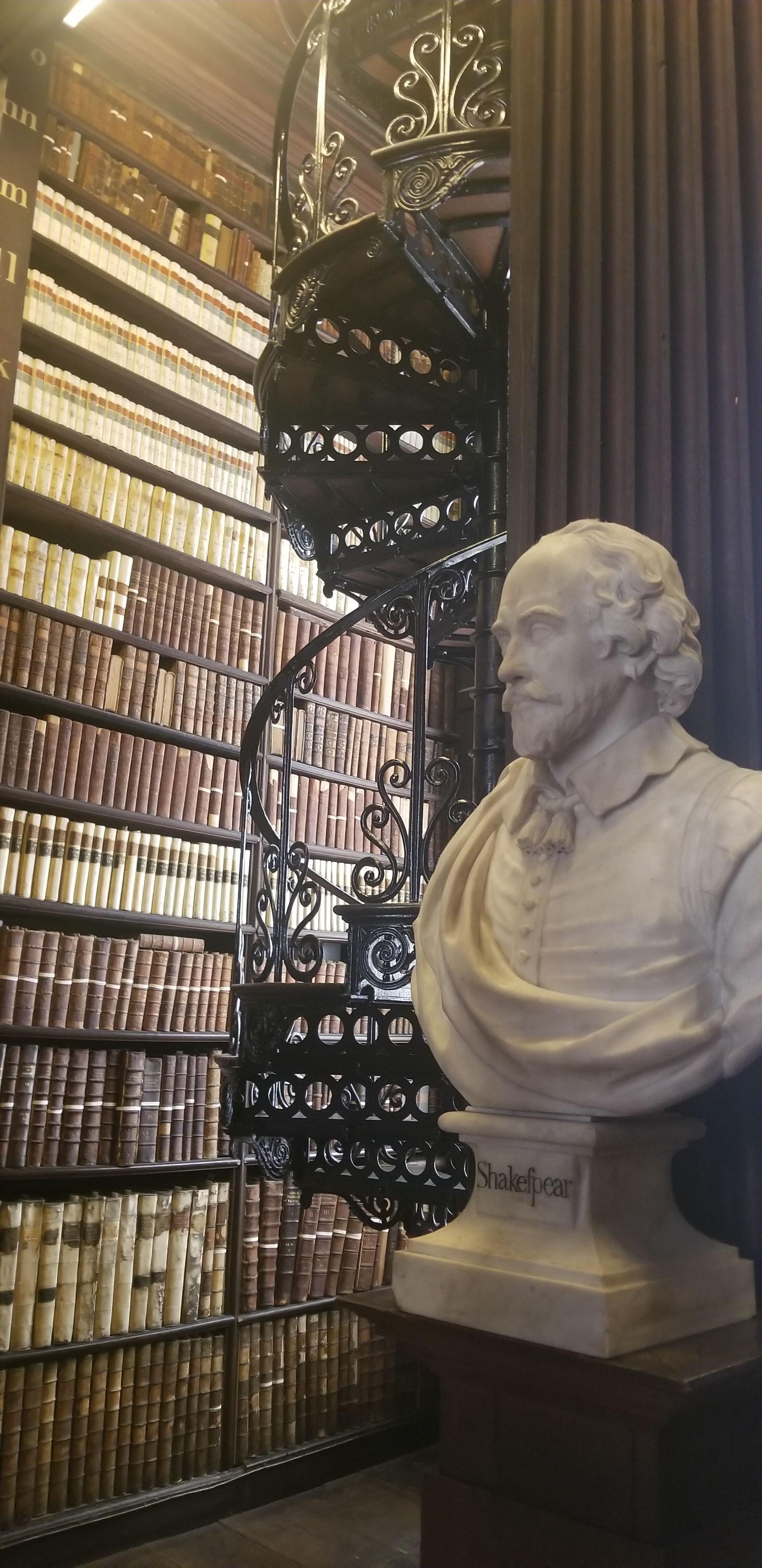
Near the Book of Kells is the Long Room in the Old Library on Trinity College. That is an awe-inspiring library of nearly 200,000 of their oldest books, along with the busts of famous writers, scholars, and other men connected to the college.

We paid a visit to St. Patrick’s Cathedral, where Jonathan Swift is buried. You may know him as the author of “Gulliver’s Travels”, but he was also Dean of the Cathedral from 1713 until his death in 1745.

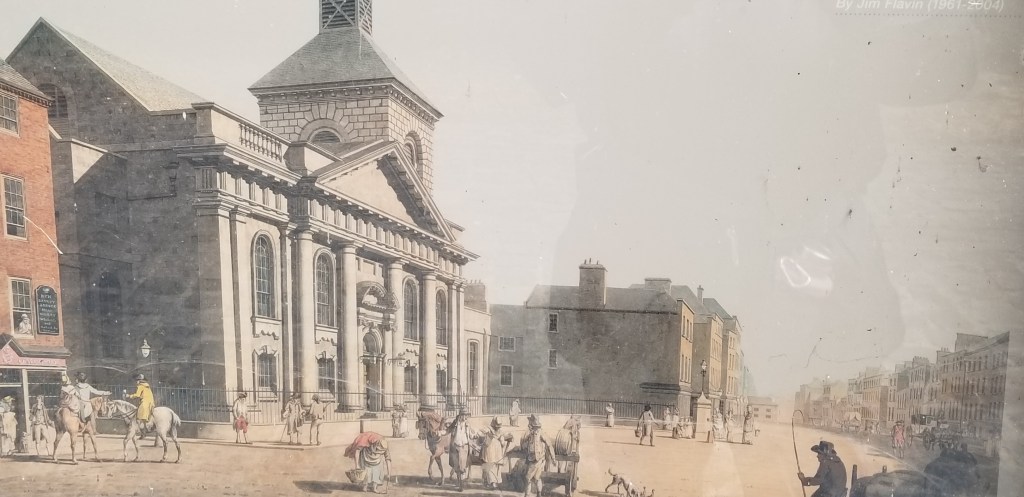
We arrived too early for our Guinness tour, so we strolled around the neighborhood and happened upon an old cemetery, now a park, behind St. Catherine’s. A church has been on this spot since the 12th century, although the current one was built in 1769.

I often wish I could be a time traveler and see a place as it was three hundred years ago. On a nearby sign, I found a picture of St. Catherine’s around the time when it was built. Now that’s what I’d like to see!

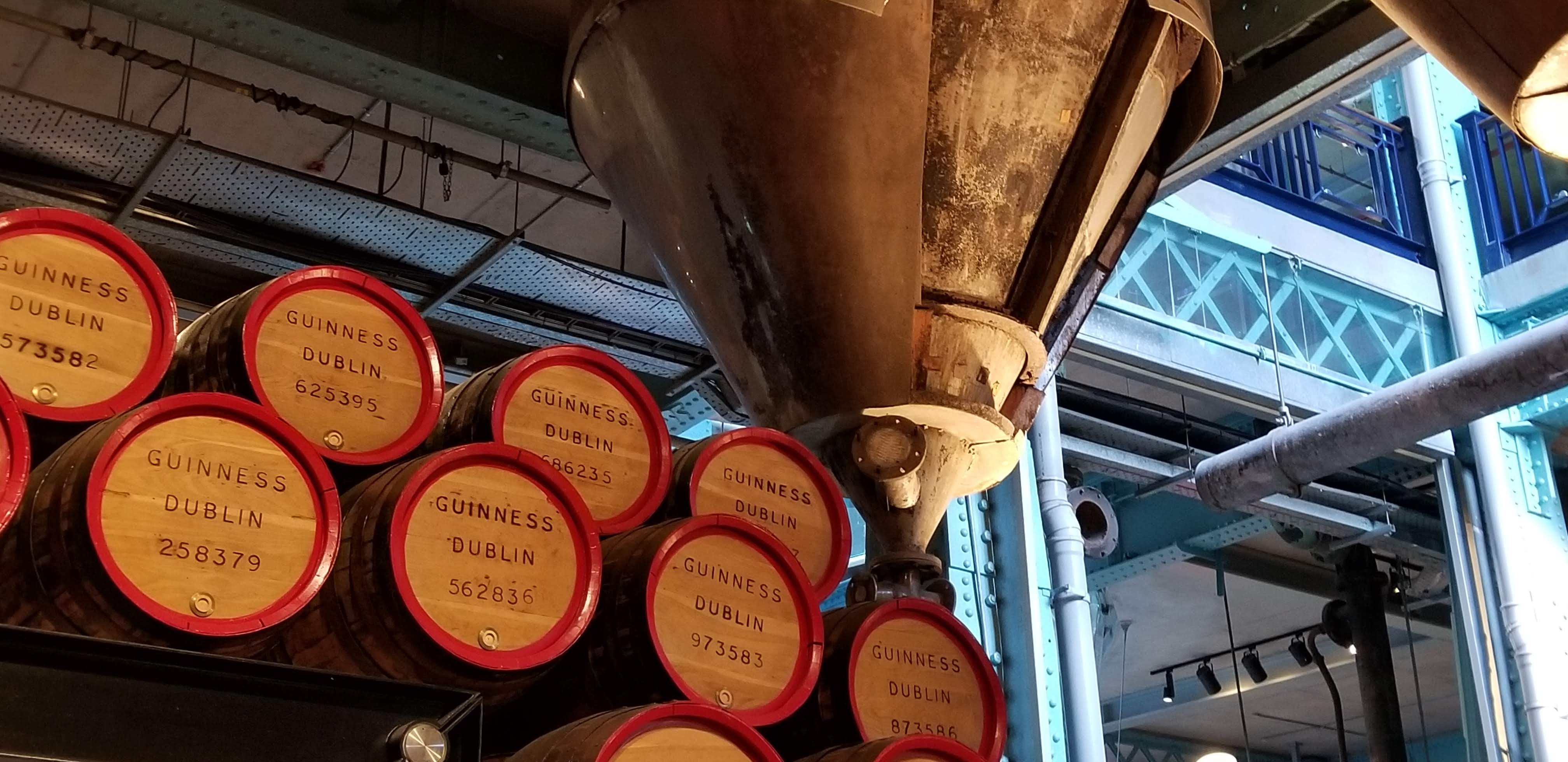
The Guinness tour is a walk-through describing their brewing processes. The brewery has been at the same location since Arthur Guinness founded it in 1759, on a 9,000-year lease. The beer is an Irish dry stout, and the recipe is a closely guarded secret. I don’t like the flavor of beer all that much, but I do like Guinness.

Our tour came with a pint of Guinness for each of us. Of course, Guinness is excellent for relieving any remaining Covid congestion anyone may have. We received an excellent view of the city as we sipped on it. The finished beer on the table was from a previous patron, by the way.

By not being able to go on our tour, we missed seeing the perimeter of Ireland north and west. Of course this was so very disappointing. Ireland was never a huge bucket list item for me, though. I don’t know if I will ever be back, but who knows? We were pretty happy that once the tour ending date passed, we had no more overnight tours, and our time was our own.

This blog post may be a bit of a downer, but the rest of our European trip was awesome. This was only the first week or two in a three month adventure, and it became everything we had hoped for after this. Covid is out there! If you are going, stay masked!

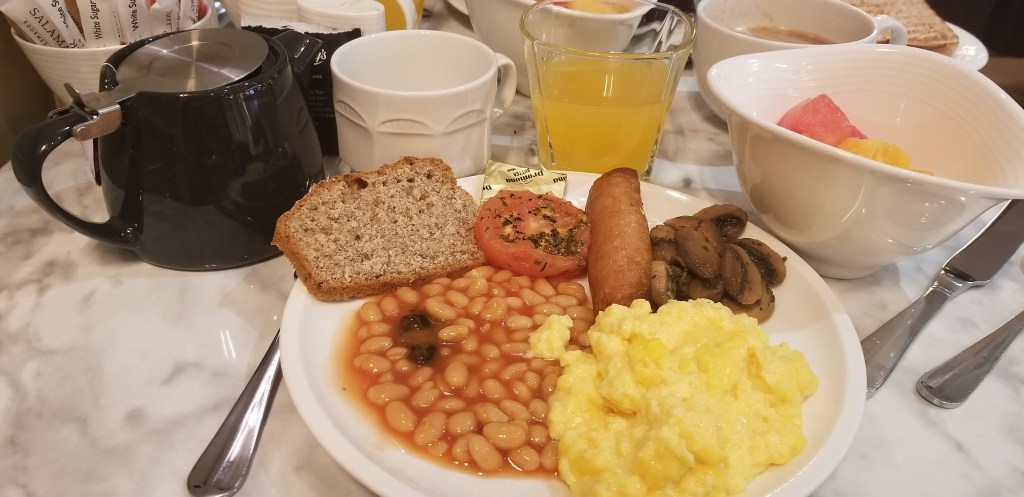
An Irish breakfast: soda bread, tomato, sausage, mushrooms, beans, eggs and of course tea

Next time: a little peek at the Irish countryside

Life in General · USTravel

And…We’re Off Again

Our previous post, from Western Colorado, actually happened two months ago. What have we been doing since then? Getting ready for our 3 month trip to Europe!

Anyone who knows me well will not be surprised to hear of our plans. Thinking about it and saving for it kept me going through the last decade of work before retirement. In its original conception, the trip was going to be 9 months, plus Hawaii tacked on at the beginning. Why spend a lot of money flying back and forth over the ocean for a few weeks when you can see more in one trip for several months?

Then, grandchildren started arriving. COVID happened, and the purchase of our truck and 5th wheel. We had our trip to Hawaii earlier this year, so now it’s time for the other part of the plan. The trip duration has been reduced to only three months, but three months is still a blessing, and I’m glad we can go.

I started planning for the trip last fall. And then stopped for awhile. COVID variants arrived, waned, came back around again. Ukraine was invaded by Russia. Optimistically, I reserved AirBnbs and purchased plane tickets. Cal was worried about Covid resurgence. And it is resurging again. We have been vaccinated and boosted twice, and have our masks, but who knows? Neither of us could have foreseen the airport debacle that is going on right now in Europe and here in the States. But all plans are made, and we will hope for the best.

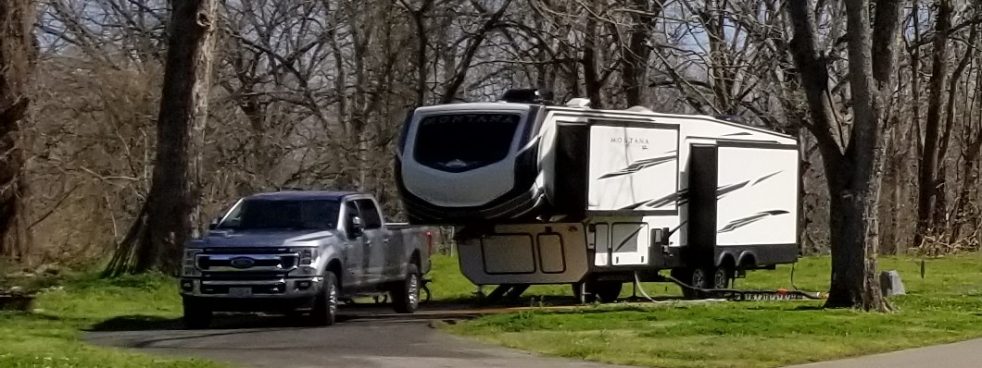
What about our truck and 5er? Our RV is going into storage on an air base. What could be more secure than that? We have a nephew in Albuquerque who is graciously letting us keep the truck in his driveway. I suspect he will be enjoying a few drives in it. When we return to the United States, we will be back to our RV’ing life the same as before.

Meanwhile, besides trip preparation, our time in Denver has been filled with the mundane stuff of everyday life. We have been happily enjoying the company of our grandchildren – and their mothers, of course!

Two days after we arrived, we had a late May snowstorm.


A bewildered buck

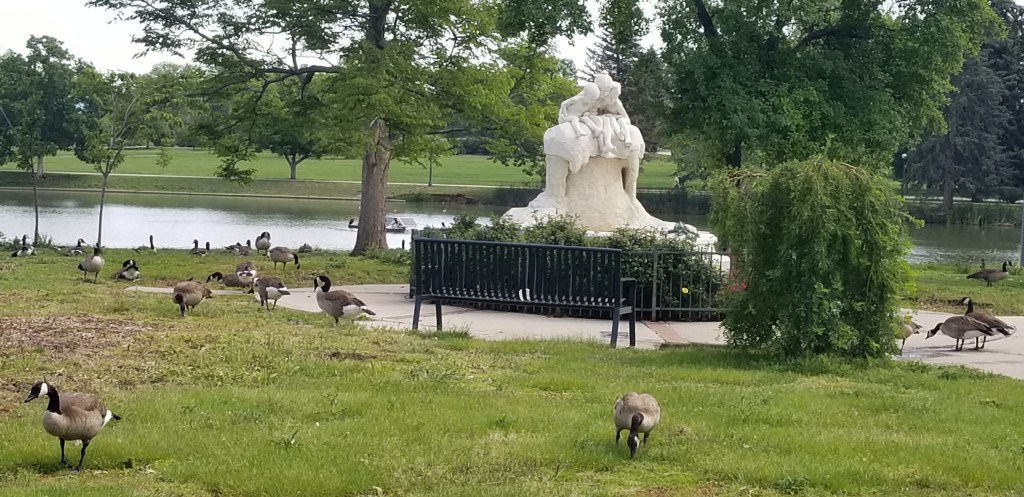
One place I enjoyed returning to this summer was Denver City Park. There were a couple of walks with friends. I wish I could have joined them more often. This is the kind of weather I prefer!

This year, for the first time, I had opportunity to be in the park twice in the evening for concerts by the Mile High Freedom Band:

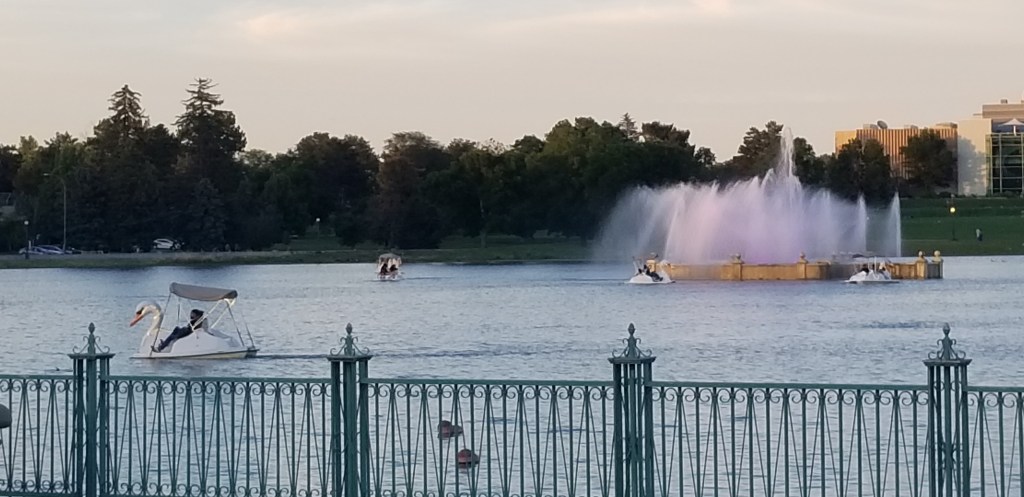
In Ferril Lake, the fountain changes colors, and swan boats paddle around it.

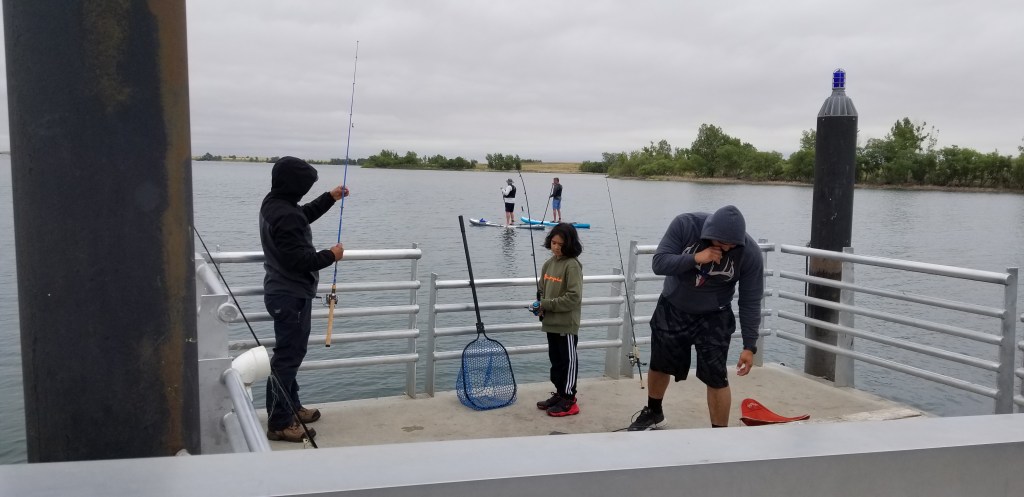
As we rose north from Arizona and Utah so did the gas prices, and they peaked during our stay in Denver. We limited excursions to those around town. We were curious about a couple of brown signs we’ve seen on streets we travel often, so we followed those signs. The first was 8 miles out from our summer spot at Cherry Creek State Park to Aurora Reservoir. Despite the cool and overcast weather, people were out fishing and SUP’ing.

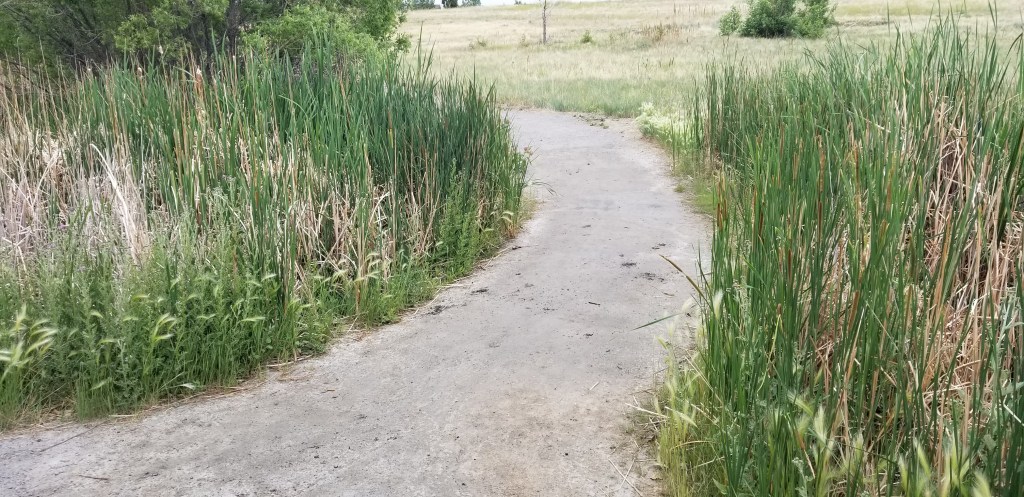
We discovered a great trail through the rolling prairie around the lake, and some blooms that looked a little like thistles.

Another brown sign we see on our way to City Park in Denver is for Four Mile Park. I was hoping for a hiking/biking trail until I did some research on it: it is a historical park.

Source: Fourmilepark.org

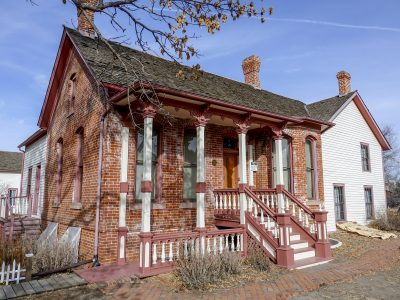
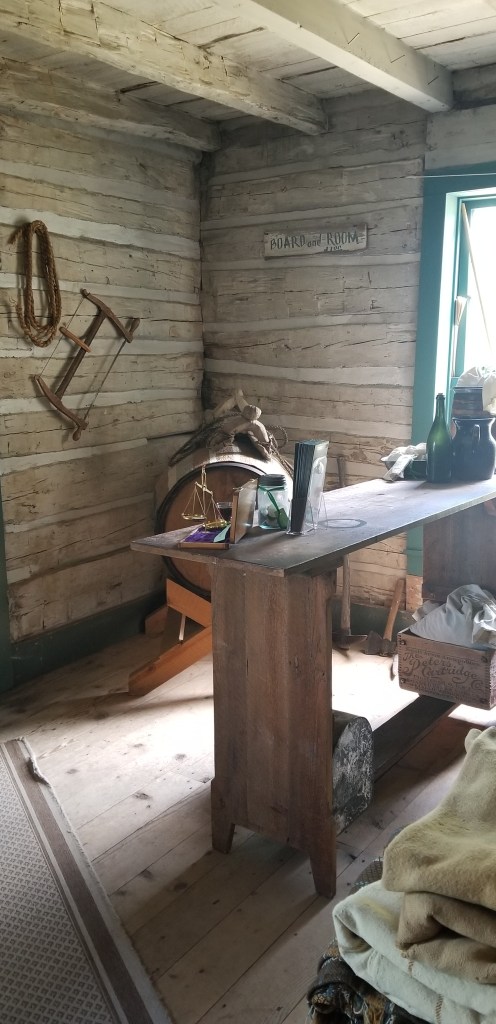
Four Mile Historical Park is four miles from the heart of downtown Denver and was a last stop on the Cherokee Trail in the pioneer days. This house is the oldest house in Denver. A cabin was built to supply travelers, and then it became an inn and stage coach stop. Women slept in the parlor and the men upstairs, and the upstairs loft was also used for dances. It finally became a gentleman’s farm for a Denver lawyer and his family, and grew to 600 acres. Now there are only twelve acres and it is in the city with apartment buildings all around the outside.

Tim, the assistant site manager, walked us through the house. We could see its transformation over the years. The first room is the old cabin, then there is a walk through the parlor, and finally into the very genteel turn-of-the century home.

The interesting thing is that the dining room and kitchen are in the basement. It’s cool down there, perfect for hot days when the wood burning stove is always lit. The stove also warms the space in winter.

Outside, there are both replica and and original buildings, barns with animals, and a boardwalk for children to sweep when they are visiting.

One thing I like about Denver is that, even when just going about running errands, I can look up and see the mountains when driving westward.

Of course, the best thing of all is the time spent with our grandchildren. Merely gazing at that perfection of a truck is happiness in spades for our grandson.

As with our trip to Hawaii, I don’t know how often I will be blogging while in Europe. We do have some places that we will be settling in for over a week, so maybe I’ll be catching up then.

Do you follow Facebook? If so, Twosna Travels is there, and a search on the name will find me. I may be more likely to post random photos there.

First stop – Belfast, Ireland. Until then: goodbye, slán, tschüss, arrivederci, antio sas!