USTravel

Home in Denver, Colorado

When spring comes around, all roads lead to Denver. That is because a big part of our family is here – our daughter, their wife and children. I see that I haven’t written a lot about these times since the first summer we were here, and now we have spent four summers.

I really wish sometimes that we could settle into one RV park and stay there, but Denver isn’t blessed with good commercial RV parks. In the state parks one can only stay two weeks. So we stay at the two state parks nearby and rotate through the summer. I’ve come to look forward to these times because each one has its merits.

It’s funny to say that a state park feels like home, but Cherry Creek is that for me. It’s nestled smack dab in suburban Denver, an oasis in the city. Yet, deer welcome us back almost every time we come in for the first time.

We are close to our family at Cherry Creek, and are often called to babysit or otherwise help out. We might have the kids over for some outdoor play time, or the whole family for dinner. I can visit with my friends on Monday mornings if we’re not busy. We try to cram in dentist or doctor visits while here. In between the busyness, I get my daily steps in with two favored walks.

One of them is a walk through the campground to a trail that goes down along the beach. Over the winter they had erected a brand new bath house, along with this sign:

It’s fun to imagine what the view ahead would have been like without the lake!
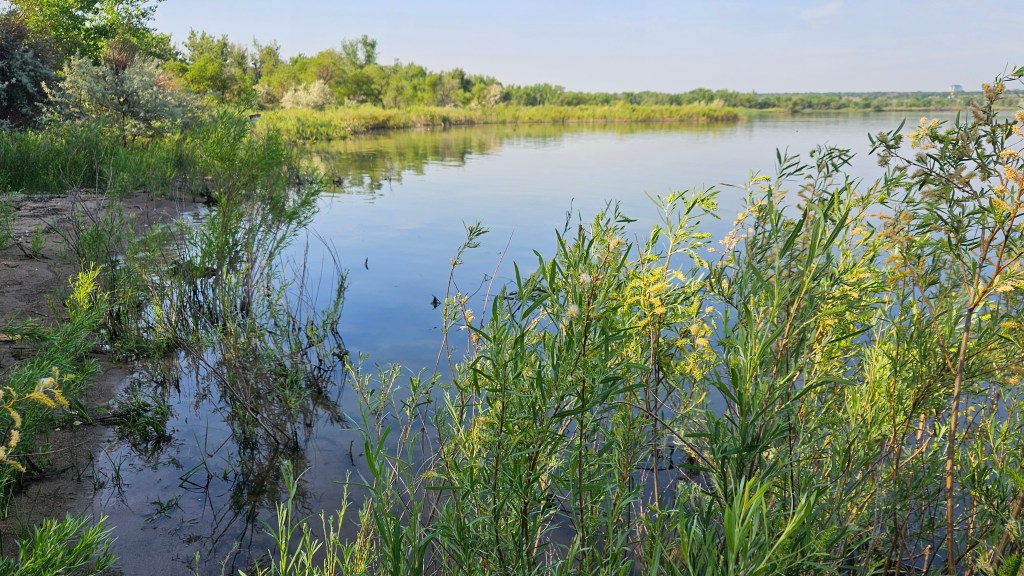
This view is on the far side of my beach walk. You can see that the waterfront is covered with weed growth. Until last year, I could walk along here all summer to see a lot of shore birds at the far end. A flood in 2023 raised the lake level and now I have to wait until fall, when the water recedes and opens enough sand to walk on.

When that finally happened last fall, I was so excited to finally walk all the way back to visit my bird friends.
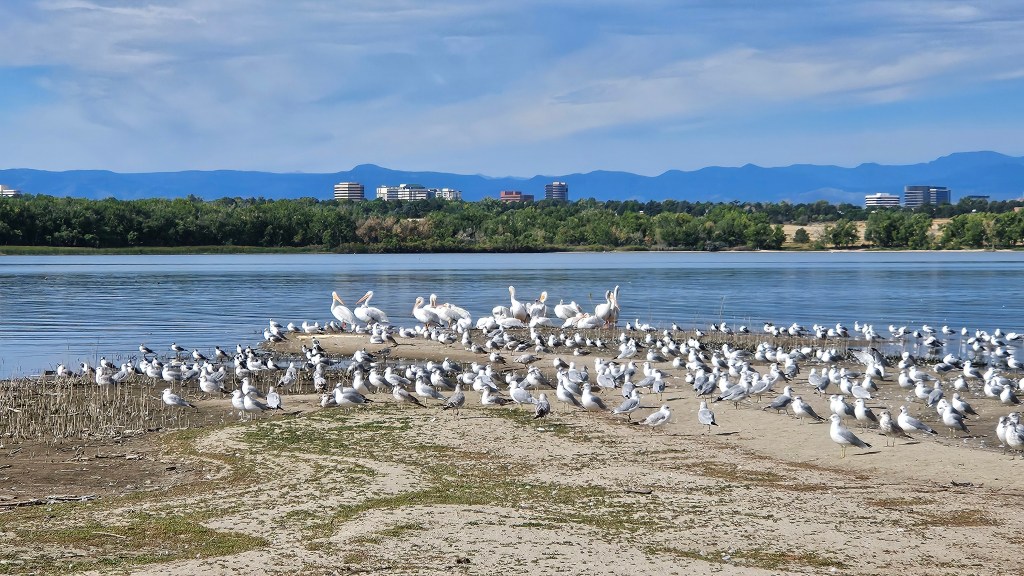
The other walk is along the dam to the marina, although if the day is hot I don’t make it that far. It’s a four mile round trip, and I’ve started to push myself farther. One day, I think, I will walk all the way around the lake. Or maybe not.

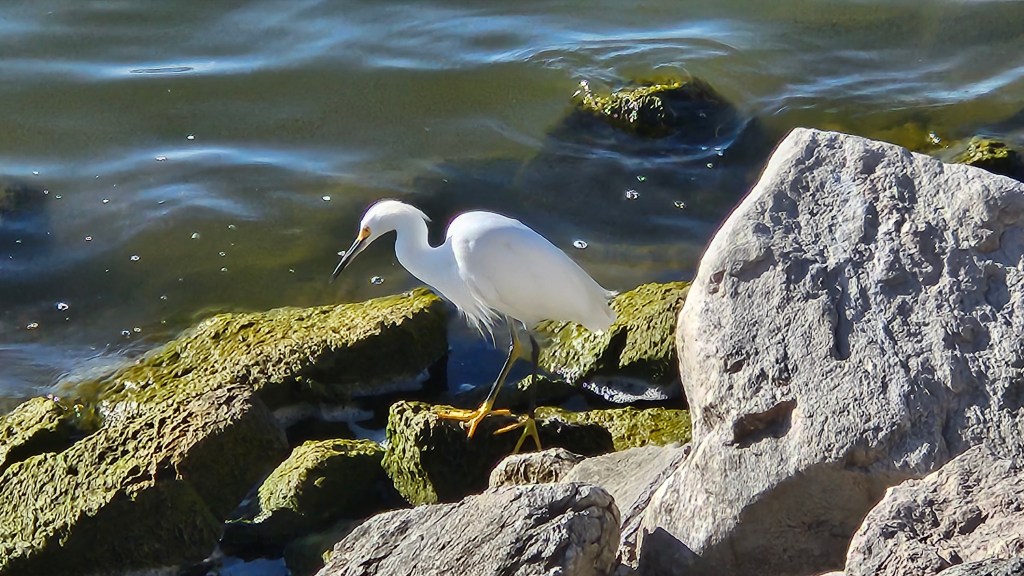
Along the dam trail, I enjoy watching the egrets, ducks, and pelicans along the shoreline. In August, flowers begin to bloom.
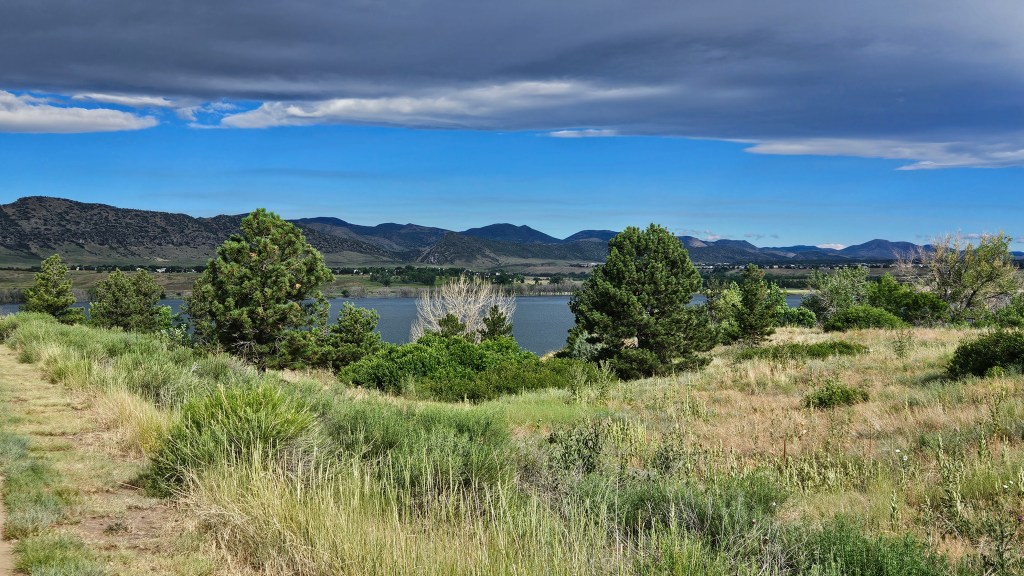
When our two weeks at Cherry Creek are up, we move over to Chatfield. Here we are about a half-hour’s drive from our family, and it’s possible for busyness to still reign over a stay here. We try not to have to make too many trips into town, though, because we relish time to just enjoy a bit of the back-to-nature feel of this park.
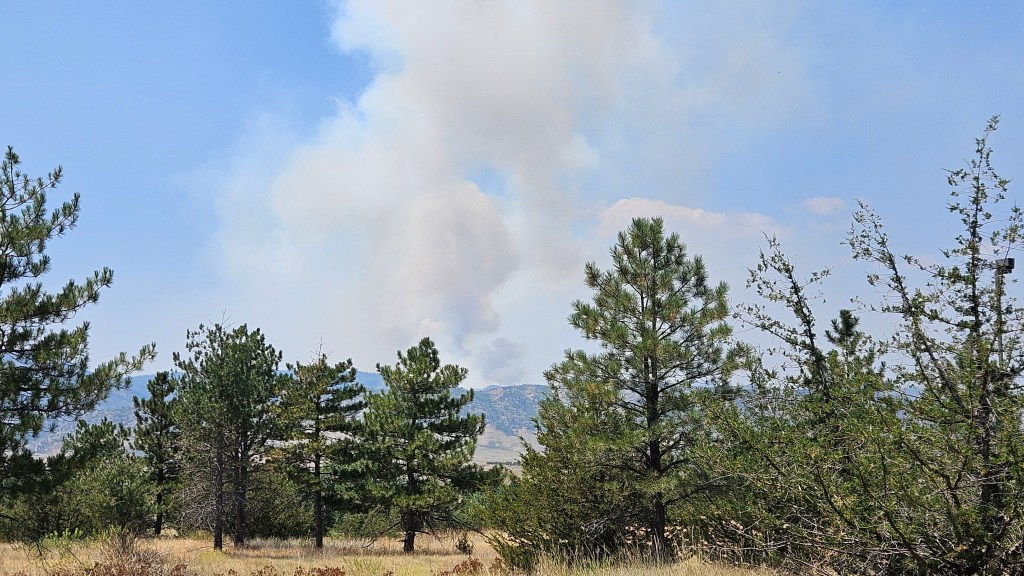
In July, we had some excitement during our stay. We could see the smoke from a forest fire over one of the distant peaks from our site. Helicopters flew overhead constantly, getting water from the lake and dumping it on the peak to wet it down. Luckily, it never advanced to our side of the mountain.
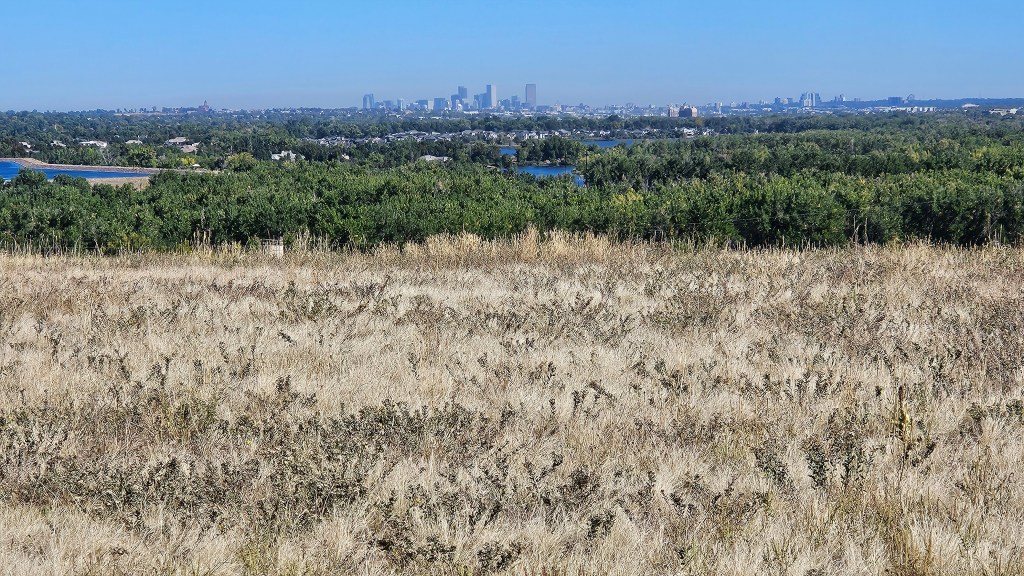
At Chatfield, we can ride bikes around the park’s trail. In late September it had cooled down enough to head out on the north side, up on top of the dam for a spectacular view of the city of Denver–
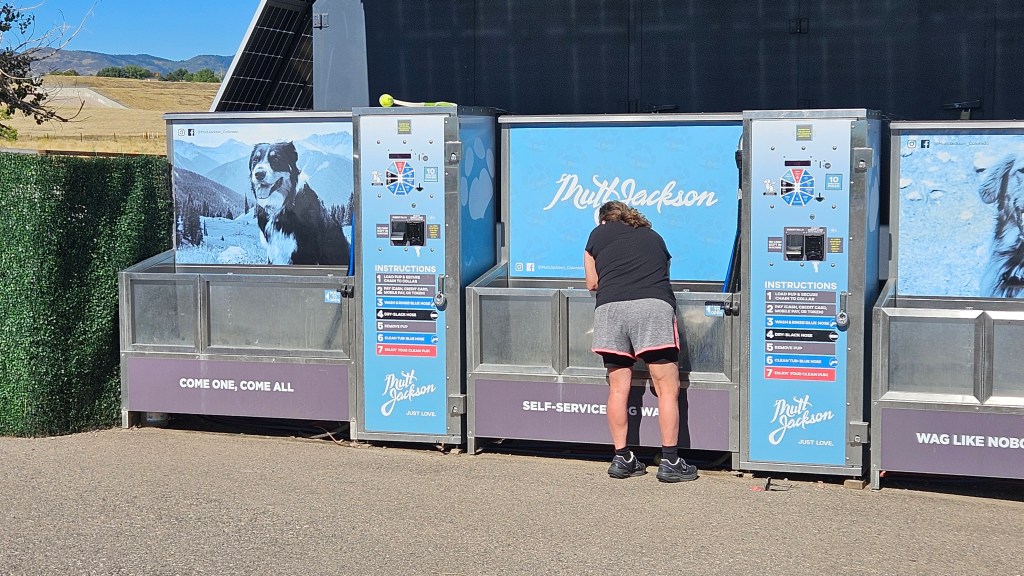
and discover a whole new area on the other side of the dam. There’s a huge dog park, with a place to wash your pups after they’re done romping around the small lake there.
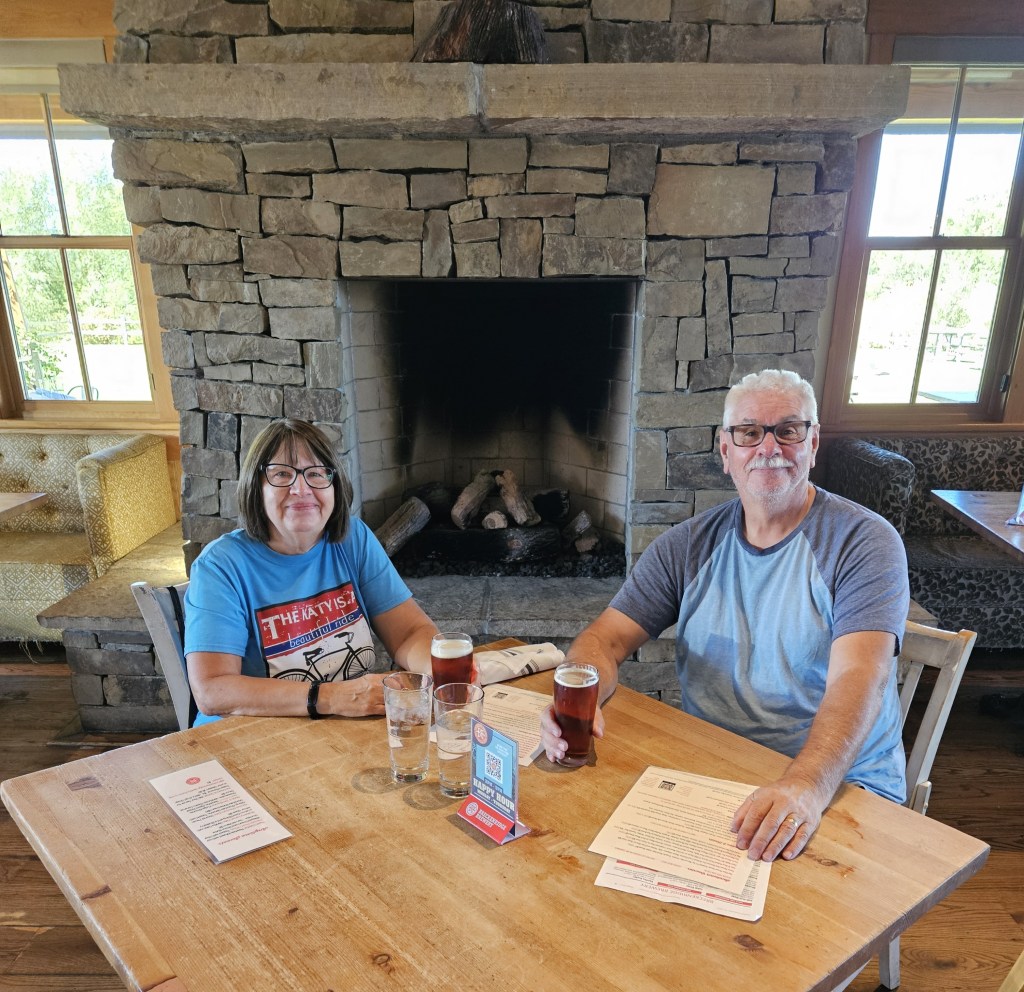
The bike trail went out of the park and onto shaded trails in the cottonwoods alongside the Platte River, and finally to Breckenridge Brewery for a fine, refreshing lunch. Yes, food did follow the beer.
Every year, when the nights get chilly and the calendar rolls over to November, we are on the road going south. But not this past year. At the beginning of October, we put the RV in storage and moved into an AirBnb apartment for a seven month stay. I wanted to care for our newest grandbaby two days a week so she wouldn’t be in day care for all five days, and that was very fine with her parents.

Our apartment is in an old, refurbished building in an suburb of Denver which bumps right up to the city and is only ten minutes from our family. It has a small-town feel which includes a downtown where the old buildings have been converted to restaurants and small shops. The old post office is still in use and on the National Register of Historic Buildings. We can walk there and, best of all, there are more restaurants just steps away from our apartment.

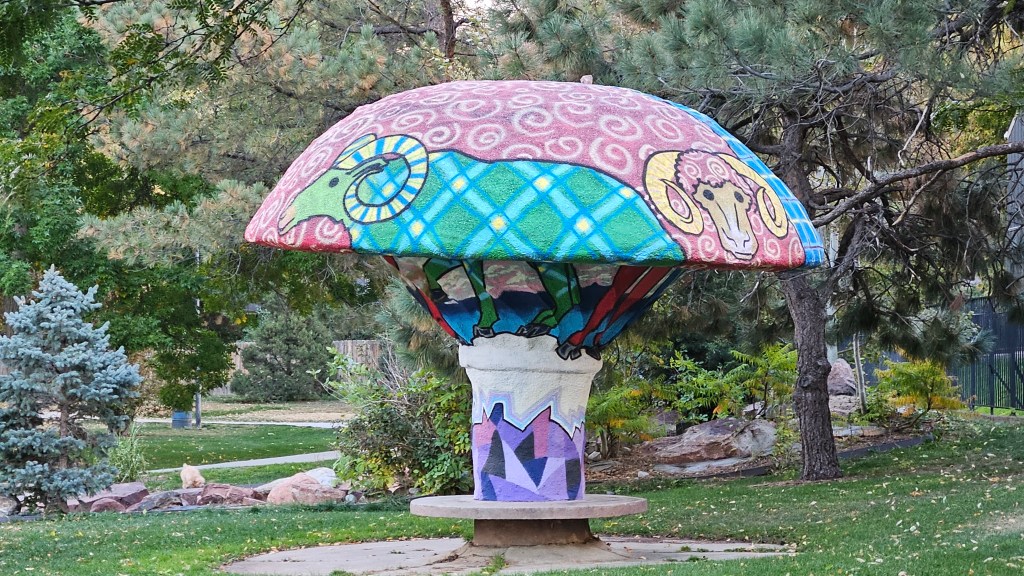
Not far away is a small park that has sprouted several of these beautiful mushrooms.
We can have a number of different walks when the weather is fine. We can take our life in our hands to cross a busy road where there are natural areas with paths and multi-million-dollar homes set back from narrow, winding lanes with views of the mountains. In the other direction, homes from every era of the 1900’s line the streets of neighborhoods that go on forever. Cozy 1930’s bungalows sit alongside ranch styles from the 1950’s and 1960’s. Many have been remodeled and given a fresh look. In between, someone may have built a new contemporary home. There is a whole neighborhood of mid-century modern homes, many of which look like Frank Lloyd Wright himself had overseen their construction.

Early in the fall, the other reason we are here revealed itself: our daughter-in-law has breast cancer, and her treatment regimen stretches for a year. We are so happy to be here for them. Yes, there are some very long days, especially when I babysit my grandbaby and am needed to stay for dinner and bedtime, but there have been a lot of rewarding times with the children. We are here for sick days, but we are also here for fun trips around town on weekends and school holidays.

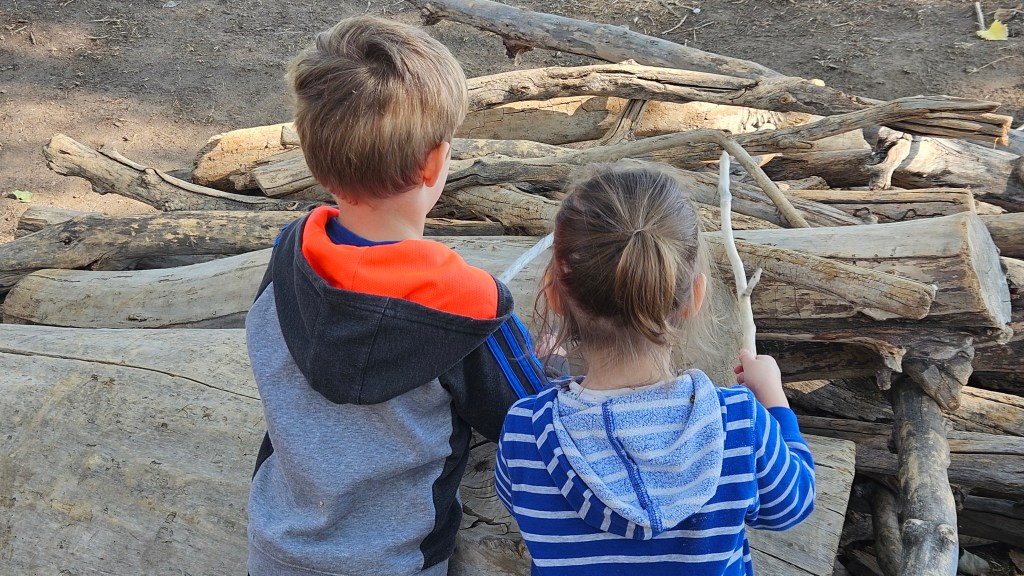
Here are our two oldest at a park, pretending to roast marshmallows over a fire. Yum!
We are not used to winter anymore, so having cold and snow has been different. On most snow days, we can’t luxuriate in just looking out the window: there are things to do and we have to go out. It’s better that way, anyway.

Blogging time has been sorely diminished, but I’m still not hurting for blog material. I can pull out of my pocket any number of adventures we’ve had for that. And, there are only two more months left in our AirBnb stay. Although our hearts are here, with our family, we are also looking forward to moving back into our RV. These months have taught us that our happy place is on the road. Trips out are already planned, but the road always circles back to Denver.
Next time…visiting the mountains southwest of Colorado Springs

USTravel

A National Monument, a State Park, and Dinosaurs in Western Colorado

As we crossed over the border into Colorado from Utah, we were ready for a little break. James M. Robb State Park seemed like the place to put down the RV jacks for a few days. It sits just off of I-70 in the small town of Fruita.

Actually, it was a little too close to I-70 for a state park – I could see vehicles on the freeway in the distance in one direction, although I couldn’t hear them. And if I peered hard through the trees I could see – what?? It was the distinctive red of a Dairy Queen sign. That was too tempting. On our first evening, we walked through the campground and right out the front gate to have a little ice cream after supper.

Still, our site was pretty and there were pleasant walking paths in the park. It was a welcome improvement over some of the RV parks we’d overnighted in on our journey east. The park borders the Colorado River, which was full of gushing snow melt.

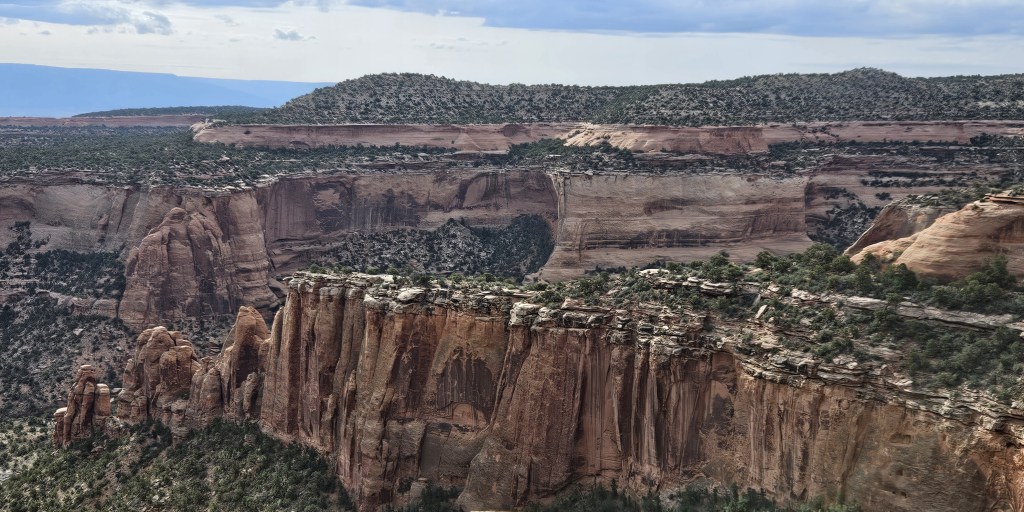
Behind us, we could see the towering cliffs of Colorado National Monument. We drove to the park for a visit. It’s only a couple of miles from the state park, but a world away. The road to the entrance wound up and up, with some rock formations, a couple of tunnels, and then…wow! We arrived on top of a huge canyon with rocks in formations and colors, pinon and juniper trees, and many viewpoints from which to see them. Rim Rock Road, which goes through the park and was built by the CCC, travels on top of mesas with plenty of switchbacks.

The scene was so different from what we were now seeing that it felt like a hidden surprise.

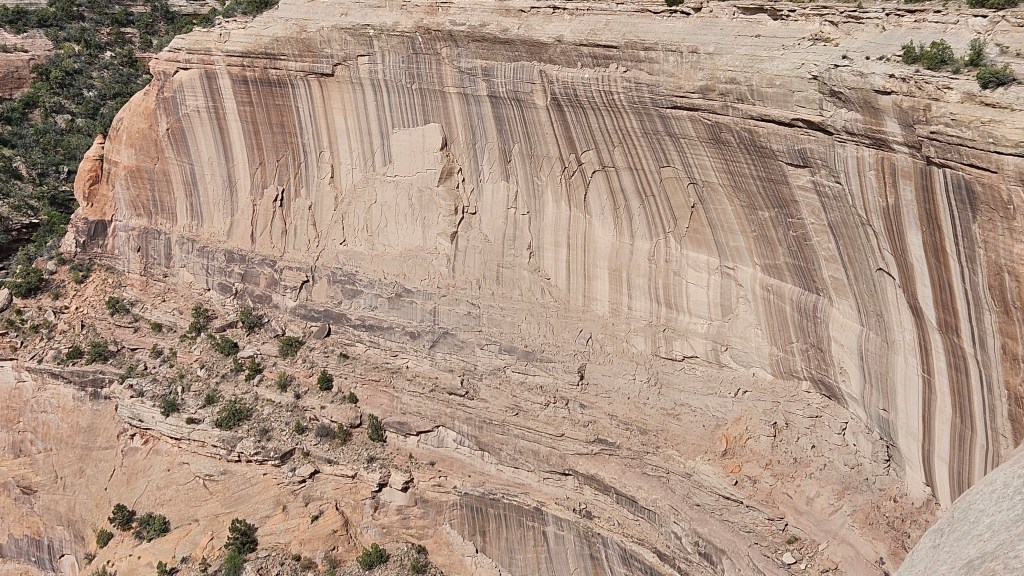
Desert varnish painted some of the cliffs in multi-colored stripes.

There was a different view around every turn–

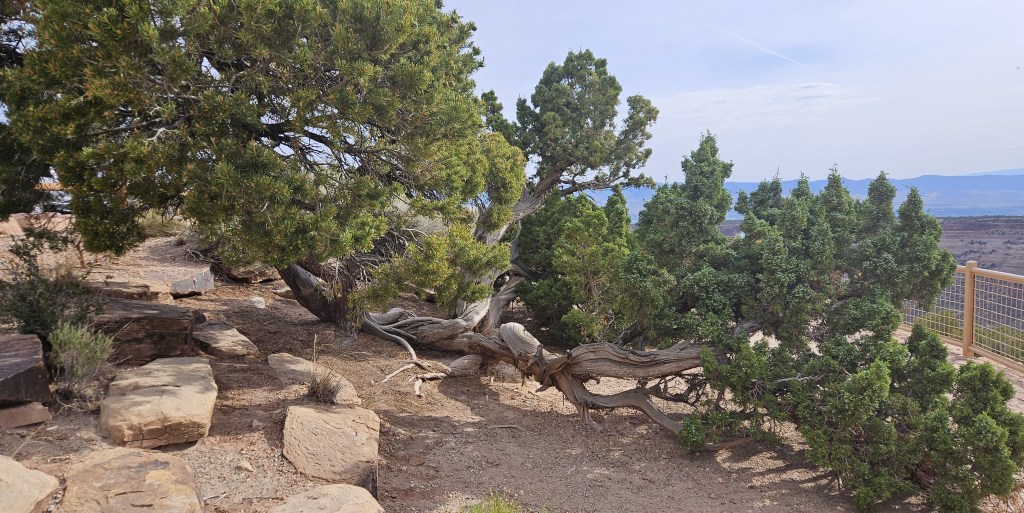
–and ancient junipers stretched out their long and gnarled limbs.

We had come into the park just before the visitors center opened, so that was our last stop. They had a great movie about the formation of the canyon and its rocks eons ago.

Dairy Queen wasn’t the only establishment in walking distance from the state park. As we’d driven back and forth, I’d seen a building called Dinosaur Journey Museum. It is part of the Museum of Western Colorado, just down the road in Grand Junction. I walked down to it from our campsite to check it out.

It turns out that this area has been rich in fossil finds. It’s called “the Jurassic Badlands” with hard sandstone ledges called “the Morrison Formation”.

There’s even a dinosaur named after the area. This is a life-size model of Fruitadens, one of the smallest dinosaurs in the world.

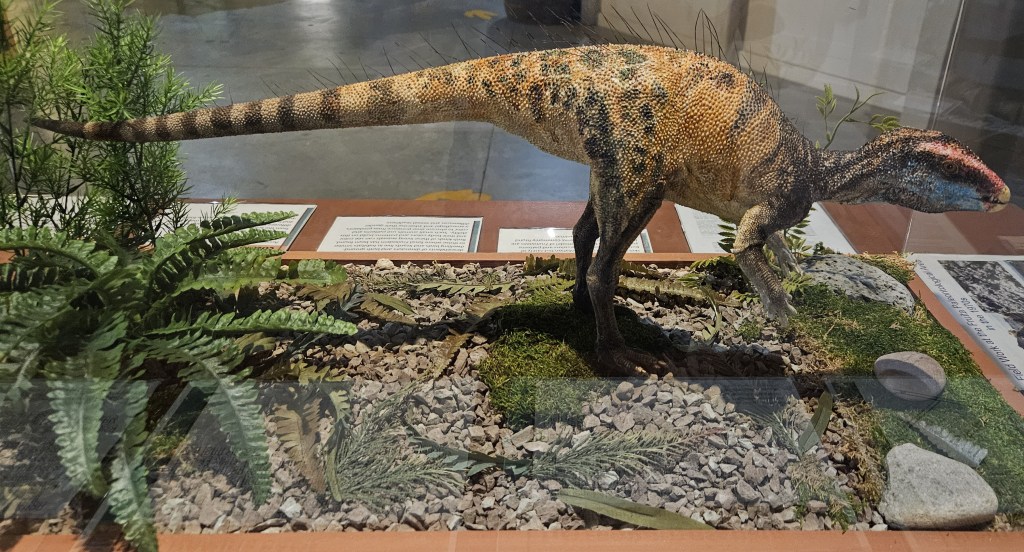
There are larger dinosaurs here, too. This is Dryosaurus Altus, which lived during the late Jurassic period. It’s still considered to be a small dinosaur!

I learned many things here, among them the fact that the state of Colorado has the largest track site of late Jurassic dinosaurs anywhere in North America. It is 350 miles away on the eastern side of the state, in La Junta. I appreciated the fact that this was not a kid attraction and that everything was presented factually. There was even an interesting movie to watch.

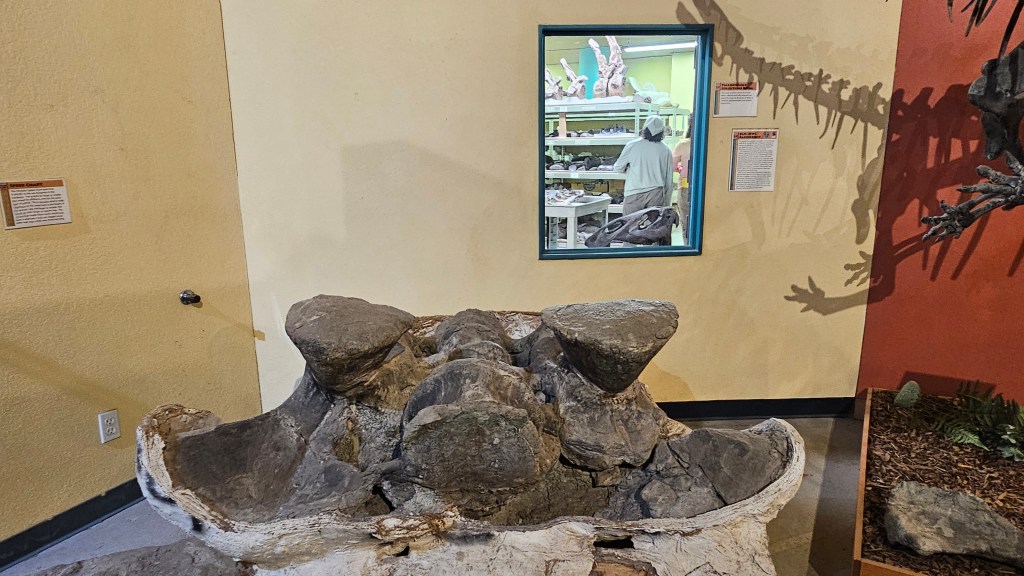
There are working labs here which could be seen through windows, with a multitude of shelves containing fossils. One of those windows can be seen here, behind this picture of an upside-down Apatosaurus pelvis.

There was one more thing to do while we were at James M. Robb, and that was to ride our bikes. This town is working hard on having a network of bike trails. Actually, the full name of this park is James M. Robb Colorado River State Park, and it boasts that there are five ecological areas in separated parks: Fruita on the west end, where we were; Connected Lakes, Colorado River Wildlife Area, Corn Lake, and Island Acres on the east end. We did not have time to explore the other areas and opted instead to head back west on our ride.

The trail started out prettily enough, along the river, but then it swung alongside the highway with little shade. I think it’s great to build bike trails, but I wish planners would consider proximity to busy roads. I suppose it comes down to land availability. My lone picture from this very hot ride was from something called “Wakezone Park.” People could waterski on a lake without a boat through a system of cables and pulleys. It looked like fun.

I caught this person on top of an incline. It looks like she is stopped on the incline, but she was actually going full speed.

The day was sunny and very hot. I thought Cal was in a hurry to get back to our site, but as we came back into town he suddenly veered onto a left turnoff instead of going directly back. I was perplexed until I discovered the reason for the detour: he’d seen a sign for Ace Hardware, one of his favorite stores, and needed to make a purchase. I was impressed that he was able to spot it, but I suppose it would have been the same for me if it had been a craft store or antique mall sign!

Back on the road, we had one more stop before arriving in Denver: another state park, Rifle Gap. Unlike James M. Robb, this park is set a few miles away from the highway.

We explored Rifle Gap and the surrounding area couple of years ago. Now it provides a restful mountain overnight on our eastward journeys back to Denver.

Next time: our Denver life

Note: although I am writing this during the winter of 2025, the trip actually occurred in June 2024.

USTravel

Mountain bliss in Western Colorado

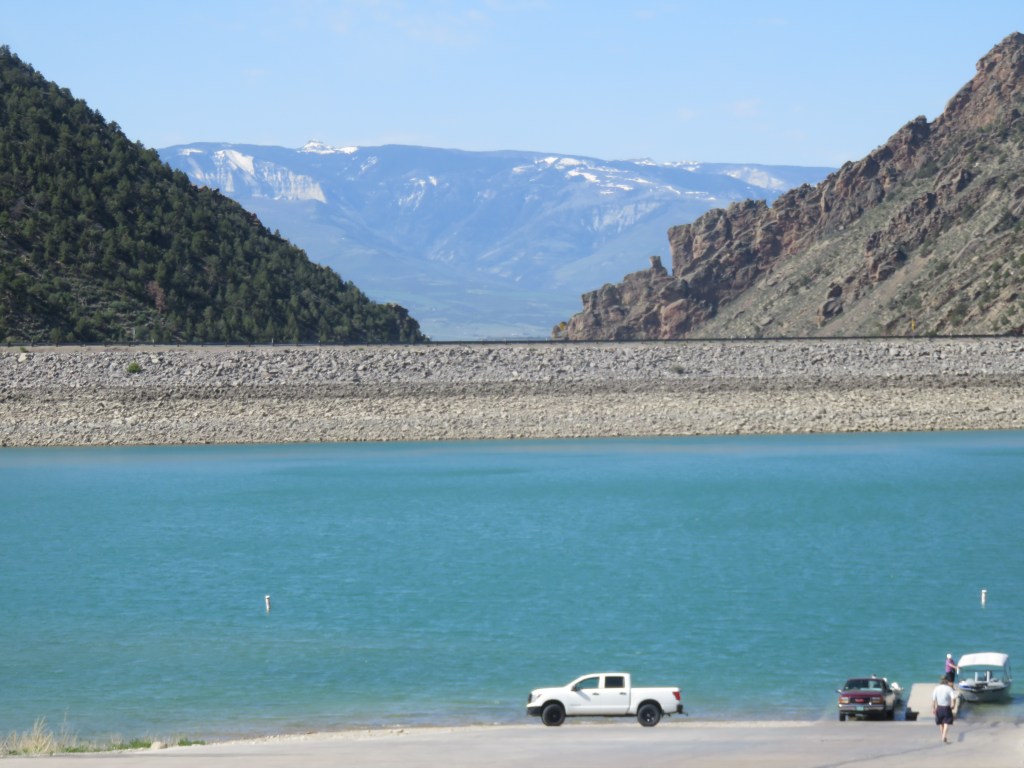
Imagine listening to the sounds here: nothing but the birds singing. The lake below is sparkling and blue. Through a gap in the foothills behind the lake you can see the beautiful green and snow-capped mountain peaks beyond. This splendid vision is called Rifle Gap State Park and it lies in western Colorado.

We had come from Moab, one of the best places in the United States for ATV’ing and off-roading in all of its many forms. Our large RV park was crowded and there was a gathering spot by the entrance for any off-road excursions. Any other park in town was full because of an off-roading event.

In true Utah form, our park was also “landscaped” with lots of rocks, gravel, dust and dirt. The park owners made an effort by watering our little patch of iris, but nothing could take away the road noise. It was handy for seeing the national parks, because we didn’t have to drive into Moab, but I was happy to see that our reserved site at Rifle Gap was open one night earlier.

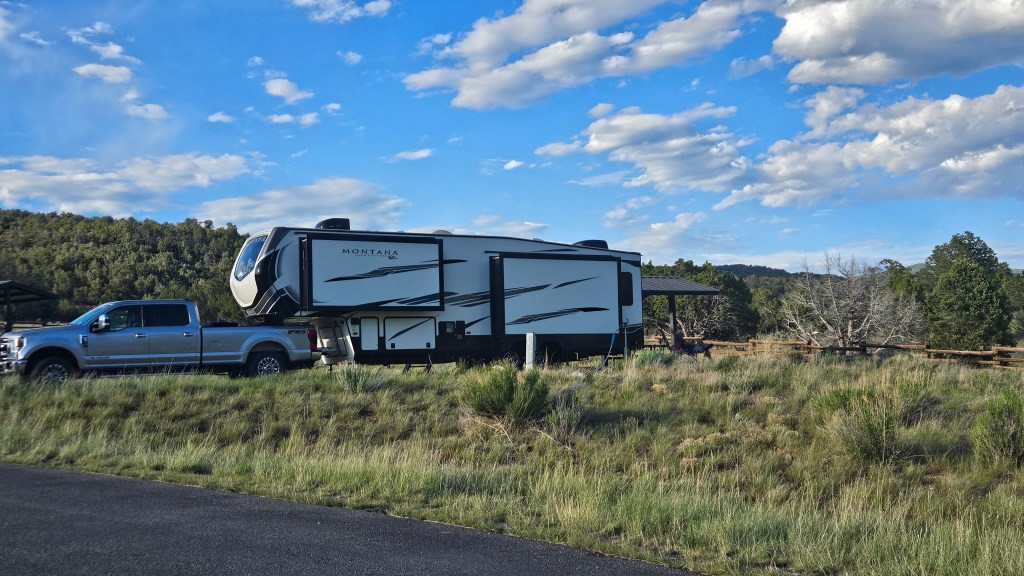
There’s not a lot going on at Rifle Gap and that was fine with us. The water level in the small lake is low. There is boating, but mainly for fishing. Campground loops line the edges of lake like pearls on a necklace. Our loop rose up from the lake in a zig zag fashion, and our site was at the top of a hill. We decided that our site, and the one next to us, were the best and most private in the park.

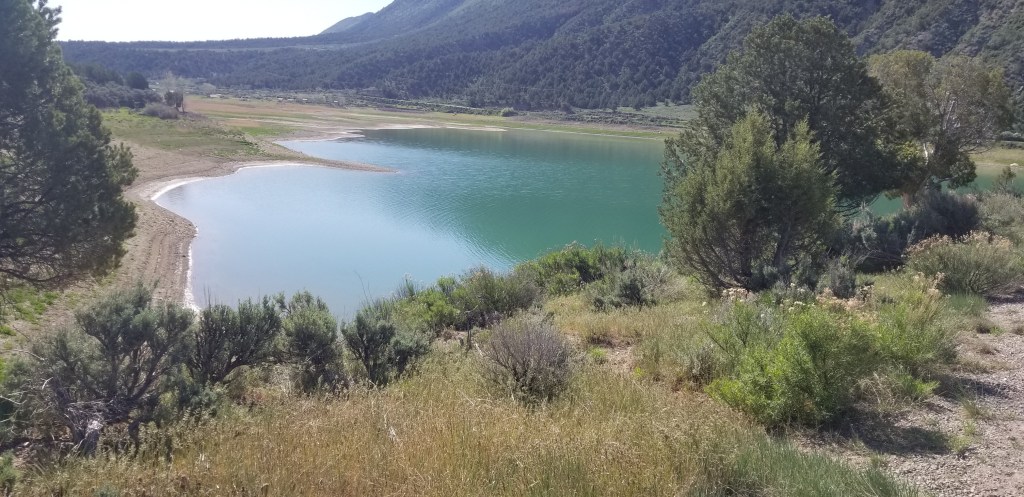
There would normally be water covering the area in the top left of this picture. Unfortunately, this has been a common sight in the West.

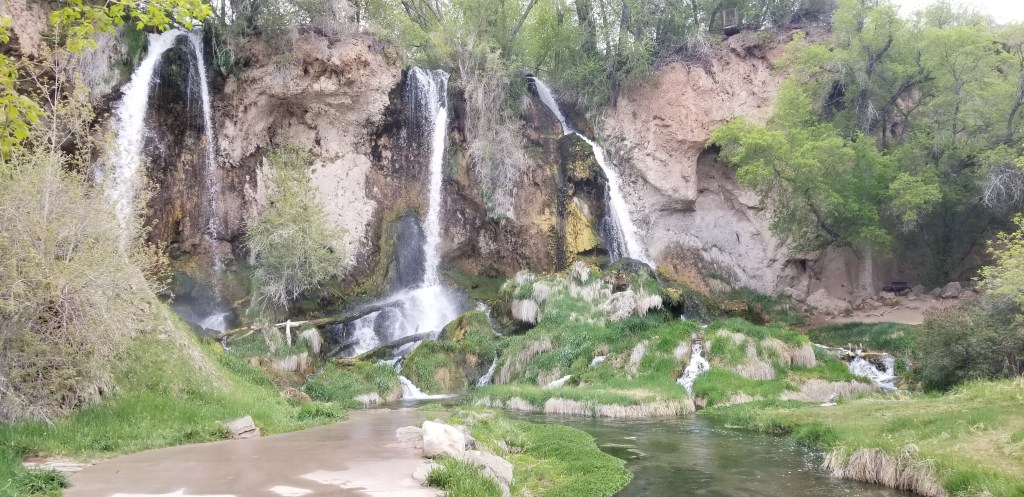
Rifle Falls State Park is not far from Rifle Gap, and driving there, you pass through a pretty little mountain valley dotted with picturesque farms, a winding creek, and improbably, an old golf course. It is another small park, but we hear it is impossibly crowded on the weekends. No wonder, because it is a lovely spot to visit. We were glad we were there on a weekday.

I had not expected something so breathtakingly beautiful.

You can walk behind the falls—

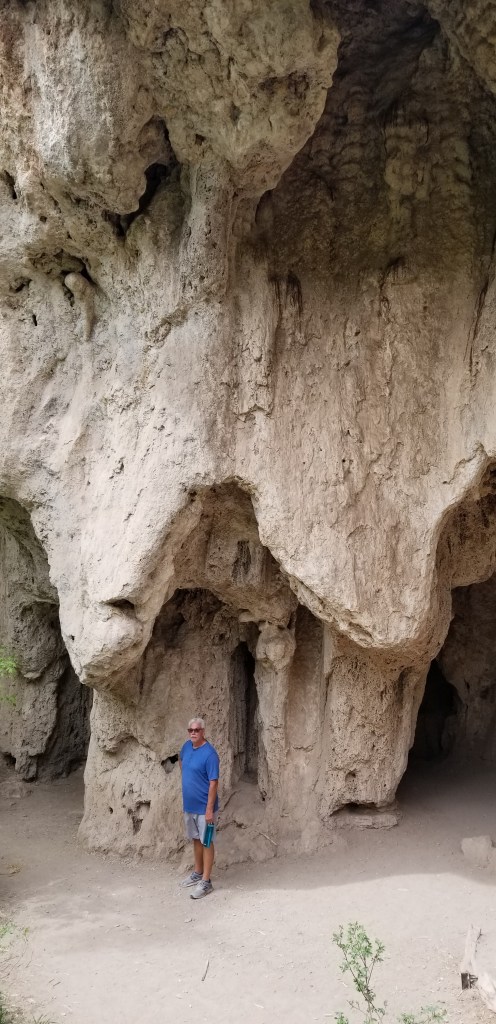
—and along the cliff walls on either side of the waterfall, there are small caves you could wander in and out of. As you can imagine, I really enjoyed this part.

Cal is giving some perspective on the size of a couple of the cave openings. He’s a little claustrophobic, so didn’t join me inside them.

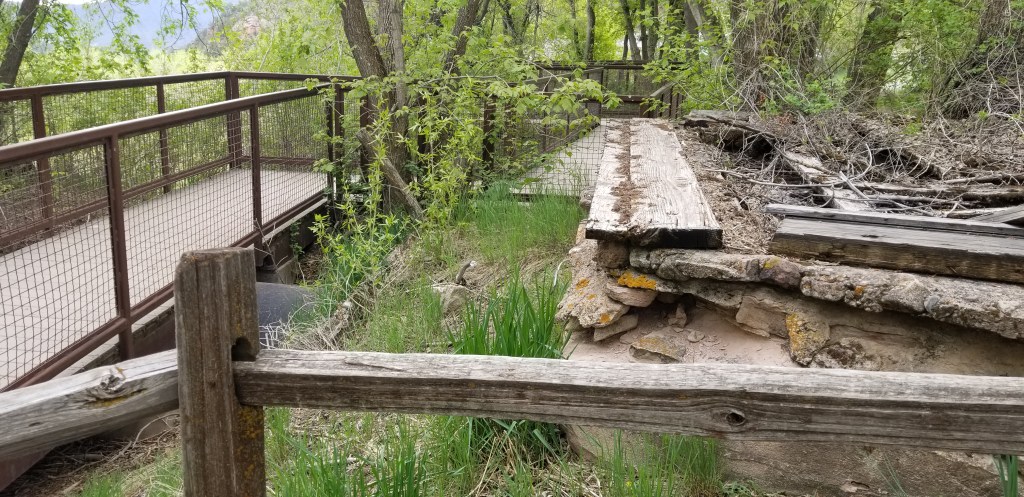
Up on top of the falls, there is a walkway.

Up here, there are “wooden diversion structures”. There was a hydroelectric plant here in the first half of the 1900’s, and these housed the pipes that carried water down to the powerhouse. Around the turn of the century, there was also a resort hotel near here, and the owner charged folks a quarter (about $5.00 today) to visit the falls. Now that it is a state park, we were able to visit without charge because we have an annual Colorado state parks pass.

The view from above the falls
One last view of the falls

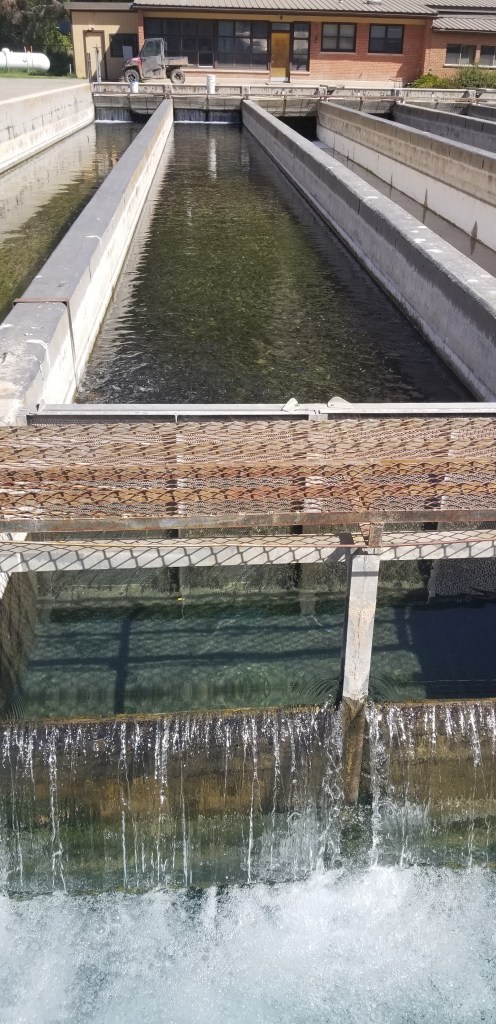
Not far from Rifle Falls State Park is the Rifle Falls Fish Hatchery, which supplies trout not only for the creek here and in Rifle Gap State Park, but in many other lakes, streams, ponds, and reservoirs. In some remote areas, they drop the fish by helicopter or small airplane. What a shock for a fish!

We always enjoy walking around the ponds in a hatchery to look at fish in their various stages of development. This hatchery has capacity to produce five million fish per year, but is only producing less than half of that currently. Whirling disease is currently a problem with cold water fish, such as trout. The hatchery is only utilizing spring water (versus surface water) to reduce contamination, which lowers their capacity. I also learned that they stock fish for kid’s fishing derbies. That’s great! It gives the kids more of a chance to catch a fish.

There was actually one other state park in this area, Harvey Gap, but all it contained was a large boat launch area. The lake looked similar to Rifle Gap, although it didn’t seem as shallow.

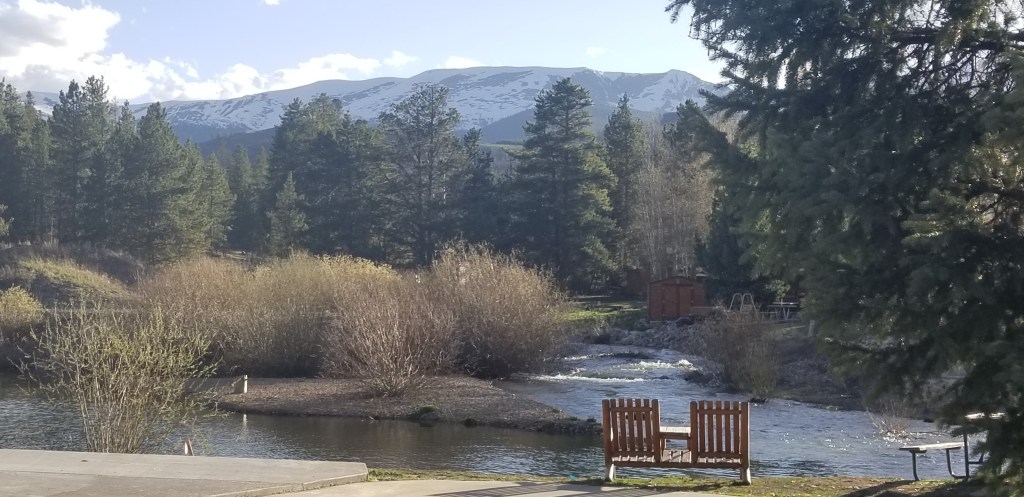
This was a relaxing interlude between our Utah travels and our arrival in Denver for part of the summer. We were treated to more mountain views along the drive to Denver, and I’ll leave you for now with this view of the Rockies from Breckenridge.

Next time: summer in Denver