Some of what I read, pre-trip, said to give Athens two or three days and then head out of town. After all, there isn’t much more that’s worth seeing in Athens besides the Acropolis. The city is covered in grafitti, and traffic is heavy and crazy. Athens is working hard to clean up its act, though, and the city has a character all its own. I can always find much to see when looking under the surface. There certainly is plenty here for a multi-day stay.
We found other places to visit after our day around Acropolis.

The Cemetery of Kerameikos popped up often in my “Athens Must-Sees”. In antiquity, this is a neighborhood where the potters lived. It flooded often, so it was not a great place to live. It began to be used as a cemetery as far back as the Bronze Age – around 2000 BC – from the Greek era to the Romans and early Christianity. Besides, that, there are a lot of cats and turtles here.
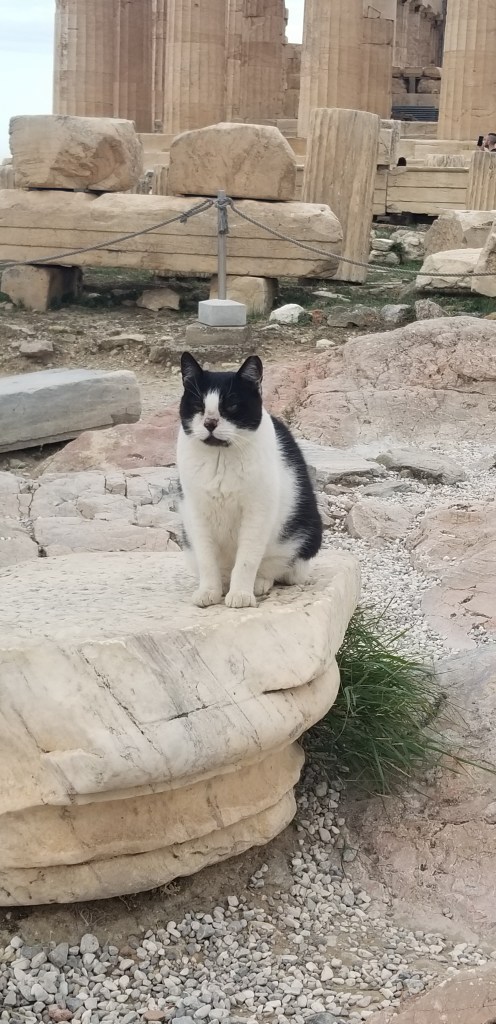
As you can see in the photo above, we did see several cats, playing and peeping out at us from the crevices in the stones.
The site lay just outside the Athens city wall, and some remnants of that wall can still be seen:

The Sacred Way was once lined with elaborate tombs for rich Athenians, going back to the late 4th century BC. It lay on the road to Eleusis. Going into Athens, this cemetery would be passed before entering the city walls. The party ended for the fancy tombs in 317 BC, when they were banned by law and replaced by simple columns for new burials. Maybe they were running out of space.
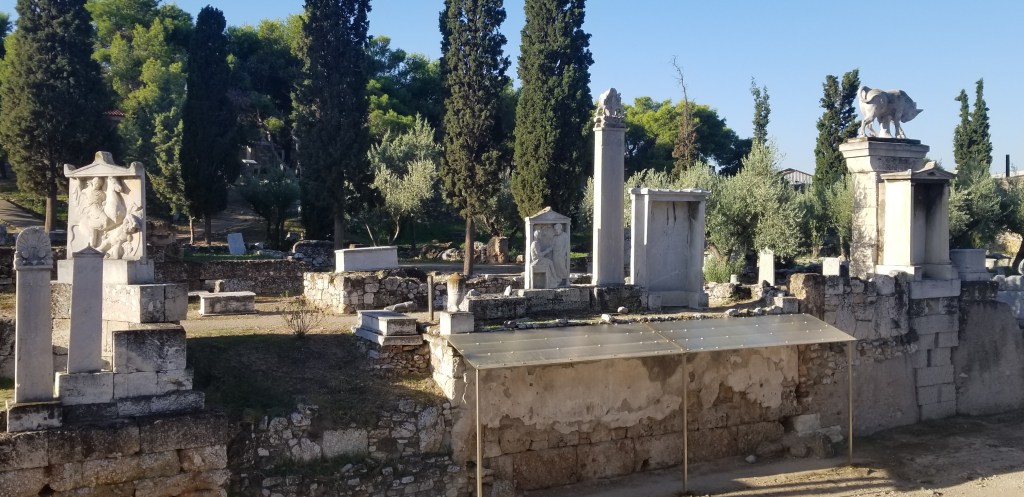
Also here is the Pompeion, which was the starting point for a grand parade for a festival that happened every four years. According to the explanatory sign, there was a large colonnaded court and rooms for feasts. A processional ship was made ready and moved through the streets to the Acropolis. The Romans destroyed some of this site when they invaded, but the festival continued for centuries.

Yes, we did see several turtles:

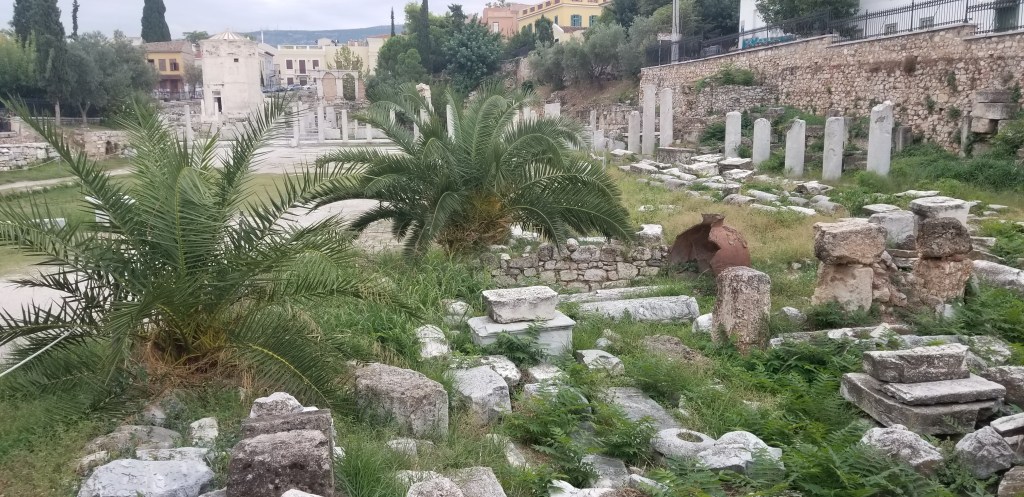
We also visited the Greek Agora. “Agora” is a word that means “market” in Greek but it had more meaning to them as a “gathering place”. It was the center of life for the city. Here, the fledgling democracy conducted state affairs, but also there were performances, philosophers giving lectures, business transacted, and folks just hanging out. I included a picture of the Roman Agora in my previous post; the ruins of the Greek Agora are far more extensive.
I was not prepared for this:

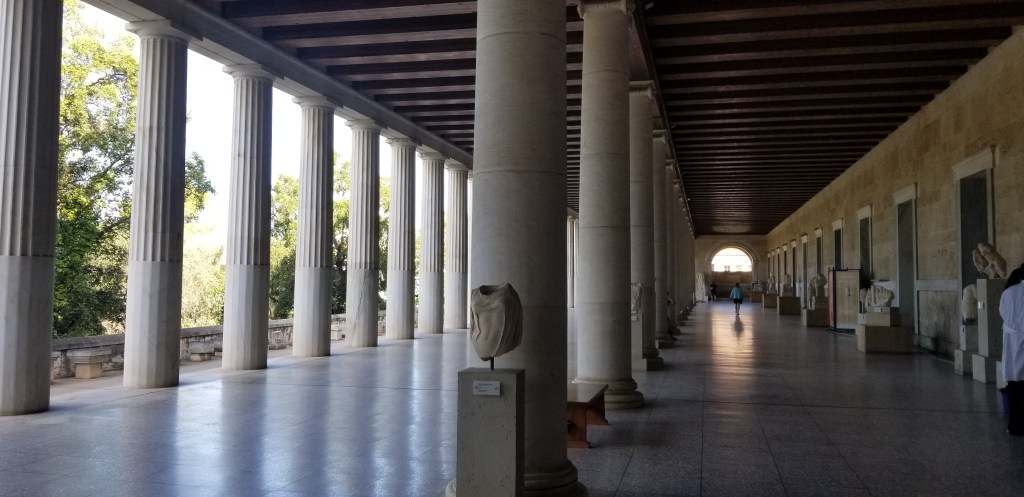
It is the Stoa of Attalos, which was reconstructed in the 1950’s. It was the largest reconstruction of an ancient building to that time, and I was bowled over by its size. In ancient times it was simply a covered porch with rooms in the back for important business. People could hang out here and there were people conducting business. Now it is a museum, and I spent a lot of time checking everything out.
Upstairs, I was fascinated by an exhibition dedicated to the work of Irishman Edward Dodwell, who traveled to Greece in the early 1800’s. On one occasion he came with an Italian painter, William Gell, and together they spent fifteen months drawing and documenting landscapes and monuments as they looked in that era, sights which are now lost. They also used a camera obscura. This quote from the sign board gave me things to ponder on:
“The sight of the ancient monuments now lying in ruins as well as the awareness of the achievements of the once pioneering spirit of the Greeks, now doomed to decline under the decaying Ottoman Empire, provoked the philosophical reflection on the transience of the human condition.”
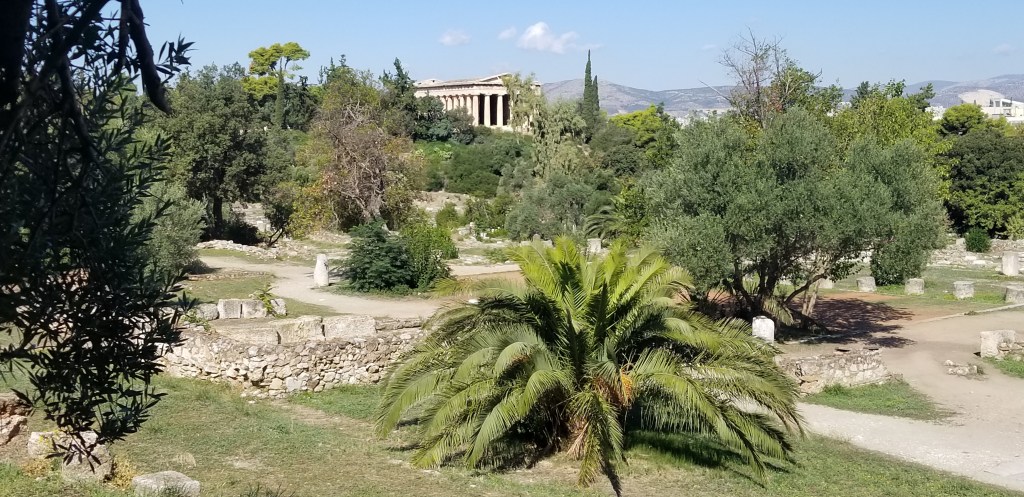
The ancient Temple of Hephaistos is also in the Greek Agora:
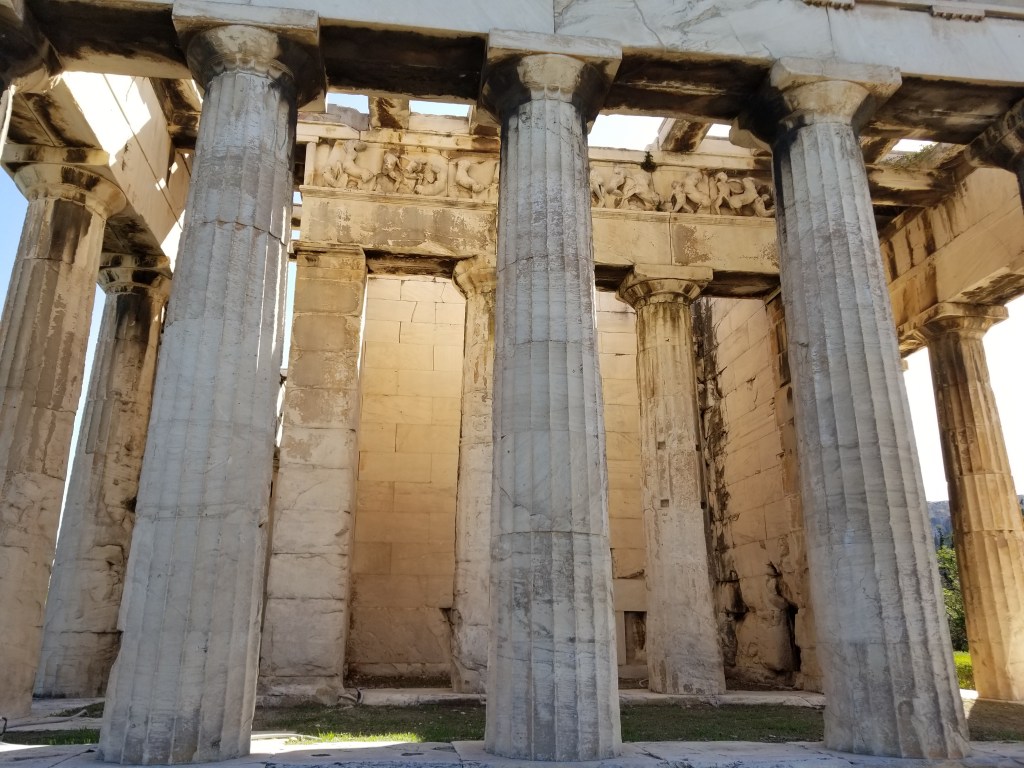
The place is a beautiful to walk around and view the various ruins.

We did see the famous changing of the guard, but it was at the Presidential Palace and not at Syntagma Square where everyone else goes. There were only two guards, and it was drizzling so they didn’t make a fuss, but we did see them up close. So up close, in fact, that one of the guards softly tapped his weapon on the ground as I peeked through the gates of the Palace. Uh-oh!

Part of what made our stay so memorable was our location at the Hotel Attalos. It is not sleek and modern, just an old and fairly inexpensive tourist hotel, and probably one step down from the City Hotel where we had stayed in Thessaloniki. A lot of tourists opt for the picturesque and mostly pedestrian Plaka district which is on the opposite side of the Acropolis hill. Despite all the city hubbub going on outside the doors, our hotel was clean, comfortable, and put on a great spread for breakfast every morning. A subterranean subway stop just five walking minutes away took us to the ferries, and to the airport in the other direction.
We were just down the street from Monasteriki, a square which has a flea market, shops, and a great view of the Acropolis. The Holy Church of the Virgin Mary Pantanassa is here, and it is all that remains of a 10th century monastery. The dark interior paired with the lush gilt furnishings was something to see.
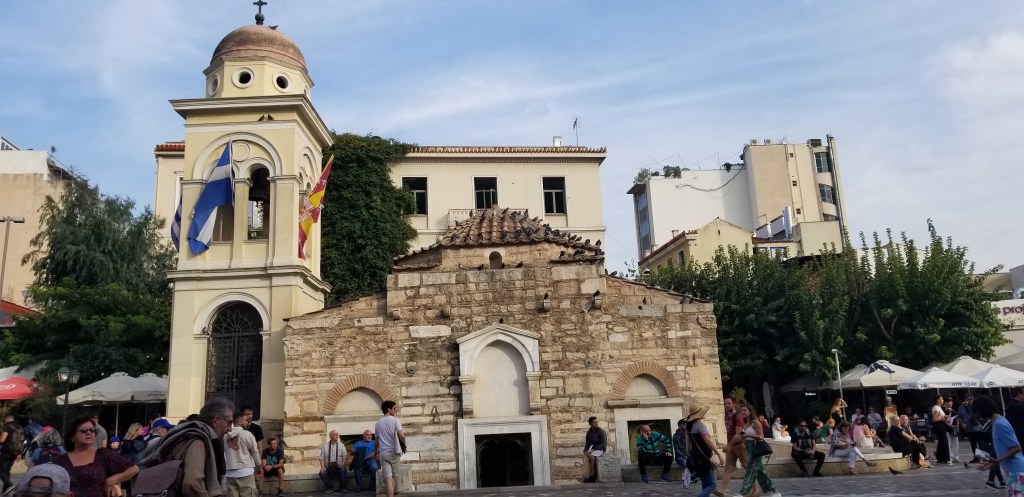
Monasteriki Square is a very busy place. The picture below is looking up from the square:

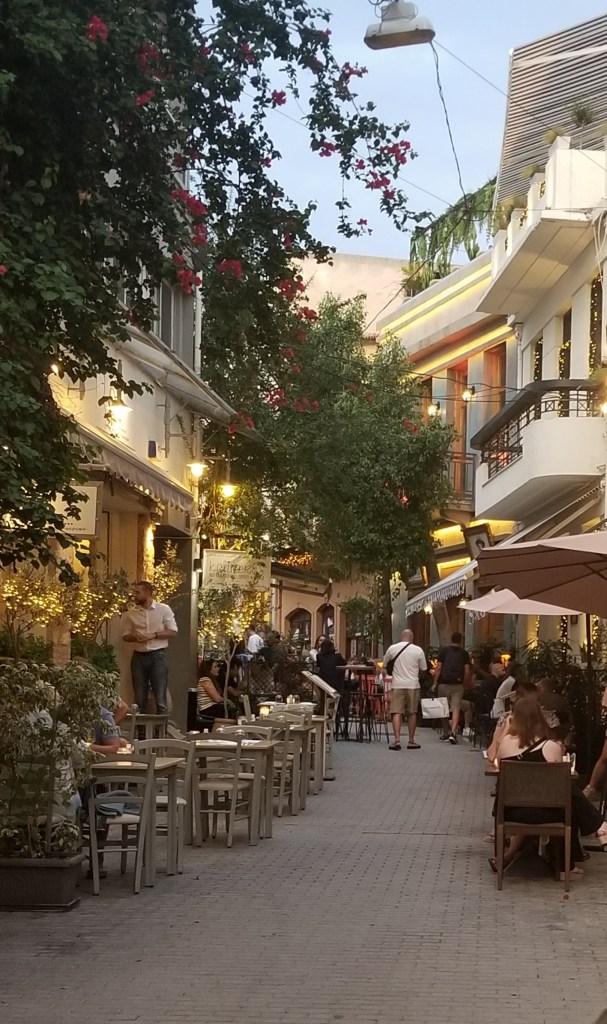
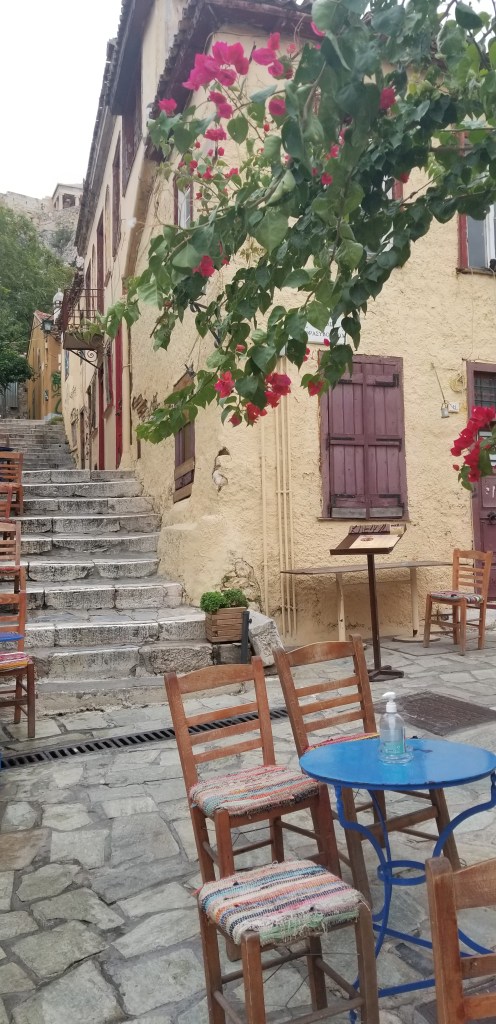
Behind our hotel was a rabbit-warren of tiny streets, many of them pedestrian, filled with all sorts of restaurants. I had a delicious moussaka there one night:
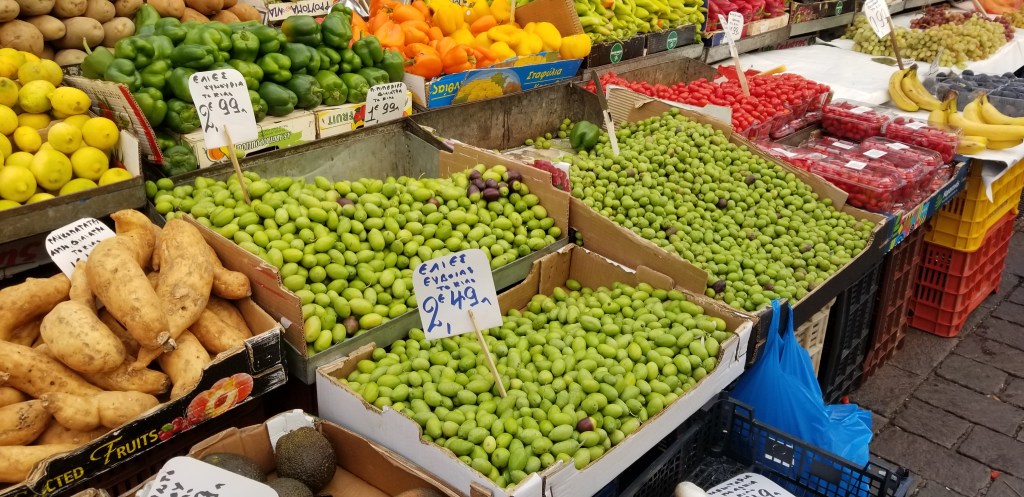
Walking out the door in the other direction, we’d see some great murals, and a market selling goods old and new, as well as produce, meat and fish. There was a lot of hanging meat here, too, but since I included a picture of that in my Thessaloniki blog I thought I’d spare my readers the sight of that.


Just a few blocks down was our favorite souvlaki stand. Upon our second meal there, a woman who worked there recognized us and started chatting with us. We returned to the Hotel Attalos for our last night in Greece and looked forward to one last souvlaki meal, and perhaps finding out more about her. Was she one of the owners? She was not there that night, so we’ll never know, unless we return to Hotel Attalos some day. That is a distinct possibility. Cal really wants to return to this souvlaki stand.

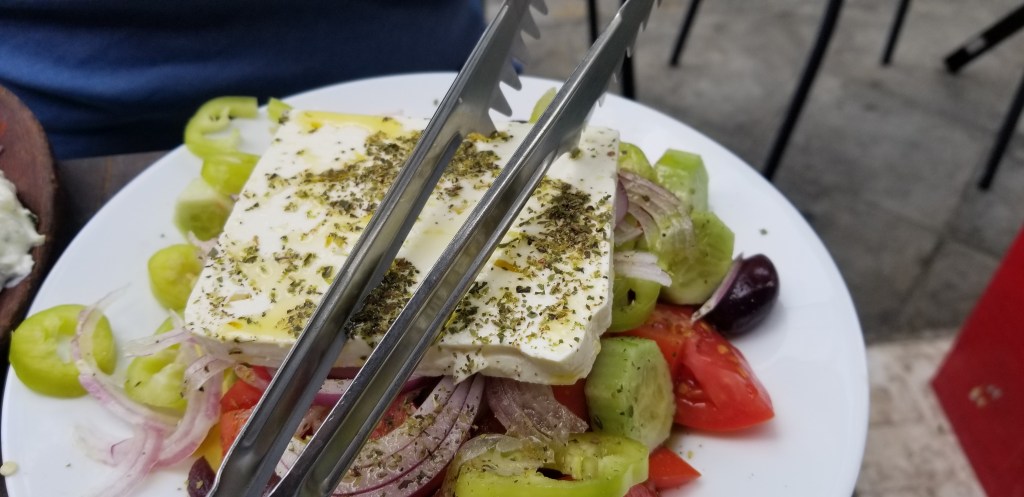
This is a Greek salad. No matter where we went in Greece, a Greek salad was the same all over: tomatoes, cucumbers, green pepper, and (for Cal) onions and olives. All of it under a slab of feta, with no lettuce. The tomatoes, in particular, always tasted freshly picked from someone’s garden.
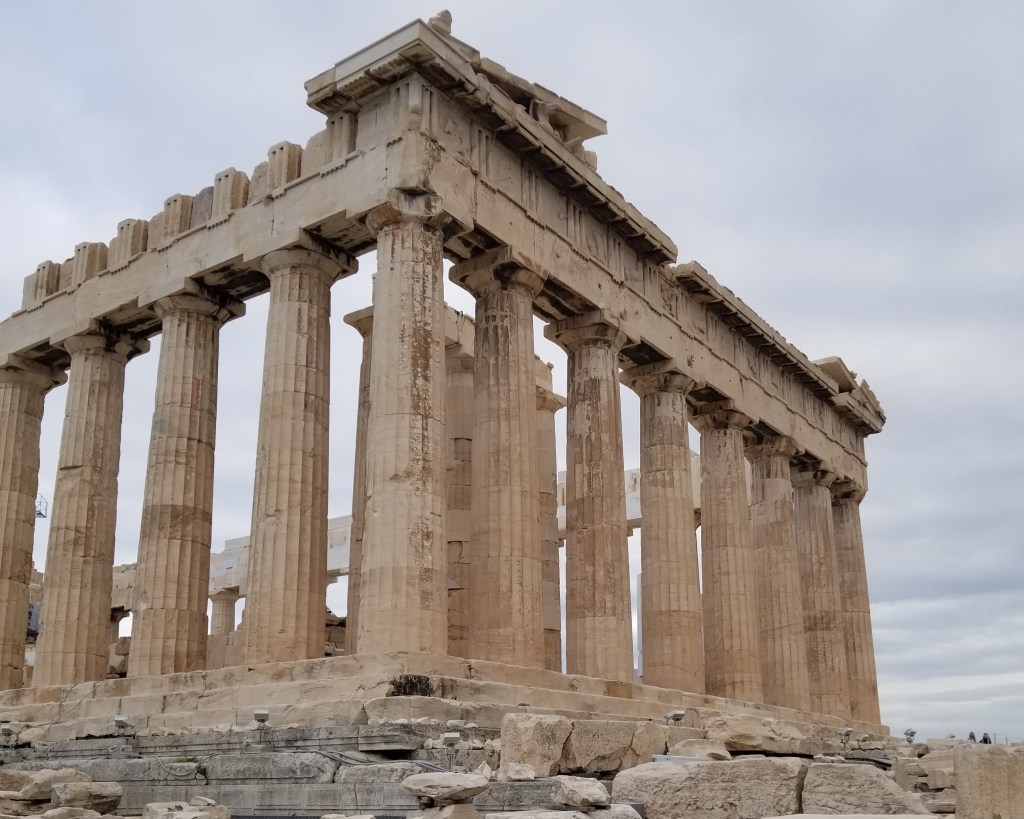
The best thing about the Hotel Attalos, however, and the reason for booking this hotel, was their rooftop bar. I don’t normally look for bars in hotels, but this one was special: it had a view of the Acropolis, lit up, at night. The great view of the city all around and out in the distance was a bonus. How relaxing, after a busy day of sightseeing, to sit up here with a Spritz and watch the sun go down and the lights go on!

Next time: a day trip to Delphi






 Twosna Travels