Europe · Germany

All Around Feldafing, Germany – Europe Travels September 2022

I had two goals in visiting Bavaria: to be in the Alps, and to see things we hadn’t seen before. The first goal failed, since Feldafing isn’t in the Alps, but the second goal? Scored!

Feldafing’s bakery

Feldafing, being situated on the shores of the Starnberger See, rises up along steep bluffs. We were buried deep in a subdivision and every trip into town meant walking up or down a hill. Postwar, it had the first all-Jewish displaced persons camp, and hosted a large community of survivors. It also has pretty little Roseninsel (Rose Island), the only island on the Starnberger See.

We rode a quaint little boat out to the island. From here, the Alps can be seen in the distance.

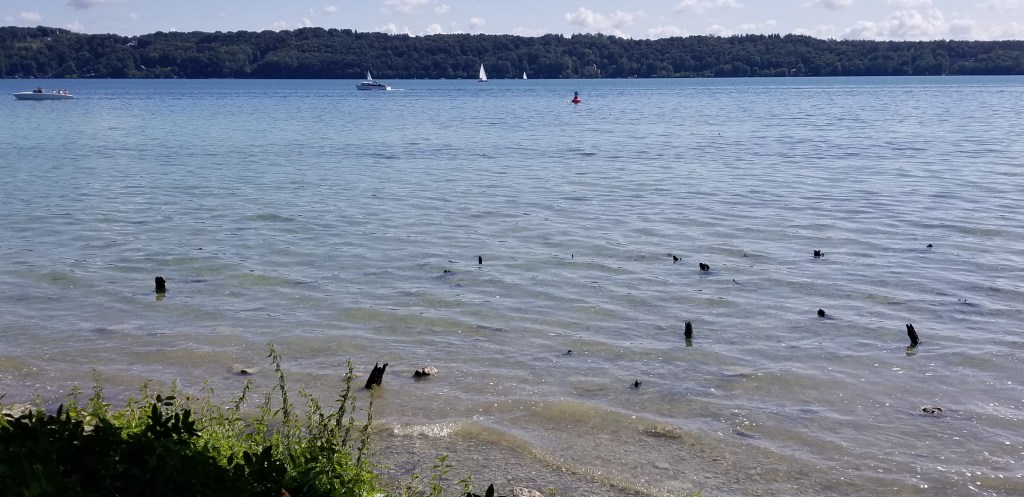
In the water just off the shoreline are Iron-Age timbers, dating from the 6th to the 4th century BC. It is evidence of the only known pre-historic lakeshore settlement of pile dwellings in Bavaria and has been designated a UNESCO World Heritage site. They are sticking up from the water in the picture below, with the framing unseen underwater. It’s unbelievable that this has been there all this time!
The thing to see on Roseninsel, though, is the beautiful casino. No, you can’t gamble here. The early definition of a casino is a small villa in the Italian style. It was commissioned by King Ludwig II’s father, but he was attached to it and made many renovations. A frequent guest was a relative, the Empress of Austria Elisabeth, nicknamed “Sissi”. King Ludwig also met here with Richard Wagner, a composer. It must have been a restful place for them.

It includes a beautiful garden, although the blooms were already finished for the year.

We took a tour of the house, but it is empty of furnishings.

It was time for a late lunch by the time we were back from Roseninsel, but since it was Sunday, our grocery store (and everything else in town) was closed. We walked along the shoreline to a bustling lakefront restaurant that had a special deal. How about some “steckerlfisch”?

Although this is supposed to be a treat in these parts, we passed on it in favor of other traditional German food.

Our AirBnb was billed as a small cottage, and although it felt like that, it was attached to a main home by a narrow hallway. Everything about it was very private, even our small patio in the back with its relaxing little pond. When he was home, our accomodating host turned on the fountain and I loved the sound of the flowing water. His name is Martin and he was the very first Airbnb host we’d met to date.

We had asked Martin for some hiking tips, and he had an excellent idea for us. Rain threatened but we set off anyway, out the other end of our subdivision and into the woods. We came to an open meadow, and there was the most gorgeous house:

Martin had told us that if we found it, we were going the right way. He’s not native to Feldafing and he could not tell us anything about it, and a search on line yielded no results. I could imagine it was built for some lower branch of the royal family.

My active imagination was working as we followed the path around behind the house and directly to the next town, Tutzing. We passed a half-buried moss-covered stone marker, so I conjectured that we were on an old road. I imagined royal guests coming to visit the yellow manor house, the women in long flowing velvet capes, galloping down the path on horses after riding the train from Tutzing.
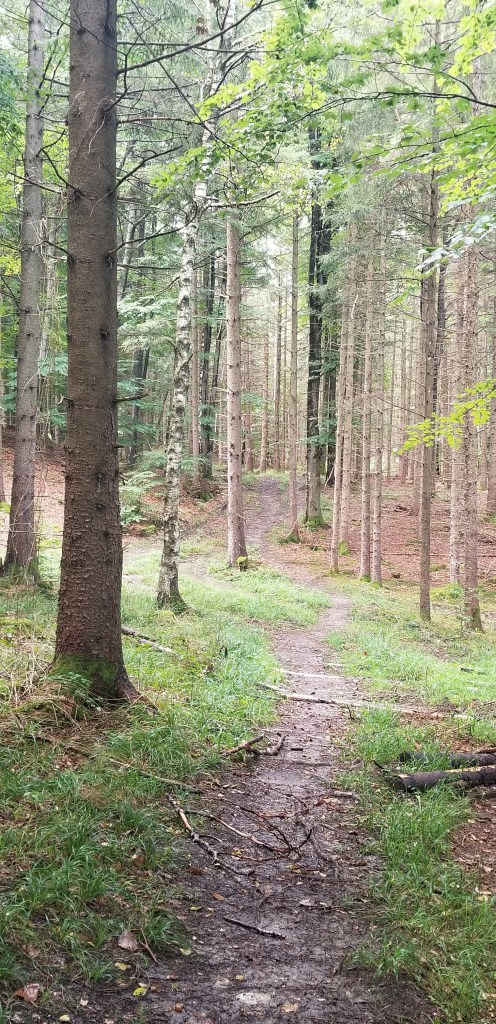
The trail did take us to the train station, but we decided to ride a bus home. We were overjoyed to discover it was coming soon and would let us off almost directly across from our house, with no final hike up a hill for our tired feet!

I had heard of Andechs Monastery, where the monks make beer, but it took me a few days to work out how to get there. This involved a train ride back to Tutzing and then a different bus through the countryside.

Andechs, a Benedictine monastery is on a “holy hill” and was built in 1455. Pilgrims have been coming here since the 11th century, though, to see relics from the Third Crusade; most notably, a piece of Jesus’ crown of thorns. We admired the ornate architecture inside the church and this sundial on the bell tower.

Today, thirteen monks live here, and two hundred people call this their place of employment. Maybe the monks made their beer themselves in former days, but now it takes a lot of folks to produce it and run a large beer garden and restaurant.

After we explored the monastery grounds, it was time for the second part of this excursion: lunch in the Braustuberl. The thing to order here is the “Schweine Haxen”, pork knuckles. It is so large that it’s best to share, which we did. The plate came with potato salad and a pretzel, and I also ordered the sauerkraut. The pork had a nice crispy rind, the meat was delicious, and the sauerkraut wasn’t overcooked like it is in the US.

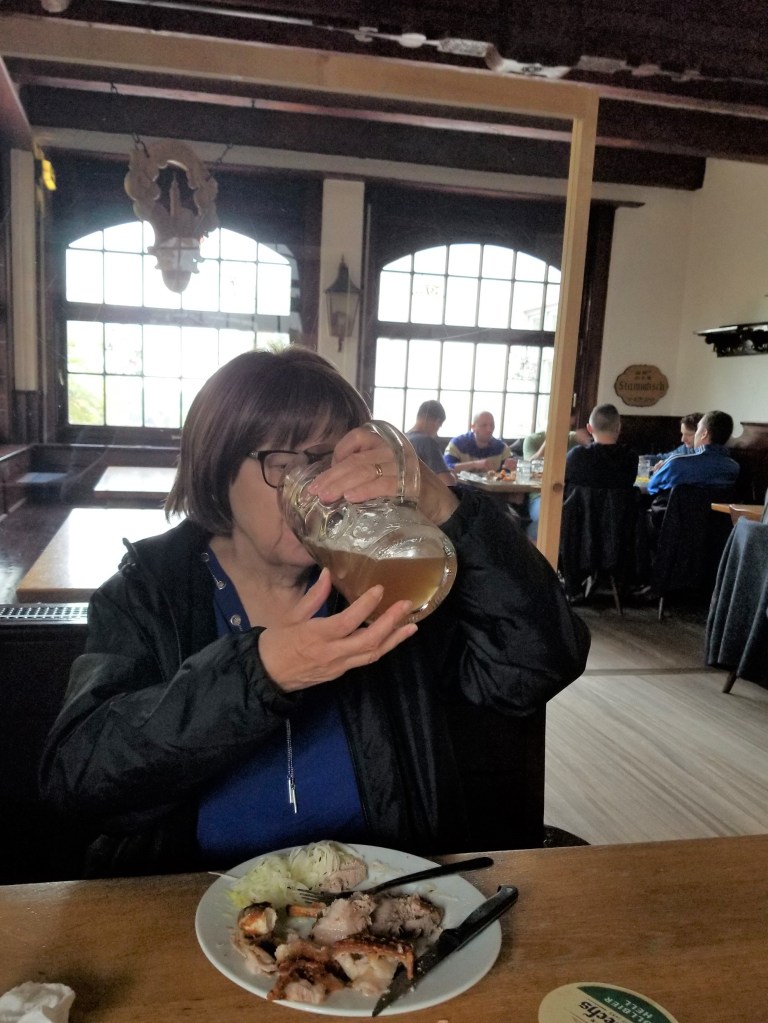
We shared an Oktoberfest-size liter of the famous Andechs beer. Cal thought it was humorous that now I need two hands to lift one of these mugs. It’s heavy!
We saw excursion boats on the Starnberger See and waited for a sunny day to explore the lake. A sunny day never happened, so toward the end of our stay we finally gave up on that and just went.
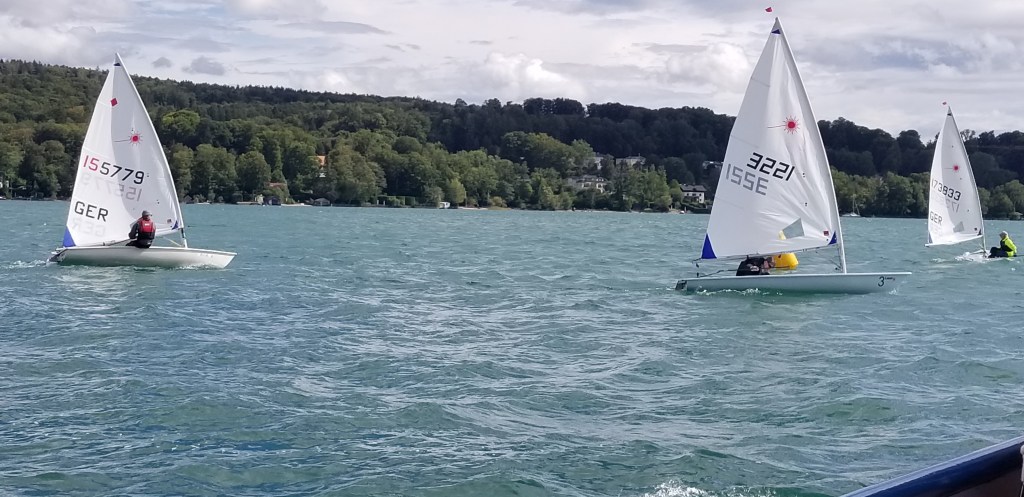
We could finally view the pretty town of Starnberg from the water.
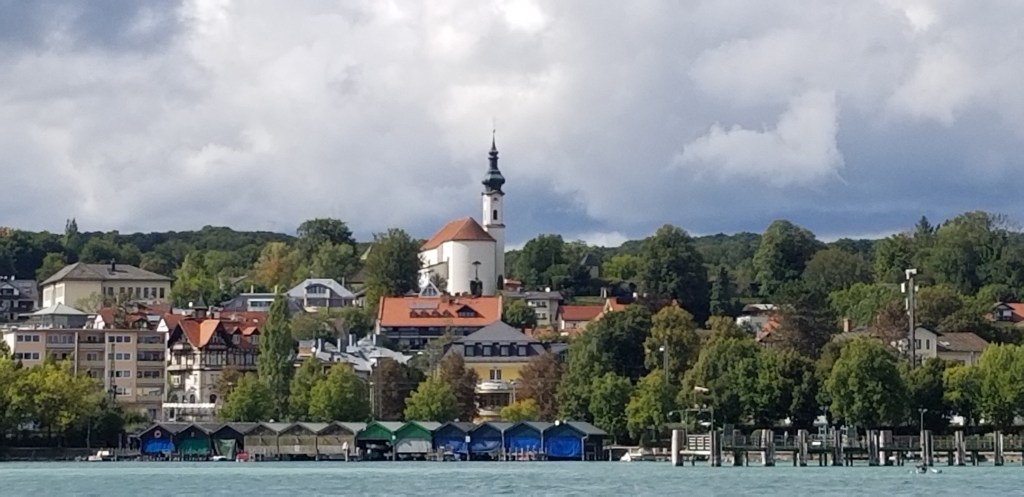
We had often passed Possenhofen Castle on our train rides to Munich, so from the water we got a better look at it. It’s privately owned.

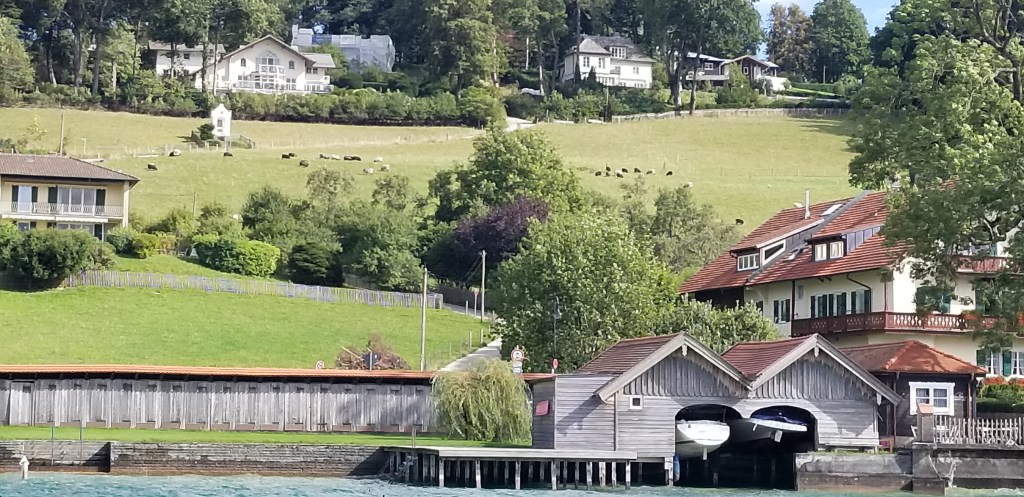
Homes, boat shelters, and sheep grazing in the meadows all came into focus when we stopped in little towns to pick up or drop off other passengers.
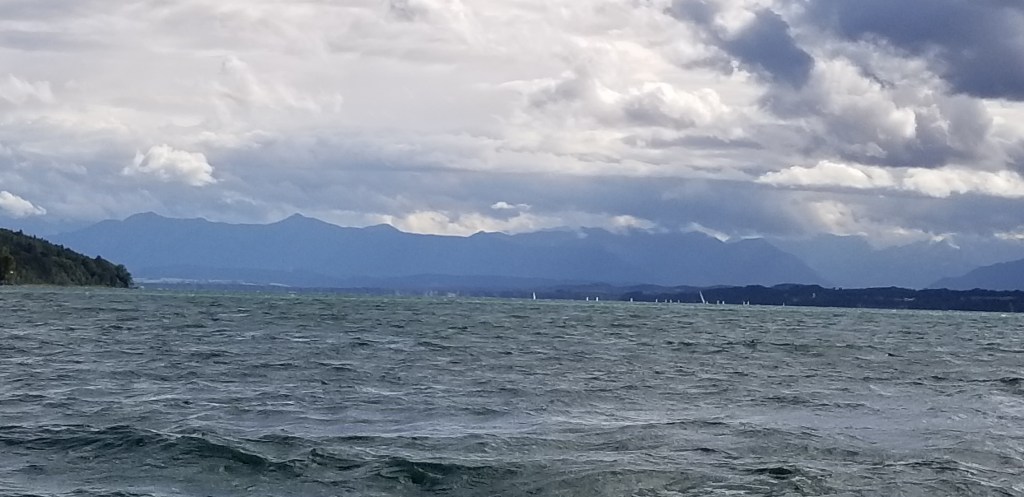
I’m always on the lookout for the Alps, even in lousy weather:
King Ludwig II, who lived from 1864 to 1886, was responsible for the existence of most of the famous Bavarian castles, including Neuschwanstein. We’ve been to all of them, some more than once, so we didn’t include them in this trip. As the years went on, King Ludwig became reclusive and his royal accountants were afraid he was draining the royal treasury in the building of the castles. This gave rise to his nickname: “Mad” King Ludwig. It was here on the shores of Lake Starnberg that he was taken into custody, and the following day both he and his doctor were found dead in the lake. It was ruled a suicide, but there has been some controversy.

I knew the story but wasn’t sure which lake. As we rode on our little cruise, we passed the spot, marked by a small cross.
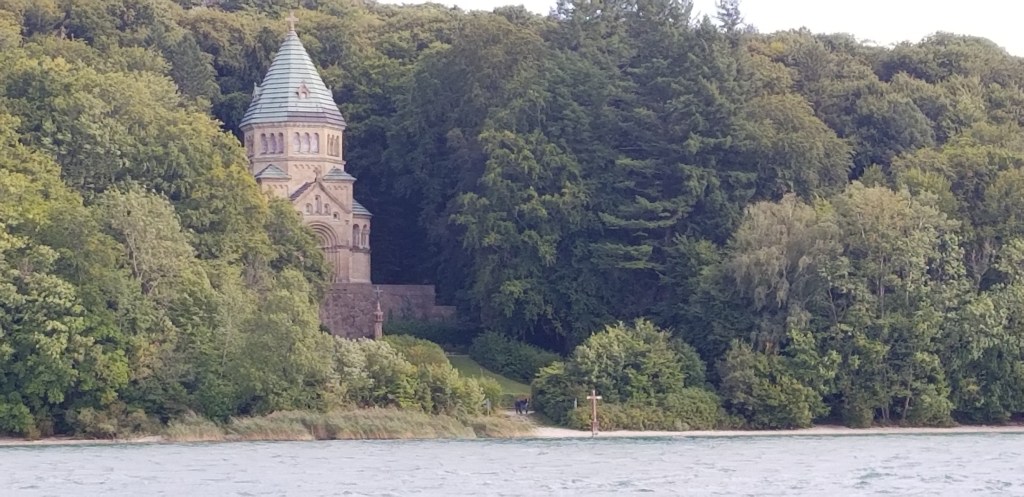
If the royal treasurers only knew how much tourist revenue the king’s castles would bring in future times, they might not have been so hard on him!

After our boat ride, ice cream was in order, but the only open cafe was full service and indoors. We sat, and there in front of me was a life-size portrait of the good King. He has a way of turning up when I least expect it.

The rest of our days in Feldafing dissolved into rainy storms. There was a day, maybe more, where we just didn’t fight the weather, choosing instead to stay indoors. Chores, further trip planning, and just mentally “catching up” have to be done on the road, too. The Queen of England had just died and on TV we watched her coffin procession move from Balmoral, Scotland to Edinburgh through all the little towns where people waited for her on the streets.

There were sunnier days ahead as we headed further south, with more surprises in store.

Next time: another new country to see
Europe · Germany

Marvelous Munich – Europe Travels September 2022

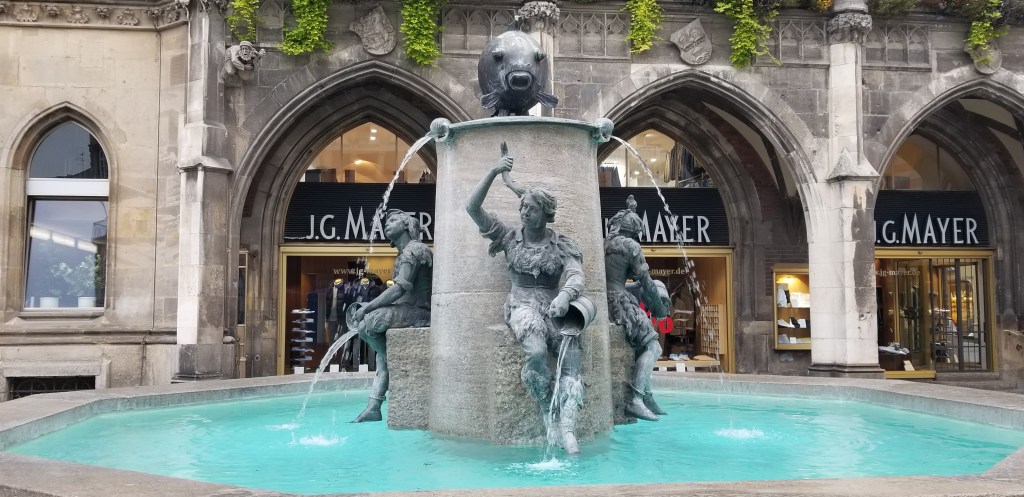
The Fischbrunnen (Fish Fountain) in Munich

As I searched for adjectives to describe Munich, I thought of the impressive neo-Gothic architecture of the Marienplatz and the playfulness of its Glockenspiel, but other edifices such as the majestic Residenz are imposing and inspiring. I thought of delicious beer and bratwurst in the Hofbrauhaus and other breweries, and the plentiful treats in the Viktualian Market, but there are plenty of other good things to eat. Museums of all varieties abound. I’ve had so much fun when I’ve visited the Oktoberfest in other years. The city is both traditional and cosmopolitan. I had to settle for marvelous. I’ve been here many times, and it’s one of my favorite European cities, so can there be any other word?

Having a Europe rail pass meant that we could zip on into the city whenever we wanted on the commuter S Bahn. It was generally a thirty to forty-minute ride. Over the course of our stay in Feldafing, we came in three times, once just for dinner. We would get off at Marienplatz and then we were in the center of everything. This blog will be a composite of all three visits. Let me show you just a little of the city that I love!

We were all business on our first rainy trip in, but there was one important thing to do first: head over to the Viktualienmarkt (Victuals Market) for a currywurst. It’s a favorite of Cal’s, and I like it too. Basically, it’s bratwurst cooked in a mixture of ketchup and curry powder. It may sound dreadful, but it grows on you, trust me.

Mine had a smidge too much mustard, but I wasn’t complaining. (Well, I did, just a little.) Otherwise, it was perfect: a roll crispy crusty on the outside, soft inside, with the wurst hanging out the sides. In Germany, an orange Fanta tastes great. I wouldn’t drink it anywhere else.

The Viktualienmarkt is a feast for the senses. I always want to buy everything, but I don’t want to carry food around with me all day. The market began long ago in the Marienplatz. After growing too large it was moved in 1807 to this place.

Most interesting to me are the unusual items that are sold. Below is a booth dedicated to selling mushrooms. I don’t know if I’ve ever seen so many kinds.

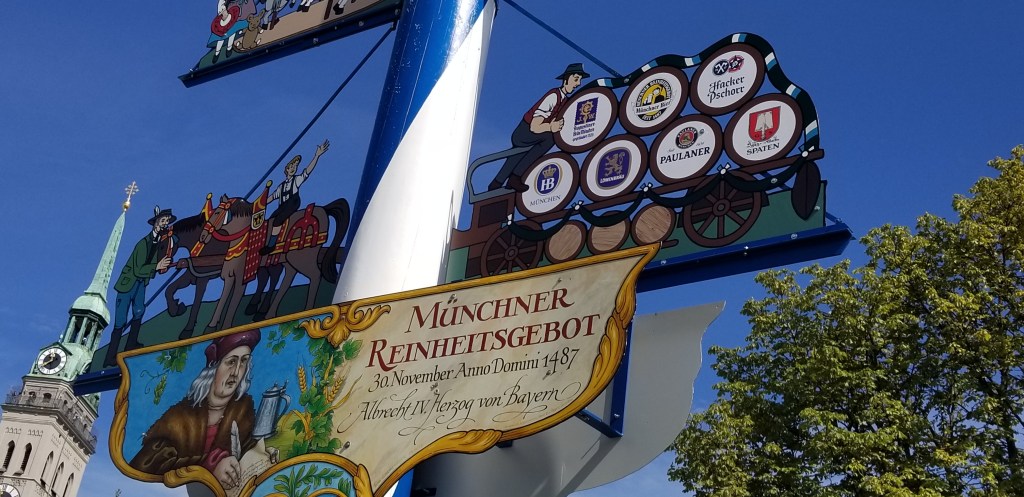
Every town in Bavaria has a Maypole. It is a focal piece which usually shows its main business and culture. Munich’s Maypole towers over the Viktualienmarkt, and I have here just the bottom portion of it to show you.

What is Munich about? Beer! The right side of the maypole shows the seven major breweries. The “Reinheitsgebot” below it is the Bavarian purity law for beer originated by Duke Albrecht in 1487. Brewers could only use water, malt, and hops for their beer, and that law governs the breweries still today.

Our “business” I mentioned earlier that brought us into Munich the first time involved a birthday gift that we needed to find and purchase for our grandson, and the mailing of a box back to the US. That didn’t mean we couldn’t stop and look around in the Marienplatz, as we always do.

This is the heart of old town Munich, and several main streets lead from here. The old and the new town hall is here, and so is the the Christmas market in December. Sadly, the Marienplatz was heavily bombed during World War II. Behind the spot where I took this picture, all the buildings are modern.

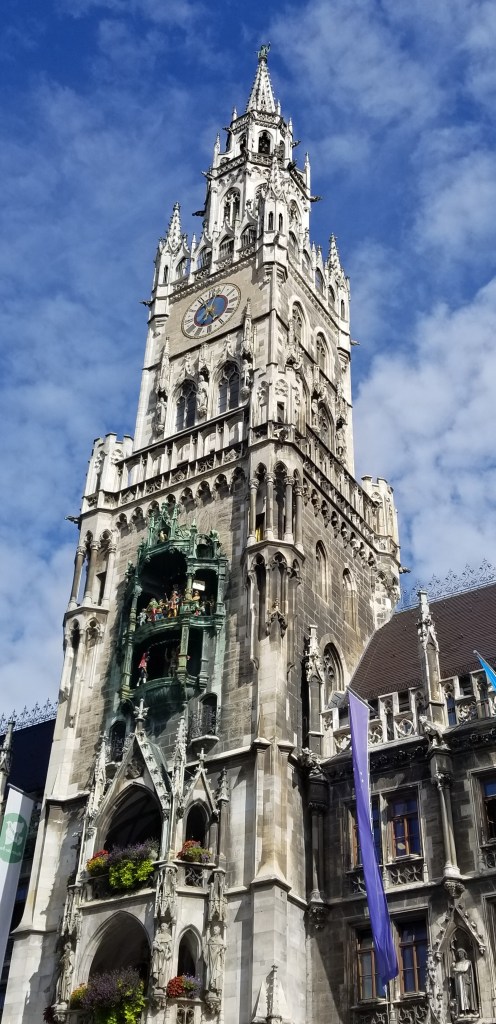
Most of the northern side of the Marienplatz is taken up by the new town hall, which isn’t really new: it was built between 1867 and 1909 in neo-gothic style. This picture only shows part of it.

Walking through the arches you see above, past the Ratskeller sign, we found several curious figures on the sides of the walls in the courtyard, such as this one. We decided they serve as water gutters since all their mouths are open.

But it is the Glockenspiel on the town hall’s tower in the plaza that catches everyone’s eye. The day we were shopping for our grandson, we hiked a pretty fair distance to a toy store I had seen on-line. We had no luck in that store, so were walking back through Marienplatz to my favorite department store, the multi-level Kaufhof. That’s where we should have gone in the first place. Luck was with us – it was exactly 11:00, time for the Glockenspiel to play! Everyone stops to watch and the Marienplatz fills with people. We’re not always fortunate enough to catch it at the exact time we are here, since it only plays at certain times of the day.

At left, you can see the whole tower with the Glockenspiel below the clock. There are 43 bells and 32 life-sized figures and it renacts two stories from the 16th century. On the top level in the left picture, there are dancers celebrating the marriage of Duke Wilhem V to Renata of Lorraine. Duke Wilhem founded the Hofbrauhaus – more on that later. On the right picture, knights are jousting in honor of the couple and of course the Bavarian knight always wins. Hooray! In the bottom level, then, is the cooper’s dance, which celebrates the end of the plague in 1517. At the end, a golden rooster at the top of the Glockenspiel chirps three times. The show lasts around 15 minutes, depending on the tunes that are played.
The Hofbrauhaus is a place we always return to when we are in Munich. It is the drinking and eating beer hall that Duke Wilhem founded for the Hofbrau brewery, but at that time it was only open for the royalty. King Ludwig I opened it to the public in 1828, and the party has been going on ever since. It’s full of “gemutlichkeit”; which means a comfortable friendliness. There is always an oompah band playing and the place is busy, even late afternoon. The crowd ebbs and flows; the empty spots you see here were filled again shortly after this picture was taken, including our own table.

These are not the standard size, full liter mugs of beer that are usually standard for the Hofbrauhaus. For the first time in our lives, we ordered the smaller size. I hardly like the taste of beer any more, but Hofbrau beer is different, and it only tastes this good in Germany. Sitting and enjoying the “gemutlichkeit” felt good after doing all that shopping and searching for a place to wrap and mail a package.

We returned to Munich just for dinner one evening, and enjoyed a stroll afterwards. We turned down a street we hadn’t explored yet, and discovered: the Residenz. I’m not sure why we never visited this place. Maybe I confused it with the Nymphenburg Palace, on the west side of the city, which we have been to before. It was too late in the evening for a tour so we just walked about.

The Residenz is the largest city palace in Germany, the home of Bavarian royalty until the monarchy was dissolved, and I don’t know how we ever missed it. See, Munich is just that way…there is so much to explore and maybe I never will see all of it.

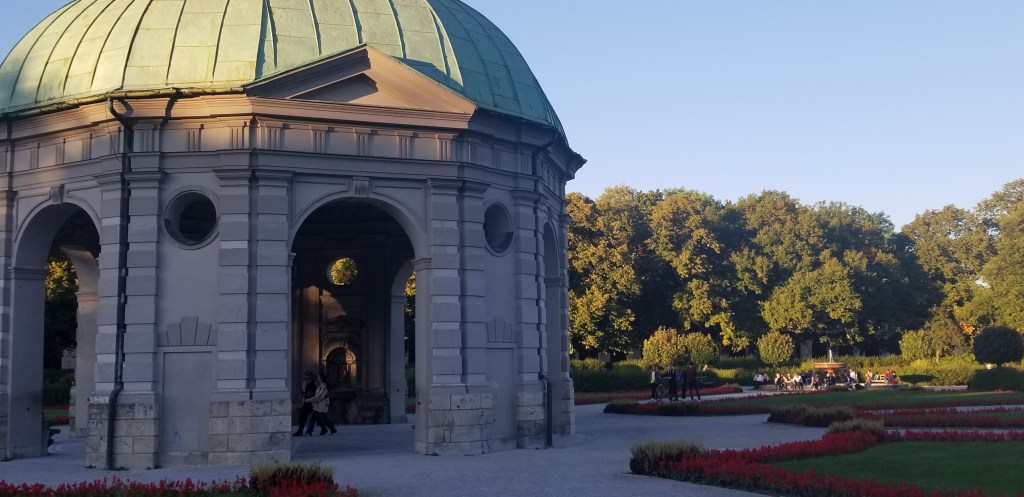
In the sunset hours, we walked through portions of the garden–

and out through the garden walls, which contained pictures of royal historical events.

Out on the plaza, a huge monument:

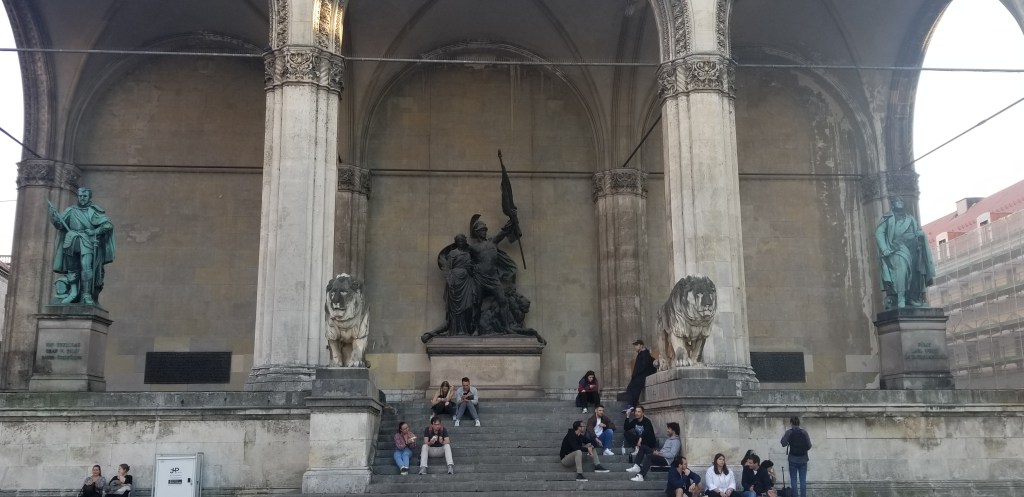
This is the immense Feldernhalle, commissioned by King Ludwig I in 1941 to honor the Bavarian Army.

At a right angle to the Feldernhalle stands the Theatine Church of St. Cajetan. I had to look up the definition of “Theatine”. This branch of the Catholic church was founded in 1524 “to combat Protestantism and promote higher morality among Roman Catholics”, according to Collins.

The church was built in the late 1600’s to honor the new heir to the Bavarian throne, Prince Max Emanuel.

Inside, a riot of cherubs and curling vines and curlicues awaited us. It was stunning, and a massive contrast to the stark Frauenkirche that we had visited earlier.

The entire interior of the church was designed in this fashion.

As we headed back to the Marienplatz that evening, still awed by that amazing church, I thought about this: that one should never assume that one has seen everything in a certain place. If you are traveling, always look for the surprises that await around any corner. They are there, and that is especially true in Munich.

A golden facade lit up by the setting sun in Munich

Next time – discovering Feldafing

Europe · Germany

Alpine Wandering in Bavaria, Germany – Europe Travels September 2022

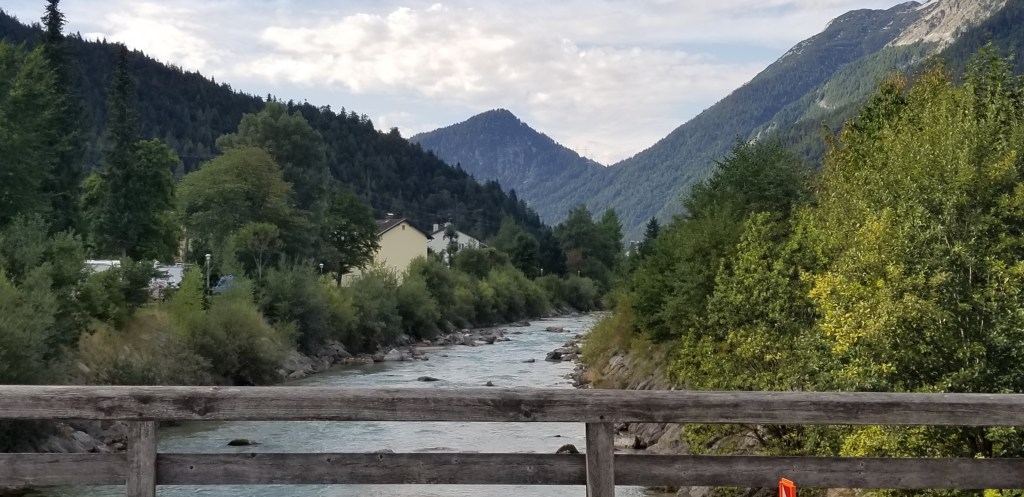
The town of Feldafing, which lies on the shores of the Starnberger See (Lake Starnberg), is the second-to-last bedroom community on the commuter train from Munich. It served as our next stop for a ten-day breather. Down by the lake, if you squint a bit, and catch a good day, you can see the Bavarian Alps. It really wasn’t close enough to the Alps for me (more on that later) so we headed to Mittenwald on the first day of promising weather.

Just getting to Mittenwald involved some mental acrobatics. We needed to translate what the signs were telling us. There was a train to Tutzing, which took five minutes. In Tutzing, we figured out that the train wasn’t going to take us to Mittenwald, it was only taking us to Murnau. Why? And then what? Between the two of us, and sort of going with the flow, we realized that we needed to get on an “ersatz” (replacement) bus to Mittenwald. For some reason, the train was down. So we rode the train for a half hour ride to Murnau and then we rode for on the bus trip to Mittenwald.

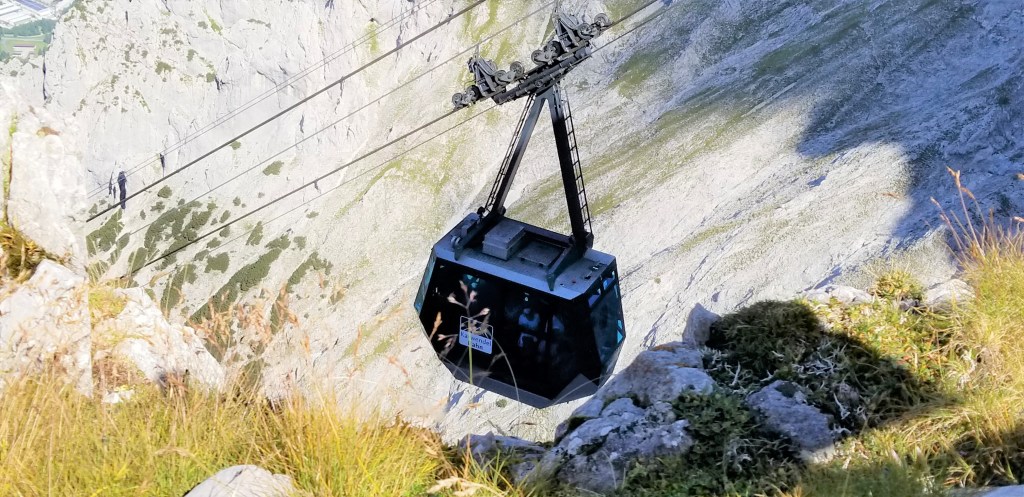
The fairy-tale town of Mittenwald would have to wait for later. A cable car up the mountain was our next step.

The cable car is the Karwendel Bahn, which took us to 7,362 feet elevation near the peak of Karwendel Mountain.

The peak was my destination, and we hiked over to it from here.

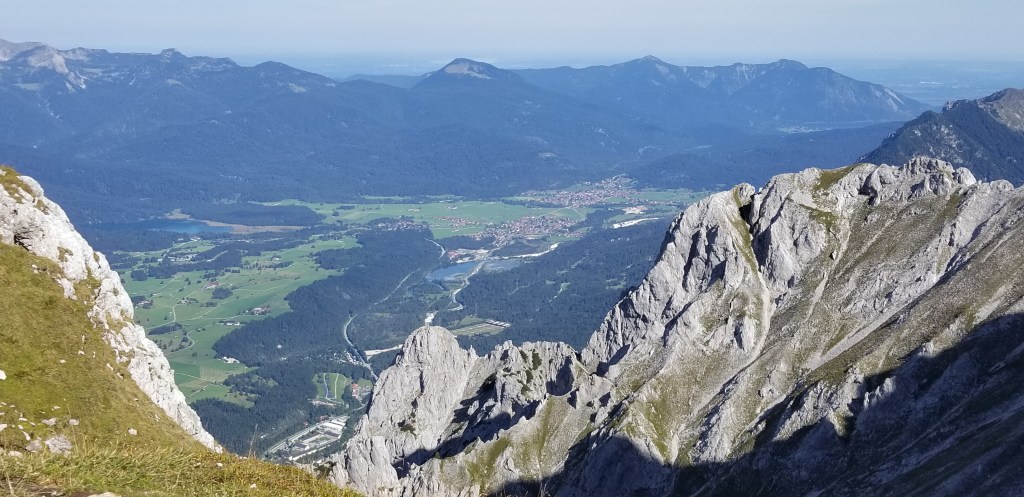
Passing the massive rock wall that you see on the left, we were treated to the magnificent view of the Alps that I love and had been looking for.

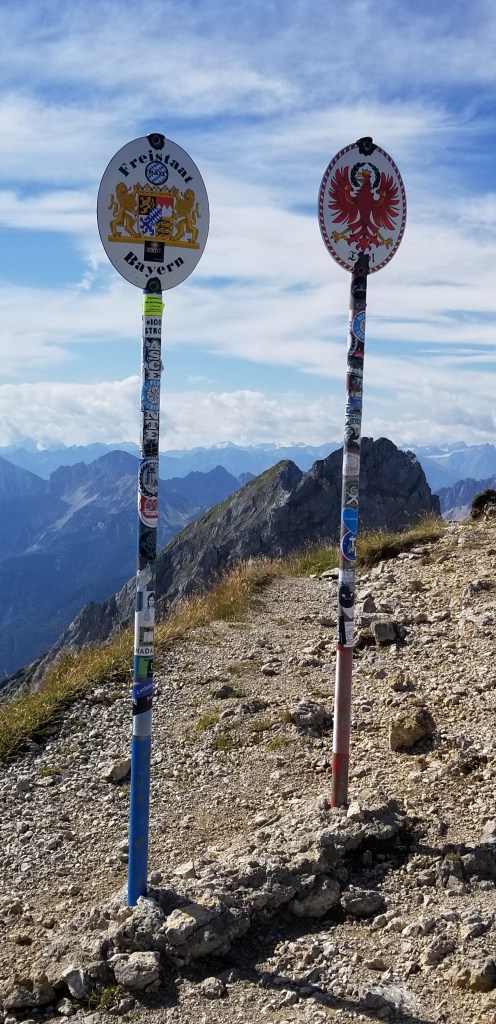
It was such a beautiful day that we could see deep into Austria, which wasn’t too difficult. We were at the border between the two countries.

The sign on the left is the border for the state of Bavaria, and the sign on the right is for the border of Tirol, Austria.

The way was steep and rocky and the air was thin, but we were up to the challenge, especially since we were being treated to such beautiful views.

A bit more climbing, and we were near the top. I needed to finish it off, so I climbed over the rocks to the peak. Success! The elevation at the peak is 9,019 feet.

From my perch on top of the mountain, I could see the cable car station far below, and sheep grazing in the Alpine meadows. Some of them are just barely discernable in the bottom right of the picture. We had to navigate through a lot of sheep poop at times on the trail.

We enjoyed the view for a long while, but finally it was time to come down off the mountain.

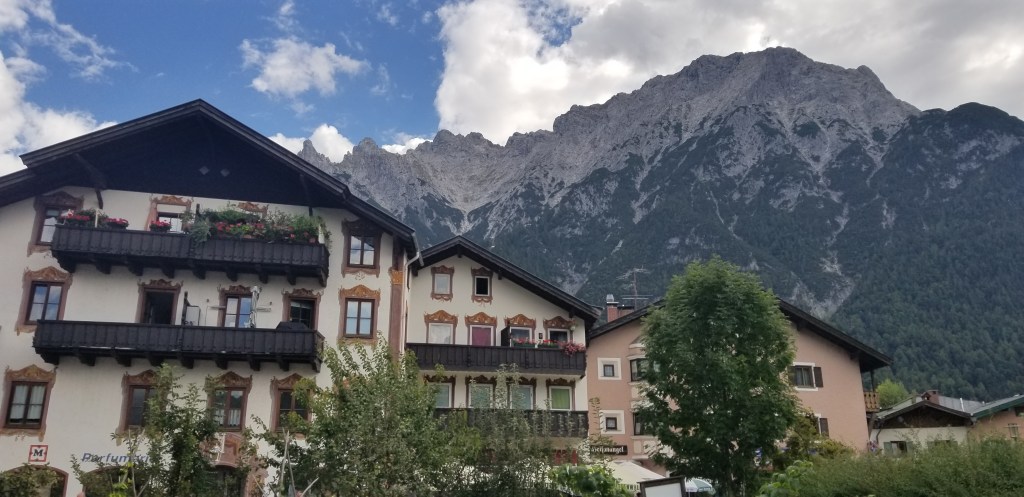
Mittenwald is a quaint little mountain village known, as several villages in Bavaria are, for its pretty paintings on their homes and businesses.

Flowers adorn the balconies and front steps of many homes, such as this typical Bavarian-style house.

Mittenwald is famous for the violin-making that began in the mid-17th century by a man named Matthias Klotz. It is said that Matthias crafted Mozart’s personal violin. I knew that the violin museum would, unfortunately, be closed on this day, but we passed by for a picture anyway.

The steeple of the Parish Church of St. Peter and Paul looks over the downtown area. The church was completed in 1740. The red marble for the church came from Italy and traveled over the Alps on the Roman “Via Claudia Augusta” trade route. Mittenwald was an important shipping point for marble and other goods in those days.

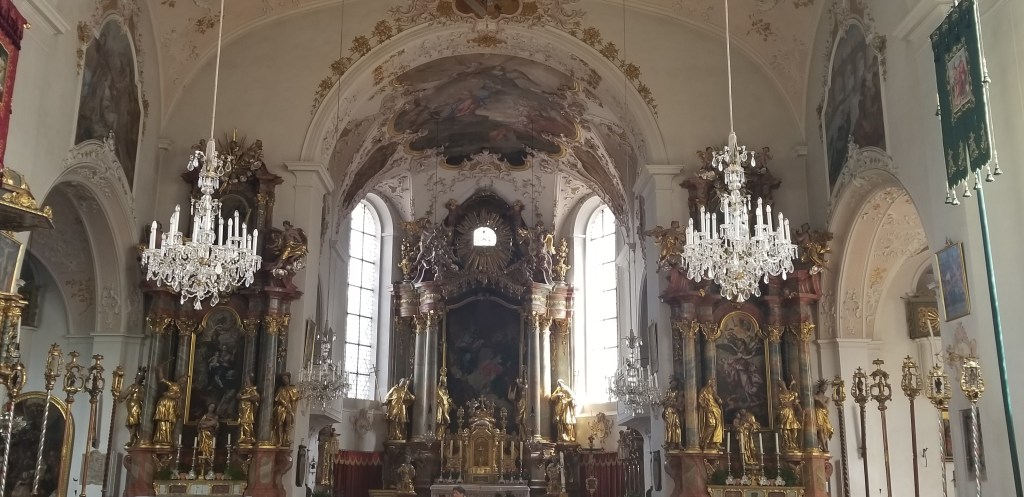
We stepped inside for a look.

Words fail me to describe the unexpected beauty of the frescoes, the gold work, and the crystal chandeliers. In a place like this, one can only take a pew to sit, enjoy the Baroque craftsmanship, and ponder life for just a while.

It is the mountains, however, that tower over everything and serve as the backdrop for this town.

We’d had a decent lunch after we’d come down off the mountain. After wandering through the village, a sign for “spaghetti eis” (spaghetti ice cream) caught my eye. This was one of my favorite treats when we lived in Germany and we surely couldn’t pass it by!

I have never seen such a huge serving of spaghetti eis. We should have shared one. The traditional version is on the left; Cal opted for the chocolate variety. What looks like spaghetti is in reality ice cream put through a noodle press; the red sauce on top is actually strawberry sauce. Grated white chocolate stands in for the parmesan. It’s always delicious, and this delectable bowl was no exception.

It had been an unforgettable day. As much as I wanted to return to the mountains, we were unable to for the rest of our stay in Feldafing. The weather became stormy and we would have encountered the train/bus combination again to get to any of the Alpine towns. The feeling of being in the Bavarian Alps is not anything I’ve encountered anywhere else. Other discoveries were in store for us while here, as I will post in my following blogs!

Next time – we visit Munich

Europe · Germany

Old and new friends in Biblis, Germany – Europe Travels August 2022

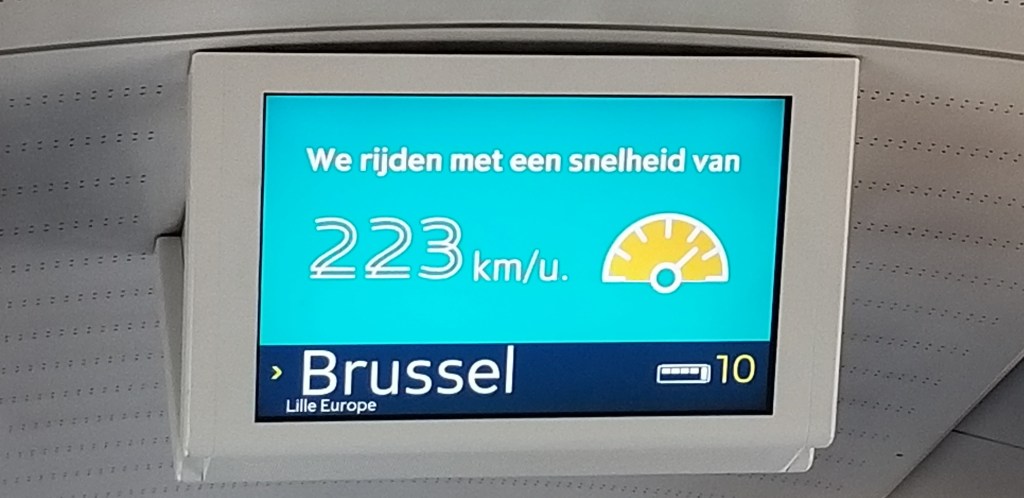
Under the water at 138 miles per hour to Brussels

Once upon a time, Cal and I crossed the English Channel on a ferry from the Dover coast of England to France for a very rough crossing. Let’s just say that it was not a good idea to dine on Indian cuisine before we left London. Fast forward to present day, in which we boarded a train in London for the ride to Brussels beneath the Channel. The train was fast and efficient, and electronic signs measured our speed and depth under the water as we rode. We were in Brussels after what seemed like a minute. That was not our final destination, though.

From Brussels, we caught another train to Germany. This train was not near as much fun.

Just as we were ordering lunch, the lights went out and the train came to a dead stop in a tunnel. We sat in that tunnel for two hours. No wurst was forthcoming, but the sodas and water were free. We had a lively conversation with our German seatmates who spoke English. One of them helped me compose conversations in German on What’s App with my friend Marlene in Biblis, who had been expecting us for dinner. The delay involved being towed back to the last town, Liege-Wilhelm, Belgium, and having to wait for the next train to Frankfurt.

Marlene and her partner Edmund were right there to meet us on the platform when our train pulled into Biblis. Marlene snapped this picture which captures our joy at finally arriving, albeit four hours late.

She is our former landlady, now our friend, of the house we lived in for the almost four years we resided in Biblis. We lived upstairs and she and her husband, who has since passed, lived downstairs in the house they built for children that never came. Our girls adored them, and they helped wrap our time in Biblis into some very happy memories.

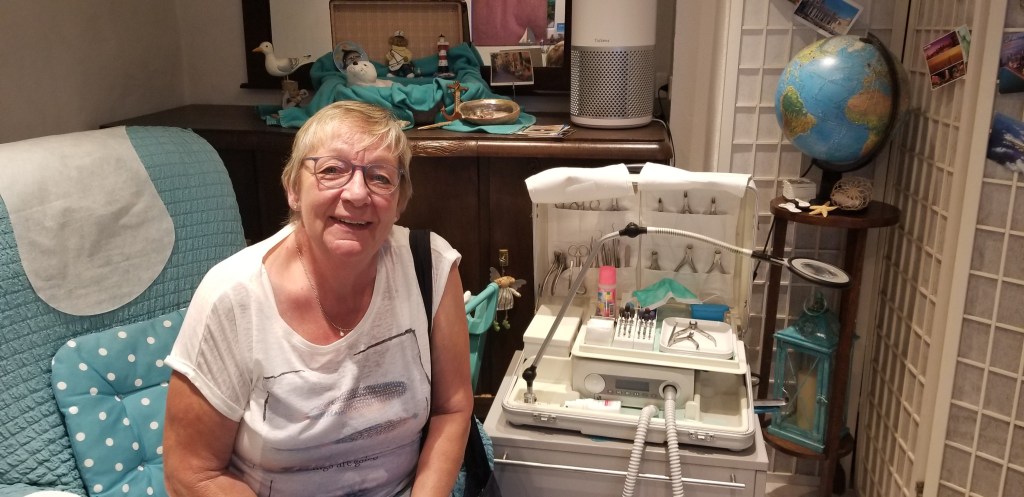
We had never met Edmund before this visit. They both rolled out the hospitality for us. We spent a rainy morning looking at pictures and catching up on the years. We admired all the work that Edmund is doing to remodel their house which she grew up in. Outside, Marlene keeps a beautiful garden. Across a small walkway, she has her own home-based business, a footcare salon. It is in a building that was her father’s barn in the old days.

When it was time for lunch, we feasted on Marlene’s delayed but delicious meal from the night before. The rain hadn’t stopped, but we piled into their car anyway for a drive around town.

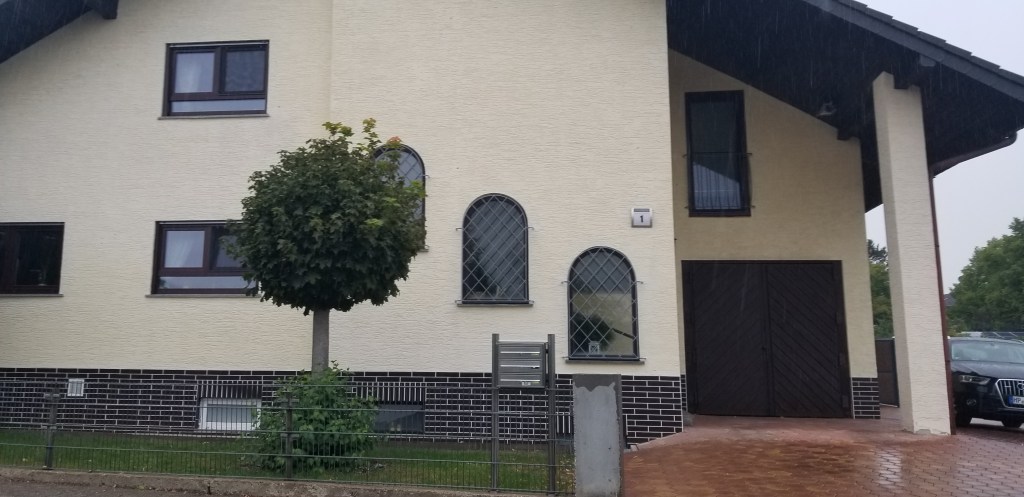
First on the agenda: a drive-by of the old house.

Ah, sweet memories. Our kitchen window was at top left, and the long window over the garage was in our eldest’s bedroom.

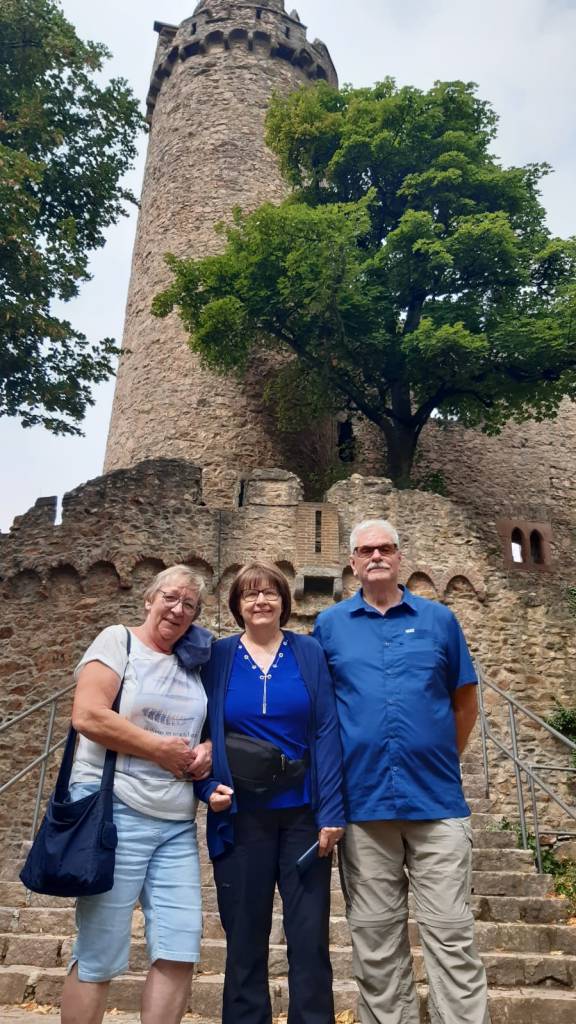
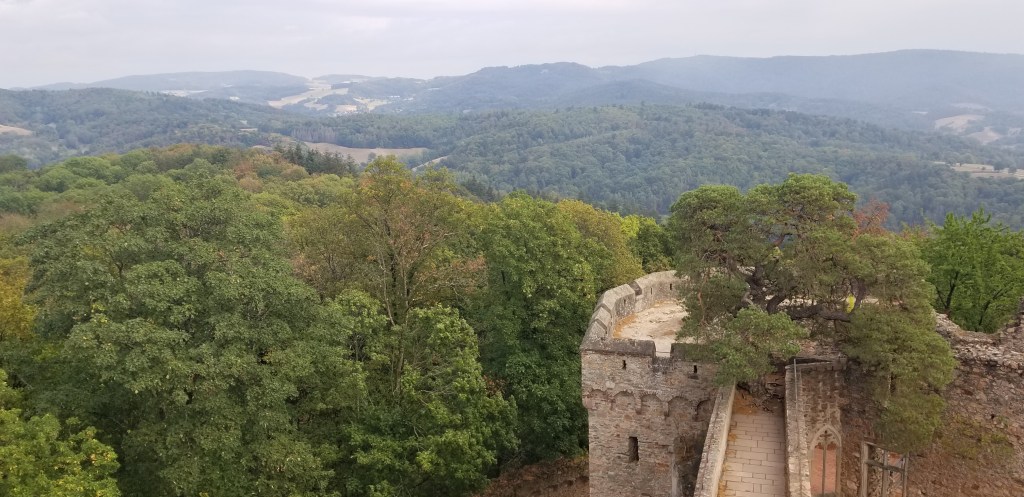
After tooling around town, Edmund headed out into the countryside of the Odenwald forests, to the town of Bensheim, for a visit to the ruins of Schloss (Castle) Auerbach. It was built in the 13th century. Had we ever been here? I really can’t remember; it was too long ago.

How was this tree able to grow and thrive way up here?
Edmund took this great picture of us with Marlene

From the castle, we enjoyed a beautiful view of the Odenwald hills. The weather was starting to cheer up.

Back in the car, and Edmund was off again, this time to Heppenheim. I thought I had been here before. I know we never walked through the old part of this town. Why ever not? We’d had lots of company and this was close to Biblis. I guess we were busy doing other things.

Heppenheim Altstadt (old town) has the medieval buildings that I love and we spent time strolling through that part of the town. The town was almost destroyed twice by fire, both in 1369 and again in 1693. But it came through both world wars mostly unscathed.

Edmund wasn’t finished driving us around. The next stop was the Rhein River near Biblis, and this was very familiar. But the once-mighty Rhein was almost unrecognizable. I had never seen the water level so low; and in a first for us, we were able to walk right out onto it.

Barge traffic hadn’t completely ground to a halt, despite the low water level.

When our kids were teenagers, we brought them back to Biblis for a visit. The Biblis years were some of the best of our lives and they were sad when we moved away from here. At that time, the visit was full of nostalgia as we visited many places that we had loved. In the intervening years, the sentimental feelings have passed. What has remained is the friendship we feel with Marlene, and now with Edmund as well. With today’s social media and on-line translators it is a little easier to keep up.

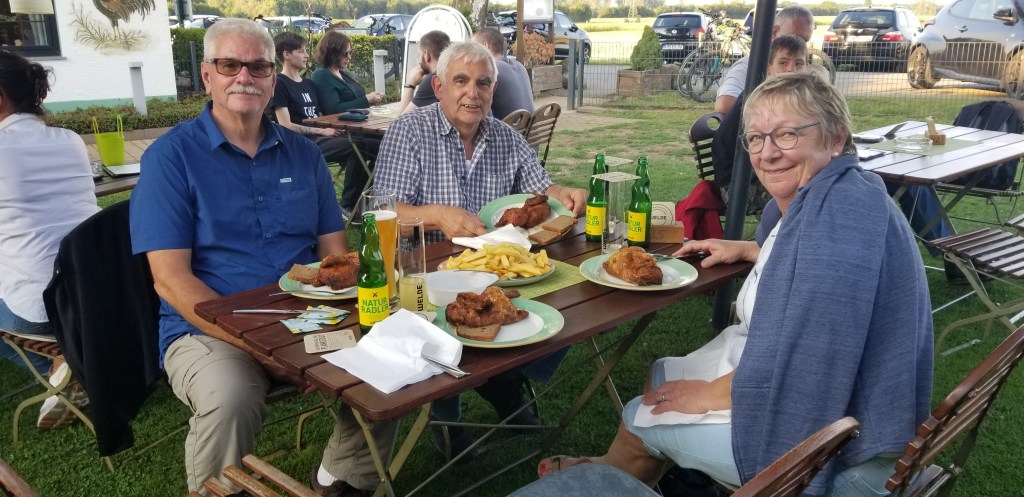
The last stop of the day was to Marlene’s favorite chicken restaurant. She brought us here when we visited the last time, too, and we were a little shocked that we had not known about it while we lived here. It’s very simple: just a huge plate of pommes frites (french fries) to share, chicken, and a little piece of bread. Pommes frites in Germany tastes better than anywhere else, in my opinion. Washed down with a beer or a radler, the meal is so very delicious.

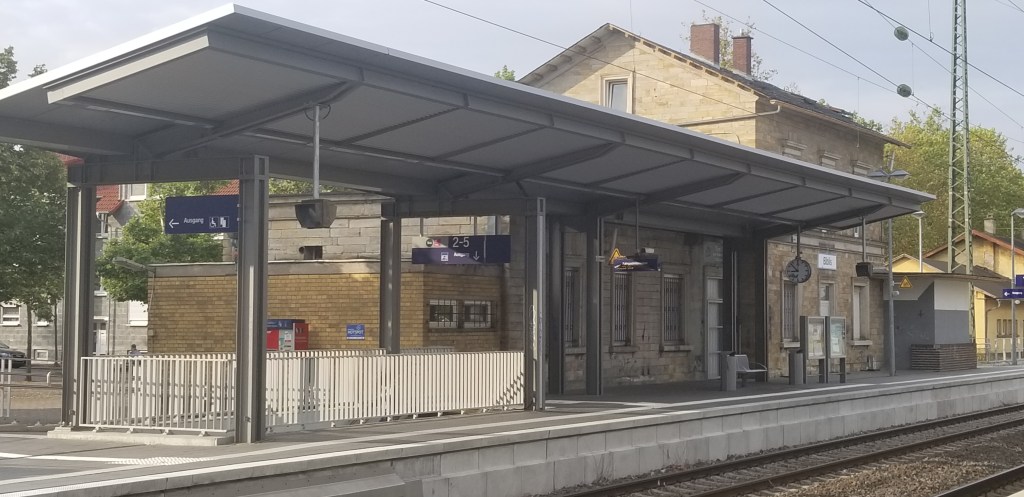
After more time that evening at their house, it was time to say our goodbyes. When the next morning came, we were back at the Biblis train station, ready to head southbound.

Next time – our visit to Bavaria