Europe · UK and Ireland

A Holiday Weekend in London – Europe Travels August 2022

St. Pancras International Rail Station

What else is there to do in London that may be a little off the radar? Well, I did have a small list, as I always do, but I wouldn’t call it a bucket list. I’m not one for just checking things off and moving on. Who knows? There may be something else more interesting to experience.

I had heard about the Charles Dickens Museum at the start of the Covid pandemic. It was a little news blurb about small museums, shuttered for the pandemic. They rely on their income from visitors to survive and they were concerned that they might not be able to reopen. I hoped it would make it so I could see it!

No worries: they did survive, and so we headed over to 48 Doughty Street to do our part in keeping the venerable museum afloat.

Dickens resided here almost three years from 1837 to 1839 with his wife and first child. He wrote “The Pickwick Papers” and “Oliver Twist” while here. It is an early Victorian home, and is one of only two of his London homes still remaining.

The grandfather clock that you see in the dining room was owned by Moses Pickwick, who owned a stagecoach and inn enterprise. He was thought to be the inspiration for the Pickwick Papers.

Dickens’s writing desk is here:
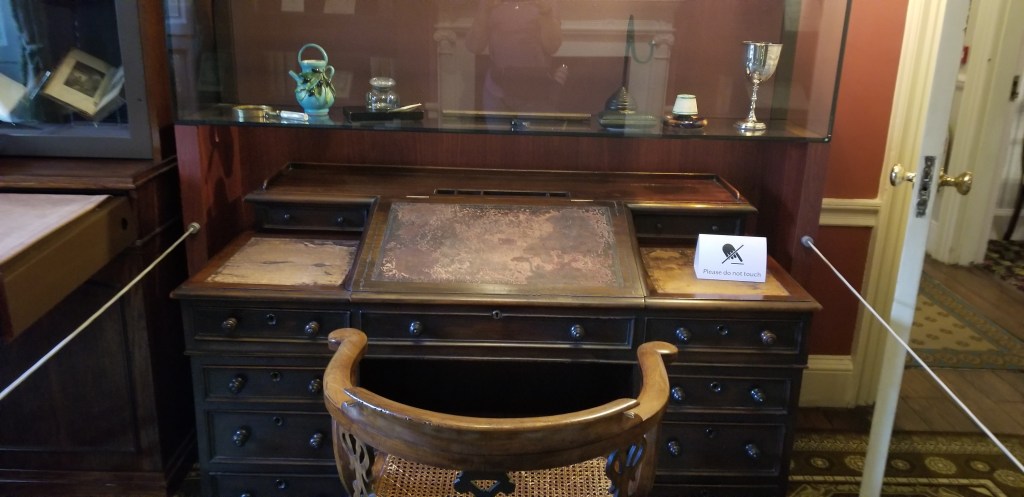
The desk was a later acquisition by Dickens. His final home was at Gad’s Hill and he purchased it while he lived there, in 1859. “Great Expectations” and other works were written on this desk.

Going down the steep narrow steps and into the basement, I found something interesting. Called the “wash-house copper”, a fire was set in the bottom to heat water inside the pot to wash laundry. The laundry was stirred with a stick. The pot was cleaned out at Christmas-time for boiling the Christmas pudding.
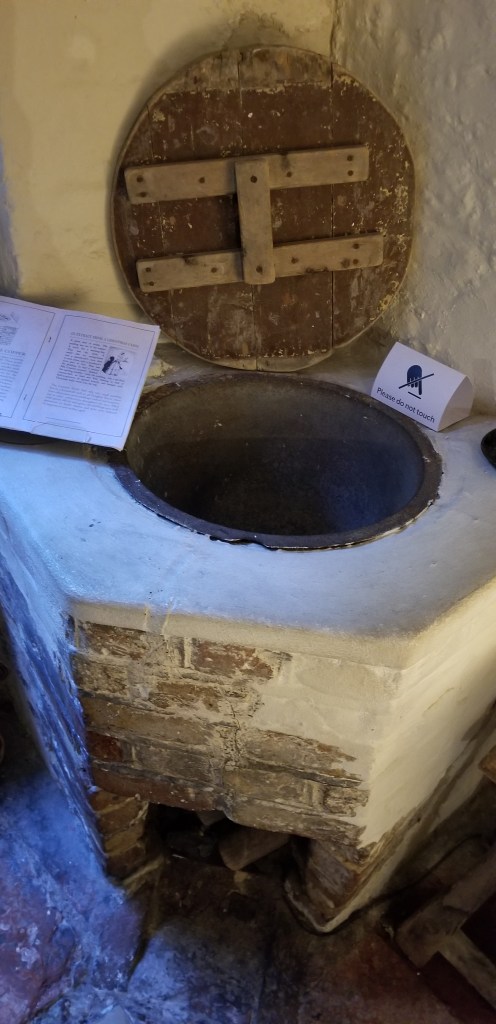
The Dickens home is a narrow city townhouse, but there are five floors. Water was boiled here in the basement for cooking, cleaning and bathing. I cannot imagine having to haul the boiled water up five floors for a bath in one of the bedrooms.

Both the Dickens and the British museums were walking distance from our AirBnb, so we headed out early on the leafy streets for each of our two remaining mornings to arrive at the museums when they opened. We spent over two hours in the British museum and that was a fairly quick overview. I, but probably not Cal, could’ve spent days. There was just so much “stuff” to see.

The British Museum may not be off the radar, but it is free. It bills itself as having “two million years of human history and culture”. There are objects from around the world. First and foremost is the Rosetta stone, the key to deciphering Egyptian hieroglyphics. Too many people were gathered ’round to get a good picture.

There were treasures from an Iron Age burial pit-
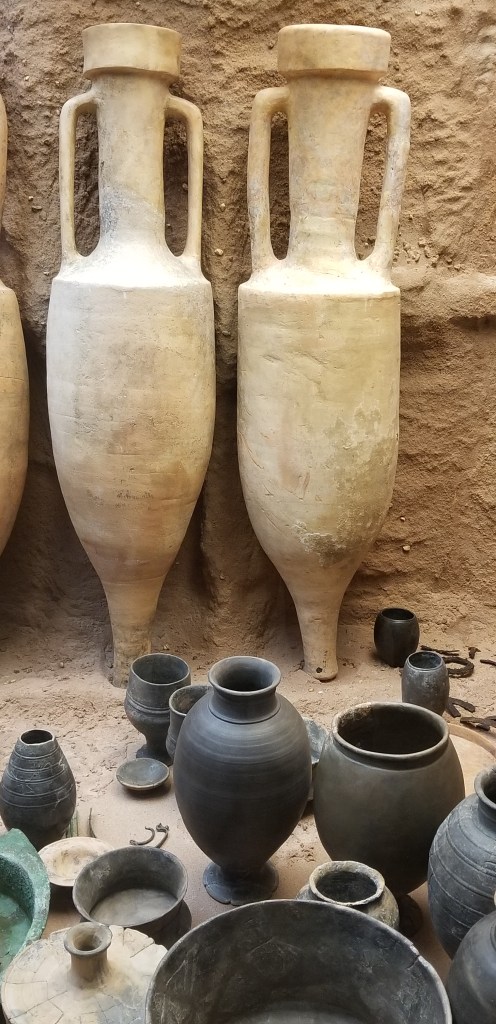
and the Lindow Man, who was found preserved in a bog. Time of death has been placed at between 2 BC and 119 AD.

The Lindow man was British, but so many of the artifacts are not. I have mixed feelings about antiquities that belong to other parts of the world. Still, Hoa Kananan’a from Nui/Easter Island was impressive. I will probably never get there to see the others. Looking at the visitor on the bottom left helps to give perspective on its size.

I could post so many more pictures, but I’ll leave off for now with a picture of part of the library. The British Museum library was founded in 1753 and has one of the world’s largest collection of written literature.

Out on the streets, there was a picturesque pub near the museum–

and an old telephone booth turned into a miniature art museum.
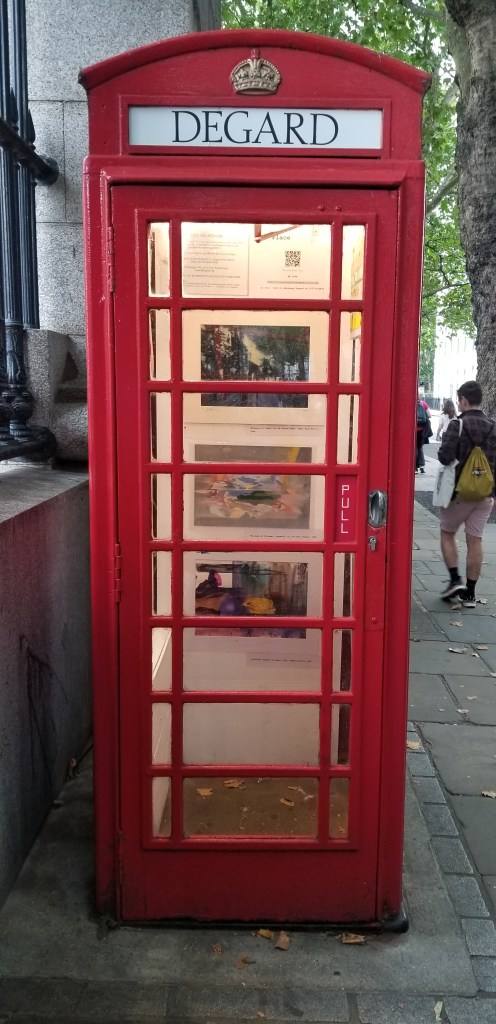
We hadn’t yet had a proper tea, and we were only a day away from leaving the continent. There are a mind-boggling lot of them to choose from in London, and they can be very expensive. Tea at Fortnum and Mason’s, THE tea spot for discerning afternoon tea patrons, starts at 78 pounds – which in today’s dollars is about a hundred dollars. We settled for a less expensive, but by no means less delicious, tea at The Coral Room. It was a sumptuous spread which served as our late lunch and we needed no more to eat the rest of the day.

For each of us there were four types of finger sandwiches, seen at bottom right, for starters. There were two scones in two different flavors with strawberry jam and clotted cream plus four different cubes of dessert. The full pot of tea was made with tea leaves (not a bag, heaven forbid!) and brewed with a timer. Perfection!

While I’m on the subject of food, I’d also like to tell you about our Sunday Roast. It is a custom in the UK, and we saw signs for Sunday Roast everywhere beginning in Scotland. On the Sunday we were in London the stars aligned. A pub we walked by often on the way to and from our AirBnb served this delectable dinner. We had a pint and watched a cricket game between India and Pakistan while we waited for our food. It consisted of roast beef and potatoes with gravy, cheesy cauliflower, and Yorkshire pudding. That last item may seem glamorous, but it is simply popovers which are baked and not fried. It was delicious sopped with the gravy.

We had ridden a black taxi from the train station when we first arrived in London, and we had been catching buses all over London. The one thing we hadn’t ridden on was the Tube, so on our last evening we rode the Tube down to Tower Bridge. Our tube stop must have been one of the older ones. It was 138 narrow steps spiraling down to the platform.

It was a beautiful evening and a lot of people were out, probably owing also to the holiday. We walked past the Tower of London, which was larger than I had remembered.
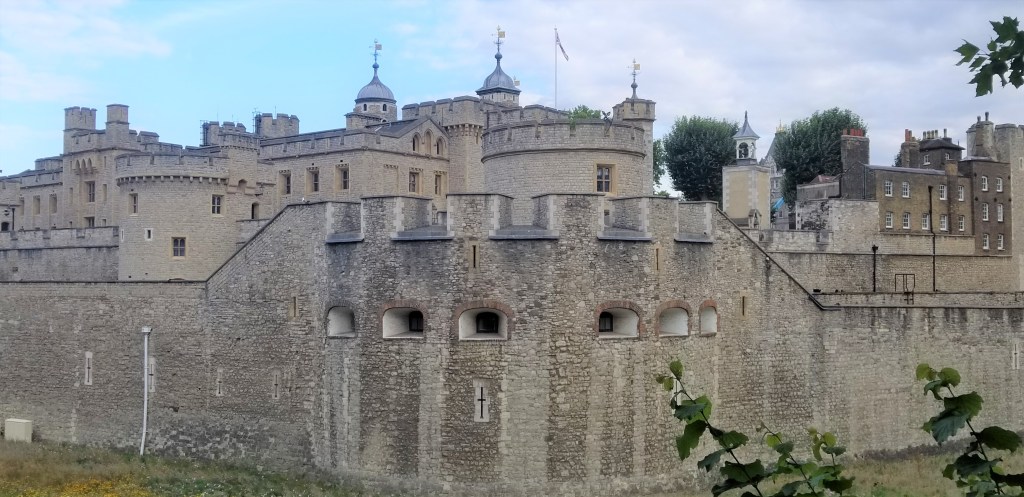
We also passed the Traitor’s Gate, over a little canal.

It is the most notorious entrance to the Tower by famous Tudor prisoners such as Lady Jane Grey, who died here at the tender age of 17 after claiming the throne for nine days back in the 1550’s. Prisoners would have been taken upriver to the Westminster courts for trial.

There is only a short walk to the Tower Bridge from here.

Could there possibly be a better finish to a visit to London?

Next time – grab your popcorn, we’re going to the movies!
Europe · UK and Ireland

From Westminster Abbey to St. Paul’s – Europe Travels August 2022

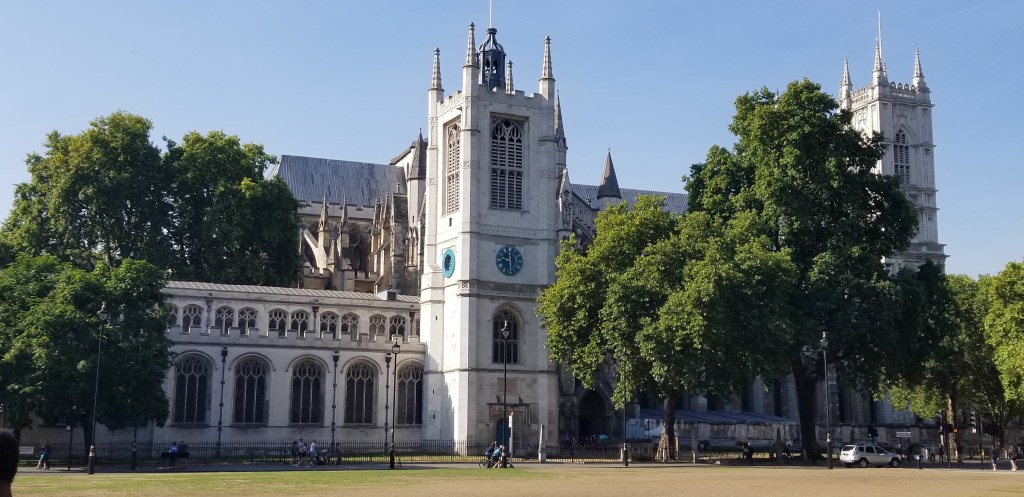
Westminster Abbey

While planning this trip I thought maybe we would skip London. We’d been there before. In order to cross the channel to the European continent, though, we needed to get on a train in London. And, honestly, our prior London trip had been more years ago than I’d like to count.

That trip was a gray and gloomy Thanksgiving weekend on one of those hulking tour buses that I keep talking about. We got on the bus way back in Germany, where we were living. Crazy, but we used to do stuff like that on our weekends back then. On that tour, we saw all the highlights like the changing of the guard at Buckingham Palace and the Tower of London, as well as things that weren’t, like a Beefeater medieval dinner complete with singing madrigals.

One thing I wanted to redo from that trip was Westminster Abbey. I hardly remembered our tour through it, and over the years since then I’ve heard many things about the church that I wanted to see. We didn’t visit St. Paul’s cathedral that time, either. I decided that a walking jaunt from one to the other was doable. And Cal, in his affable way, thought that anything we did would be just fine.

To get from our AirBnB, we needed to hop on one of those double decker buses that London is famous for. We were able to get a coveted front-row seat on the top level for our own personal London street tour.

Not our bus, but there were plenty of others around the city to take pictures of

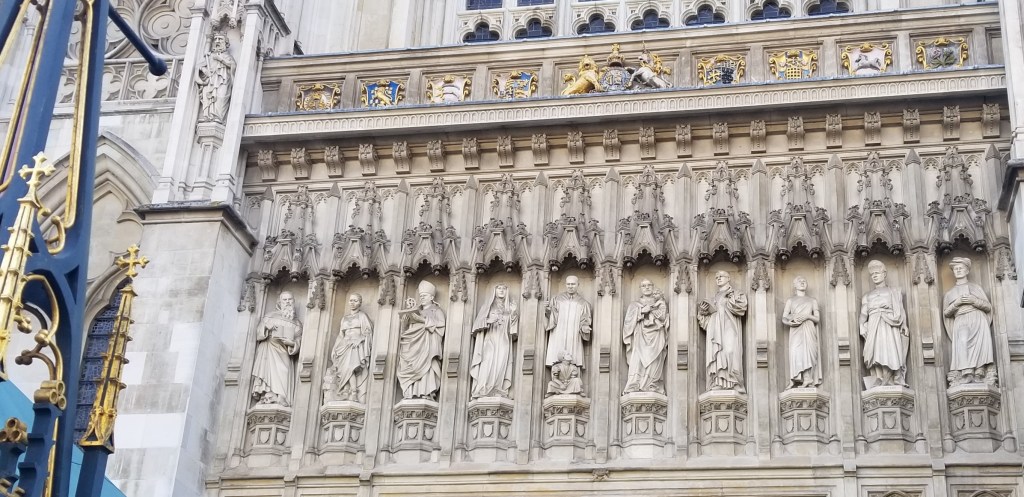
Looking up as we went into Westminster Abbey, I was surprised to see statues of people I recognized. These are martyrs from every continent who represent all who were oppressed or persecuted for their faith in the 20th century. Very modern, for an old cathedral.

The two I recognized were Dr. Martin Luther King Jr., fifth from left, and Dietrich Bonhoeffer of Germany, second to the right from him, killed by the Nazis in 1945. Niches for the statues were completed in the 15th century but never added until 1995.

We chose to be part of a 90 minute Verger-guided tour, which is a great way to learn the history of this Anglican church.

Forty monarchs have been crowned here since the year 1066. We saw the uncomfortable-looking chair that every monarch has sat in for their coronation, and sure enough, when King Charles II was recently crowned, there he was in that chair.

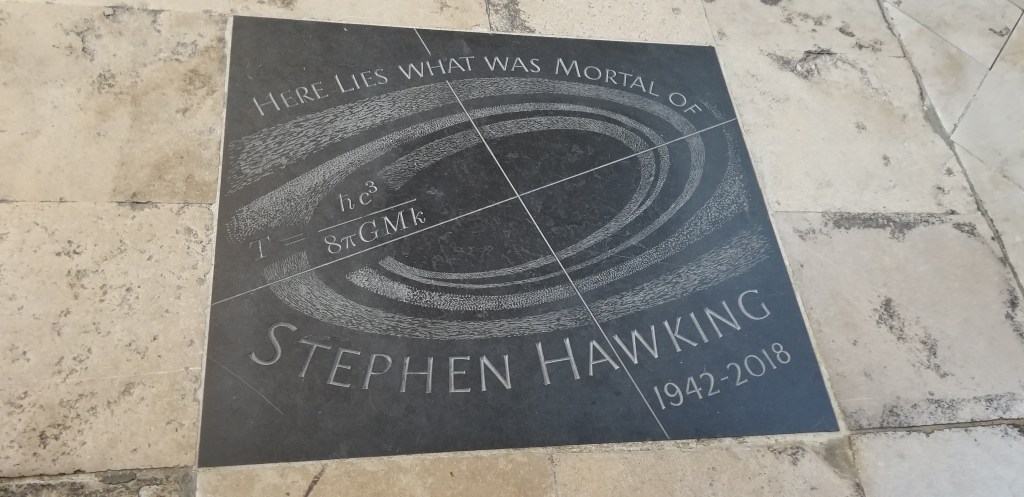
So many tombs! 3,000 people are buried within Westminster’s walls. That includes all of the royals until George II in 1760, because of space restraints. There is Mary Queen of Scots and her son, whose home I saw at Edinburgh Castle. In the scientists’ area are Charles Darwin, Isaac Newton, and a new grave: Steven Hawking.
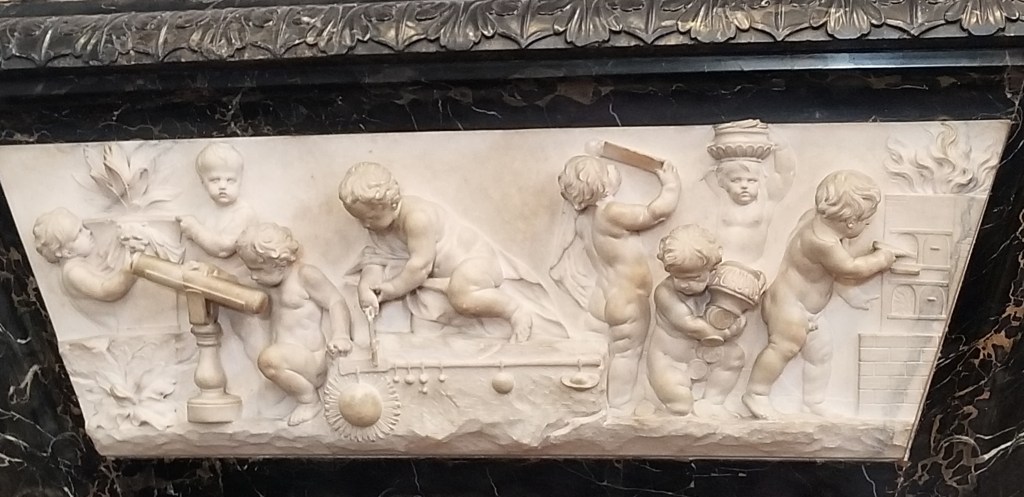
The cherubs in the memorial in their honor are so cute:

There is also a poets and musicians corner, where Chaucer, Kipling, Dickens, Handel and others are buried. I was pleased to see a memorial to the Bronte sisters, even though they are not buried here.

Outside again to exit, we walked through the cloisters of the abbey that was once here. Westminster Abbey received incendiary cluster bombing by the Nazis in 1941 and the cloisters sustained heavy damage. It has been reconstructed, like many other areas of the church.

Back out into the bright sunshine, we walked near Parliament and admired the statues. I had just finished reading Erick Larson’s “The Splendid and the Vile”, about the early days of Winston Churchill’s time as prime minister, and was pleased to see his statue.

I’m always happy to see women honored, because there aren’t as many statues of them. Here is Millicent Garret Fawcett, a politician and champion for women’s rights around the turn of the century.

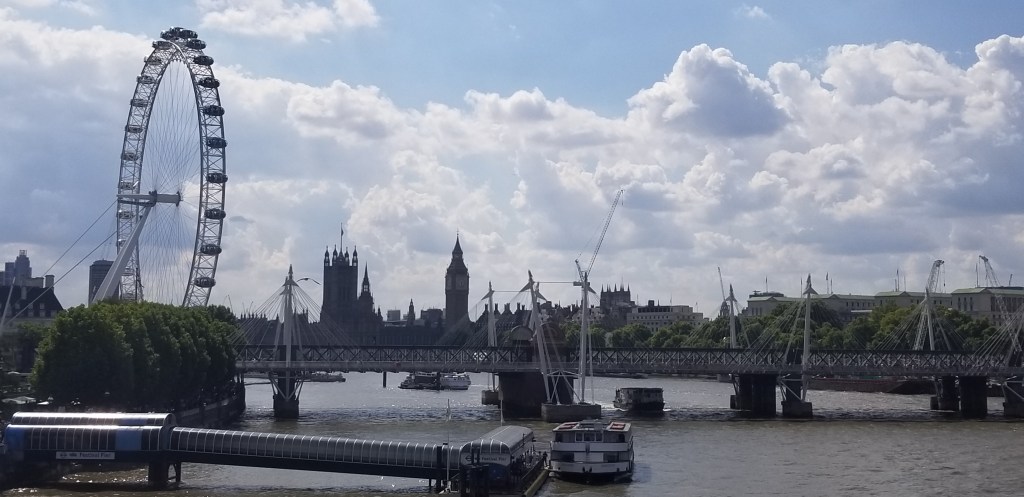
We walked over the Thames and got a view of Big Ben. I was more excited than I thought I would be to see both again.

Then, over the river to an exceptionally crowded and touristy area for a view of the London Eye, which we did not ride.

By now, we’d had lunch, crossed back over the river, and were walking towards St. Paul’s Cathedral in earnest. Twining’s Tea is along the way, and since that is one of my favorite brand of teas, a stop was obligatory. The shop has been in this location since 1706! You have to excuse the Chinamen on top of their facade. It’s an old stereotype, but they have only been there for a few centuries.

Although it was a pleasure to go inside, I was actually a little disappointed in their selection. Still, I was able to purchase individual tea bags in several flavors. Cal waited patiently outside for me and rested his tired feet.

Twinings is on an old thoroughfare called “The Strand”, and I admired the architecture in the buildings and monuments that we saw as we walked. The Temple Bar monument with its statue of Queen Victoria and the spiky dragon, symbol of London, marks the end of the Strand. It sits next to the corner of the Royal Courts of Justice.

Some fortification was needed before entering St. Paul’s Cathedral, and that came in the form of a shared sticky toffee pudding.

St. Paul’s is another Anglican cathedral, the first to be built after the Reformation. We were so amazed at the splendid mosaics in the ceiling and on the walls. There are mosaics everywhere. They are made of colored glass and gold leaf. These were done at the request of Queen Victoria, who thought the cathedral was looking too drab. The mosaics glitter and sparkle and make a person wonder exactly how anyone could create something so magnificent.

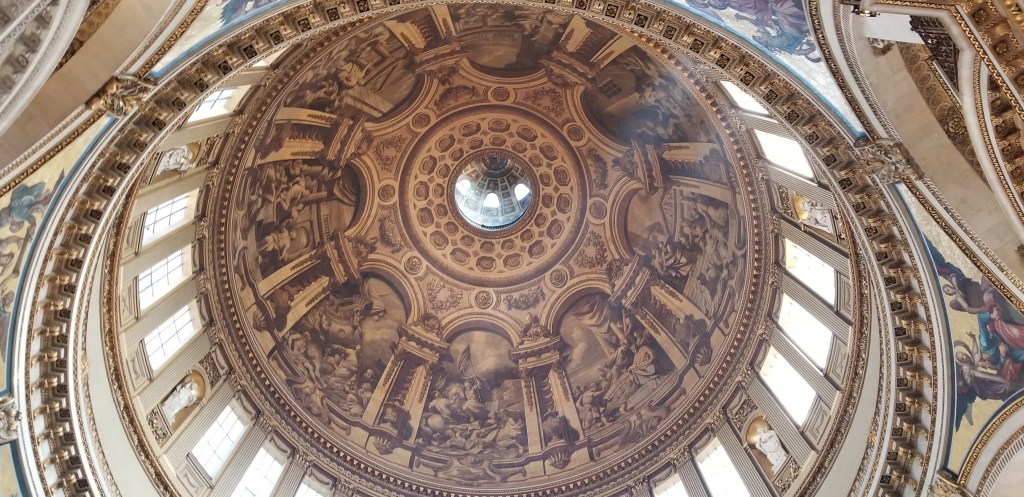
There are painted scenes of the life of Paul up in the lofty dome.

At St. Paul’s, there is almost more than the eye could take in.

As we were walking about, the choir started practicing. The music was so lovely that we decided to stay and wait for the evensong service. While we waited, we wandered below the cathedral, where the crypts are. Among others, there is the tomb of the Duke of Wellington, Napoleon’s conqueror, and also Florence Nightingale. Christopher Wren, the builder of St. Paul’s is buried here as well.

The evensong service capped off this first day in London. There were two more to come, and ironically, we were here on another holiday weekend. This time it was London’s holiday, not ours: the Summer Bank Holiday which made it a three day weekend. Sometimes, when one is on a long trip, this can’t be avoided, and I didn’t even know that Monday was a holiday until we got there. Crowd levels don’t matter much in a city like London unless one is in the biggest tourist areas, though, and except for our stroll past the London Eye, that’s not where we were. The entire city is busy anyway. We were in the Westminster Abbey area early in the day, which also helps. I’ll have more for you on our London weekend the next time I post.

Next time – more sights and tastes of London

Europe · UK and Ireland

Stonehenge and the Cotswolds – Europe Travels August 2022

For the next few weeks I will take you back in time and over the ocean to our trip to Europe last summer. I last left off with our outstanding visit to Bath. It was while we were in Bath that we took a excellent day trip to Stonehenge and the Cotswold region of England.

Rick Steve’s guidebook had led us to beautiful Bath. Another reason for coming here was that in the book he mentioned Mad Max’s day tour to Stonehenge. Since we were totally traveling by rail on this trip, I had not thought that we would be able to see it. This tour was icing on the cake for visiting Bath. Once again, we were in a little minibus, tooling around the Cotswold area for the day. Stonehenge is on the Salisbury Plain in Wiltshire.

And now I’ll let you in on a little secret. If you take this tour, you will be among the first to arrive at Stonehenge for the day. Tours from London – in those huge, hulking tour buses – arrived after us, because it takes longer to get there from London.

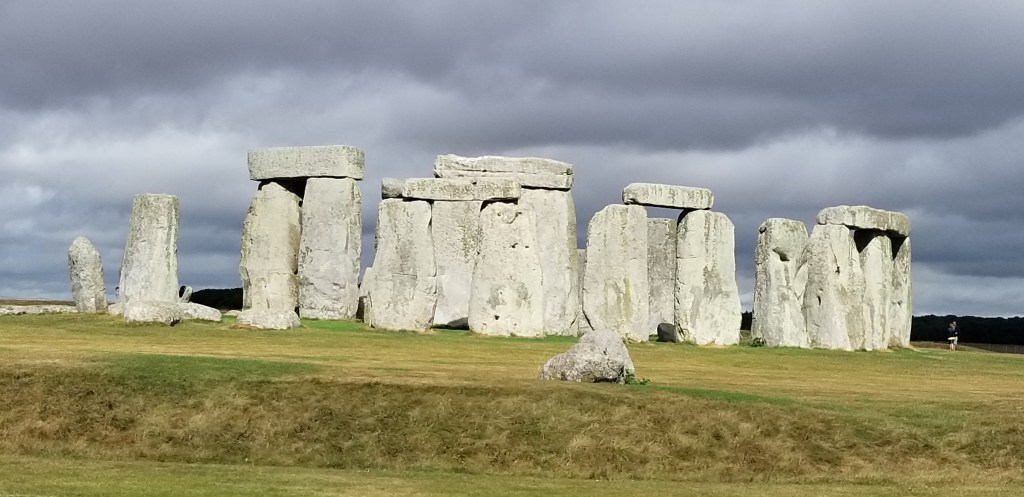
What a feeling to walk around it in person. The sun played peekaboo through the clouds and at times illuminated the rocks. The place was largely silent through most of our visit.

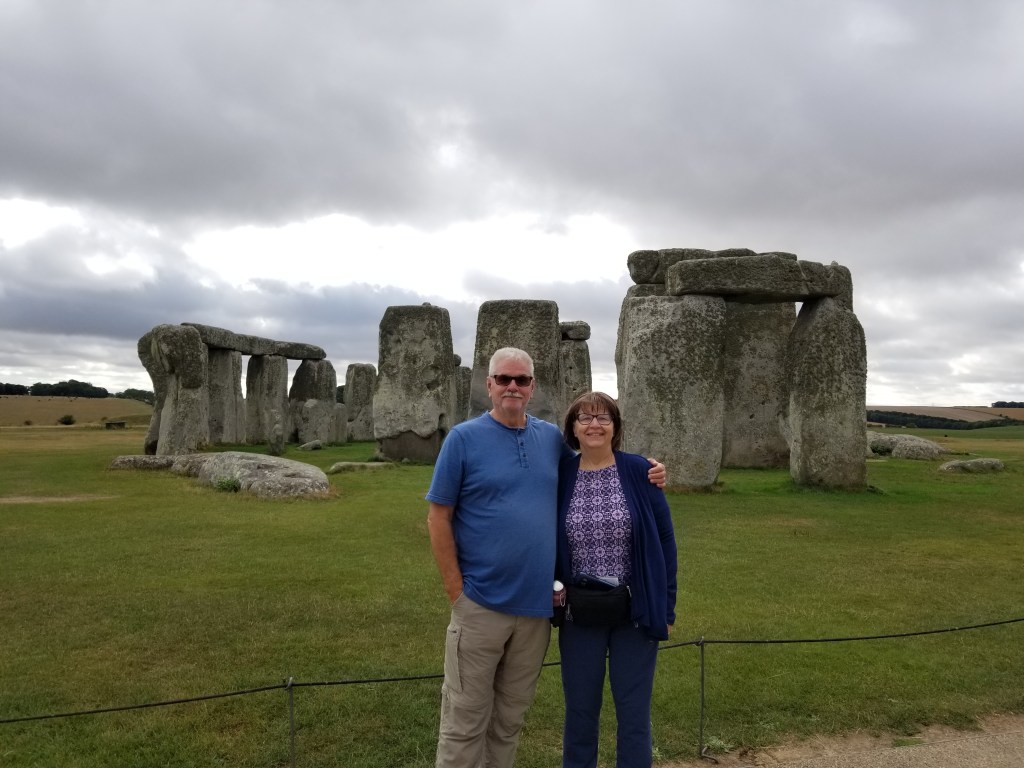
Yes, we were really there!

At its core, Stonehenge is a prehistoric temple in which the stones are aligned with the movements of the sun. The flat stones laying down at the top went all the way around in a circle. We still don’t know if it was a burial site or a place of healing, a celestial calendar, or all of the above. It took a thousand years to build. The beginning of its construction predates the Great Pyramids and the Roman Empire.

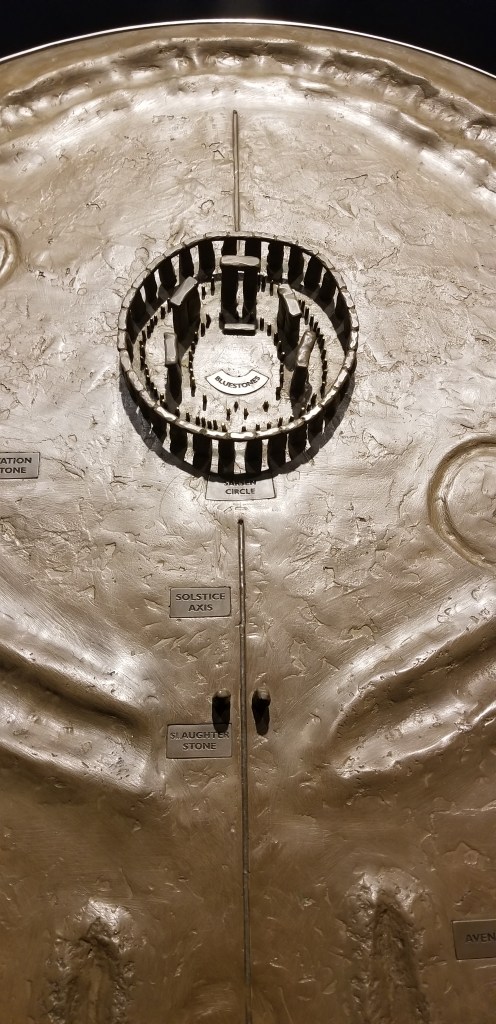
The outer circle of standing stones, called sarsens, enclosed five huge horse-shoe shaped stone arches. There are two inside circles, made of bluestones, and four station stones outside the central monument. The whole thing is surrounded by a circular ditch. The builders brought some of these rocks from great distances. The blue stones come from Wales, 140 miles away. In those days, there was no loading them up on a truck using a crane.

This diorama in the museum did a good job of showing what it looked like.

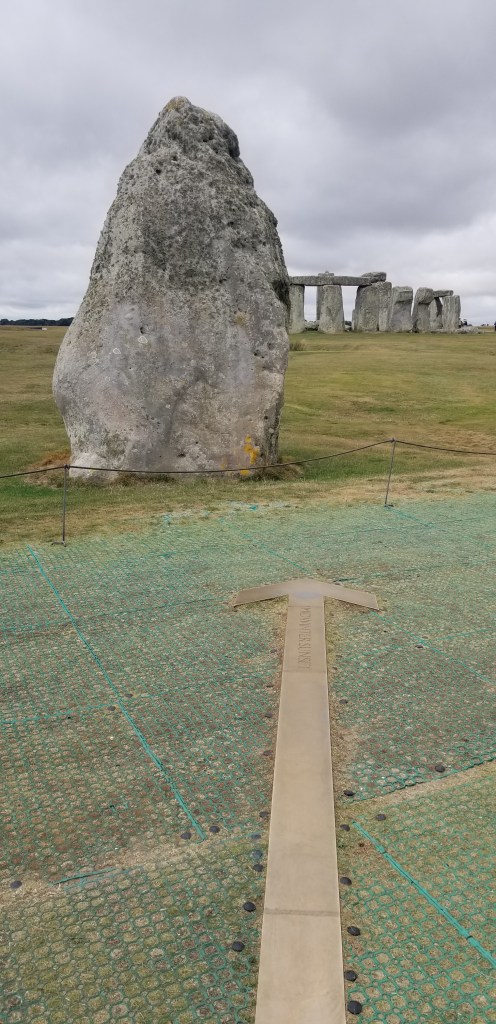
Back at the stones, we stood at the entranceway which is the thin line at the bottom of the diorama. It was a processional avenue built around 2300 BC. The stone in front is called a Heel Stone, and blocked by this view is one of the slaughter stones. Archeologists have found intense prehistoric activity here, because originally they lined the avenue with wooden stakes. The stakes were later replaced by stones, most of which are gone now.

I follow BBC news, and by coincidence Stonehenge has been in their news this week. Scientists now believe the stones may have also been a huge echo chamber. Voices inside the stones were amplified, while those outside the stones would not have been able to hear what was said. This just lends more fascination to the mystery.

We had plenty of time on our own to wander, visit the museum, and see their display of a Neolithic village.

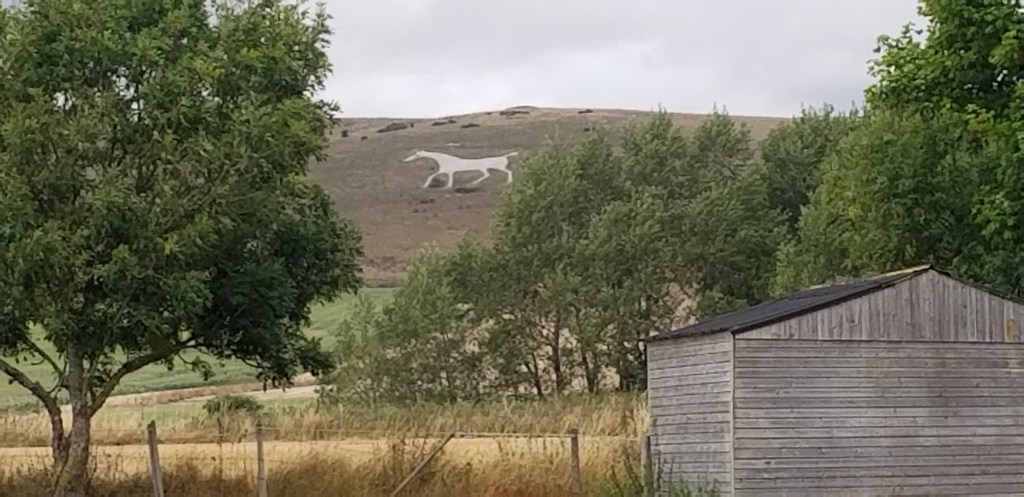
Back down the road, we made a brief stop to get a view of a chalk horse in Wiltshire that dates back to 1812. The chalk lies just under a layer of sod. Later on we drove by another that was cleared even earlier, in 1780.

We stopped at this little pasture, and friendly Gypsy Cobb horses came loping right up to see us. This was because our tour guide had a bag of carrots! With permission from the owner, he makes this stop every day and the horses know for sure that the tourists are going to feed them.
The Cotswolds are a rural and quaint area of England with towns and homes built from a limestone which is golden colored. Many picturesque thatched roof buildings can be found here. Our first stop in the Cotswolds was Avebury, where the thatched roofs take second place to the standing stones over an area that dates farther back than Stonehenge.

A “henge” is a large ditch or trench with a bank. At Avebury, the circular ditch is almost a mile around, and it was cleared with deer antlers and cow bones 6,000 years ago. The ancients would have cleared this down to the bedrock.

Inside the circle formed by the henge, stones were set in a straight line for quite a distance, perhaps as a processional route, leading up to stone circles. These were spread out and, unlike Stonehenge, uncut. Of course, through millenia many stones are gone. The town of Avebury grew inside the henge circle, along with farms.

Here you can see some of the stones with the bank of the henge behind them. This is a sheep pasture and we had to watch where we were stepping!
The huge stone below is called “The Devil’s Stone”. If you run around it 100 times, so the story goes, you will meet the devil. Well, we did not do that, but this handy rock also has a fertility seat. I sat in it and I can happily report that since then no babies have arrived.

Many people were out enjoying the stones and the day in Avebury. You can see the Devil’s Stone again at left below.

I was also happy to be out of the minibus to view the thatched roofs. Here an old cottage built of Cotswold stone, now a barn, sits among the stones.

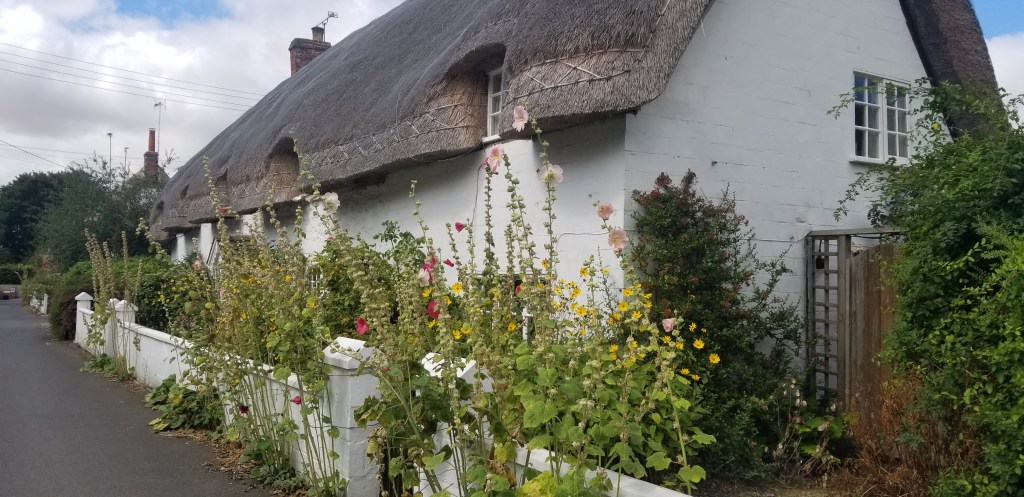
In town, I took this picture of a thatched home with a pretty garden.

After Avebury, our guide showed us many other thatched buildings. Here is the only church in England with a thatched roof:

It takes a lot of training and expertise to be able to repair a thatched roof. The buildings need to be re-thatched after several years, and a specialized craftsperson is hired for the job. It is custom for the thatcher to leave their trademark at the top of the roof when done. Here, on this house, you can see a little squirrel left as this crafter’s trademark.

We spent time in two villages, the first of which was Lacock. It was already mid afternoon so we made a lunch stop. Cal and I have figured out the score on these lunch stops. We were given plenty of time on our own, but we’ve learned from other tours that we didn’t want to use up this time waiting for food in a restaurant. We had put a picnic lunch together before we left Bath. As it happened, there was a little picnic area near our drop-off spot with a grove of trees and a low stone wall. Soon enough we were on our way to explore Lacock after our break.

For the past few centuries, the entire town of Lacock was owned by one family, the Talbots. Lacock Abbey, a former nunnery, was converted to be their manor home. There wasn’t time for a guided tour but our guide showed us a path we could take to explore the grounds. As we walked around we could see a security guard on the back terrace keeping an eye on us.

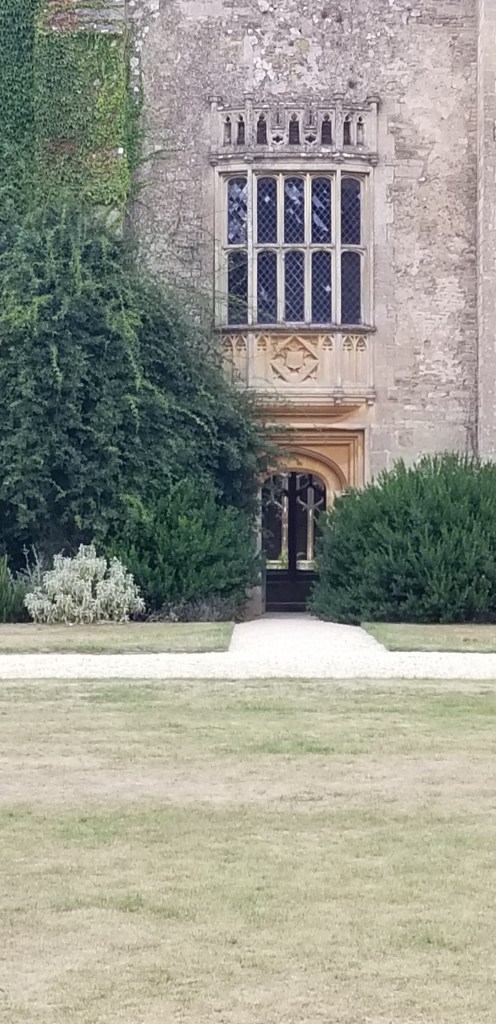
Lacock Abbey has a claim to fame: in 1835, William Henry Fox Talbot created the first photographic negative. The first picture ever taken was the small window that you see above the door.

In 1944 the last descendant of the Talbots sold the manor house and the town to the National Trust. The people who reside there are essentially living in a museum. They have all the trappings of modern day life inside their homes but none of it is shown on the outside save for the cars parked on some of the streets.

Laycock had an old workhouse reminiscent of Oliver Twist. That building is on the left of the picture below, next to a tannery where the folks in the workhouse were obliged to work.

The village dates to the early 14th century and there are seven centuries of buildings that can be seen in just a 10 minute walk around. There is nothing built after the 1920’s.

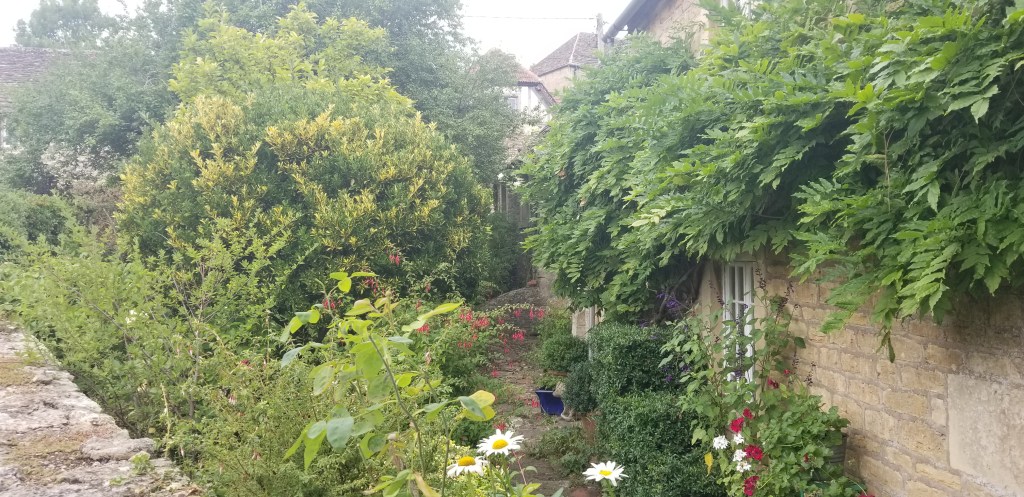
There were many beautiful gardens as well.

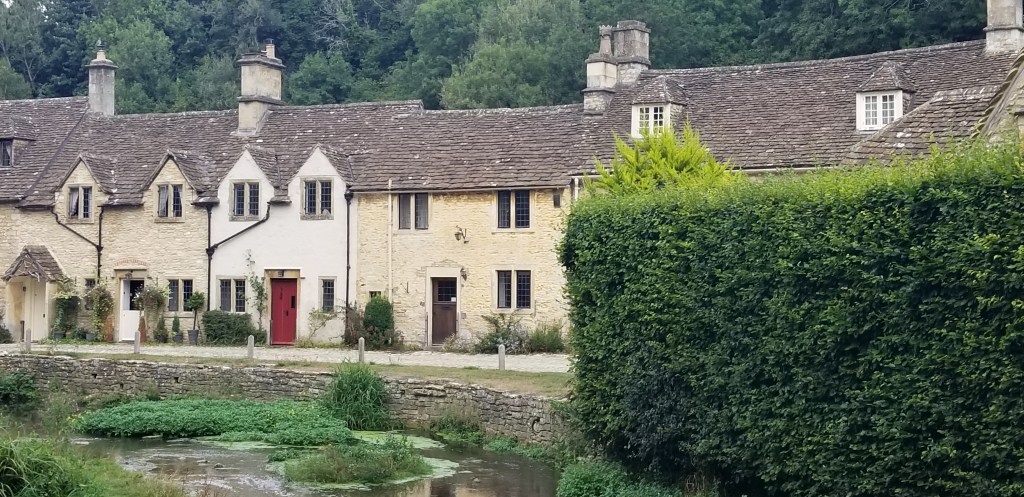
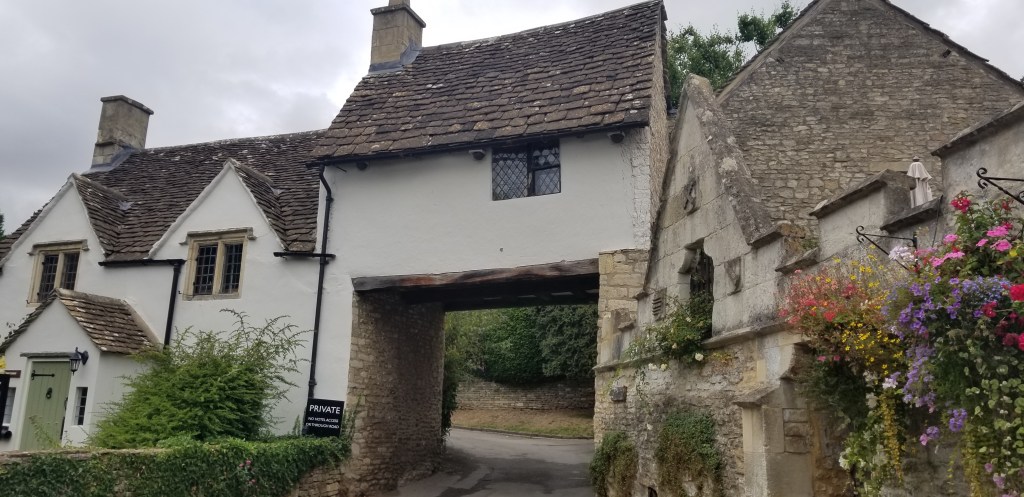
It was already getting on to late afternoon but we still had one more village to visit. Picturesque Castle Combe has had no new buildings in their historic area since 1600. The castle for which the town was named has long since been demolished. This was a large cloth making town in its day, but by the 1700’s the level of the river fell and could no longer support the mills. Spinners and weavers lived in the homes along the river.

Again, we were turned loose to explore. We had but a short time to look at the market center of town–

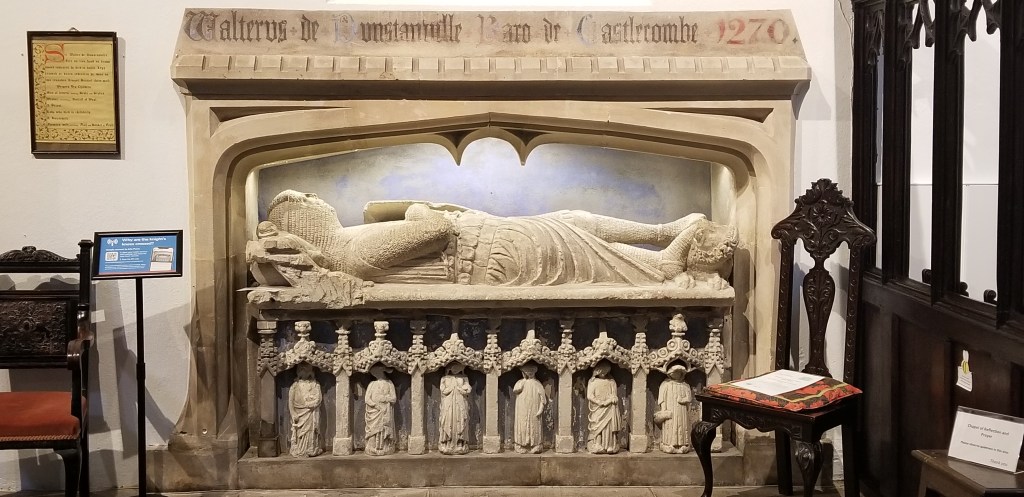
and to take a peek into the village church. There is a knight buried here.

This is Sir Walter de Dunstanville. His hand on his drawn sword indicates that he died in battle. His legs are crossed, signifying that he went on two crusades.

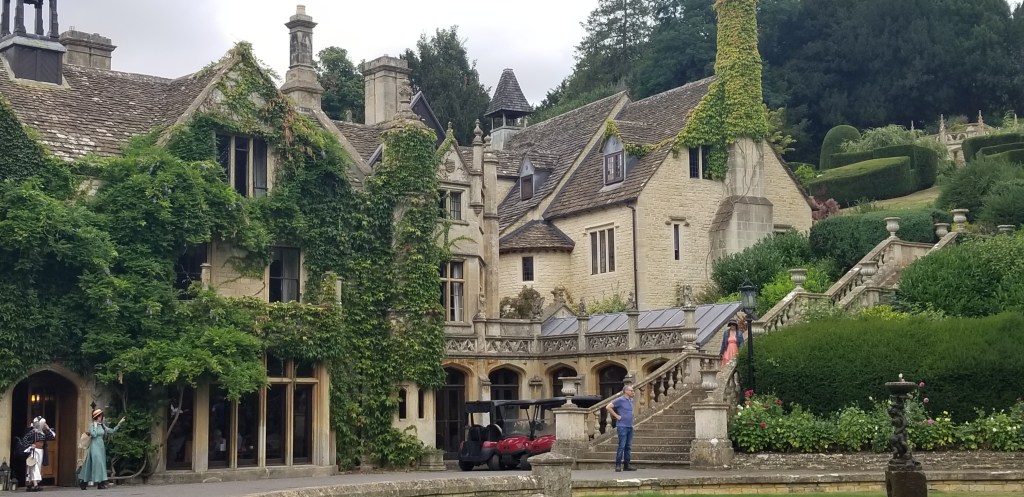
Castle Combe, like Laycock, had its manor house and for five centuries one family owed it and the town. Unlike Laycock, though, the town does not belong to the National Trust. The manor house has changed hands many times and is now a very upscale hotel. After I took this photo, I was amused to see various clashing eras in view. There is the house/hotel itself, some women in period costumes, a gentleman in jeans, and some golf carts. I would have loved to explore the grounds and the gardens more.

So many sights had been packed into one day! We capped off our return to Bath with 3 different and tasty mezes at a Greek restaurant on their patio. It was on a little pedestrian alley where we could people watch as we dined. I felt that this had been a very well-planned tour, and it went into memory as one of the highlights of our European trip.

Next time – London

USTravel

Visiting our 36th President in Johnsonville, West of Austin

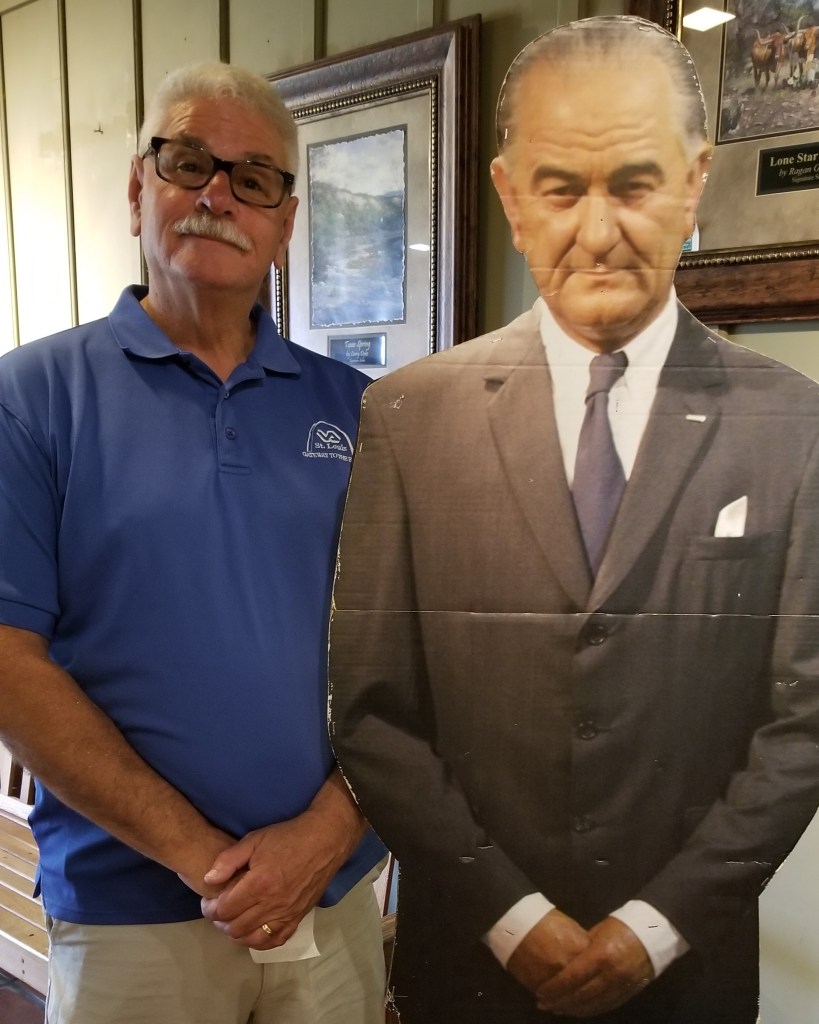
Do you recognize this person? The guy on the right is who I mean. By now, you probably recognize my husband Cal, on the left. Lyndon Baines Johnson (often called LBJ) was our 36th president from 1963 to 1969. We spent a day in and around the Hill Country town of Johnson City, Texas. When you look at the whole of it, to go back into LBJ’s life in Texas is to go back in time to the earliest days of Texas settlement. That includes both ranching and cotton farming, and a whole way of life that is gone now.

Despite doing a little research, I wasn’t sure where we should start. We ended up visiting the National Historical Park in town first. Johnson City was settled in 1879 by a person named James Polk Johnson, for whom the town is named. Another early settler was Sam E. Johnson, Sr., who was Lyndon’s grandfather and James’s uncle. From what we heard, practically everyone in town is related to some branch of the Johnson family somehow. The National Historical Park has a little museum, and when we stepped in, a docent was ready to take us right back out and down the street for a tour of LBJ’s boyhood home.

Young Lyndon lived here from the age of five until he left home for college. He had three sisters and a brother, all of whom were younger than he. The inside of the house is shown as it would have been during his teen years. His sisters all had the front bedroom with windows that you can see behind the bush. He and his brother had a bedroom right behind their parents’ room, so there was no sneaking out after bedtime!

It was from this front porch that LBJ announced his first foray into politics: his candidacy for the House of Representatives, which he won in 1937.

After visiting the museum, it was a pleasant little walk to the Johnson Settlement. There are historic buildings here to give the story of Texas frontier ranching life. I was a little disappointed to see that all of the buildings in this area were either closed or under reconstruction. LBJ’s grandparents’ cabin is shown below on the right. They moved in in 1867 and lived out their lives here.

LBJ’s grandfather and uncle had a cattle droving business. As a nod to Texas ranching history, a couple of iconic Texas longhorn steers were out in the little pasture. This one stopped to pose nicely for me:

From Johnson City, it is fourteen miles out to the LBJ Ranch District area of the National Historical Park. It was time for lunch, so we had a little picnic in the cab of the truck. It was a cool day, and rain threatened. The picturesque Pedernales River was in view.

Most of my reason for wanting to visit the LBJ Ranch was that I had visited here already many years ago and remembered how fun it was. I think I was here twice: once on a tour from Ft. Hood, where I was stationed, and once when my parents came down to visit. It’s all very fuzzy, but I remember riding all around the ranch in something like a golf cart. A ranger at the office told me that it was a 10-person tram. The tour did not start until every seat was full! I wouldn’t want to be the person who arrived just after the tram had left.

It is all different today, and to me it’s a little confusing until you are there. When you follow the sign in to the ranch, you are in the LBJ State Park and Historic Site. You buy your tickets for the national park in the visitors center of the state park unless you already have a pass. In the state park is also the Sauer-Beckmann Living History Museum. You can see it or skip it. Then you drive down the road, cross the Pedernales River which separates the two parks, and you are on the ranch. It is a neatly mapped out park road now; no more trams.

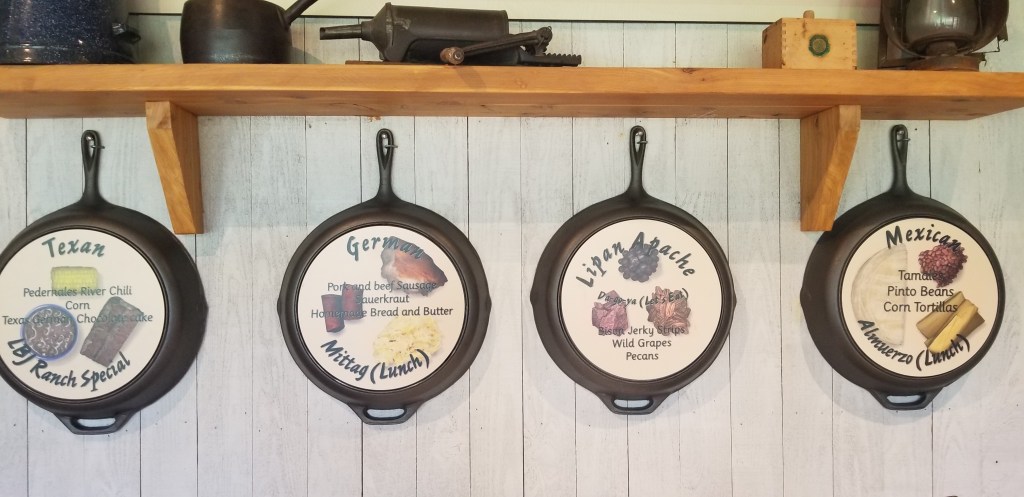
The state park offers a little detour from the Johnson history. There was this little display in the visitor center which showed what various cultures on the land would have had to eat, going back in time. I thought all of them sounded good.

The living history farm in the state park takes the visitor back in time to 1918.

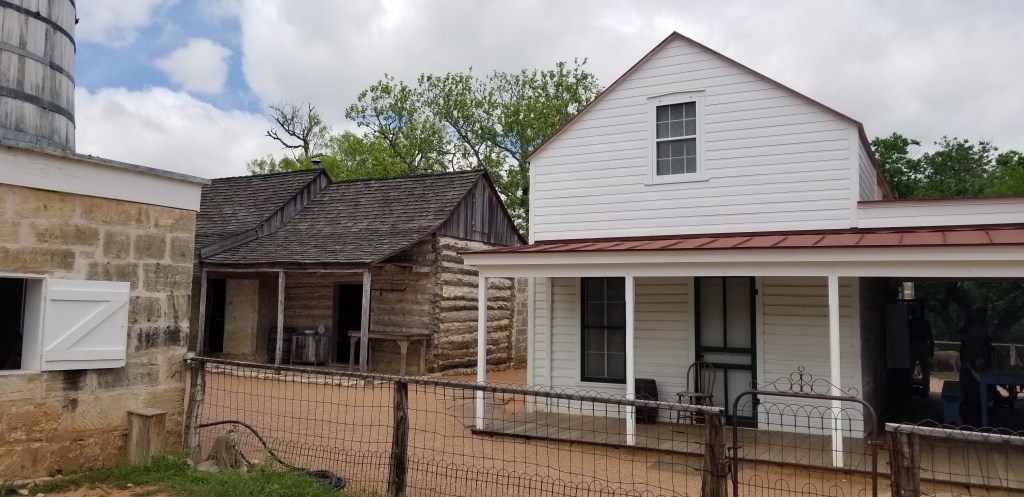
The Sauers moved here from Germany in 1869, built their log cabin, and later a frame house next to it. They farmed and raised cattle and sheep. They lived their lives here, adding to the land, and then sold the farm to the Beckmann family in 1900. The Beckmanns raised cotton.

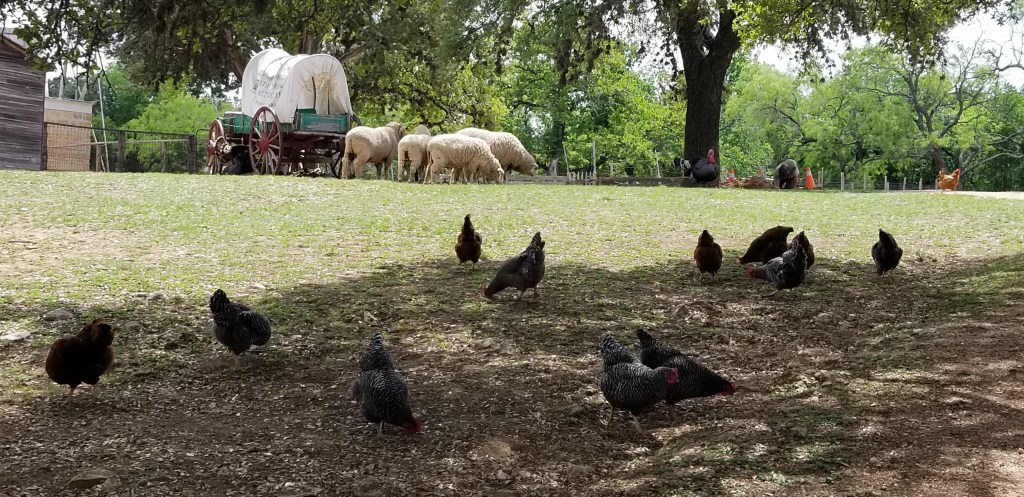
This is a “living history” farm in that the rangers are dressed as they would have been in 1918. They care for the animals. They gather eggs, cook, clean, work in the garden, make lye soap and do seasonal chores such as canning and slaughtering. Here’s the thing: what they eat for lunch has to be whatever they have produced on the farm. The rangers admitted that sometimes it gets a little challenging to put it together.

The last Beckmann descendent died in the 1960’s. When the state park took it over, they put the farm into a time machine. They took out the shag carpeting, the appliances, and all the hookups to electric, water and sewer. The farm transformed into what it had been.

In 1918, Lyndon Johnson was a boy. The family had land here and sometimes retreated to the old farm when times were hard. The Beckmanns were his neighbors.

What was fascinating to me was that in 1918 my own mother was almost five years old and living on a farm in Michigan. As I walked through the house I took myself back in time, imagining that maybe her house looked a little like this, too.

Would her family have used these medicines?

The day was already getting on and we needed to get ourselves over to the ranch.

We passed the school where 4-year-old Lyndon started his education. We stopped to look at his birthplace, but the house that is there now is reconstructed; LBJ as President turned it into a guesthouse. Instead of that house, I decided to show you a view of the ranch from out back. The beautiful yellow flowers were in bloom in fields all over Texas.

LBJ’s grandparents moved out here from the cabin near town. They lived the rest of their lives in a house near this spot.

Across the road from both houses is the Johnson family cemetery. This is where both LBJ and his wife are buried. It’s a peaceful place overlooking the river.

The ranch maintains a herd of longhorn cattle which roam freely. We had to be sure to watch out for them, and not run over any young calves, as we drove the ranch roads. The Sauer-Beckmann farm has cattle, too, and I don’t think they needed any more beef.

The cattle are cared for in a “show barn” area but we did not stop there.

Our last stop was the highlight: the “Texas White House”. This was the original rock farmhouse on the property and LBJ’s refuge. It was enlarged over the years and added on to so many times that now there are structural issues. There is massive reconstruction going on so for that reason the house is currently closed. I was able to walk around part of it. Imagine all the barbeques on this lawn, with the famous politicians of the day in attendance!

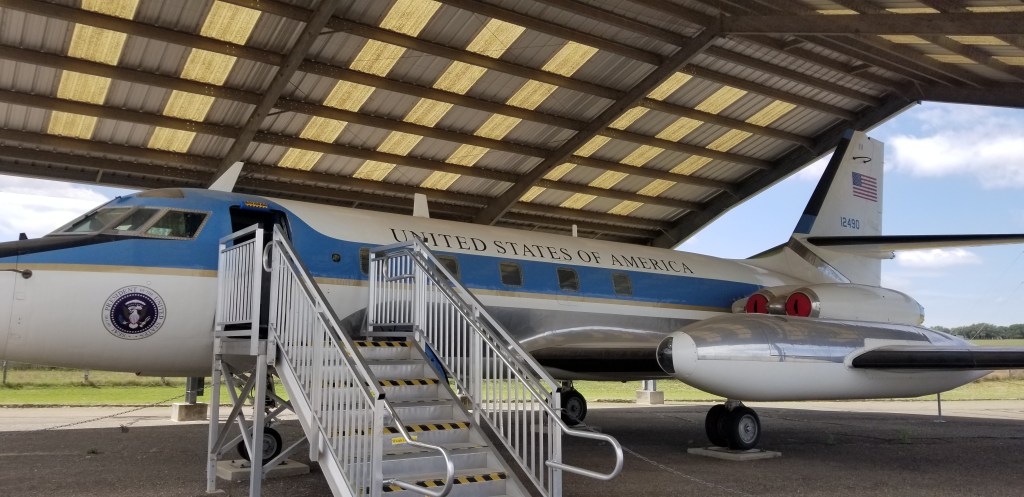
A small airfield was constructed on the ranch for LBJ’s arrival. His plane was called “Airforce One-Half” because Airforce One was too large to land here. He would fly into Randolph Airforce Base near San Antonio, and then embark on this plane for the ride home.

LBJ was vice-president under John F. Kennedy, and was sworn into office upon his death. At the end of his term he successfully ran for president again. He could have run for a second term but the Vietnam War was becoming a major problem and he declined, choosing instead to retire to his central Texas ranch. He only had four years of retirement when he passed suddenly of a heart attack.

We have come to the end of our Austin time, and indeed, as I’m writing this, it is almost two months later and we are far away from there. There is much to tell you about our travels as we have continued down the road. However, I’m going to pick up my blogs again from our trip to Europe last year first for a few weeks.

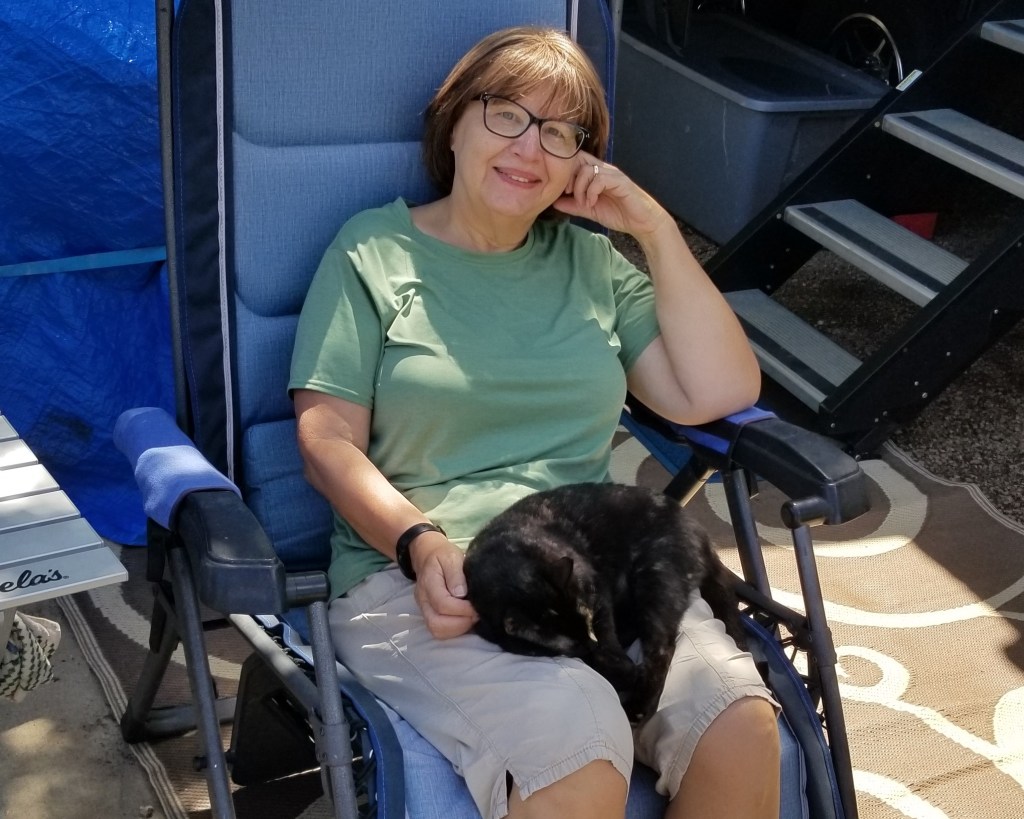
At our RV park, we were in exactly the same site as we had been in two years ago and had made friends with the cat that the permanent RV dwellers next door owned. When we arrived for this stay, Pumpkin appeared shyly from under the trees. As soon as I called her name, she ran to me. We bonded again for the month we were here and she could often be found snoozing on one of our lawn chairs. It was bittersweet because we will never have this site again. The park is making it a site for permanent dwellers only. I’ll leave you for now with a picture of me and my special friend.

Next time – back to England with a tour of Stonehenge and the Cotswolds

USTravel

Longhorn Cavern West of Austin

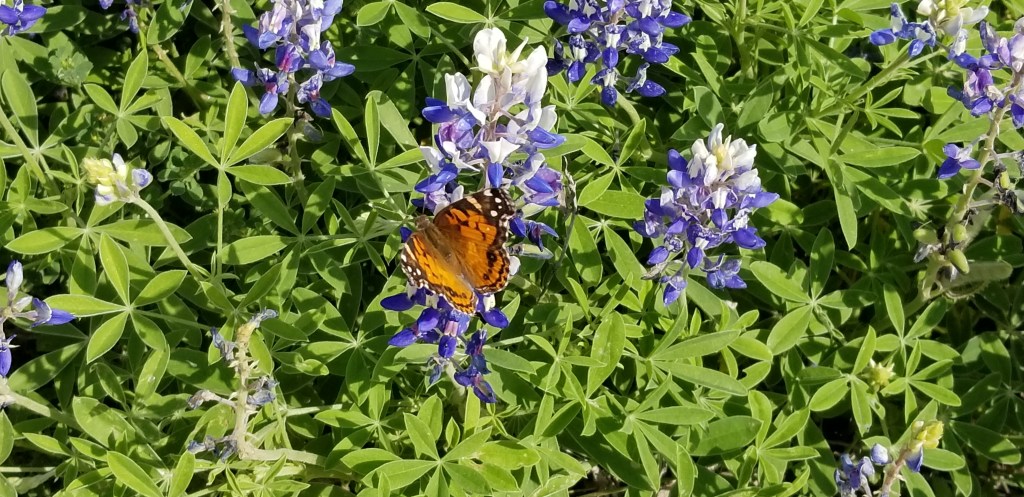
Not far from the bluebonnet fields of Muleshoe Bend lies a Texas state park called Longhorn Cavern. The entire purpose of this small park is for its cave tours. We drove right past this park a couple of years ago on the way to another state park, Inks Lake, which is only six miles down the road from Longhorn Cavern and is itself another great park to visit. It’s a beautiful drive through rolling hills with spring wildflowers and longhorn cattle in view.

Natives used this cave as a Comanche Indian Council room. An outlaw by the name of Sam Bass used it as a hideout. Just before the cave was purchased by the state in the mid-1930’s, it was used as a speakeasy nightclub complete with dance floor and a kitchen. Once the state purchased it, the cave was completely readied for tours by the CCC boys. This was prime CCC time. Our tour group gathered in this pavilion below, which they built solely for that purpose from local limestone. The craftsmanship is admirable.

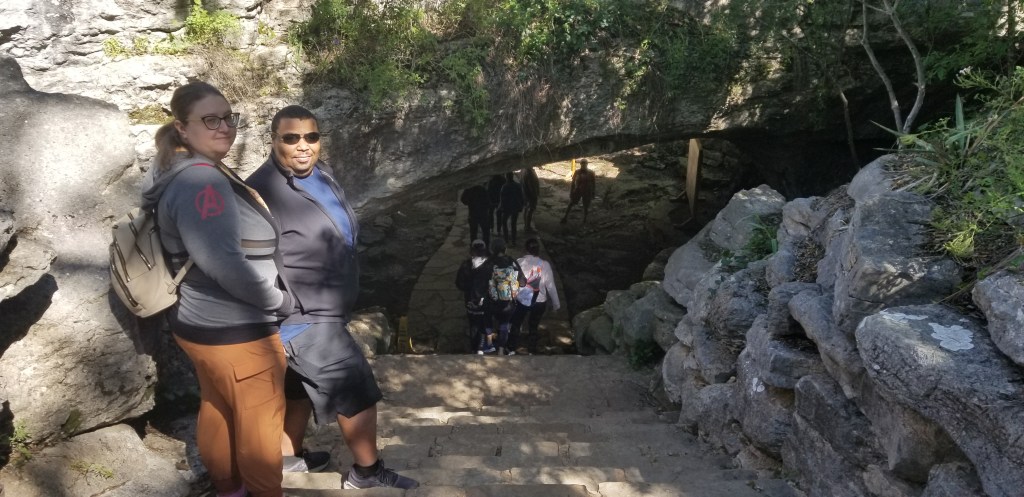
From this building, it was a short walk over and down to the cave. I captured these views as we were going in.

Every cave I’ve visited is different from every other one. I like to see what new thing each cave is going to show me. For starters, I’ve never been in a cave that was totally developed by the CCC. They removed 2.5 tons of silt, debris and bat guano, and they built stairs and walkways. Their entire long days were spent working down underground with candlelight. For that, they were paid a dollar a day.

Longhorn was formed long ago by underground flowing rivers, which makes it unique. Most caves are formed by water sinking down through the earth. The flowing water sculpted beautiful works of rock art.

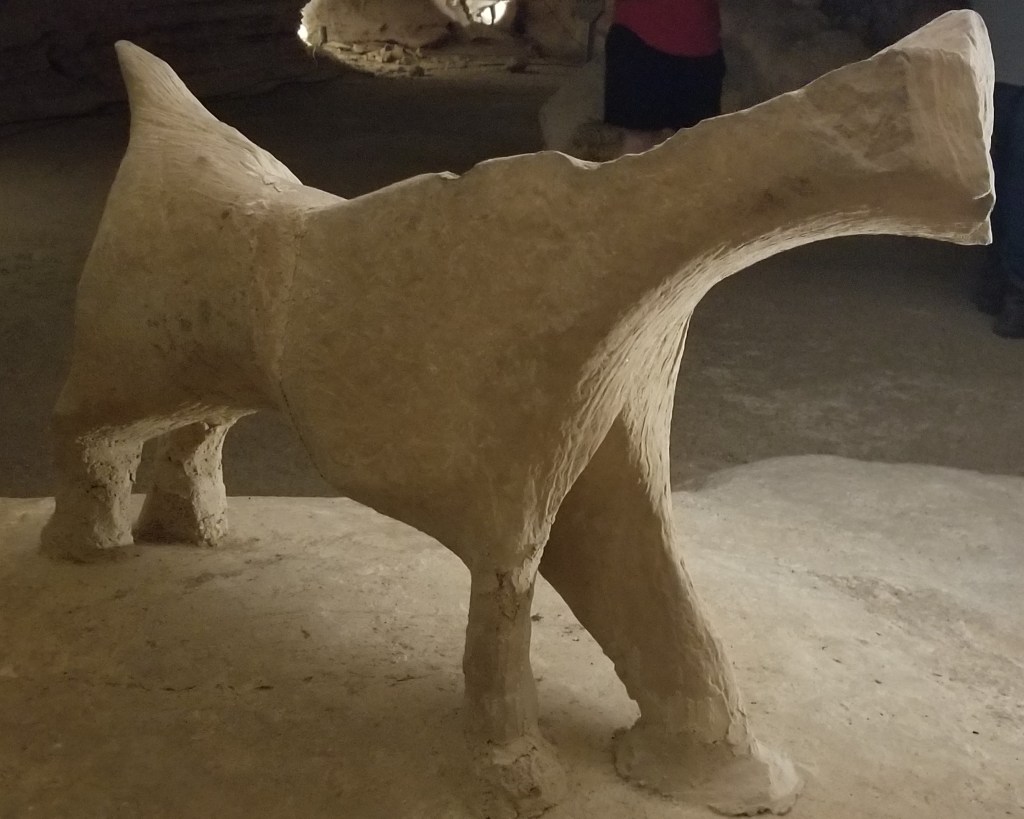
The CCC workers found this “dog” further back in the canyon and moved it up to where it could be seen better. They were working back in the day when it wasn’t common knowledge that caves should be left in their natural state. Mother Nature carved this sculpture out of magnesium-rich dolomite rock.

Because of flowing rather than dripping water, this cave is not resplendent with stalactites and stalagmites. It did fold some of them in with its sculpted rock art, though.

There is a colony of 80 to 100 tricolored bats here. Of course, they were snoozing away, so we were admonished not to disturb them and not to use flash on our cameras if we wanted to take a picture. Our daughter, Katie, was particularly good at spotting them.

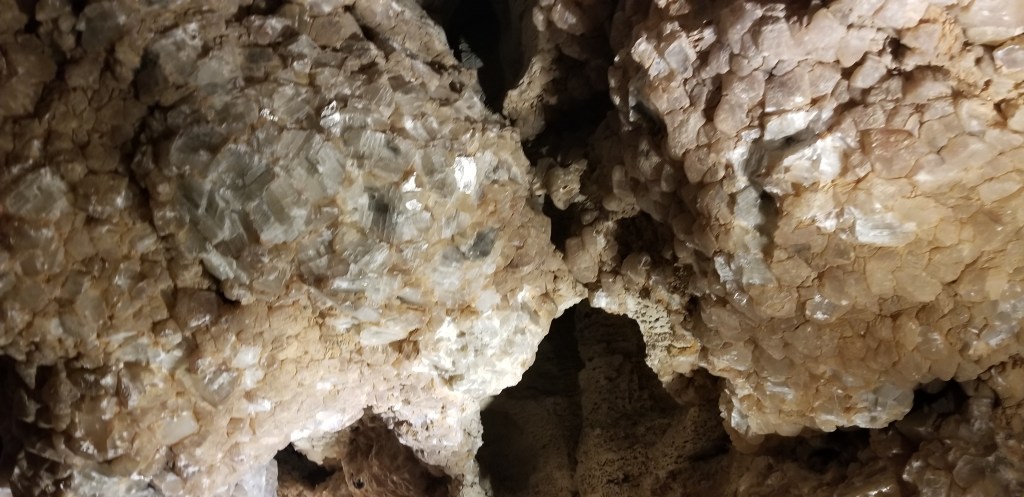
The thing that made this cave a standout for me, though, was an area lined with calcite crystals. There were so many in one place in the cave that our tour could divide as we wished through two tunnels left or right, circle around back to the main tunnel, and go see the other side. They glittered in the dim light. Wow!

I learned a new word in the cave – “pareidolia”. It is the human ability to see shapes or pictures out of something random. For example, “cave bacon” is simply flowstone which looks very much like real bacon. Our guide showed us many formations that looked like something familiar and, for fun, urged us to find our own pereidolia. She showed us this face made from light and rock:

Can you see a man’s face?

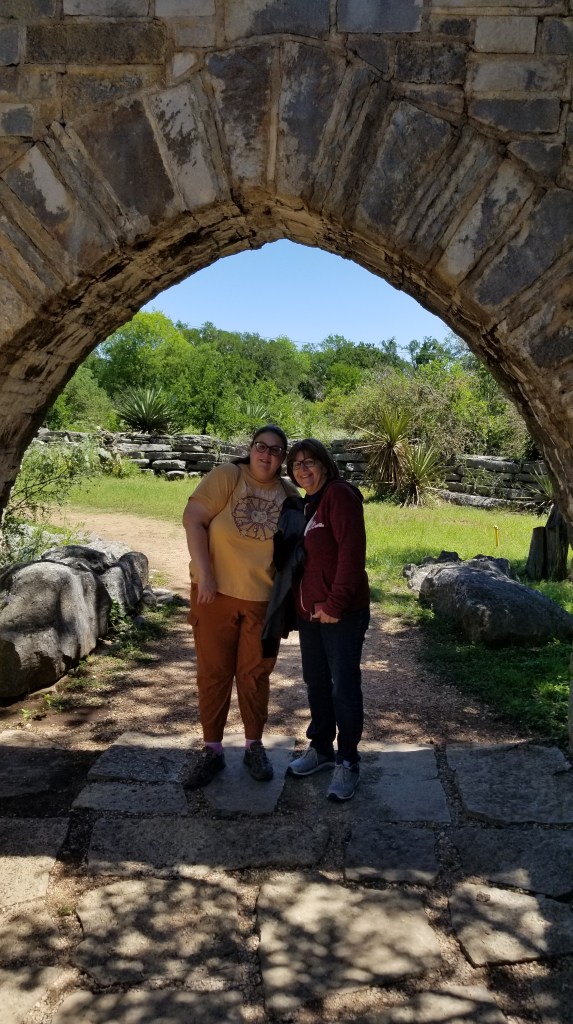
The tour was a full hour and a half and it was well worth the ticket price. Coming back up, my daughter and I stopped for a picture under the CCC’s beautiful stone archway:

Above ground, there are a few trails in this small day-use park, and the CCC built a tower here also. Climbing it gives a view of the Hill Country all around. But I can’t tell you more than that, because it was lunchtime. We were all hungry, so we skipped it.

The best stop here that we’ve found for lunch is in nearby Marble Falls, at Blue Bonnet Cafe. Cal and I had stopped here for their renowned pie once, and this time we discovered they do a great lunch too. It was a Saturday, and there was a line, but it moved quickly.

There was one more destination I wanted to see in the Hills area, and I will save that for my next and last posting of “West of Austin”.

Next time – we visit a past President of the United States

USTravel

Bluebonnet Bonanza West of Austin

West of Austin–a bounty of beautiful hills, rivers, parks, historic towns, wineries, and destinations for a day or more. Instead of jamming everything together in my usual fashion, I decided to write a series of three shorter blogs about three destinations in this area. Muleshoe Bend Recreation Area will be the first.

We started to see them when we were in Corpus Christi. And then, driving into central Texas, they carpeted the roads and the fields. Beautiful swaths of color: blue, orange, pink, white. Sometimes just one color, sometimes two or more mixed in. Texas’s highways and byways in the spring are not to be missed. What am I talking about? The wildflowers, of course! If you have not been to Texas in late March or early April, it should really be on your calendar for next year. And now, I can tell you where the Shangri La of Texas wildflowers is: Muleshoe Bend Recreation Area.

Muleshoe Bend is an LCRA park, the same as South Shore Lake Bastrop where we had stayed earlier. LCRA stands for Lower Colorado River Authority, a non-profit public utility that provides water stewardship and electric energy. While at South Shore, I picked up a little magazine that listed all of the LCRA parks. Next to the write-up for Muleshoe Bend was a glossy picture of fields of bluebonnets. Wildflower heaven! This was to be our first weekday trip for our Austin stay; the flowers along the roadways seemed to be at their height of blooming and I did not want to miss them.

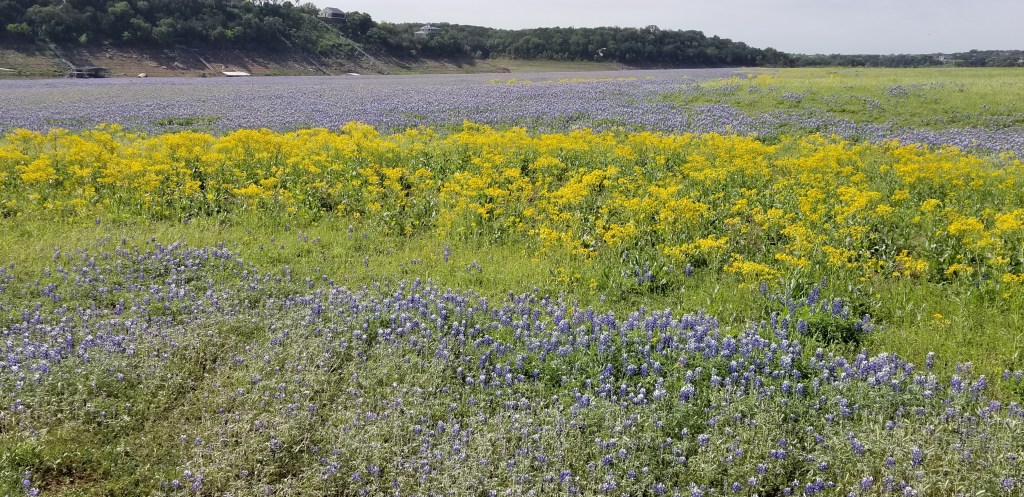
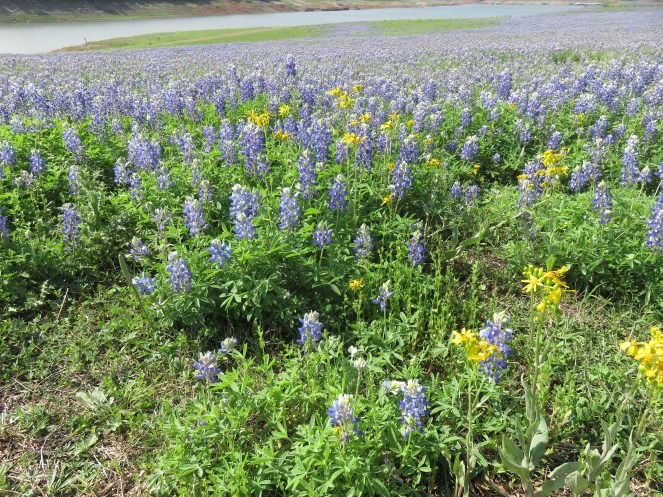
I didn’t know if the magazine had overhyped the flowers. Arriving in the park, we stopped to look at a map and found a trail to hike. While looking at the map, I noticed a small handmade sign close to the ground that said just: “Flowers”, with an arrow. We decided to follow that first. The road was dirt, dry and dusty. There were more signs so we kept going. And then, this:

The picture above was my first look, and it was only in one direction. There was more! Here I am, as happy as can be, in those beautiful bluebonnets:

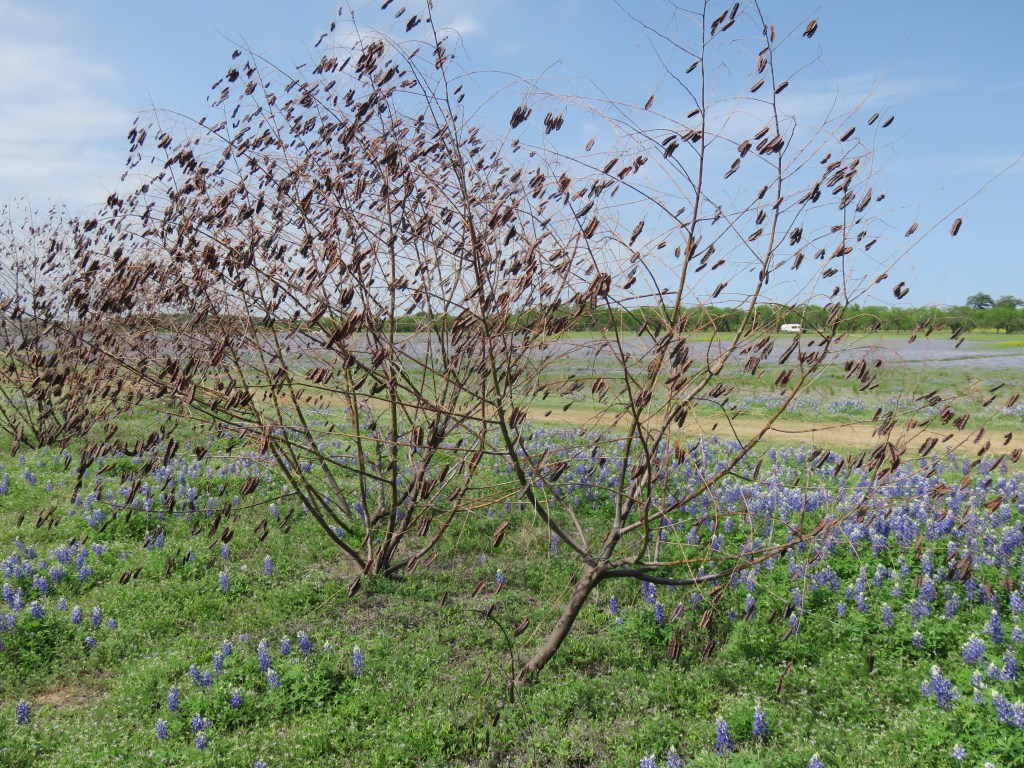
All was quiet here, except for the seed pods on these bushes clacking in the wind:

We hiked, we took in the flowers and the views, listened to the wind and the pods and the birds, watched tiny butterflies flit about, and I took the time just to be still with the camera put away. A place like this is good for the soul.

The whole huge area is bounded on one side by the Colorado River. The river here was very low when we visited. There are a few houses on the bluff high above. It looked like the steps behind their houses were supposed to go down to boat docks in the river below, but the docks are sitting on weeds. It’s been a long time since the river has been at capacity. You can see one or two houses in the background of this photo:

The river is still there, although you can’t see it in the above picture. Here is a better view below. In light of all the beautiful flowers, I wasn’t focused on taking pictures of it.

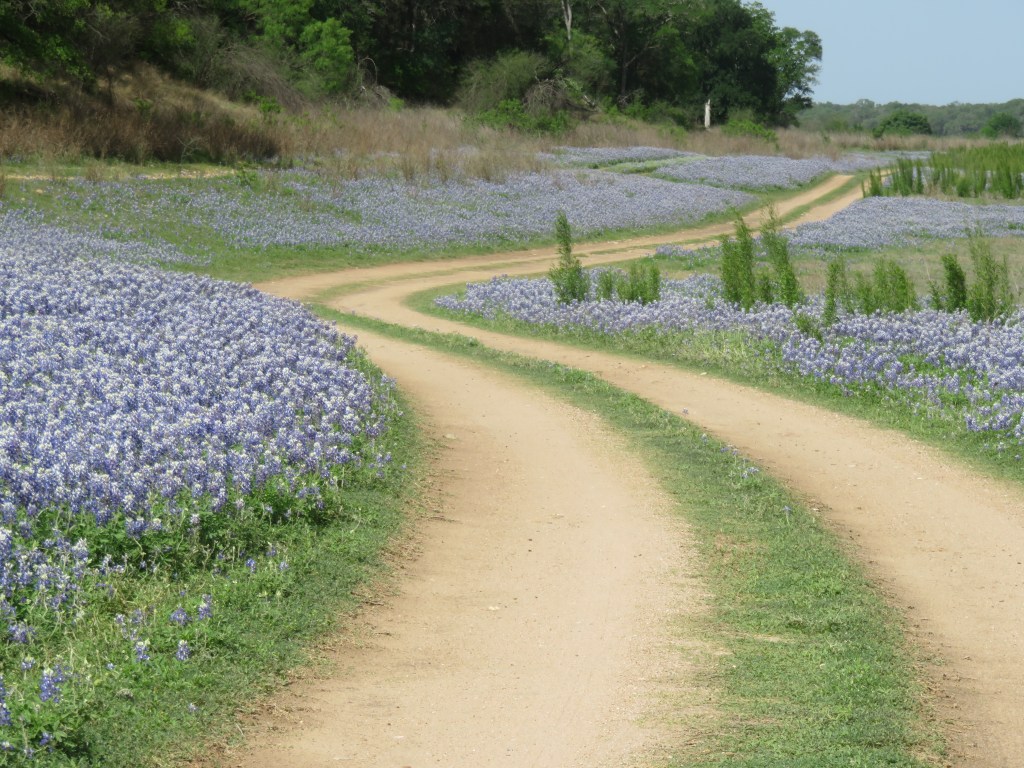
We abandoned the trail we were going to hike. There is another, going through the flowers and around the hillside, that we ended up on while flower gazing. Or maybe it’s a park road, I don’t know.

There was an eye-catching area filled with white prickly poppies, too.

I thought that seeing the massive splendor of all of the flowers here was almost as good as visiting the monarch butterflies in their migrating place in Mexico this past early March. And that is saying a lot.

I wouldn’t come here on a Saturday or Sunday, though! I’m sure that on the weekend, with flowers in bloom, that this place is packed.

Next time – we go underground

USTravel

Exploring Austin’s Creative Side

Sometimes one thing just leads to another. It all started with the Bullock Museum in Austin.

I’m the lucky recipient of occasional e-mails from Texas State Parks. One of those e-mails caught my attention: a curated collection of paintings of various Texas state parks was being held at the Bullock Museum in Austin. It was to celebrate the centennial of the Texas park system. Well, that sounded interesting. But the Bullock Museum is in downtown Austin, somewhere we don’t typically venture with our Ford F350 truck. The parking garage ceiling is too low for us to park in. I talked about it with our daughter Katie and she offered to take us.

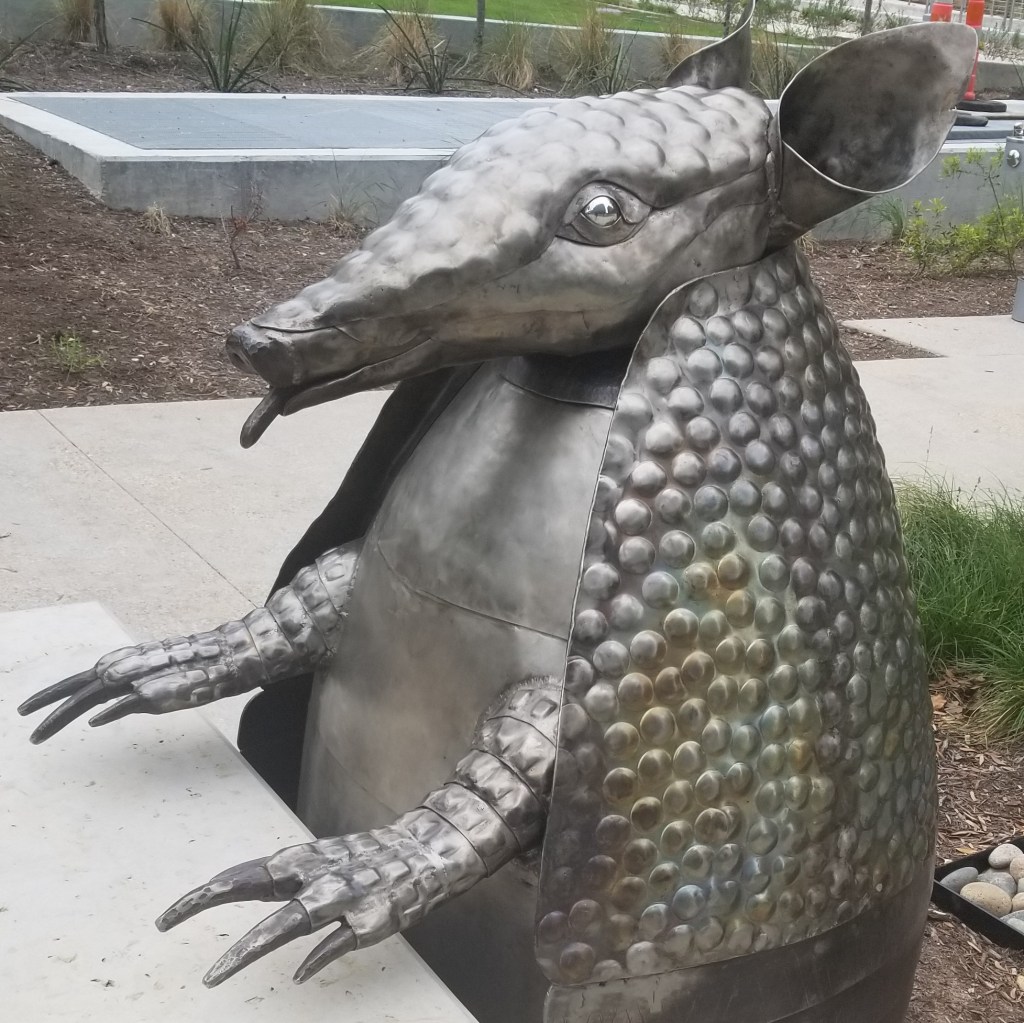
At her suggestion, we started the day out at the Kerby Lane restaurant’s original downtown location for a delicious breakfast. Afterward, there was time before the Bullock opened to stroll along the new walkway to the state capitol building. It is lined with sculptures of animals indigenous to Texas, which is where I saw the armadillo that you see at the top.

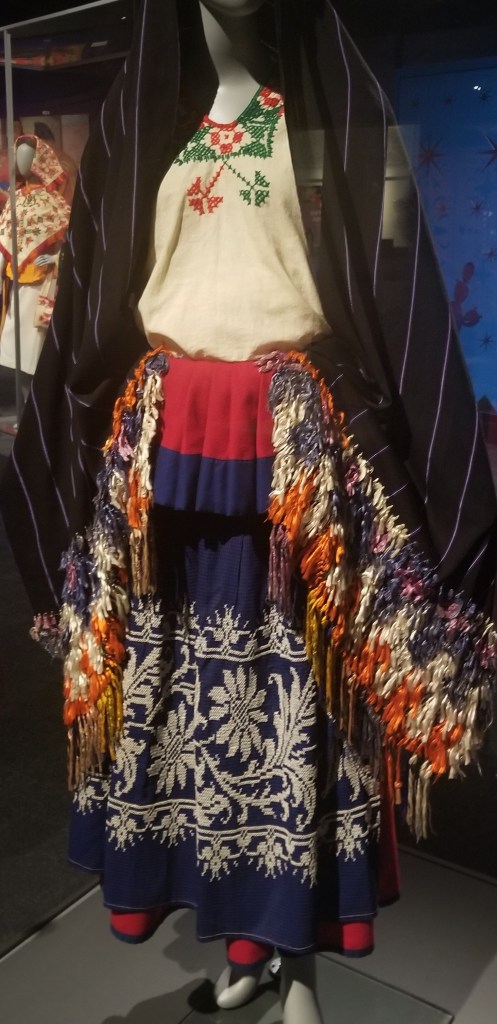
The Bullock Museum is the history museum for the state of Texas. The exhibit was on the top floor, so I was diverted by all the displays that we saw before we ever got up there. First up was a room of traditional handmade dresses from every state in Mexico. Cal gave it a quick walk-through, but I was fascinated. Look at the hand embroidery on this dress!

There were many other things that he found more interesting, such as the reconstructed hull of the French ship La Belle that went down in the late 1600’s and was found in the sands of Matagorda Bay in 1995. The ruins as they were found were in 600 pieces. Many artifacts are on display that had been on the ship, including things that new settlers might need for a new colony.

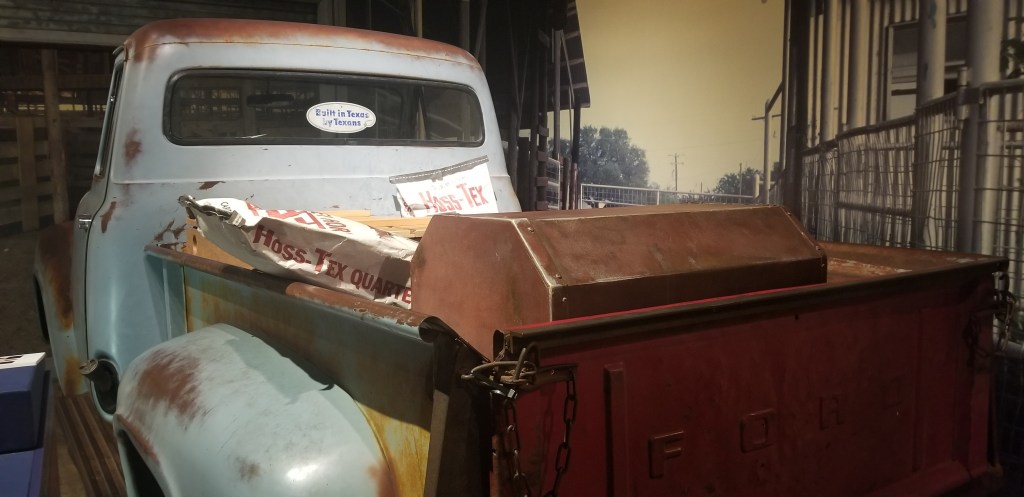
And here is this fiftieth anniversary model Ford F100, built in their Dallas plant in 1953:

We finally arrived at the “Art of Texas State Parks” exhibition. To celebrate the state park system’s 100th birthday, the parks and wildlife department commissioned thirty Texan artists to paint scenes from their parks. There is a lot of diversity in ecosystems as well as history in the parks, as we have found. The Texas state parks that we have been to are some of the best that we have seen anywhere. Some of the art was too contemporary for my taste, but I enjoyed seeing many others both from parks that we had been to, and ones we hadn’t. Some parks have been added to my “must see” list based on their picture. For example, this one:

It is of Caprock Canyons State Park up near the panhandle of Texas, south of Amarillo. The artwork is entitled “Caprock Morning Ritual” and the artist is Jeri Salter. There really is a herd of bison in the park.

In the museum is a statue of Sam Houston, one of the founders of the state of Texas. The sculptor was Elisabet Ney, who lived from 1833 to 1907. Being a rare female sculptor, she caught Katie’s attention. Katie discovered that her studio is an Austin museum and they were having an “Elisabet Ney Day” three weeks hence. She wanted to go, and I agreed, so we made a very fun girls’ day out of it.

Elisabet Ney was born in Germany and spent half of her career there. She sculpted German luminaries such as Jakob Grimm, the author of fairy tales, and politicians such as Otto von Bismarck. She was a feminist before her time and a very independent thinker. Despite her parents’ wishes she went to the Sculptor School in Berlin. Later she fell in love with Edmund Montgomery, a philosopher, and they married in secret. Eventually they immigrated and bought a plantation in Texas called Liendo. The quiet farm life was great for her husband’s work but when her monuments and busts of prominent politicians became popular she built a studio in Austin.

I didn’t know any of this when we came to the studio. When we drove up to it I thought it was all grown up in weeds!

It is a villa built after the style of castles in her beloved Germany, complete with tower. The “weeds” are actually beautiful wildflowers flourishing alongside little pathways through the property. The whole place is perfect for an artist who needs to create. You can just imagine what the residents of this brand-new fashionable Hyde park neighborhood thought about this at the time, though. Elizabet sometimes wore pants, wore her curly hair short, and had kept her maiden name, so I’m sure that added to the chatter.

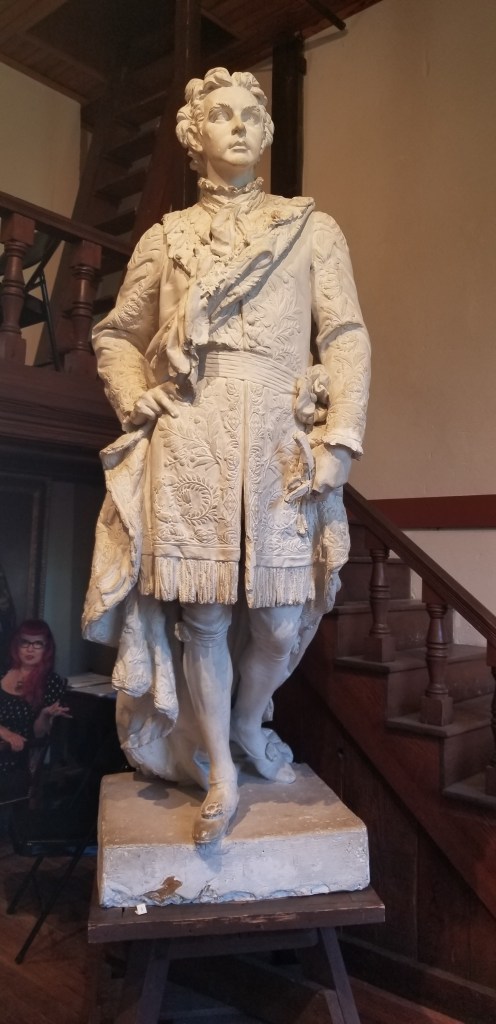
Walking in, my jaw dropped. Here was a bust of someone I recognized immediately. What….? I turned around, and there was a full size statue of the man I recognized. I didn’t know about Elisabet’s German connection yet but I was about to find out from the docent that you can just barely see on the left of Ludwig.

This is none other than King Ludwig II of Bavaria, whom she sculpted in 1870. I’ve learned his story well during the times I have lived and traveled in Germany. Elisabet wrote a letter to him requesting to sculpt him, and he agreed. He put her up in a villa and had a hall set up as a studio for her. She is the only person he ever allowed to make a statue and bust of him. She got tired of the publicity and court gossip that ensued, though, and immigrated shortly thereafter.

Much of her work is displayed in the studio, including busts of important Texans in the day. And there is this:

Elisabet had sculpted the Greek Titan Prometheus while in Germany and had it shipped to her studio. The arm was damaged in transport. It was while she was repairing it here in the studio that she suffered a fatal heart attack and died at the age of 74.

We decided it would be fun to have a tower in one’s studio, or even having a studio to create in. Here’s a picture of Katie climbing the tower steps.

I could not find much about Elisabet Ney on the Internet. Her story is fascinating, and I decided that someone needs to do a historical fiction novel based on her life. It won’t be me, though!

And the “Elisabet Ney Day” that brought us here? It was an Earth Day celebration on the back portion of her property, with mostly activities for children under several picnic canopies.

Our next stop after the Ney museum was the Austin Creative Reuse Center, a non-profit shop that accepts donations of craft supplies for resale. Katie had taken me here several years ago. They shut down during Covid and now have reopened in a larger space. If you have any sort of craft hobby you could probably find items for your projects here at a very low cost. It is a place that is entertaining to poke around in.

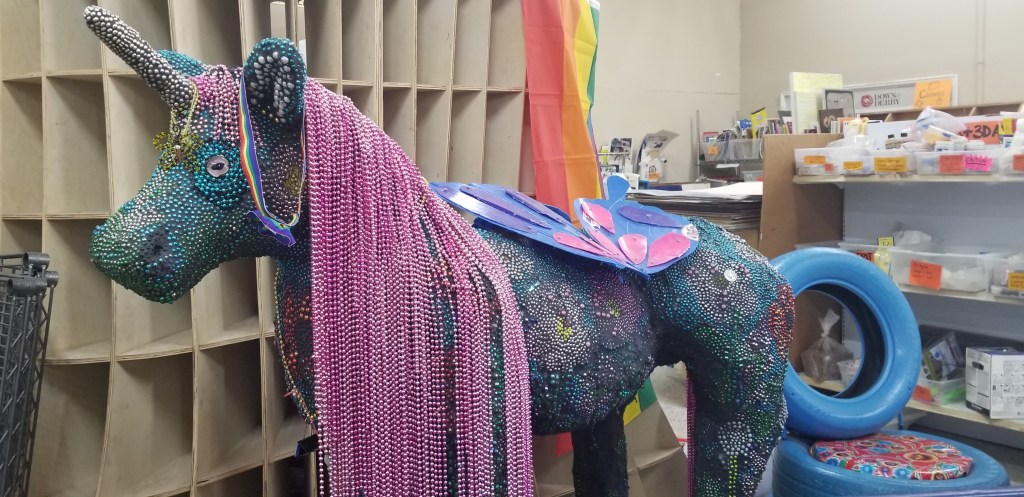
A purplish unicorn greeted us when we walked in the door. There was a list of things that had gone into its creation which I can’t remember now, but I’m sure it included toilet paper and paper towel rolls, and Mardi Gras beads.

Also in the photo is a chair made from old tires. Some people are blessed with a creative talent that I don’t have.

You probably don’t come here with a list of things you want since you don’t know what you will find. I purchased four manila envelopes, a mini stapler, a thick wad of scrapbooking paper, some postcards, and a counted cross stitch pattern of a picture of bluebonnets, all for the paltry sum of $5.34.

It was while we were out that Katie mentioned that the “Greater Austin Clay Studio Tour” was happening the next day. We decided to do that, too. Fifteen pottery studios around Austin opened their doors for the weekend. Of course, we did not go to all of them, but Katie was driving all over town just for the few that we did visit.

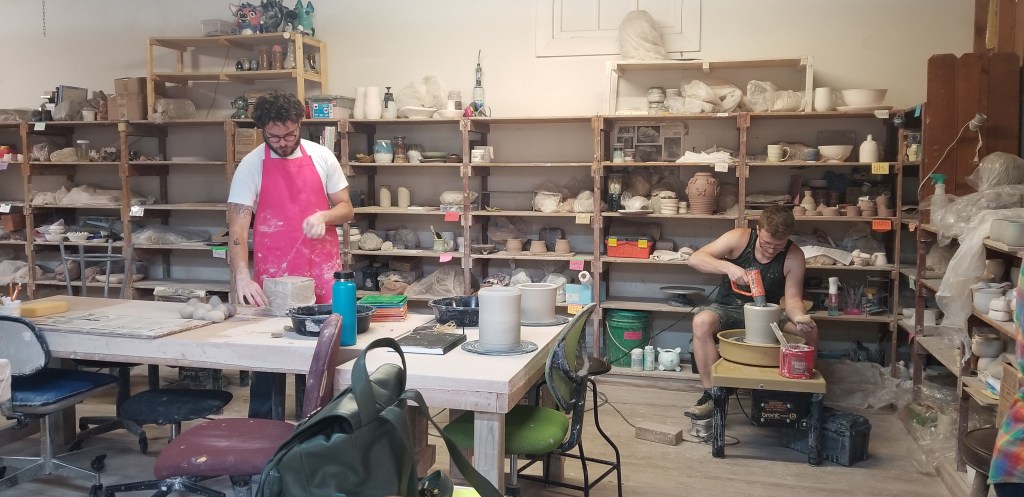
Some studios were in people’s homes. Sarah German of Sarah German Ceramics had her garage open for sales and she was also demonstrating a technique to make the mugs that you see on this shelf. Other clay creators were here too, and I’m sure they found it interesting to see what their colleagues are doing. I really like her work but there is no place for anything like this in an RV.

Her studio is a separate little building in the back yard and it was open for visitors. It is a contemporary, airy studio perfect for creating. I may not work with clay, but I would love having a space like this.

How does this studio compare to Elizabet Ney’s? Well, both are for creating, but that’s where the similarities stop! This one is probably far better suited to today’s artist.

Many of the studios were in commercial buildings. They offer classes for amateurs like us, which might be fun another time when I’m in town.

I used to buy a lot of pottery – functional stuff for the kitchen, mostly. I had to get rid of a lot of it when we cleared out the house. I bought nothing on this day, but enjoyed looking at everything for sale and at the various studios.

Visiting all of these places got my creative juices flowing. But I don’t think I’ll be painting a picture, sculpting a bust, or throwing clay on a wheel anytime soon!

Next time – Going west – west of Austin, that is

USTravel

A Patchwork of Small Towns in Central Texas

The state of Texas is dotted with plenty of small towns which were settled in the 1800’s and had their heyday in the early 1900’s. Many of the best are county seats with picturesque courthouse squares. Some fight the march of time and decay very well by keeping themselves updated with restaurants and stores, and their buildings occupied and up to code. They look very much like something plucked out of the Midwest. Three of these towns, located southeast of Austin, are Bastrop, LaGrange, and Burton.

Our RV was settled in just outside of Bastrop at South Shore Lake Bastrop in one of the most perfect sites we’ve ever had. We waited in vain for an armadillo to come waddling up the little trail in front of us. We’ve just discovered this little string of parks that are run by the Lower Colorado River Authority (LCRA).

Our daughter Katie and her boyfriend Larnell came down from Austin to see us one Saturday while we were here. Katie is both a kid at heart and also loves dinosaurs, so we went along with her suggestion to visit The Dinosaur Park near Bastrop. It’s definitely kid-oriented, but the dinosaurs on the woodsy nature trail are very interesting. There are plenty of them in a realistic setting among the trees. They are painted with different skin textures and color variations and the descriptions contained the most up-to-date information. I wasn’t ready to be impressed, but I was.

This is a Stegoceras, which lived right here in Texas and the Southwest. It was a 4 foot high, 8 foot long herbivore which lived during the late Cretaceous period – 70 million years ago.

Katie and Larnell obviously enjoyed their walk here although the day was hot. Having them around certainly makes for some different entertainment. There was a stop at Buc-ees, Texas’s mega convenience store. I can’t blame them for this stop, though. We hadn’t yet made our Texas Buc-ees stop, so there was shopping to do. Buc-ee himself was wandering around.

We headed from there to the Bastrop Beer Company in downtown Bastrop. Cal and I had a delicious “Outcast Blackberry” mead from Saint Michael’s Mead. We were not able to find it anywhere when we tried to purchase it later, though. We even went to one of their breweries in Hye, Texas with no luck.

Bastrop has an interesting history. Its namesake, Felipe Enrique Neri, Baron of Bastrop, was actually a Dutch commoner wanted for embezzlement in his native country. He assisted in obtaining land grants and served as Austin’s land commissioner. Thanks to his work, Stephen Austin located about 100 families here and Bastrop’s name has stood the test of time.

Cal and I walked the streets of Bastrop another day and found a fireplace made of books in the bookstore. I really hope that they don’t ever light that fireplace.

I window-shopped down the sides of the one main street. In case you’re interested, there are no antique stores in Bastrop. The woman in the history museum wasn’t sure why.

On another day, we headed for the town of La Grange. Nearby are the Kreisch Brewery and Monument Hill State Historic Sites, one a part of the other.

Monument Hill is both a burial place and a memorial to men who died in two events: the Dawson Massacre of 1842 and the Meir Expedition of the same year. These events were part of the Texas fight for independence from Mexico.

The crypt for the Dawson Massacre soldiers is in the bottom right corner of this picture.

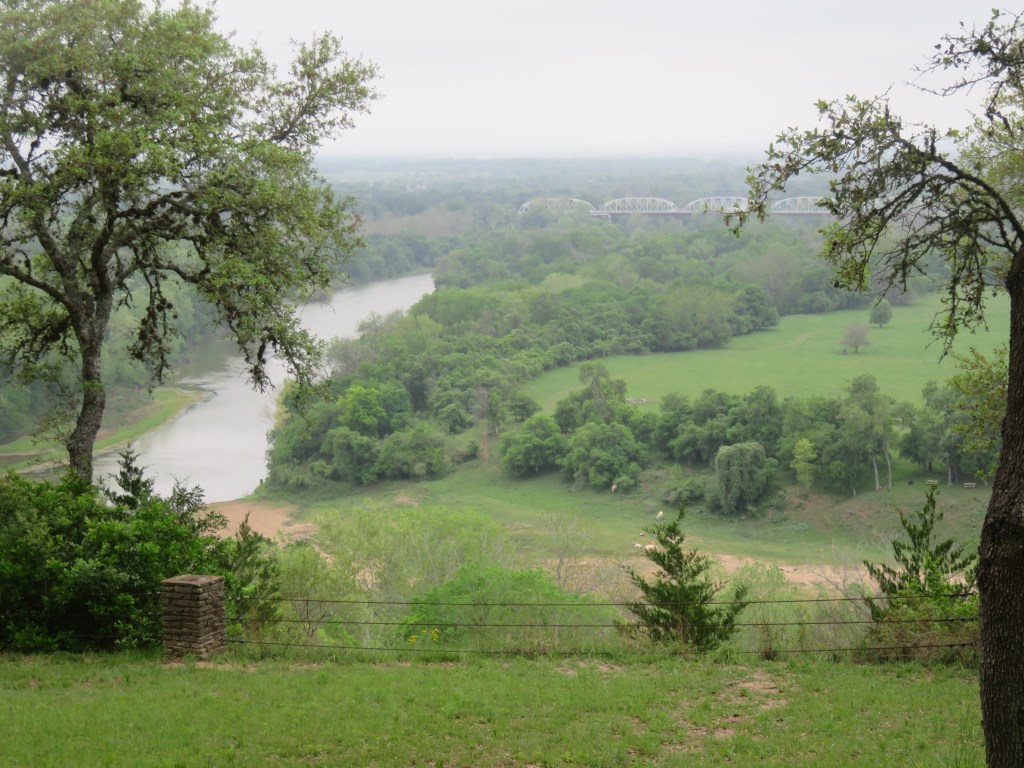
The site sits at the top of a bluff above the Colorado River. The view from here is beautiful.

A German immigrant named Heinrich Kreische settled on the land that the monument is on back in 1849. Being a stonemason, he decided to build a lovely home for his family.

My own heritage is German, so I was delighted to see a springerle cookie mold and “cookies” on the table in the kitchen.

The family smoke house still stands and the aroma in there was heavenly. The park rangers smoke meat about every two months in it. They have German heritage festivals here and everyone gets to sample the smoked sausages.

I guess a guy from Germany needs some decent beer. Being a stonemason, Kreische probably also needed a new project after the house was built. He utilized spring water on his property to build one of the first commercial breweries in Texas. People could come and have a pint, eat delicious food that the Kreische women served and look out over the countryside.

Sadly, today the brewery is but a ruin. Kreische had a work-related accident and died, and the brewery fell into disrepair.

There was an upper floor to the brewery that was made of wood which has not survived. I was very impressed with Heinrich’s stone craftsmanship. Check out the archway below!

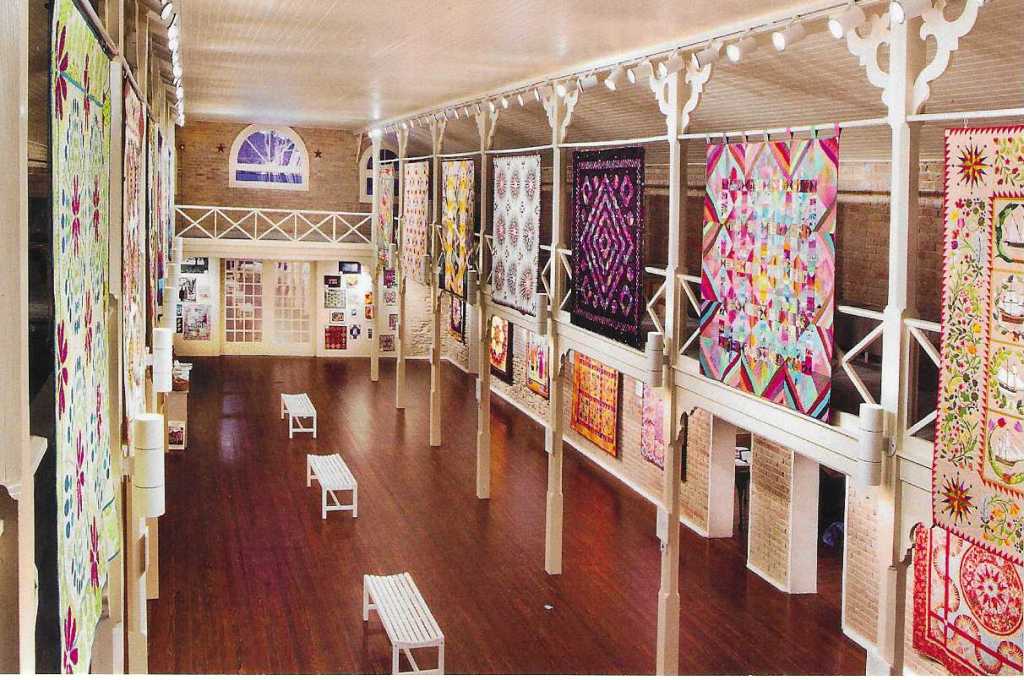
We moved on to a quick lunch in LaGrange and then we separated for awhile. Visiting the Texas Quilt Museum certainly wasn’t on Cal’s agenda. I am not a quilter but I greatly admire the work of those who do.

Although this building is now a quilt museum, it was a furniture store in its day. Funeral caskets were sold on the top floor. The view below was from a postcard; I couldn’t get this excellent view any other way than purchasing one, since there was no entry to the upper level. The quilts in this view are different from the ones I actually saw.

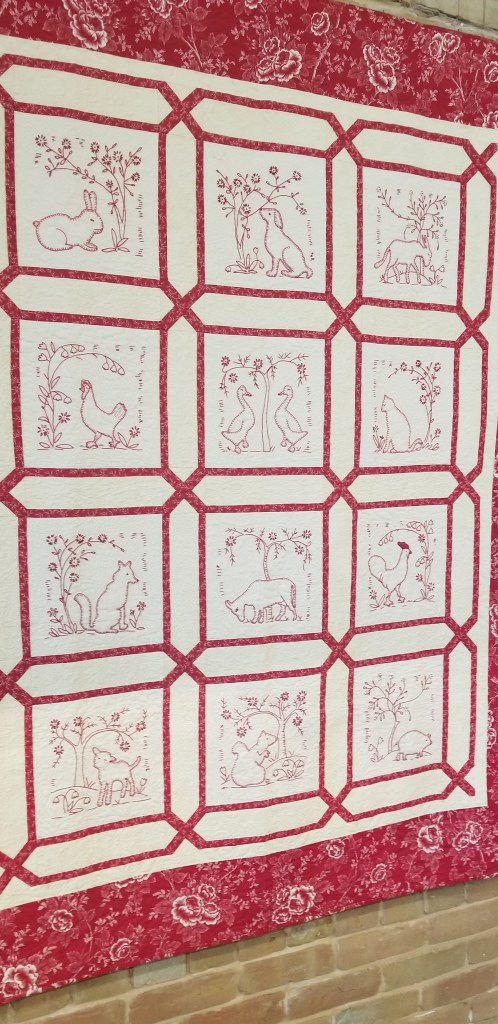
The museum has changing exhibits and I was pleasantly surprised to see red work embroidered quilts on display. It was more interesting to me than the more commonly seen pieced quilts because I do embroidery work. I spent a great deal of time here just admiring them.

Red embroidery floss was the first commercially available colorfast dye color sold in the late 1800’s to the early 1900’s. Embroidery purely in red waned after additional colors became available. Some of these quilts were antique and some were more recently made from antique patterns. I almost talked myself into purchasing some of these embroidery patterns on sale in their shop, but I really already have too many other projects in my stash.

LaGrange is one of those cute little courthouse towns and for the most part the stores lining the square were occupied. That is always good to see. They had a row of antique stores and I texted with Cal before losing myself in them; he was happily occupied checking out the old courthouse building. He enjoyed sitting in their little indoor courtyard. Prior to this he had purchased three varieties of cookies in the bakery across the street.

Inside the courthouse in LaGrange, Texas

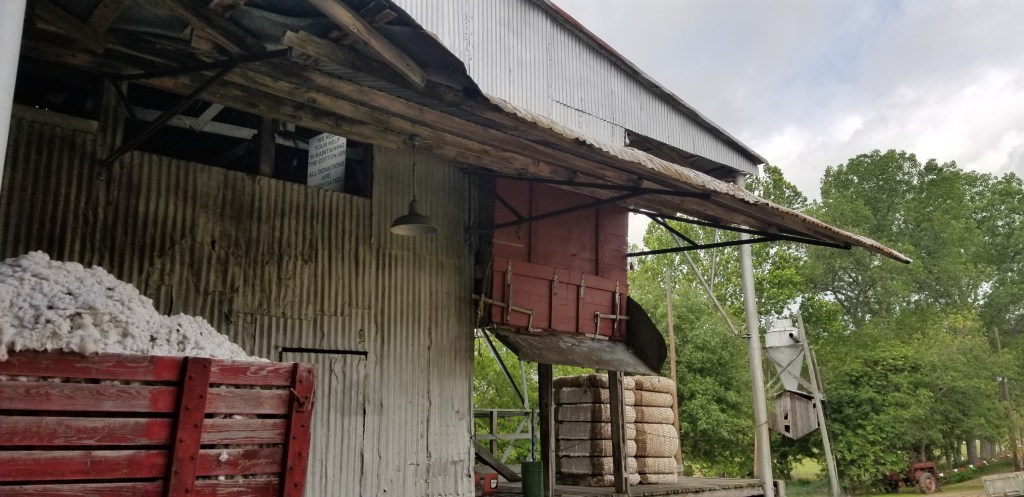
We visited Burton, Texas on our way back from visiting my brother in Dickinson. Burton was the tiniest town in this collection of towns. It was a small German farming community in its day. We stopped here to see the Texas Cotton Gin Museum, which has the oldest cotton gin in America still in operation. The gin here has stood since 1914. We trailed behind a high school group on their tour already underway.

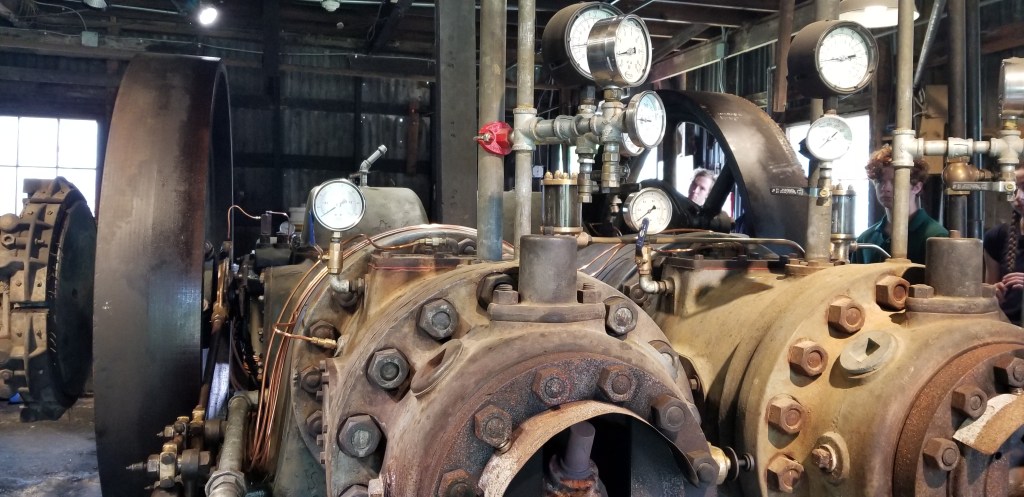
A gin is simply a machine that separates cotton seeds from fibers. This gin has a 16-ton Bessemer Type IV diesel oil internal combustion engine (got all that?? ), fondly known as “Lady B”. It can still gin and bale cotton. Once a year they have a Cotton Gin Festival, and that is when they fire it up.

The engine powers the gin, which then separates the fiber from the seeds. This is shown below.

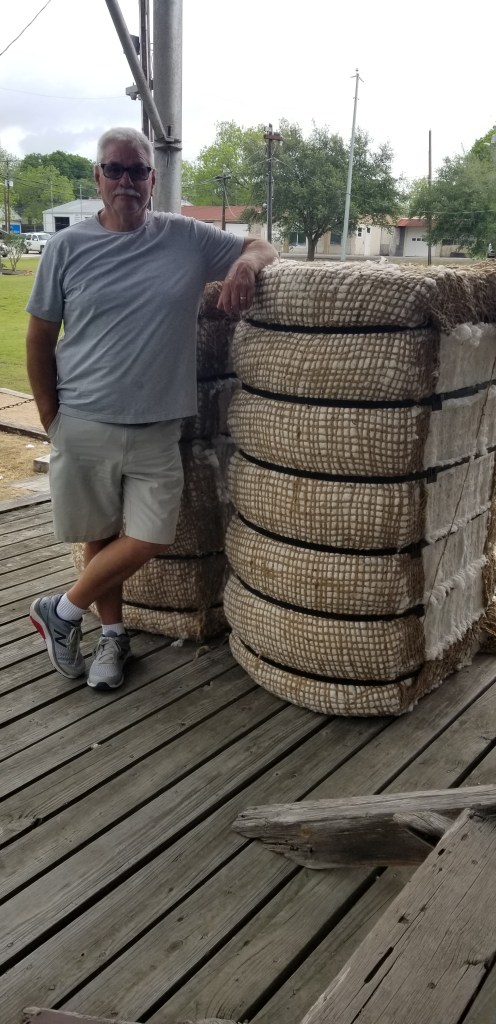
Cal is showing you the size of a bale of ginned cotton. One bale can produce 300 pairs of jeans, or 200 bed sheets. It weighs approximately 500 pounds.

This gin was the lifeblood of the community in its day, mostly the first half of the 1900’s. Eventually cotton was no longer profitable here, and the local farmers stopped growing it.

Between the gin and the museum building, they grow a little field of cotton. It was too soon for planting time. There was an interesting video to watch in the building, and a few artifacts to see. The folks at this place are proud of their gin and love visitors.

After seeing the gin, we stepped into one store since we’d heard they had lunch. It wasn’t much, so we didn’t stay. We were told that if it hadn’t been for the cotton gin, the town would have folded up and died. In my opinion, their other gem is an excellent Mexican restaurant just around and behind the gin. It is called Los Patrones. It seemed like maybe it had been rehabbed from an old garage, or maybe not. Both the food and the atmosphere were great.

Our next stop in our RV travels from South Shore Lake Bastrop was Austin. I’ve posted about Austin when we were there two years ago, but there are always new things to see and do. Like the last stay, we were there for the entire month of April and it is my favorite month to visit!

Next time – exploring Austin’s creative side

Life in General · USTravel

A Game Changer – Our New eBikes

In my last post, I stated that I would be telling you about our travels as we’ve moved on. I’ve decided to write about our new ebikes instead. They are a lot of fun for us and I thought I would share.

My husband, Cal, and I have loved bike riding since we were each growing up. Bikes were part of our first purchases long ago as newlyweds. Our last few years in Missouri were spent riding the mostly flat Katy Trail, a rails-to-trails that stretches all the way across Missouri. We rode the entire 225 miles round trip but took years to do it, exploring local sights and bed-and-breakfasts along the trail. The Katy Trail is really the kind of trail we are used to now.

A flashback from eleven years ago, here we are on the Katy trail

We hauled our bikes out to Rend Lake in Illinois after purchasing our RV. There was a bike trail there, but the (small) hills on the trail were more difficult than we thought they should be. I guess we’re not getting any younger! We don’t ride enough now to attain any level of fitness on them. We’ve had the bikes out for rides since then, depending where we are, but not really all that often. I can tell you, most trails in the Southwest are not like the Katy Trail. So, mostly our bikes have sat, bundled up, on the back of our RV.

Cal wanted to buy ebikes from the beginning of our RV venture. I’m not mechanically inclined and although I liked the idea, I was honestly a little afraid of riding one. I was also somewhat tired of spending bundles of money after the RV purchase, so I put him off a bit by telling him we needed to save for them. Meanwhile, he researched the future purchase and talked to people who had them in some of the parks we have been in. In January I could put it off no longer – we had plenty of money saved in the little fund that I had set aside for this purpose.

We were in agreement on the two reasons we wanted the bikes – to be able to tackle hills with ease, and to be able to go longer distances on our rides.

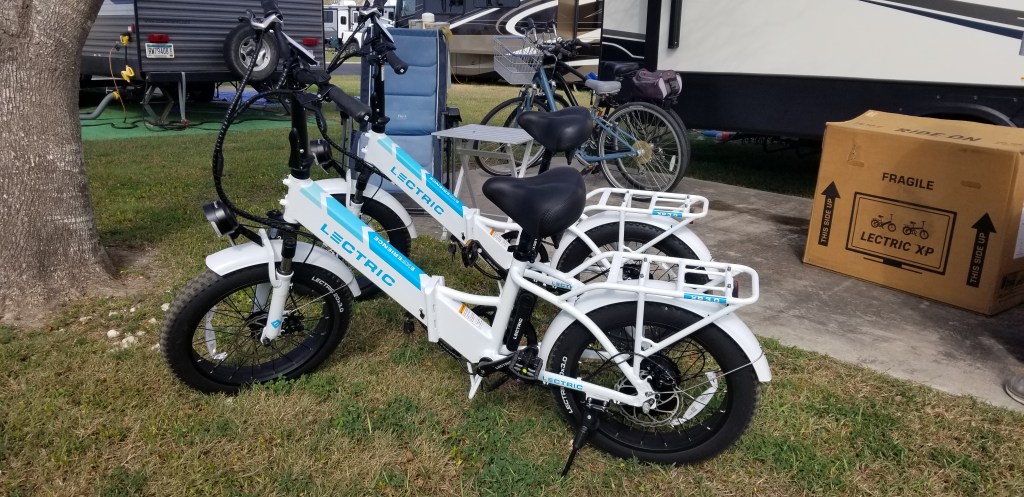
When the time came, he knew exactly what we needed. He ordered the bikes from Lectric and they came in two big boxes – not much assembly required! They are Lectric eBikes XP 3.0 and they fold in half. He purchased them with a package that included better headlights, seats, locks and bigger batteries. He also ordered mirrors from Amazon.

The new eBikes, with one of the boxes they came in to the side, and the old bikes in back.

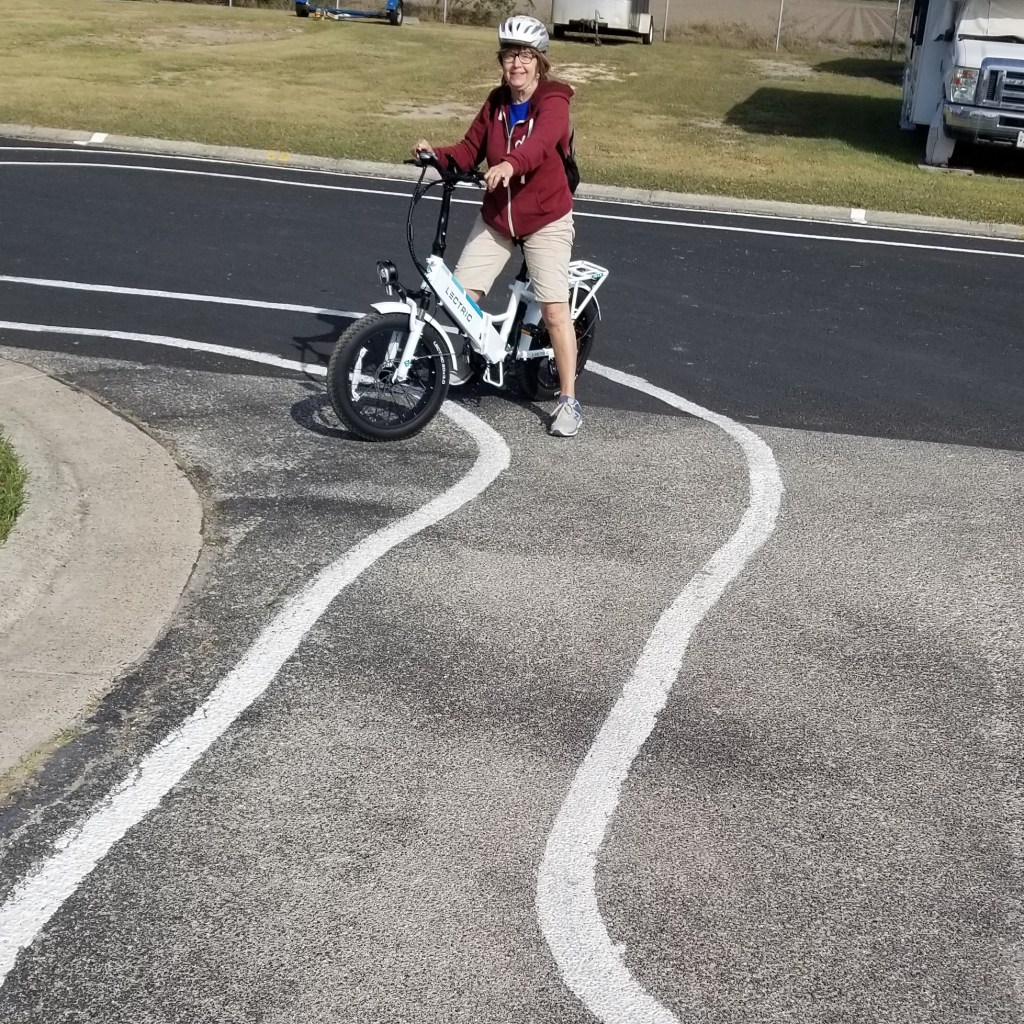
I was more than a little nervous getting on my bike for the first time. Cal was very patient with me and walked me through the use of the pedal assist, the gears and the throttle. There were some weird painted lines at the end of our street which seemed tailor made for an ebike rookie like me.

Soon we were riding around the RV park, and then out the gates on our first adventure. Just five minutes away was a Marine military academy. Everyone there must have been on a winter break because the streets were deserted. We found a huge empty parking lot where I could experiment with using the throttle, and tentatively took the bike up to 18 mph. Wheeee!

It was on the way back to our park from this ride that I realized that it was one of those windy Harlingen days. In our excitement over the bikes, we had not noticed. So it was that we found our third use for ebikes: riding in the wind. With our old bikes we would definitely been fighting the strong headwinds.

We rode the country roads around Harlingen:

and, later, around the naval air station in Corpus Christi.

Both places were perfect for learning how to ride. Contrary to what I used to think, I get as much of a workout as I want by adjusting the gears. There are seven, and I have my bike set usually at five or six. The pedal assist adjusts the speed, and it helps when I’m getting started or going up a hill. There are five levels, and level two or three is fine for riding. I’ve gotten it up to to four only once. That was for a granddaddy of a hill which I pedaled up with ease.

The throttle is what helps me zip across a busy street, or catch up to Cal when I’m lagging behind. On a straightaway, it is fun to just use the throttle, sit on the bike like I’m on a scooter, and take up the speed. But I don’t do that often. It is both exhilarating and a little scary. It uses up battery life faster, too.

Harlingen and Corpus Christi are on a coastal plain, so the roads around both places are flat as a pancake. When we traveled further on, to Central Texas and Austin, we were able to see what the bikes could do on hills. Bastrop State Park had some paved trails, and I could go up the hills with no problem. In the picture below, we had just come off a pretty good down hill where the bike had gone up to 21 miles per hour.

The bikes weigh 70 pounds including the battery. They are fairly heavy to schlep in and out of our truck but so far Cal says he doesn’t think it’s too bad. I’ve helped him and I think they’re heavy. We’ll see how it goes down the road.

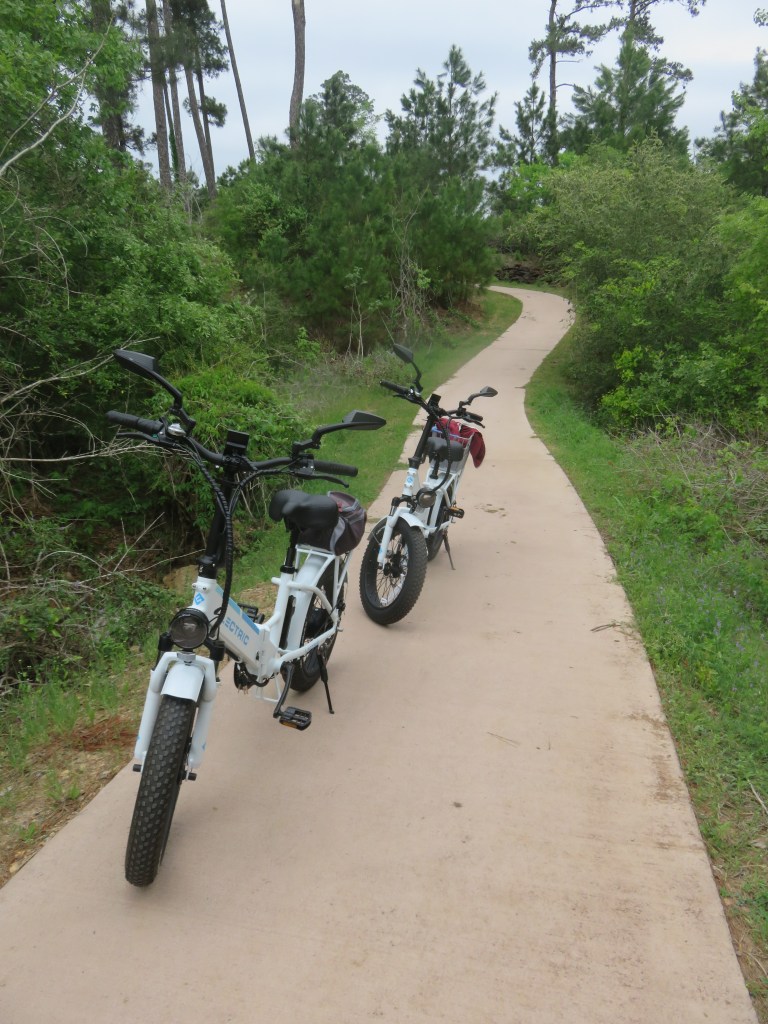
We found a couple of great paved bike trails in Austin: the North and the South Walnut Creek Bike Trails. The paths were wide, paved, and woodsy. You wouldn’t know you were right in the middle of the city.

I was taking some scenic photos of the Texas bluebonnets, and Cal thought it would be cute to put his bike right in the middle of them:

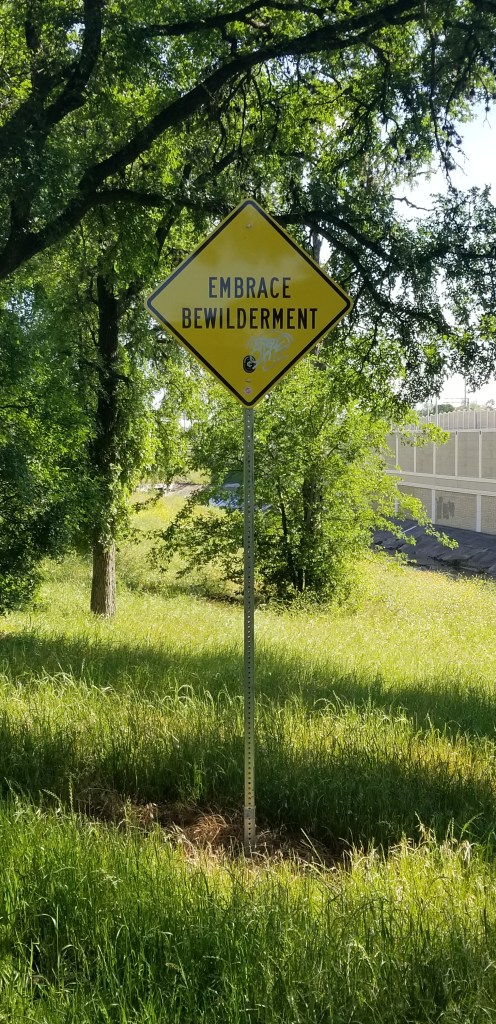
Another day, we went into Austin for a trail that didn’t pan out. This was exactly the way I was feeling on that trail. Only in Austin!

We did circle back on that ride to get on the trail that lines the Colorado River downtown and crosses over with bike-dedicated bridges. Although it was busier, the trail was wide and very beautiful.

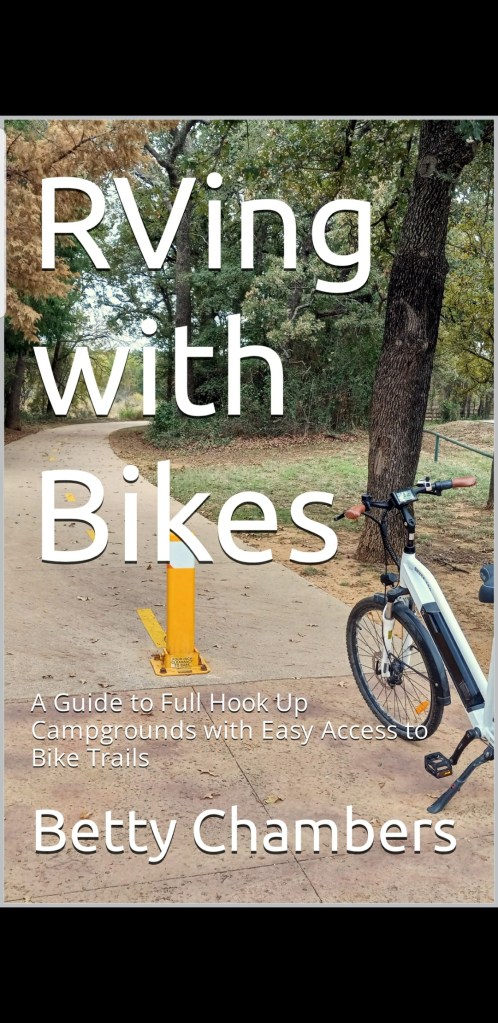
It would be great to have paved trails where we are RVing so that we can ride bikes out of the park. We did not have that luxury in the places in Texas where we stayed. This is where my fellow blogger and friend, Betty Chambers, comes in. She has written an ebook “RVing With Bikes”. It shares the locations of full hookup RV parks that have easy access to bike trails right out of the park. The book is small but Betty is adding new parks to it as she finds out about them. I see a lot of value in this book as time goes on. You can find it on Amazon for the paltry sum of $2.99.

I’m going to close for now, it’s time for a bike ride. See you on the trail!

Next time – roaming Central Texas… maybe

USTravel

Sea, Sand, and Sea Creatures in Corpus Christi, Texas

The marina in Corpus Christi, Texas

To wrap up the winter of 2023, we moved “up north” 145 miles. This time we sat about as close as you can get to the water, on Corpus Christi Bay at an exclusive private club: the US Military. We were at Naval Air Station Corpus Christi for ten days, for our first stay with the navy.

It isn’t quite as fancy as it may sound. Hurricane Harvey did its work here back in 2017. The road to the family camp is riddled with potholes. A lot of “non-essential” (i.e., recreation) facilities such as the marina have been deemed too structurally unstable for repair but have yet to be torn down. We enjoyed watching all the bird life on the fishing pier, but supposedly it was off limits for this same reason. I say “supposedly” because we saw plenty of people walking or fishing from it now and again.

This naval base is very quiet. There are only 140 permanent Navy service people stationed here. It is a training ground for new navy pilots who pass through until they attain their wings. My own nephew, Mike, trained here and didn’t have much good to say about the place. I don’t think it would be particularly exciting for a young service person. There are only a couple of places to eat outside of the military dining facility, and the commissary and base exchange are small. The club, and other spots for socializing, are only open once or twice a week. The base is in need of sprucing up but there doesn’t seem to be the funds for that.

We’re in a different stage of life than my nephew, though, and found it to be perfect for us. We like off-the-wall, quiet places. I enjoyed many walks on the beach in front of our RV and on the long, wide concrete strip on the other side of the fishing pier. That strip stretched for over a mile and we surmised that it was the shipping dock back when ships stopped here. It was also great for bike riding. We rode bikes all over every corner of this small base. On a Saturday morning the empty streets transformed into great bike paths for us.

Many RVer’s don’t like NAS Corpus Christi because of the constant wind, but we were already used to that after our winter in Harlingen. When the wind was more intense, it would stir up the waves and they would crash against the sea wall. Other RV’ers told us they’d seen it kick up higher than this. I think I’m glad we weren’t here for that kind of weather!

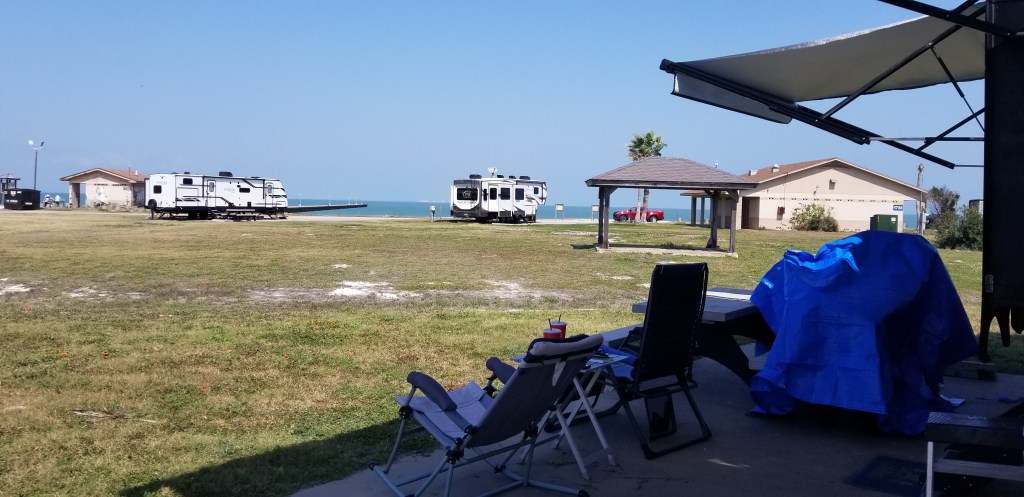
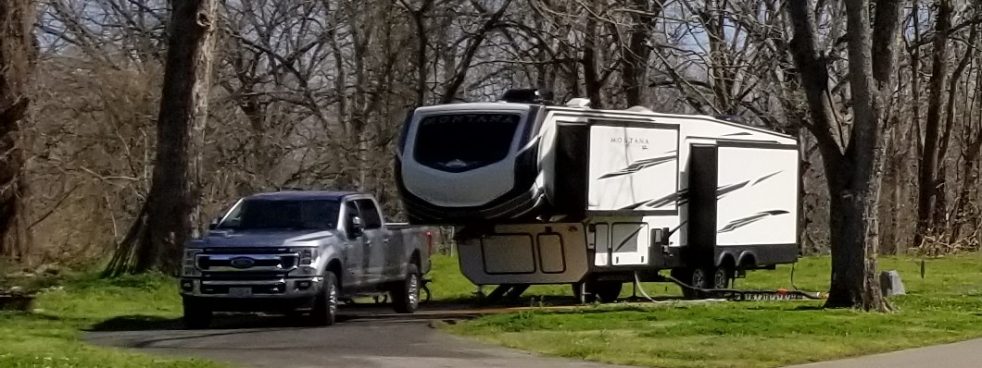
The below RV is not ours. We were glad we did not have this front-row spot. The other drawback to being here is that the salt air is detrimental to RV’s and other equipment one may have. This RV was a little too close to the salty sea spray. As it was, Cal was hosing the RV down every three days or so.

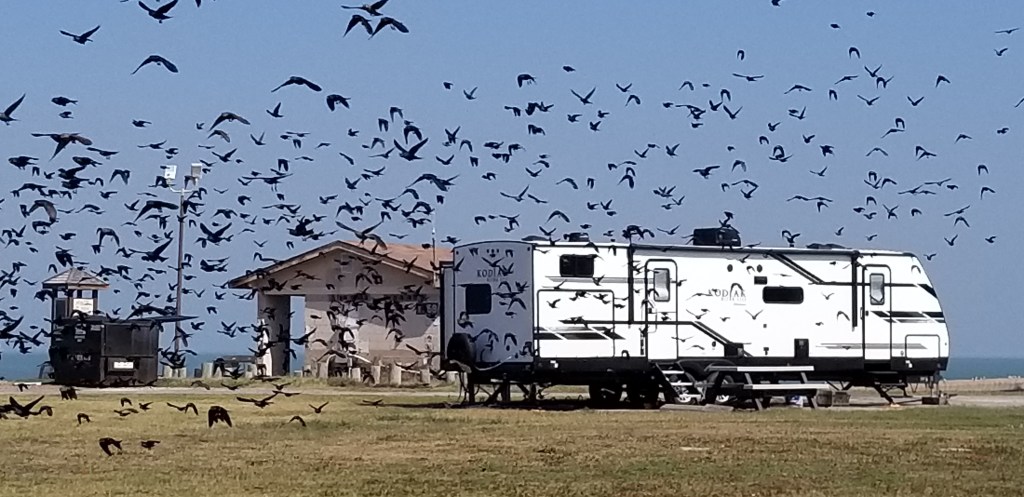
In the mornings, grackels would congregate, swooping and landing in a tiny area of the field, then suddenly taking off again.

There was a little cove across the road behind our park. I liked to walk there to see the roseate spoonbills that made the cove their home, and to see what other birds might be hanging out that day. I often saw sandhill cranes in the field behind us as well.

The base was built during World War II and I can imagine it was hopping during that era. Senior officer’s quarters were built fronting the dock and the water. Most are gone; Harvey finished off what was left in 2017. But, amazingly, a handful are still lived in.

A rear admiral lives here. What does it look like inside, I wonder?

There is nothing between this house and the bay except for a small field and the concrete strip.

I was surprised to learn that when these homes were built many officers still had servants. The servant’s quarters were to the side of the garage. I peeked into one that was standing empty. It is truly a remnant of a by-gone era. Not much later, the quarters were turned into a multitude of uses by the officers living in the house.

We were both outside a good portion of every day here and it was relaxing to just forget about the time. Many days we joined a group of friends who gather late afternoon most days for a beer or whatever was in their water bottles. We compared notes with them on other military family camps. Some of these folks fish or golf. We like to see what’s in the area, and they were a good resource for that.

Not far to the east of Corpus Christi, the John F. Memorial Causeway bridge crosses the Laguna Madre to the barrier islands on the Gulf of Mexico. A left turn past the bridge leads north to Mustang Island State Park and then up to Port Aransas. The state park is small but I couldn’t miss exploring its beach.

There were many people fishing here on the two rock piers or on the beach. This woman was repeatedly plunging a white PVC pipe into the sand; what was she doing? We had to find out, so we asked and she was happy to tell us.

The device is called a shrimp gun or pump, and she was using it to catch ghost shrimp for fishing bait. They are a tasty treat for pompano and other fish.

In Port Aransas we visited a bird refuge. It was behind a sewage treatment plant – phew! – but there was a nice view of Laguna Madre to see the birds. We even found an alligator hanging out right underneath the viewing platform.

Over the JFK causeway, if you turn right, you end up at Padre Island National Seashore. This is a place that is near and dear to my heart, because it contains happy memories of weekend trips camping on the beach with my best friend years ago. I was happy to see it was still mostly the same unspoiled place it used to be.

Padre Island (not to be confused with South Padre Island to the south; they are not connected) is the longest undeveloped barrier island in the world. It’s possible to drive 65 miles down the beach, and we probably only drove less than half of it. It’s a relatively young island – about 4500 years old – in a constant state of change. It’s a fragile environment with its exposure to wind, hurricanes, and ocean currents.

When we first drove on to the beach, there was a line up of RV’s camping on the beach. Then, a smattering of tents, which were fewer and fewer as we went on. Finally, a deserted section: perfect!

Pods of pelicans glided silently by.

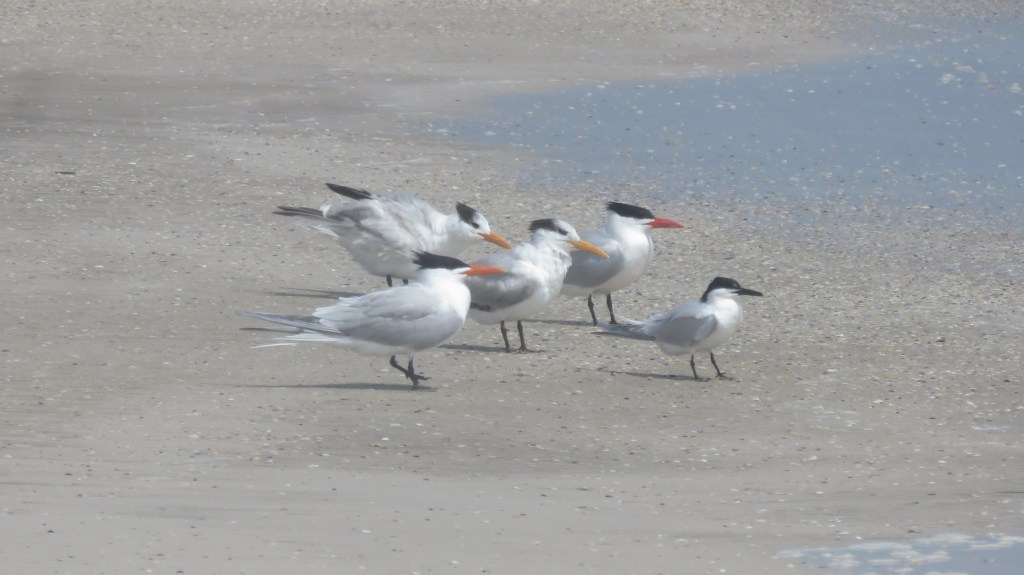
These birds on the beach are a little different than the sea gulls they were hanging out with. Their black hats and long tail feathers blew in the wind.

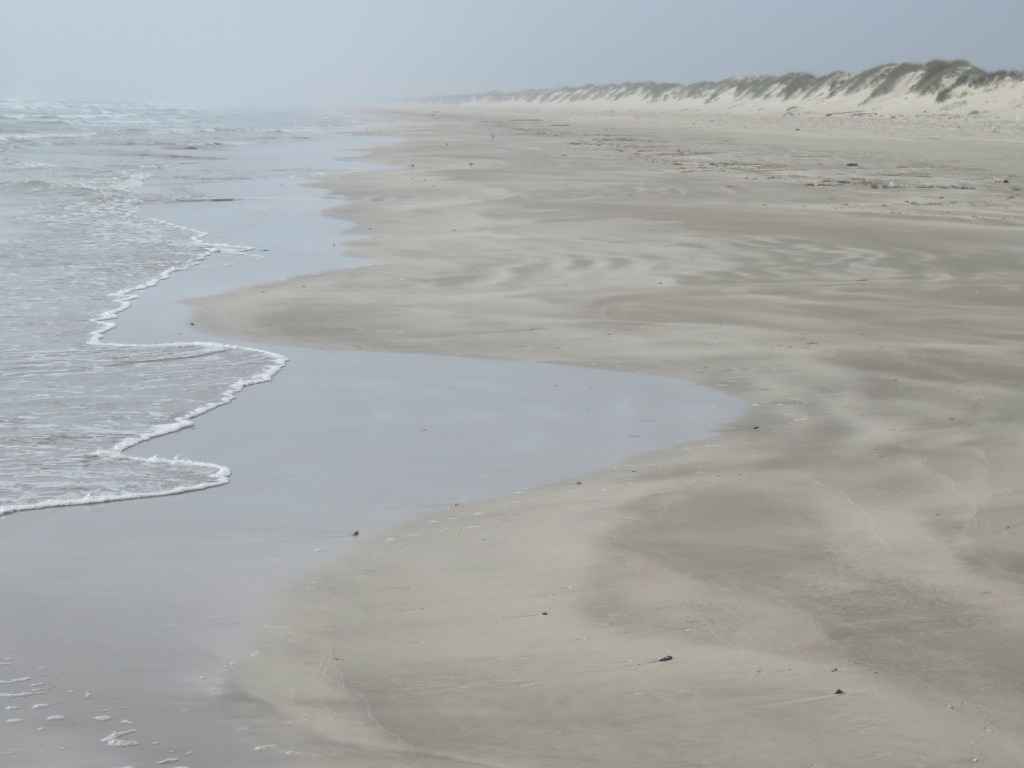
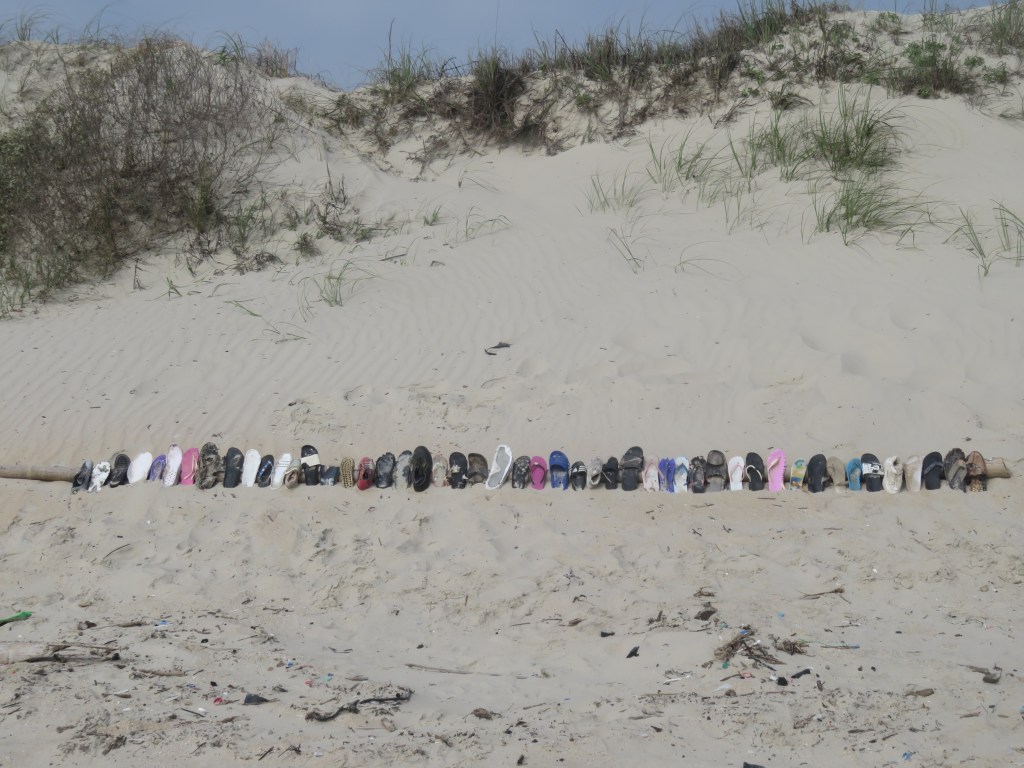
I took a wonderfully long walk down the beach, and saw more trash than I would have liked. I passed several lonely flip-flops without their mates when I came upon this. I wish I’d known this was here; I’d have added to the line!

When we were finished visiting the beach, we stopped at the national park museum on the way back. There’s an explanation for the trash: several currents flow in around the Gulf of Mexico. Those currents swirl around and collect debris from ships and fisherpeople, and all the islands and countries that touch its shores. The north and south currents converge and dump not only sand and shells but also trash right on to Shell Beach, further south than where we stopped driving. Several exhibits discussed the effect of this trash on marine life.

They do a big clean-up day at least once a year. There are trash bags outside of the museum so folks can do a pickup if they’d like, and we did see a gentleman walking the beach with one of the yellow bags. Note to self for another time: stop at the museum first. I had been in a hurry to get to the beach, of course.

I hadn’t been to an aquarium in many years, so we made a stop at the Texas State Aquarium in Corpus Christi. We watched a dolphin show and admired all the tanks of sharks, alligators, corals and fish from the Gulf of Mexico, the Caribbean, and Mexico’s Yucatan Peninsula.

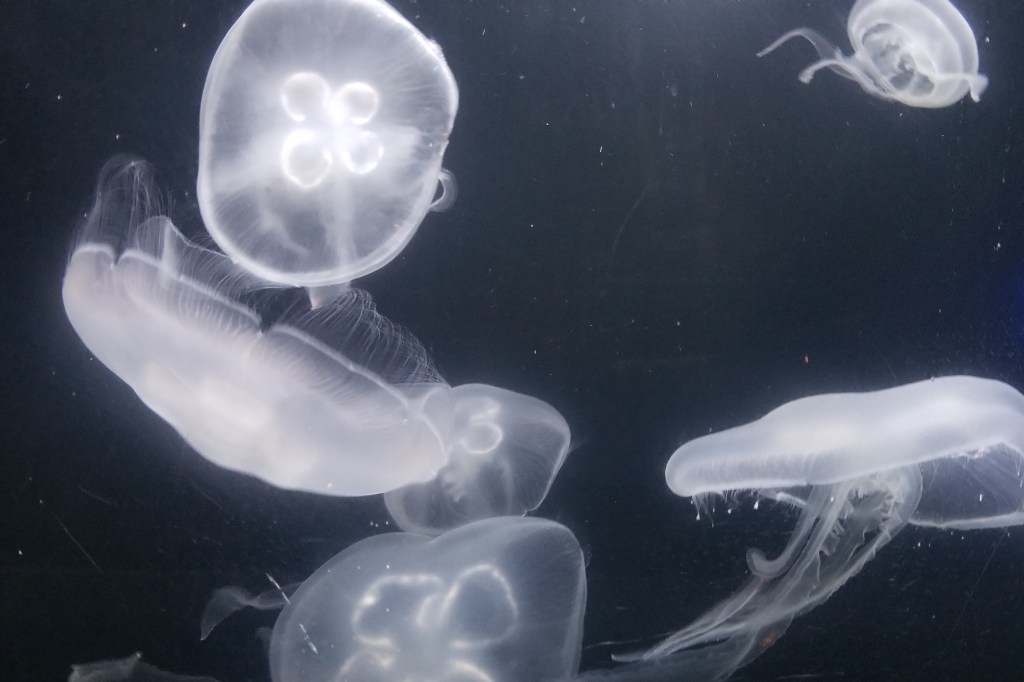
There were moon jellies in the aquatic nursery:

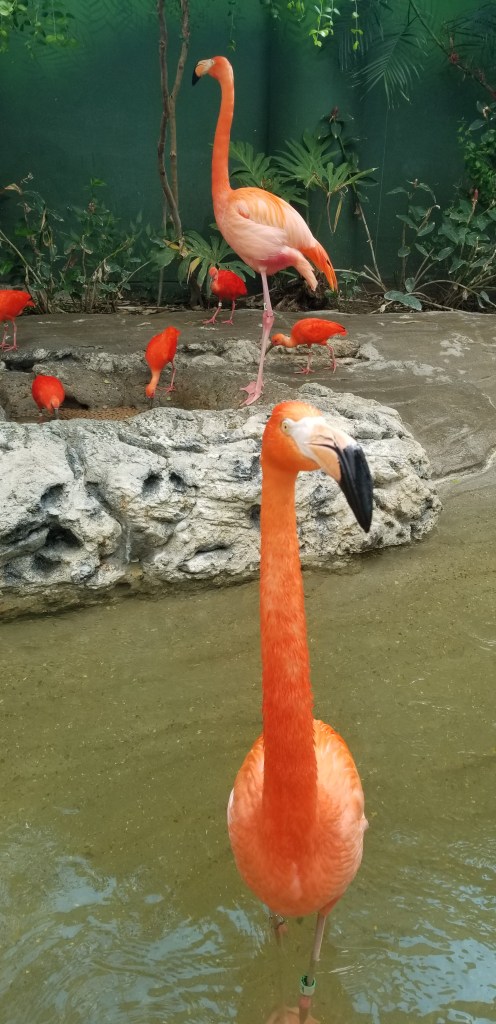
and I enjoyed watching the flamingos in the jungle area. The one in front inspected us up and down. “Just what are you looking at?” it seemed to say.

This one just wanted to dance. They were fun to watch, or maybe I just enjoyed them because I can’t get this close to shore birds out in the wild.

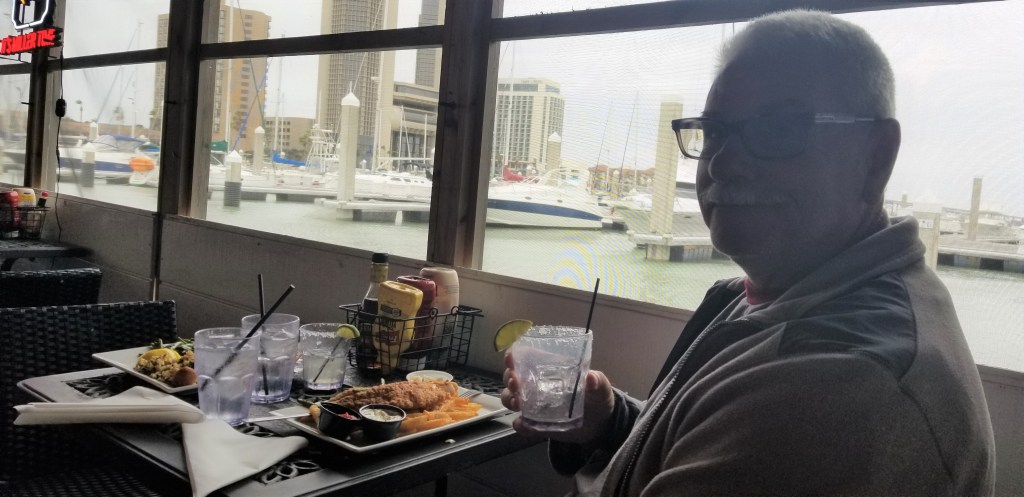
Near the marina downtown, which is where the picture at the top was taken, was a statue of Selena Quintanilla-Perez, a young rising singer who was murdered at a young age in 1995. She was much loved in Texas and many people were here for a look or a picture in front of her memorial.

We were getting ready to say farewell to the Gulf region for now, but one last seafood dinner at Harrison’s landing was in order.

Where do our travels take us from here? That’s for the next post!

Next time – we visit a small Central Texas town